





— Blogs —
—Products—
 Consumer hotline +8618073152920
WhatsApp:+8615367865107
Address:Room 102, District D, Houhu Industrial Park, Yuelu District, Changsha City, Hunan Province, China
Product knowledge
Time:2025-09-07 11:17:14 Popularity:1261
Quick Answer: Weather station total cost of ownership includes the installed system, field servicing, calibration, replacement parts, communications and the work needed to keep data usable. Compare quotations over the same operating period and measurement scope. A purchase price or a professional/consumer label cannot establish the lower long-term cost.
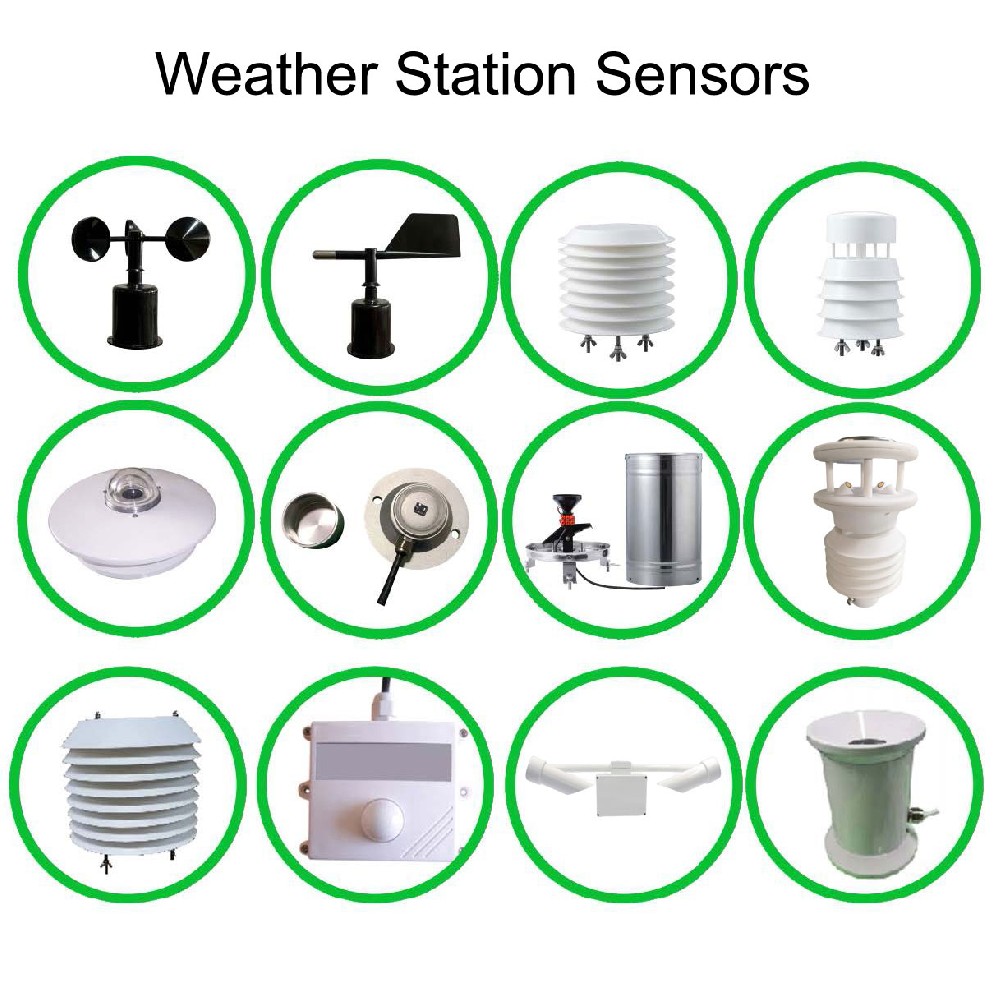
A farm station used for daily irrigation planning and a station supplying contractual solar-resource data do not have the same cost basis. Their measurement channels, siting constraints, service access and documentation may differ. Before comparing prices, write down what each station must deliver and which omissions would require another purchase.
Include the mast, mounts, enclosure, sensor cables, power supply, logger and the route from the logger to the user's software. A quotation for sensors alone is not directly comparable with a commissioned system. Equally, do not charge one option for a gateway or mast already available on site while assuming the other option needs no integration.
Use a planning period chosen for the project, rather than assuming a fixed service life for every sensor. For an undiscounted comparison, the calculation is: total cost = initial installed cost + service and calibration + replacements + communications and software + later integration and removal costs, where applicable. Keep assumptions visible beside each amount.
| Cost line | What to include | Evidence needed for the estimate |
|---|---|---|
| Installed system | Sensors, logger, mounting, power, enclosure, cabling and commissioning | Itemized configuration and site installation scope |
| Scheduled service | Travel, access, cleaning, inspection and reference checks | Site access conditions and proposed service tasks |
| Calibration | Required channels, service fees, shipping and temporary replacement | Required method, interval and laboratory scope |
| Parts and repairs | Replaceable modules, spare stock and repair labor | Parts availability and explicit replacement assumptions |
| Data delivery | SIM service, hosting, subscriptions and software support where used | Actual tariffs, licenses and export requirements |
| Changes and end of use | Configuration work, controller changes and removal if relevant | Expected changes and responsibility for each task |
Do not insert generic online price ranges into this worksheet as though they were NiuBoL quotations. Current cost depends on the channels, output versions, mounting, power and destination requirements. An unpriced line is a request for clarification, not evidence that the task is free.
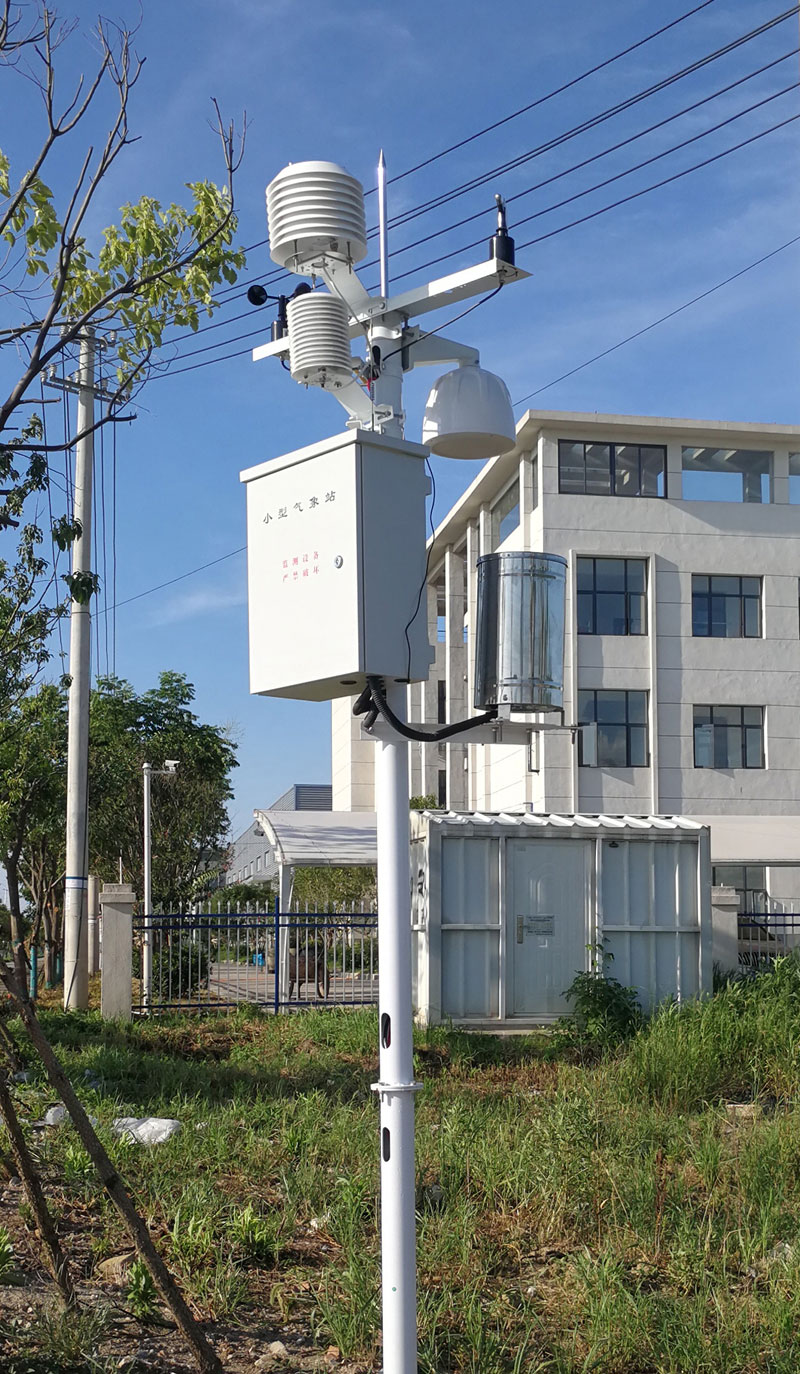
A roadside station may be inspected during an existing maintenance route. A remote agricultural station may require a separate vehicle trip and access permission. The same cleaning task therefore has different project costs. Count mobilization separately from time at the sensor, and avoid counting one shared visit several times for different channels.
The NBL-W-RS tipping-bucket rain gauge requires an unobstructed collector and a level installation. Leaves, insects and sediment are site-dependent service concerns. The NBL-W-SS wind speed sensor uses rotating cups; inspection of movement and mounting remains relevant despite its IP65 protection. Neither feature supports a claim of maintenance-free operation.
Ask which checks can be completed from ground level and which require mast access. A configuration that permits safe component removal may reduce service effort, but that benefit must be assessed against the actual mounting design. It cannot be calculated from the sensor purchase price alone.
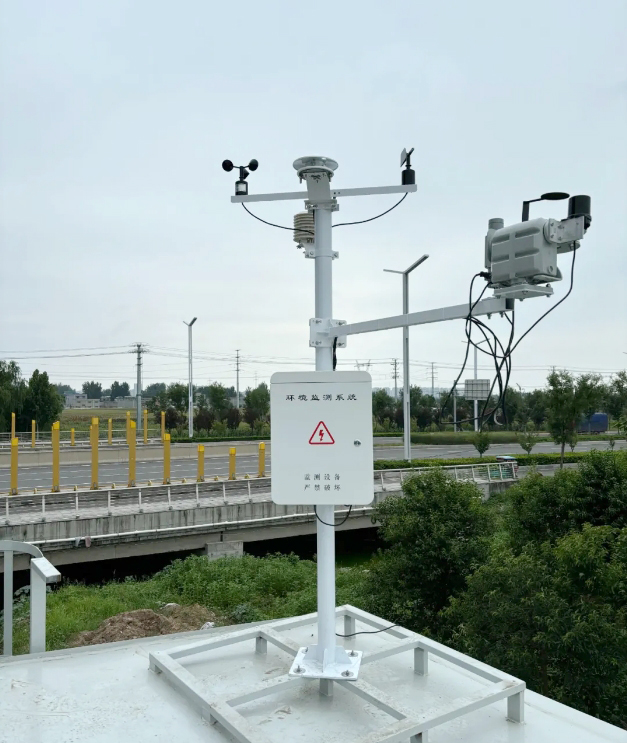
A compact integrated head can simplify mounting and wiring. If a channel fails, however, the repair route may involve removing the complete head. A modular station can allow individual sensor replacement but usually involves more mounts, cables and connectors. Neither arrangement is universally cheaper.
For each option, identify what leaves the site during service, what continues measuring, and whether a spare unit is needed. Ask whether replacement requires a new cable, bracket, logger configuration or channel calibration. These are practical differences between designs; a claimed service life of several years does not answer them.
A budget may include an assumed replacement during the planning period. Label that as a planning assumption, not the manufacturer's guaranteed failure date. Warranty terms, expected maintenance and the project's spare strategy are separate matters and should be priced from their actual scope.
The TG462 data logger offers mixed interfaces, including three RS485 ports, serial interfaces and analog inputs. Available interfaces do not guarantee that every required sensor is already supported in the software. Budget the configuration and test effort for the actual register maps, analog scaling or pulse acquisition hardware.
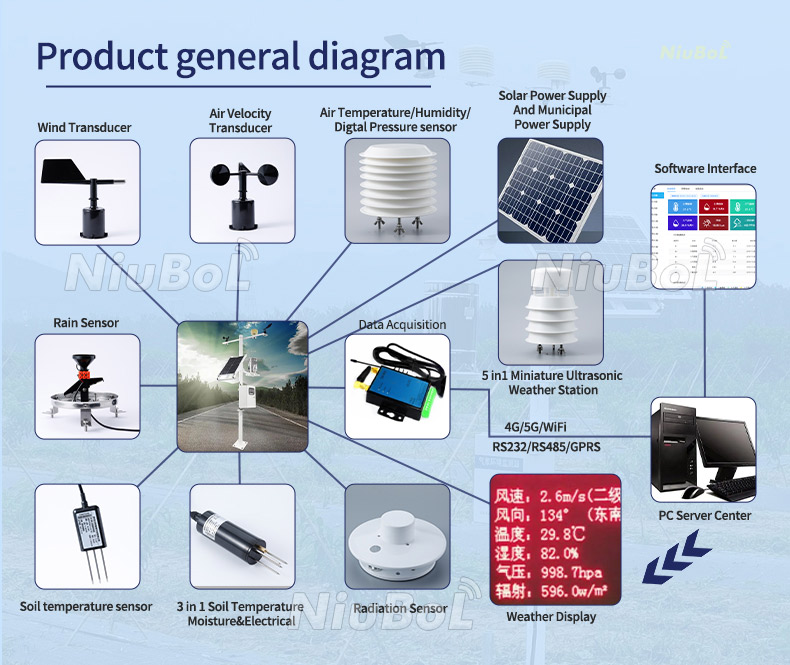
TG462 is rated IP30. An outdoor installation therefore needs a suitable protective enclosure and correctly designed entries, power distribution and moisture management. Do not describe the logger itself as an exposed outdoor IP65 device. Cellular and Wi-Fi options also depend on the selected configuration; communications fees are not automatically included in the logger price.
Data costs extend beyond transmission volume. Establish whether the buyer needs local records, scheduled exports, a hosted display or integration into an existing platform. Check what happens to stored observations during a connection outage. Rebuilding missing records or manually converting file formats is project work even when the SIM tariff is small.
A whole weather station does not have one meaningful accuracy percentage covering temperature, humidity, wind and rainfall. For example, the NBL-W-LBTH air temperature specification is +/-0.5 degree C, while rainfall resolution and wind-speed uncertainty use different quantities. An unsupported comparison such as one class being accurate to a single percentage obscures the procurement decision.
Specify which channels need calibration documents, the required test points and any traceability or accreditation requirements. Then include the cost and turnaround of that work. A traceable calibration does not eliminate exposure error or remove the need for checks after transport and installation.
Recalculate the comparison with one additional field visit, a different data-service plan and the replacement of the most costly serviceable component. These scenarios do not predict failures. They show which assumptions dominate the decision and which questions deserve an answer before purchase.
If an option costs more initially but is expected to save service trips, divide that additional initial cost by the actual avoided cost per trip to find the number of avoided visits needed to recover the difference. Only count visits the design genuinely removes. Do not assume cleaning disappears because a station has remote communications.
Keep the cost of data loss separate unless the project has a defensible financial basis for it. For irrigation, describe the decision affected by unavailable observations. For research, describe the gap in the record. Assigning an arbitrary monetary loss can make a cost comparison look precise without making it reliable.
A reliable amount requires an itemized configuration, installation scope, service plan and chosen planning period. Request the equipment quotation first, then add site-specific recurring costs. There is no single supported amount that applies to every NiuBoL station.
No. The higher price must buy something relevant, such as required measurement performance, easier component replacement or a documented reduction in service work. If those differences do not affect the task, the additional cost may not be justified.
No. Include the panel, controller, battery, installation and expected inspection or replacement tasks. Size the system from sensor, logger and communication loads and local solar conditions; solar power does not guarantee uninterrupted operation by itself.
Possibly, if it has suitable inputs, storage and the required communication support. Check RS485 Modbus RTU registers, analog channels and rainfall counting before removing a dedicated logger from the scope. Include the PLC programming and testing effort.
Request separate lines for the measurement package, mast and mounts, power, enclosure, communication option, commissioning and any requested calibration work. Identify exclusions and recurring charges so different offers can be compared on equivalent terms.
For a NiuBoL inquiry, send the required observations, site access conditions, existing infrastructure and preferred data destination. A configuration-specific quotation provides the starting figures for a useful cost worksheet; generic price bands do not.
Weather station total cost of ownership is a comparison of installed scope and sustained operation, not a contest between marketing categories. Use actual quotations, site-specific service costs and explicit replacement assumptions. Select the configuration that meets the measurement task with a supportable operating plan.
Prev:Weather Station Buying Mistakes: Five Checks Before Order Approval
Next:How Agriculture Sensors Work: Measurement Principles and Field Limits
Related recommendations
Sensors & Weather Stations Catalog
 Agriculture Sensors and Weather Stations Catalog-NiuBoL.pdf
Weather Stations Catalog-NiuBoL.pdf
Agriculture Sensors Catalog-NiuBoL.pdf
Water Quality Sensor Catalog-NiuBoL.pdf
Related products
 Combined air temperature and relative humidity sensor
 TDR Soil Moisture & Temperature Sensor for irrigation| RS485 |4-20mA| NBL-S-THR
 Soil pH sensor RS485 soil Testing instrument soil ph meter for agriculture |NBL-S-PH
 Wind Speed sensor Output Modbus/RS485/Analog/0-5V/4-20mA
 Tipping bucket rain gauge for weather monitoring auto rainfall sensor RS485/Outdoor/stainless steel
 Pyranometer Solar Radiation Sensor 4-20mA/RS485


Screenshot, WhatsApp to identify the QR code
WhatsApp number:+8615367865107
(Click on WhatsApp to copy and add friends)

