





— Blogs —
—Products—
 Consumer hotline +8618073152920
 WhatsApp:+8615367865107
Address:Room 102, District D, Houhu Industrial Park, Yuelu District, Changsha City, Hunan Province, China
Product knowledge
Time:2026-01-13 13:34:01 Popularity:785
In the face of dual challenges posed by water resource scarcity and frequent extreme weather events, efficient and precise water resource management has become a core proposition in the construction of smart cities and modern industries. From the operational monitoring of urban drainage pipe networks to flood warning for large rivers, the accuracy of flow data directly impacts the scientific nature of decision-making. With its leading radar sensing technology, NiuBoL has launched a non-contact radar flowmeter that is gradually replacing traditional measurement methods and becoming the “smart eye” in the field of hydrological monitoring.
Traditional contact flowmeters, such as ultrasonic open channel flowmeters or submersible pressure flowmeters, often face severe challenges in specific environments. Silt accumulation, weed entanglement, highly corrosive liquids, and equipment wear under high flow velocities frequently result in increased measurement errors or frequent equipment failures.
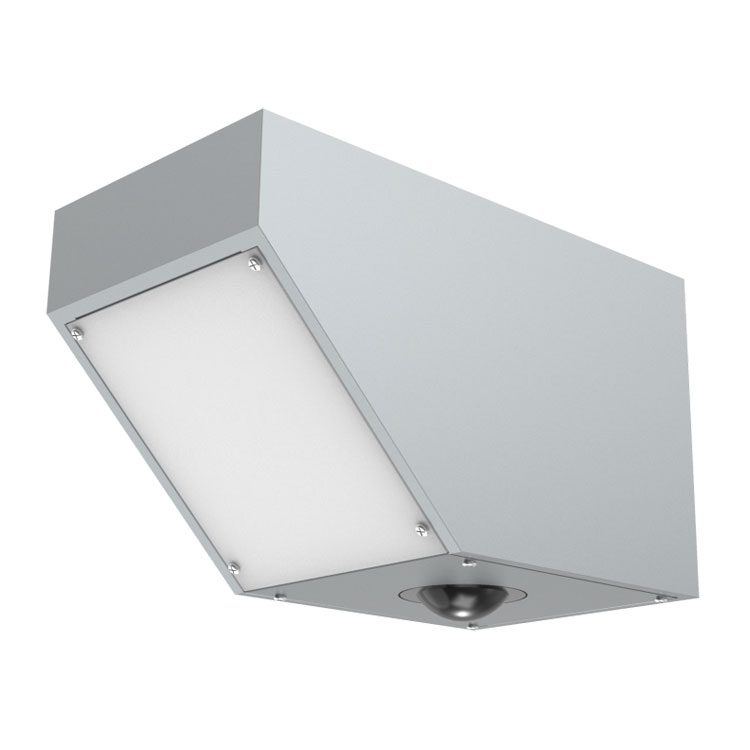
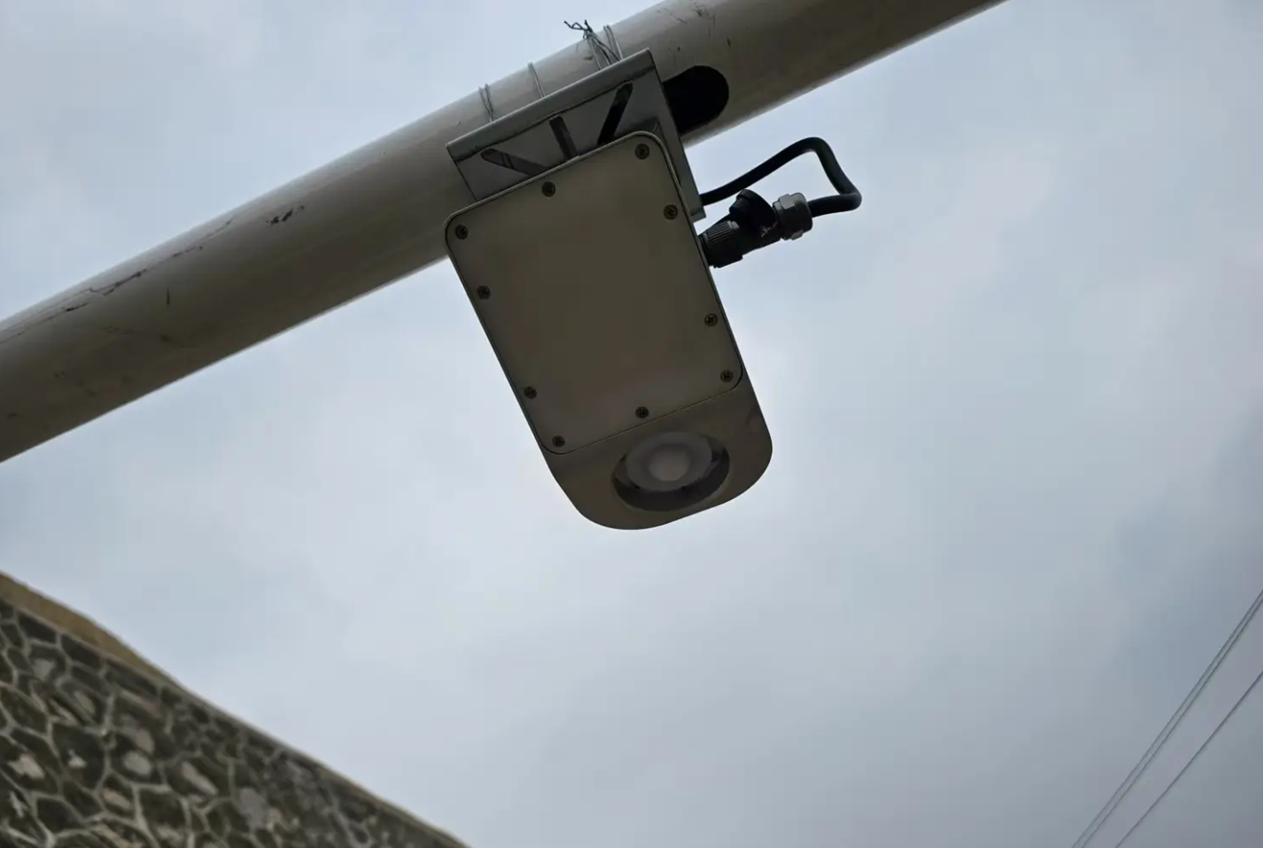
The NiuBoL radar flowmeter adopts a non-contact measurement principle, with its core consisting of an integrated high-performance radar velocity meter and radar water level meter. By emitting microwave signals and receiving echoes reflected from the water surface, the device can calculate flow velocity and water level in real time. This “non-wetted” characteristic fundamentally solves the pain points of sensors being washed away or clogged, ensuring long-term stability under harsh working conditions.
1. Non-contact measurement with extremely low maintenance costs
The NiuBoL radar flowmeter is suspended above the water surface without any physical contact with the fluid. This means the device is unaffected by silt, debris, chemical corrosion, or floating objects in the water. Compared to contact devices that require regular probe cleaning, NiuBoL products achieve near “zero maintenance,” significantly reducing labor and time costs for later operations and maintenance.
2. High-precision multi-dimensional data monitoring
The system is not a single-function sensor but an integrated intelligent monitoring terminal:
Flow velocity measurement: Utilizes 24GHz radar velocity measurement technology, with a wide velocity range (0.1 ~ 20 m/s), accuracy of ±2%, and velocity resolution of 0.01 m/s.
Water level measurement: Employs 76GHz-81GHz high-frequency millimeter-wave radar, with ranging accuracy up to ±1mm and a range of up to 65 meters.
Intelligent algorithms: Combined with preset cross-section information, the built-in algorithm can automatically calculate instantaneous flow, cumulative water volume, and cross-sectional average velocity.
3. Industrial-grade environmental adaptability
NiuBoL adopts a fully waterproof design, adapting to extreme temperatures from -40℃ to +80℃, and can operate stably at 95% RH humidity. Its 10-30V wide voltage power supply design can connect to mains power or perfectly match solar power systems, addressing the urgent need for deployment in off-grid remote areas.
4. Powerful communication and integration capabilities
The device supports RS485 interface and standard ModBus-RTU communication protocol. This allows the NiuBoL radar flowmeter to seamlessly integrate with various PLC systems, SCADA platforms, or smart water management IoT platforms. The maximum communication distance of 2000 meters provides great flexibility for local wiring in large-scale water conservancy projects.
Understanding the working logic of radar flowmeters helps users better select and deploy the equipment. The measurement process follows the following rigorous physical model:
Flow velocity acquisition: The velocity meter uses the Doppler effect to detect frequency shifts caused by water surface fluctuations and obtain the “surface flow velocity.”
Water level acquisition: The water level meter precisely measures the vertical distance from the sensor to the water surface using the Time of Flight (ToF) principle, and converts it to real-time water level based on the installation height.
Model conversion: Since surface flow velocity is not equal to the cross-sectional average velocity, the NiuBoL system has a built-in hydrodynamic correction model. The basic calculation formula is as follows:
Flow = Average velocity × Cross-sectional area × Correction coefficient
The system converts the collected raw surface data into standard flow indicators with decision-making value, and the correction coefficient can be fine-tuned according to the actual measurement environment.
| Parameter Item | Technical Specifications & Performance |
|---|---|
| Brand & Model | NiuBoL Series Radar Flowmeter |
| Power Supply Voltage | DC 10-30V (wide voltage design, compatible with solar and mains power) |
| Device Power Consumption | Rated power ≤ 1.3W (low power mode, suitable for field deployment) |
| Flow Velocity Measurement Frequency | 24.00 GHz (microwave Doppler principle) |
| Flow Velocity Measurement Range | 0.1 ~ 20 m/s |
| Flow Velocity Measurement Accuracy | ± 2% |
| Flow Velocity Resolution | 0.01 m/s |
| Water Level Measurement Frequency | 76 GHz ~ 81 GHz (millimeter wave radar principle) |
| Water Level Range | 0.1 ~ 65 m (maximum range when measuring water level only) |
| Water Level Ranging Accuracy | ± 1 mm |
| Water Level Resolution | 1 mm |
| Effective Installation Height | 0 ~ 20 m (recommended installation height 3-4 m) |
| Communication Interface | RS485 (industrial-grade opto-isolated) |
| Communication Protocol | Standard ModBus-RTU (supports secondary development and integration) |
| Communication Distance | Up to 2000 m in standard environments |
| Operating Temperature | -40°C ~ +80°C (resistant to severe cold and extreme heat) |
| Operating Humidity | 0% RH ~ 95% RH (non-condensing) |
| Protection Rating | IP65 (fully sealed waterproof design, suitable for harsh outdoor environments) |
Flood Control and Mountain Torrent Early Warning
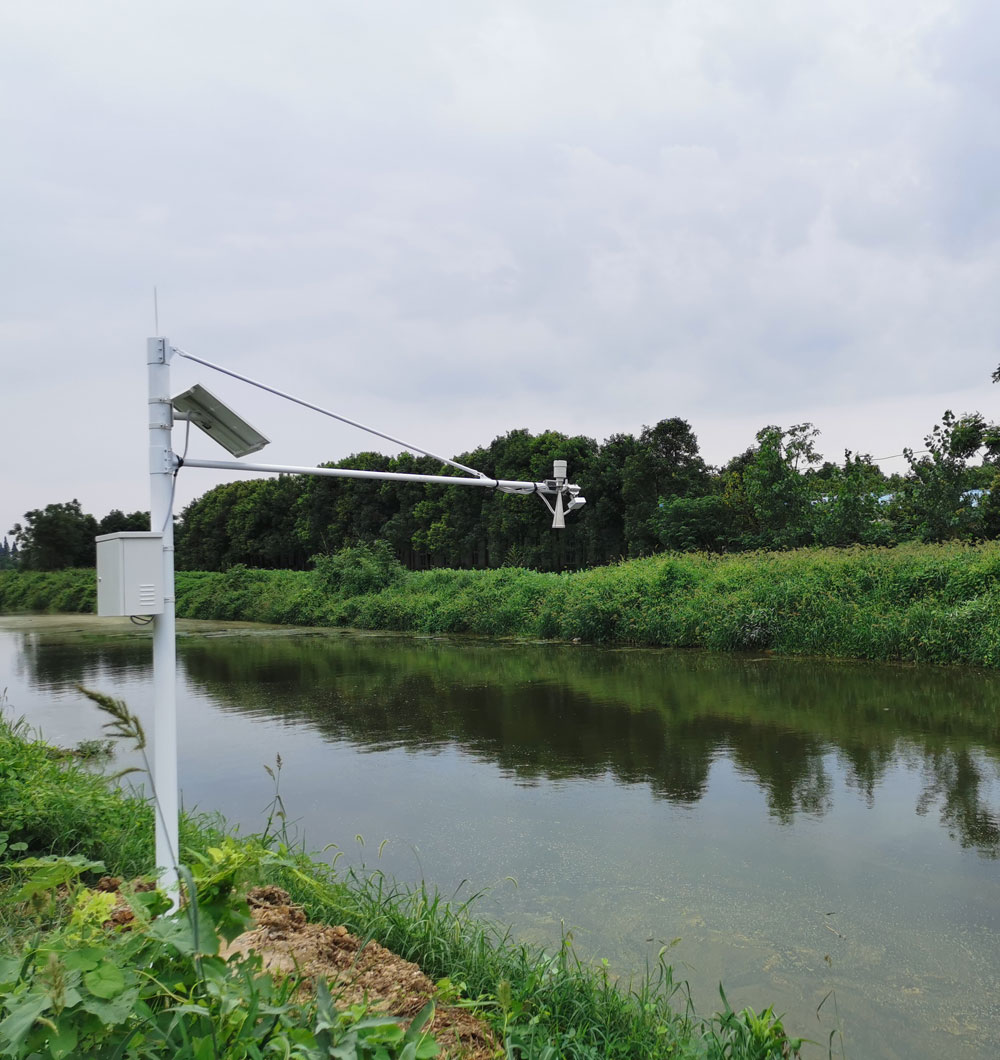
During flood seasons, river flows surge accompanied by large amounts of impurities and floating debris. The NiuBoL radar flowmeter can be installed on bridges or cross-arm poles to monitor river channel water level and flow velocity in real time. When values exceed the warning threshold, the system automatically triggers alarms, providing precious time for personnel evacuation and flood dispatching.
Urban Drainage and Waterlogging Monitoring
The internal environments of urban inspection wells and drainage culverts are humid and corrosive. Due to its compact size and easy installation, the radar flowmeter can accurately monitor the load conditions of rainwater and sewage pipe networks, effectively preventing urban waterlogging caused by pipe network overload.
Agricultural Irrigation and Canal Management
In irrigation district management, accurate water rights allocation relies on precise flow measurement. NiuBoL products are suitable for various hardened canal sections and can effectively handle complex situations such as weed overgrowth and slow flow velocities in channels, helping agriculture achieve precise water saving and scientific irrigation.
Environmental Monitoring and Sewage Treatment
For industries such as chemicals and power generation, monitoring wastewater discharge flow is key to environmental compliance. The NiuBoL non-contact radar flowmeter demonstrates far superior service life compared to contact-based devices in open channels or highly corrosive wastewater.
To achieve the best measurement accuracy, the NiuBoL technical team recommends following these professional principles during installation:
Environmental Selection
Measurement channel section: Should be a straight section with steady flow, free from large boulders obstructing the water, and without significant vortices or turbulent flow.
Regular cross-section: The test channel section should preferably be hardened, and the measurement cross-section should be regular to improve the accuracy of area calculation.
Antenna beam: Pay attention to the irradiation range of the water level meter (beam angle 6×6°) and velocity meter (30×80°). Higher installation heights result in larger irradiation areas; avoid the beam illuminating branches or weeds on the banks.
Installation Position
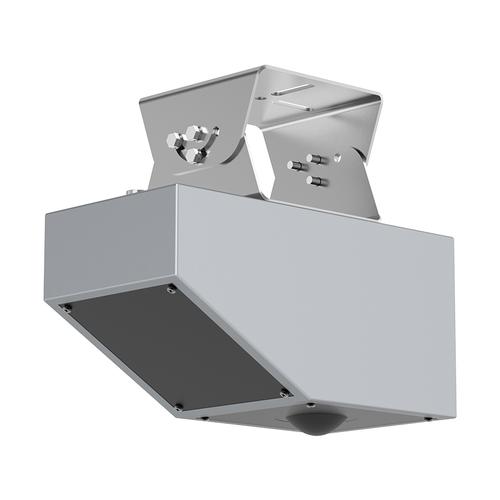
Alignment direction: The inclined surface of the flowmeter should be installed parallel to and facing the incoming water direction.
Height recommendation: Suggested installation height is 3-4 meters, which ensures signal quality while providing anti-theft protection and preventing equipment submersion during extreme floods.
No obstruction requirement: There must be no obstructions in the radar wave emission paths of the water level meter and velocity meter; otherwise, measurement accuracy will be directly affected.
Q1: How does the radar flowmeter perform in still water or extremely low flow velocities?
The NiuBoL radar flowmeter has a minimum measurable velocity of 0.1 m/s. In completely still water or environments with extremely low velocity and no surface ripples, measurement becomes more difficult. For such scenarios, it is recommended to implement local channel constriction at the measurement point to increase flow velocity.
Q2: Will rainy weather affect the measurement data?
The device incorporates digital filtering technology and rain compensation algorithms. Although heavy rain disturbs the water surface, the system can identify and eliminate high-frequency interference from raindrops, ensuring smooth and reliable output of water level and flow velocity data.
Q3: How does non-contact measurement ensure long-term stability?
Since it does not come into contact with the fluid, the NiuBoL radar flowmeter avoids physical wear and electrochemical corrosion of the sensor. As long as the power supply remains stable and the antenna surface is kept clean, its long-term operational accuracy far exceeds that of submersible sensors that require frequent calibration.
Q4: How does the device achieve remote monitoring?
Through NiuBoL’s supporting water and rainfall monitoring pole and monitoring host, flow data can be transmitted via RS485 signals to the host, then uploaded to the cloud platform via 4G/5G. Users can monitor the data in real time through mobile phones or computers.

The digital transformation of hydrological monitoring fundamentally depends on the reliability of sensing equipment. With its non-contact measurement, high-precision data acquisition, and all-weather operational capabilities, the NiuBoL radar flowmeter successfully addresses numerous challenges in flow measurement for open channels, rivers, and culverts. In future flood mitigation and resource allocation efforts, NiuBoL will continue to provide global users with more precise and intelligent water environment monitoring solutions.
Would you like to learn more about customized deployment solutions for the NiuBoL radar flowmeter? I can provide detailed technical manuals or offer tailored selection recommendations based on your on-site channel width and flow velocity range. Are you interested in learning more about solar power system configurations or the interface protocols for uploading data to cloud platforms?
Related recommendations
Sensors & Weather Stations Catalog
 Agriculture Sensors and Weather Stations Catalog-NiuBoL.pdf
Weather Stations Catalog-NiuBoL.pdf
Agriculture Sensors Catalog-NiuBoL.pdf
Water Quality Sensor Catalog-NiuBoL.pdf
Related products
 Combined air temperature and relative humidity sensor
 TDR Soil Moisture & Temperature Sensor for irrigation| RS485 |4-20mA| NBL-S-THR
 Soil pH sensor RS485 soil Testing instrument soil ph meter for agriculture |NBL-S-PH
 Wind Speed sensor Output Modbus/RS485/Analog/0-5V/4-20mA
 Tipping bucket rain gauge for weather monitoring auto rainfall sensor RS485/Outdoor/stainless steel
 Pyranometer Solar Radiation Sensor 4-20mA/RS485

Screenshot, WhatsApp to identify the QR code
WhatsApp number:+8615367865107
(Click on WhatsApp to copy and add friends)

