





— Blogs —
—Products—
 Consumer hotline +8618073152920
WhatsApp:+8615367865107
Address:Room 102, District D, Houhu Industrial Park, Yuelu District, Changsha City, Hunan Province, China
Product knowledge
Time:2025-02-16 17:56:42 Popularity:2963
A weather station comparison report should identify the measured quantity, reference instrument, exposure, matched times and observed differences before anyone changes calibration. A mismatch with another display is not proof of sensor error. Record the station as found, check the data conversion and compare equivalent observations under suitable conditions.
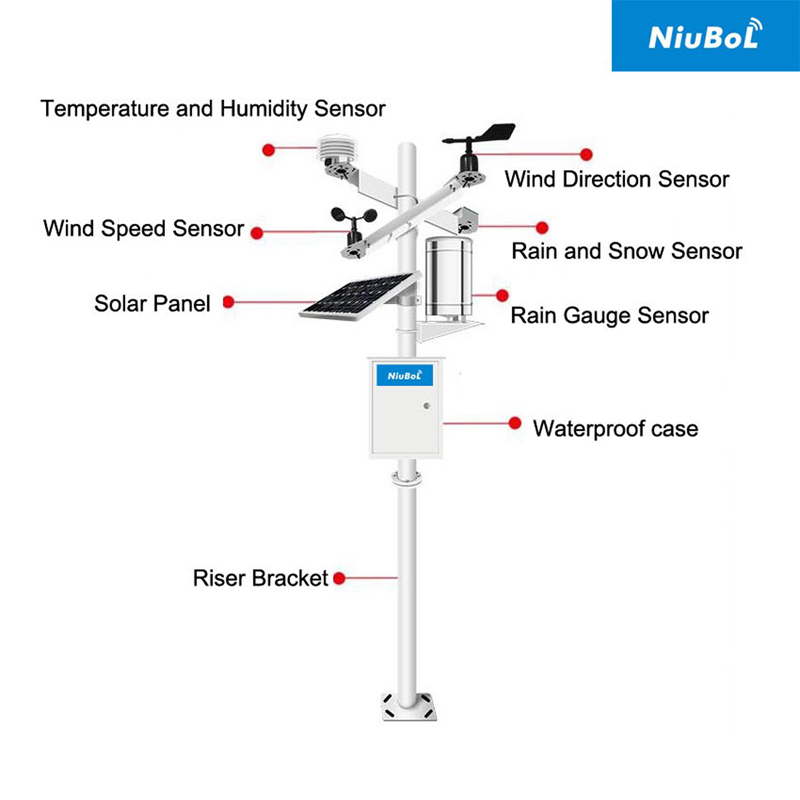
Replace a complaint such as the station is inaccurate with a channel-specific observation. Identify whether the issue is an afternoon temperature difference, a rainfall total, a wind-direction offset or a value that differs only on the remote screen. Note when it began and whether installation, cleaning or software settings changed at the same time.
Keep the original values before adjusting anything. If a temperature offset is applied first, a later comparison no longer describes the original station. The purpose of the report is to give service staff enough information to distinguish a real instrument problem from exposure, timing or data interpretation.
| Report entry | What to record | Why it matters |
|---|---|---|
| Station and channel | Model, output version, parameter, unit and installed location | A station can have one affected channel while others remain usable. |
| Reference | Instrument identity, calibration information and applicable uncertainty | A reference reading is not an error-free value. |
| Comparison conditions | Height, shielding, surface, exposure and weather | Different sampled conditions can explain a difference. |
| Timing | Observation timestamps and averaging or accumulation periods | A live value and an interval average are not interchangeable. |
| As-found evidence | Matched readings, raw output, settings and service history | Preserves the basis of a repair or calibration decision. |
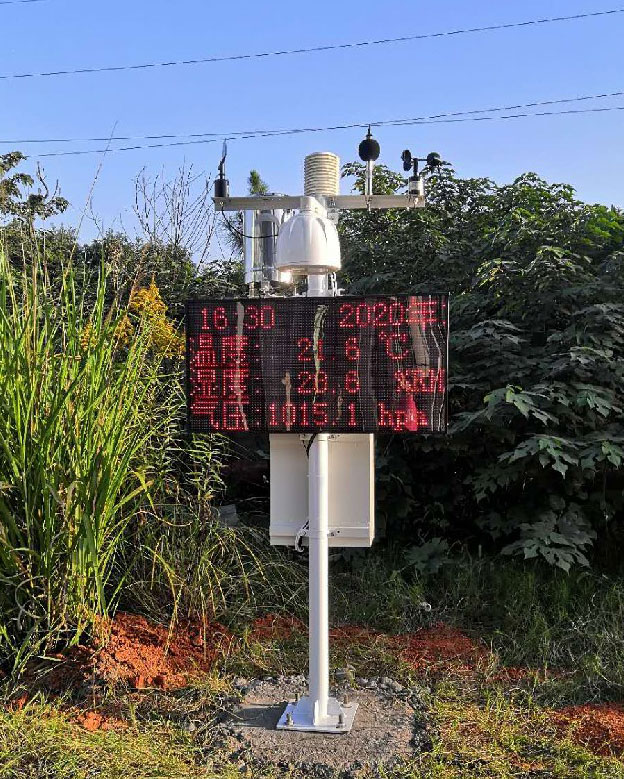
For an air-temperature check, use a suitable maintained reference in comparable shielding and airflow, allow both instruments to stabilize, and record synchronized observations. Holding a handheld thermometer in direct sun beside a shielded sensor does not create an equivalent comparison. A weather app may refer to another site, a forecast or a different observation period.
Soil temperature requires a reference at the relevant soil location and depth, not an air thermometer nearby. Wind comparison is sensitive to height, obstructions and averaging. Rainfall comparison needs matched catch periods and suitable gauge exposure. A general station-wide percentage tolerance cannot cover all of these quantities.
For formal acceptance, agree the method and decision rule in advance. Reference uncertainty, test conditions and the station specification all affect interpretation. A field comparison can identify a problem worth investigating without establishing calibration across the instrument's full range.

Calculate station minus reference for each matched pair. For illustration, 20.4 C at the station and 20.0 C at the reference give a +0.4 C difference. That arithmetic alone does not establish a failed sensor or justify a -0.4 C offset. Repeat the comparison across relevant conditions and consider the reference and exposure.
Separate a consistent difference from one that appears only during strong sun, after wetting or during rapid temperature change. The latter patterns can indicate shielding, ventilation or response differences. Averaging every condition into one number can conceal the pattern and lead to a correction that improves one period while worsening another.
| NiuBoL component | Relevant specification | Report detail needed |
|---|---|---|
| NBL-W-LBTH | Temperature +/-0.5 C; RH +/-5% RH; pressure +/-1.5 hPa; DC 12-24 V | Parameter, reference conditions and units; RH differences expressed in percentage points. |
| NBL-W-SS / NBL-W-DS | Separate speed and direction sensors; IP65 | Observation height, wind statistic, direction reference and obstructions. |
| NBL-W-RS | 0.2 mm resolution; +/-4% in an indoor static test at 2 mm/min | Test method and flow condition; do not apply the stated test result to every field storm. |
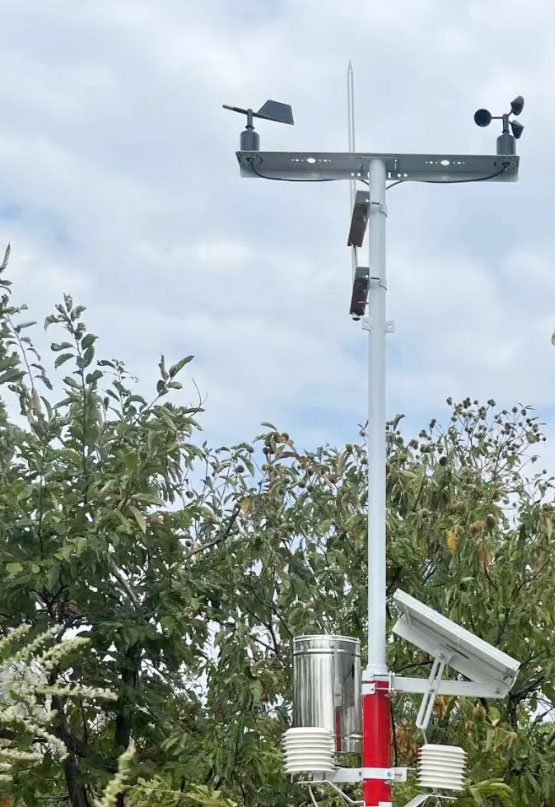
For RS485 Modbus RTU channels, retain a raw response and the resulting engineering value with the correct address, register map and scale. Check that the displayed unit matches the decoded value. An analog channel needs the corresponding current or voltage conversion; a pulse rain gauge needs the installed millimetres-per-tip value.
Follow one observation from the instrument to the logger record and remote screen. If the logger is correct and the screen differs, investigate application mapping, timestamps or calculations. Changing the sensor coefficient would alter the healthy part of that chain. The TG462 / TG462S logger has compatible acquisition interfaces, but each installed application still requires the correct channel configuration.
For wind direction, compare angles around the north boundary correctly: 359 degrees and 1 degree are 2 degrees apart, not 358. For rainfall, align start and end times and check resets. These checks can resolve apparent discrepancies without claiming that any physical sensor was recalibrated.
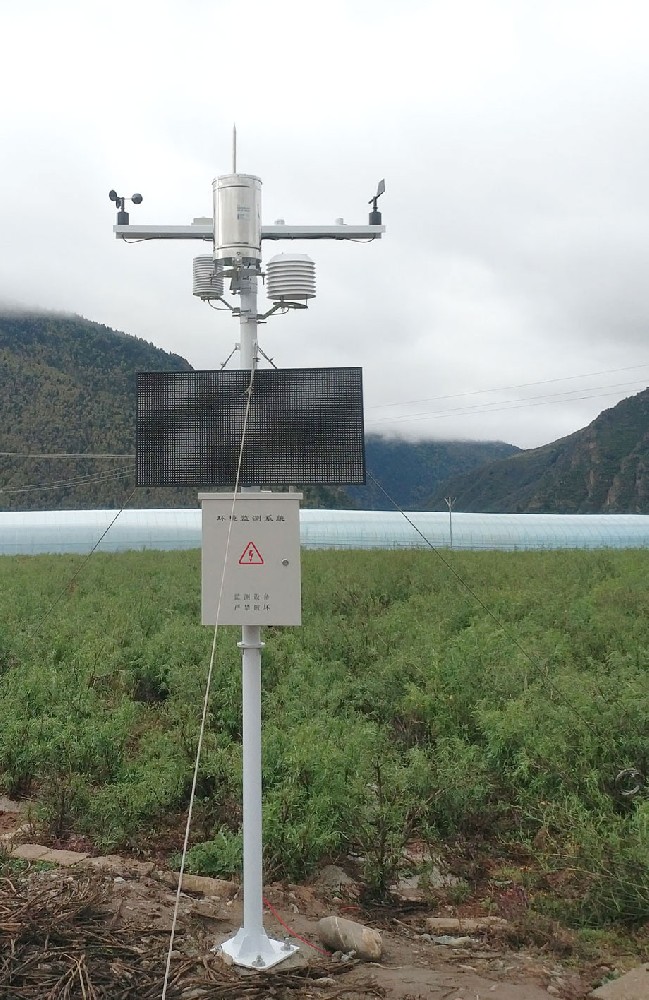
If cleaning, remounting or a wiring correction is needed, record the intervention time and retain the as-found readings. Repeat the comparison afterward under suitable conditions. A successful communication test after repair is not the same as a measurement comparison, and an adjustment should not erase the original evidence.
Where the difference remains unexplained, send the report for technical review or arrange an appropriate calibration service. Do not overwrite historical data with a newly chosen offset. Keep any corrected analytical series separate and document its method. Set future inspection or calibration intervals from the instrument, contract and observed performance rather than assuming that every channel needs the same annual procedure.
Usually it is insufficient. Check comparable exposure, timing, stabilization and reference quality, then repeat observations over the relevant conditions. Formal acceptance requires the agreed method and decision rule, not merely a visible difference on two screens.
Only after establishing what caused the difference and whether an adjustment is appropriate for that sensor and application. A solar-heating error can vary through the day; a single offset can conceal it and introduce error elsewhere.
No. Two instruments can follow the same changes while one remains consistently higher. Report the actual paired differences and their conditions, not only a correlation value. The reference and comparison uncertainty still matter.
No. The +/-4% figure is tied to the specified indoor static test at 2 mm/min. Catch exposure, level, contamination and rainfall behavior affect field comparisons. Use a method suited to the intended acceptance or service question.
Send the channel model and output, matched raw readings, reference details, timestamps, settings and exposure photographs. Include the intervention history and whether the discrepancy is present locally, remotely or both. This supports a targeted decision about configuration, installation, calibration or replacement.
A weather station comparison report is useful when another engineer can understand what was compared and reproduce the check. Preserve the initial state, use equivalent observations and trace the data path. Adjust or replace an instrument only when the evidence supports that action.
Prev:Dust and Noise Event Review: Check Activity, Wind and Measurement Validity
Next:Battery Safety Use Guidelines for Weather Station Equipment
Related recommendations
Sensors & Weather Stations Catalog
 Agriculture Sensors and Weather Stations Catalog-NiuBoL.pdf
Weather Stations Catalog-NiuBoL.pdf
Agriculture Sensors Catalog-NiuBoL.pdf
Water Quality Sensor Catalog-NiuBoL.pdf
Related products
 Combined air temperature and relative humidity sensor
 TDR Soil Moisture & Temperature Sensor for irrigation| RS485 |4-20mA| NBL-S-THR
 Soil pH sensor RS485 soil Testing instrument soil ph meter for agriculture |NBL-S-PH
 Wind Speed sensor Output Modbus/RS485/Analog/0-5V/4-20mA
 Tipping bucket rain gauge for weather monitoring auto rainfall sensor RS485/Outdoor/stainless steel
 Pyranometer Solar Radiation Sensor 4-20mA/RS485


Screenshot, WhatsApp to identify the QR code
WhatsApp number:+8615367865107
(Click on WhatsApp to copy and add friends)

