





— Blogs —
—Products—
 Consumer hotline +8618073152920
 WhatsApp:+8615367865107
Address:Room 102, District D, Houhu Industrial Park, Yuelu District, Changsha City, Hunan Province, China
Product knowledge
Time:2026-05-26 14:14:29 Popularity:369
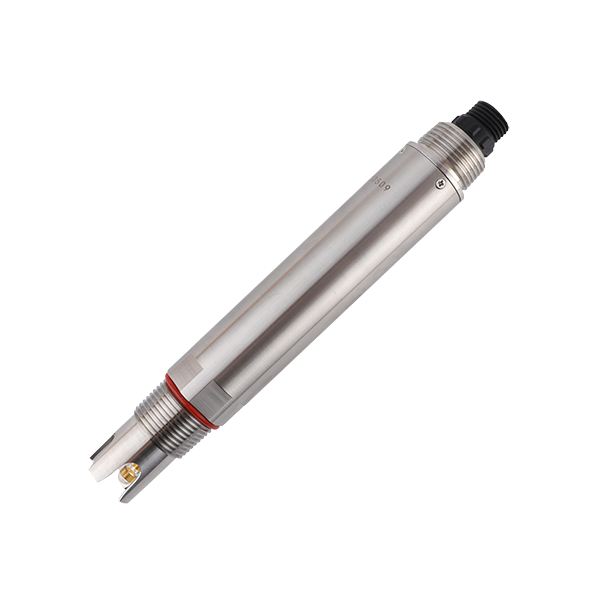
In municipal water supply, industrial circulating water and wastewater treatment projects, maintaining a reasonable residual chlorine concentration is the core means to ensure water quality safety and inhibit secondary microbial growth. As a professional industrial sensor manufacturer, NiuBoL is committed to providing global EPC contractors and system integrators with high-stability, low-maintenance-cost online water quality monitoring solutions.
In water disinfection monitoring, two basic concepts must be strictly distinguished:
Residual Chlorine (Free Chlorine) vs Chloride Ion: Residual chlorine usually refers to the free available chlorine remaining in water after chlorination disinfection (mainly in the form of HClO hypochlorous acid and ClO- hypochlorite), which has strong oxidizing and bactericidal capabilities. Chloride ion (Cl-) is a stable ion without bactericidal activity. The two are completely different in engineering logic.
"Consumption and Residual" Engineering Balance: The total chlorine added to water is divided into two parts. One part is the chlorine demand, used to kill bacteria, microorganisms and oxidize organic matter in water; the other part is residual chlorine.
Process Control Range: Maintaining an appropriate amount of residual chlorine can ensure the continuous bactericidal ability at the end of the pipe network. However, excessive residual chlorine will accelerate the corrosion of the water transmission pipe network, produce disinfection by-products (such as trihalomethanes), and greatly increase operating costs. Therefore, refined control of residual chlorine is the core task of industrial water quality monitoring systems.
In industrial online monitoring, the choice of measurement method directly affects the total cost of ownership (TCO) and unattended capability of the system.
Traditional laboratory or portable measurements mostly use DPD reagent colorimetric method. Its main disadvantages include:
High reagent dependence: Each measurement requires consumption of chemical reagents, which is not suitable for high-frequency, continuous online monitoring.
Poor anti-interference ability: Measurement accuracy is easily affected by the optical interference of the water sample's own color, chromaticity and turbidity.
High maintenance cost: Automated colorimetric flow path is complex, fluid pump tubes are prone to aging, and it is difficult to operate for a long time in the field or unattended sites.
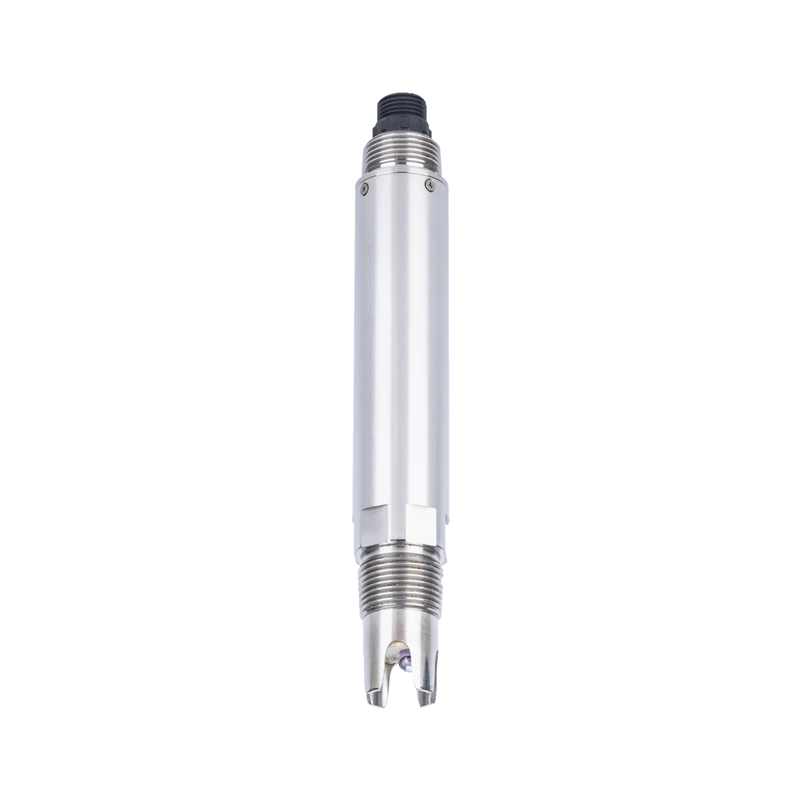
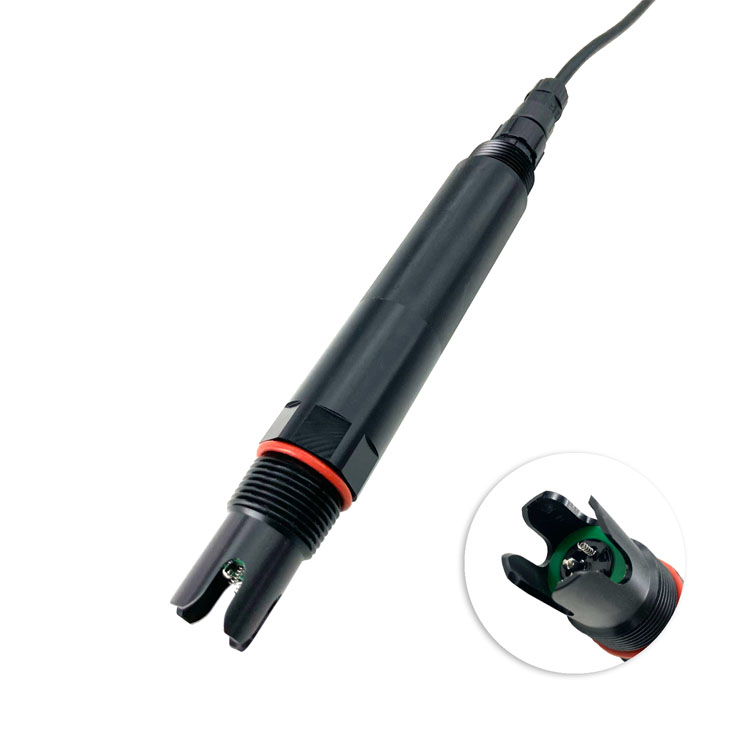
NiuBoL's NBL-WQ-CL online residual chlorine analyzer (online residual chlorine sensor) adopts the constant voltage method principle:
Working Principle: A specific polarization voltage is applied between the polarized electrode and the reference electrode. When the water sample flows through the electrode surface, free chlorine (HClO) undergoes an electrochemical reduction reaction at the cathode, and the current intensity generated is directly proportional to the concentration of free chlorine.
This method brings significant advantages to industrial sites:
No reagent consumption: It is a non-chemical reagent measurement with zero reagent pollution.
Fast response speed (T90 less than 90s): It can capture water quality changes in real time and directly provide real-time feedback for dosing control loops.
Strong anti-interference ability: The measurement signal is based on electrochemical current and is completely unaffected by water sample turbidity and color.
In field and industrial site deployments, environmental complexity may cause abnormal instrument operation. The following is a troubleshooting manual for field engineers:
Engineering Cause (Root Cause):
Power wiring error or shielding layer not grounded, resulting in digital communication interruption.
The sensor has not undergone sufficient polarization time after being connected to the system, and the internal electrochemical equilibrium has not been established.
The water body actually does not contain effective free chlorine (e.g., completely consumed by reducing substances).
Field Fix:
Use a multimeter to check whether the DC 12-24V power supply is normal and verify the RS485 A/B line sequence.
After initial power-on or power-off restart, the sensor must be continuously powered and polarized for more than 2 hours before reading data.
Collect on-site water samples and compare with portable DPD equipment to confirm the presence of residual chlorine in the water.
Prevention Suggestion: Strictly follow the standard wiring diagram for construction, ensure sufficient control cabinet power supply, and reserve polarization buffer time after system power-off and restart.
Engineering Cause (Root Cause):
Excessive fluctuation in inlet flow or flow rate, failing to maintain constant flow velocity.
Bubbles form in the flow cell and adhere to the electrode measurement sensitive surface.
The electrode surface is subject to physical pollution such as oil stains and biofilms.
Field Fix:
Adjust the front inlet valve to control the flow into the flow cell within a constant range of 30~60 L/h.
Tilt the flow cell or briefly increase the water flow to flush away surface bubbles.
Use a soft cloth dipped in diluted cleaning agent or a small amount of alcohol to wipe the electrode surface.
Prevention Suggestion: It is recommended to install a flow stabilization device to avoid installing the sensor directly at pump outlets or other high turbulence and multi-bubble positions.
Engineering Cause (Root Cause):
The water sample pH value exceeds the instrument's automatic compensation range. The dissociation degree of hypochlorous acid (HClO) is highly dependent on pH. When pH is greater than 9, free chlorine mainly exists in the form of ClO-, which will cause the measurement result to be seriously low.
Long-term lack of calibration, passivation on the surface of gold/platinum cathode.
Field Fix:
Test the pH value of the on-site water sample to ensure it is within the nominal range of 4~9. If pH is chronically high, introduce a pH sensor for linkage compensation.
Perform the standard "two-point calibration method": use chlorine-free water to calibrate the zero point, and then use standard sample water of known concentration for slope calibration.
Prevention Suggestion: Establish a maintenance cycle of regular calibration every 1 to 2 months to ensure range linearity.
Engineering Cause (Root Cause):
The electrode is in a water-deficient and dry state for a long time, causing damage to the sensitive membrane or electrochemical active surface.
Excessive water pressure (greater than 0.2MPa) causes physical structure damage.
Field Fix:
If the reading is sluggish due to drying, try soaking it in tap water for 24 hours to activate the electrode.
If the membrane or internal silver electrode suffers irreversible physical damage, the sensor body needs to be replaced.
Prevention Suggestion: During process water shutdown, the flow cell outlet valve must be closed or the sensor removed and soaked in clean water. Dry burning is strictly prohibited.
From the perspective of water plant operation logic, online monitoring of residual chlorine is directly related to system asset protection and safety compliance:
Biological fouling and bacterial regeneration control: In water transmission pipe networks and cooling towers, if residual chlorine is too low, bacteria and algae will multiply rapidly, forming biofilms, leading to pipeline blockage and decreased heat exchange efficiency. This is particularly obvious in high-humidity, high-basic-water-temperature environments such as Southeast Asia drinking water systems.
Process operation compliance: For Europe environmental monitoring compliance or Africa municipal water treatment projects, effluent residual chlorine indicators are the core of legally mandatory compliance.
Asset protection: Avoid irreversible oxidative damage to core equipment such as downstream reverse osmosis (RO) membranes and metal pipes caused by high-oxidizing environments from excessive chlorine dosing.
To give full play to the best engineering performance of the NBL-WQ-CL residual chlorine sensor, it is recommended to follow the following specifications during on-site deployment:
1. Flow cell installation specification: The constant voltage electrode must be used with a flow cell. It is strictly prohibited to throw it directly into an open pool. Keep the water flow speed between 30~60 L/h. Too low water flow will cause insufficient free chlorine replenishment on the electrode surface, resulting in low readings.
2. Rigid requirements for polarization time: After initial installation or replacement of the sensor, it must be powered and polarized for at least 2 hours. Calibration and commissioning can only be performed after the chemical potential on the electrode surface is stable.
3. Long-term shutdown protection: During production line shutdown or water cut-off, the flow cell should be kept filled with the measured liquid or clean water to ensure the electrode is always in a wet state.
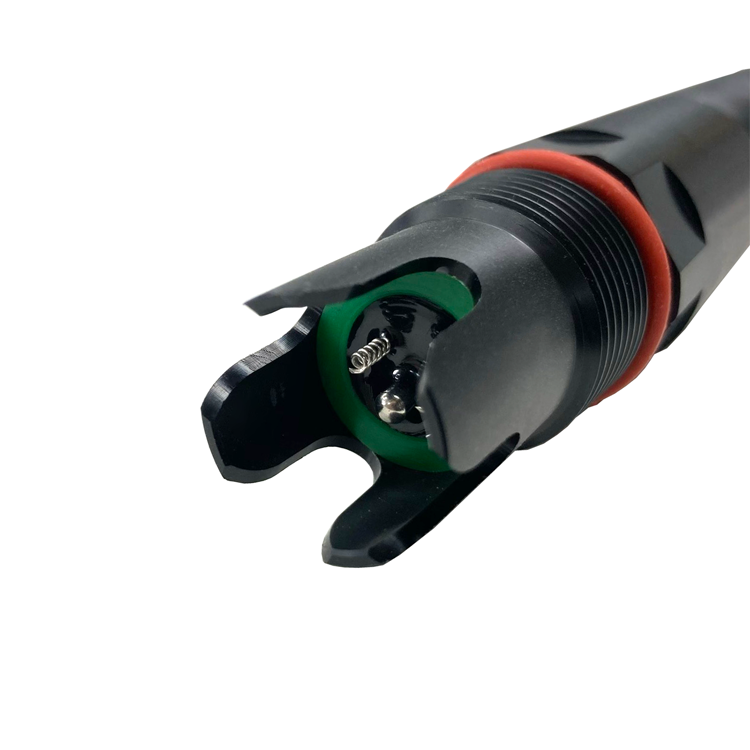
| Parameter Item | Standard Specification & Technical Index (Model: NBL-WQ-CL) |
|---|---|
| Shell Material | ABS / PC alloy material |
| Measurement Principle | Industrial-grade Constant Voltage Method |
| Range | 0~2.000 mg/L (HClO / Free Chlorine) |
| Resolution | 0.001 mg/L |
| System Accuracy | ±5% or ±0.05 mg/L, temperature accuracy ±0.3℃ |
| Response Time | T90 less than 90 seconds |
| Minimum Detection Limit | 0.05 mg/L |
| Temperature Compensation | Pt1000 Automatic Temperature Compensation (ATC) |
| Output Interface | Standard RS-485 (Modbus RTU protocol) |
| Operating Conditions | Temperature 5~50℃, water pressure ≤ 0.2MPa, pH 4~9 |
| Protection Level | IP68 (probe part) |
| Overall Power Consumption | 0.2W @ 12VDC |
NiuBoL sensors (RS485 chlorine probe) are specially designed for modern industrial automation. They do not rely on cumbersome traditional split transmitters and can be directly integrated into industrial networks:
[ NBL-WQ-CL Sensor ] --(RS485 Modbus RTU)--> [ Field PLC / Edge Gateway ] --> [ SCADA / Cloud Control Center ]
Modbus RTU Protocol Simplifies Integration: The sensor uses standard Modbus RTU digital protocol and outputs through a two-wire RS485 interface. Engineers only need to configure the corresponding baud rate (default 9600bps) and slave address to directly read residual chlorine and temperature data in 16-bit registers.
Linkage Dosing Loop (PID Control): In Middle East desalination plants or industrial circulating water systems, the SCADA system can directly read the real-time residual chlorine value of NBL-WQ-CL as a feedback variable input to the PID controller to automatically adjust the stroke and frequency of the sodium hypochlorite metering pump, achieving unattended closed-loop dosing.
Low Power Consumption Advantage: The ultra-low power consumption of 0.2W makes it very easy to integrate into field solar-powered RTU collection boxes, making it an ideal choice for remote pipe network monitoring points.
Q1. Does the constant voltage residual chlorine sensor need to replace electrolyte and membrane?
Answer: NBL-WQ-CL adopts a membrane-free and electrolyte-free constant voltage electrode structure. There is no problem of membrane perforation or electrolyte depletion. Daily maintenance only requires regular cleaning of physical dirt on the electrode surface, greatly reducing later operation and maintenance costs.
Q2. Will ozone and chlorine dioxide in water interfere with the sensor measurement?
Answer: Due to its operation under a specific polarization voltage, the sensor has high selectivity for free chlorine (HClO). However, if strong oxidizing substances (such as chlorine dioxide or high-concentration ozone) coexist, they will produce some cross-interference. When selecting, it is necessary to confirm the type of disinfectant on site.
Q3. Can the sensor be installed directly on the main pipeline?
Answer: No. Because the water pressure of the main pipeline (usually greater than 0.2MPa) and flow velocity fluctuations are large, it is easy to damage the electrode or cause unstable measurement. Water flow must be led out through a bypass and connected to a standard flow cell for measurement.
Q4. What is the specific impact of inlet pH fluctuation on measurement?
Answer: The constant voltage method mainly measures HClO in water. When pH is 4 to 7, free chlorine almost entirely exists in the form of HClO; when pH rises above 8, HClO will largely dissociate into ClO-. Therefore, this sensor is most suitable for systems with relatively stable pH values between 4 and 9.
Q5. Why is the reading very large or keeps jumping when first powered on?
Answer: This is a typical manifestation that the electrode has not completed polarization. The electrochemical layer on the electrode surface needs to be rebuilt after power-off. Please keep it powered on for more than 2 hours, and the reading will return to stability.
Q6. How to determine whether the electrode is contaminated?
Answer: If under the same sample water and flow rate, the instrument's response time is significantly slower, or after comparison with the standard DPD method, the measured value continues to be low and drifts again soon after calibration, it usually indicates that there is biofilm or scale attached to the electrode surface, which requires physical cleaning.
Q7. Can the cable be extended by yourself?
Answer: Yes. The sensor uses standard RS485 digital signal output with strong anti-interference ability. In actual projects, shielded twisted pair can be used to extend the cable up to 1200 meters.
Q8. Does your sensor support interoperability with mainstream European and American PLC systems?
Answer: Yes. NiuBoL's full range of digital sensors strictly follow the international standard Modbus RTU protocol and can seamlessly interconnect with mainstream PLCs such as Siemens, Schneider, Rockwell, and various IoT gateways.
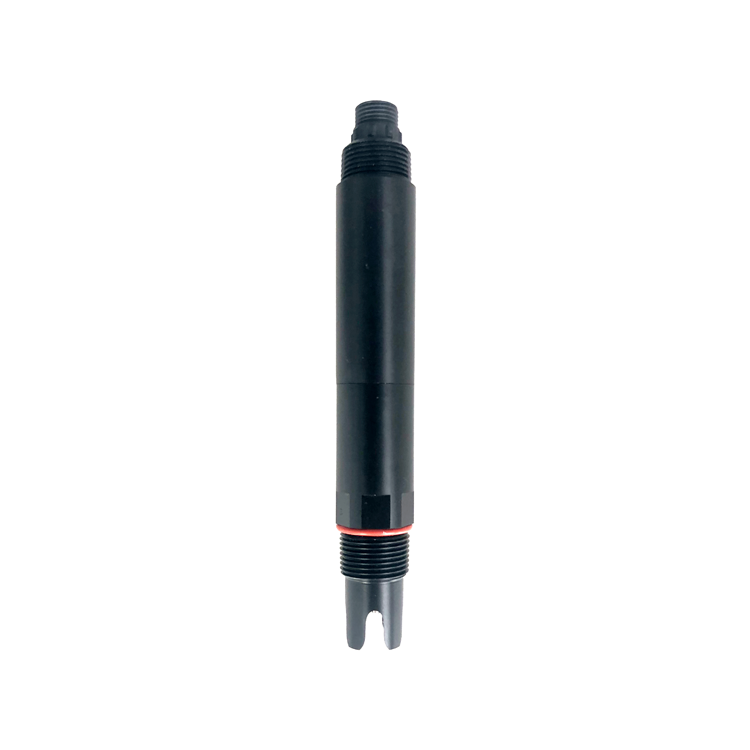
As a sensor innovation brand, NiuBoL not only provides standardized hardware but also focuses on providing overall monitoring selection solutions that comply with international standards.
When to contact us?
You are bidding and selecting equipment for municipal, swimming pool or industrial water treatment projects.
Your system needs to access low-power, solar-powered field wireless measurement and control networks.
Your SCADA system requires non-standard integration technical support or specific protocol adaptation.
Support we can provide:
Complete register map and Modbus development technical support.
Bulk project authorization and price protection for integrators and EPC contractors.
Customized shells and cable lengths for specific industrial corrosive environments.
Typical Application Industries:
Tap water plant pipe network monitoring, swimming pool chlorination control, hospital wastewater treatment, industrial cooling circulating water, beverage and food online water quality monitoring.
If you need to obtain an official quotation, product drawings or Modbus communication manual, please directly contact our sales and engineering support team. We will provide one-stop technical response.
 NBL-WQ-CL Water Quality Sensor Online Residual Chlorine Sensor.pdf
NBL-WQ-CL-4A Industrial-grade Online Residual Chlorine Sensor.pdf
NBL-WQ-CL-4S Series Online Water quality Residual Chlorine Sensor.pdf
Prev:Online Residual Chlorine Sensor: NBL-WQ-CL Constant Voltage Free Chlorine Monitoring System
Next:Optical Dissolved Oxygen Sensor for Wastewater Treatment: The Luminescence DO Monitoring Guide
Related recommendations
Sensors & Weather Stations Catalog
Agriculture Sensors and Weather Stations Catalog-NiuBoL.pdf
Weather Stations Catalog-NiuBoL.pdf
Agriculture Sensors Catalog-NiuBoL.pdf
Water Quality Sensor Catalog-NiuBoL.pdf
Related products
 Combined air temperature and relative humidity sensor
 TDR Soil Moisture & Temperature Sensor for irrigation| RS485 |4-20mA| NBL-S-THR
 Soil pH sensor RS485 soil Testing instrument soil ph meter for agriculture |NBL-S-PH
 Wind Speed sensor Output Modbus/RS485/Analog/0-5V/4-20mA
 Tipping bucket rain gauge for weather monitoring auto rainfall sensor RS485/Outdoor/stainless steel
 Pyranometer Solar Radiation Sensor 4-20mA/RS485

Screenshot, WhatsApp to identify the QR code
WhatsApp number:+8615367865107
(Click on WhatsApp to copy and add friends)

