





— Blogs —
—Products—
 Consumer hotline +8618073152920
 WhatsApp:+8615367865107
Address:Room 102, District D, Houhu Industrial Park, Yuelu District, Changsha City, Hunan Province, China
Product knowledge
Time:2025-12-09 15:51:47 Popularity:932
Soil is the foundation of plant growth, and its condition directly affects the safety and efficiency of agricultural production. Among numerous soil indicators, soil electrical conductivity (EC) is a key comprehensive indicator for assessing soil salinity levels.
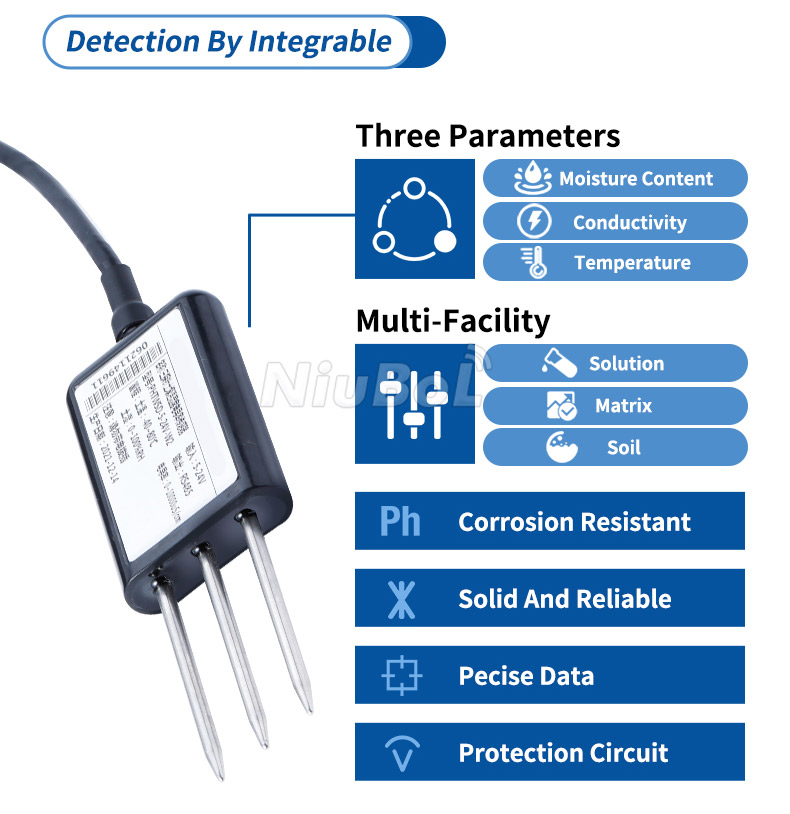
A soil conductivity sensor is a professional device used to measure the concentration of soluble salt ions in soil. When these salts dissolve in soil water, they exist as ions, forming a conductive medium. Higher EC values indicate higher total salt content.
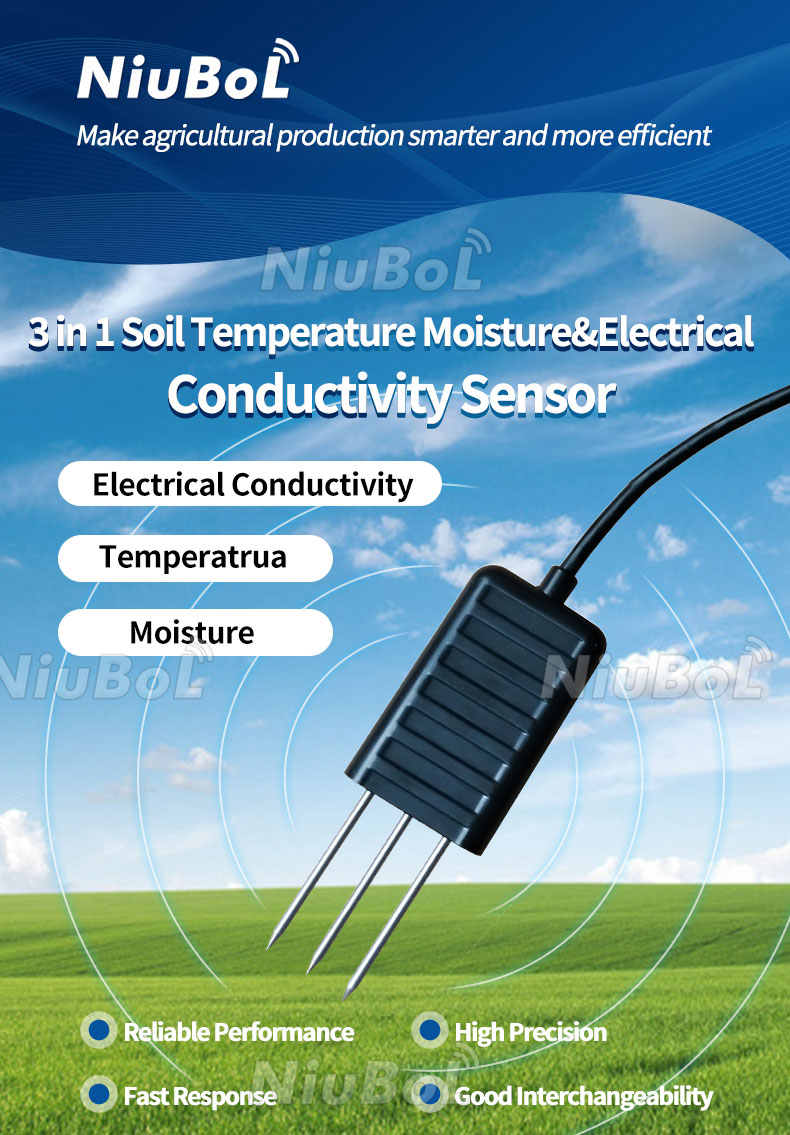
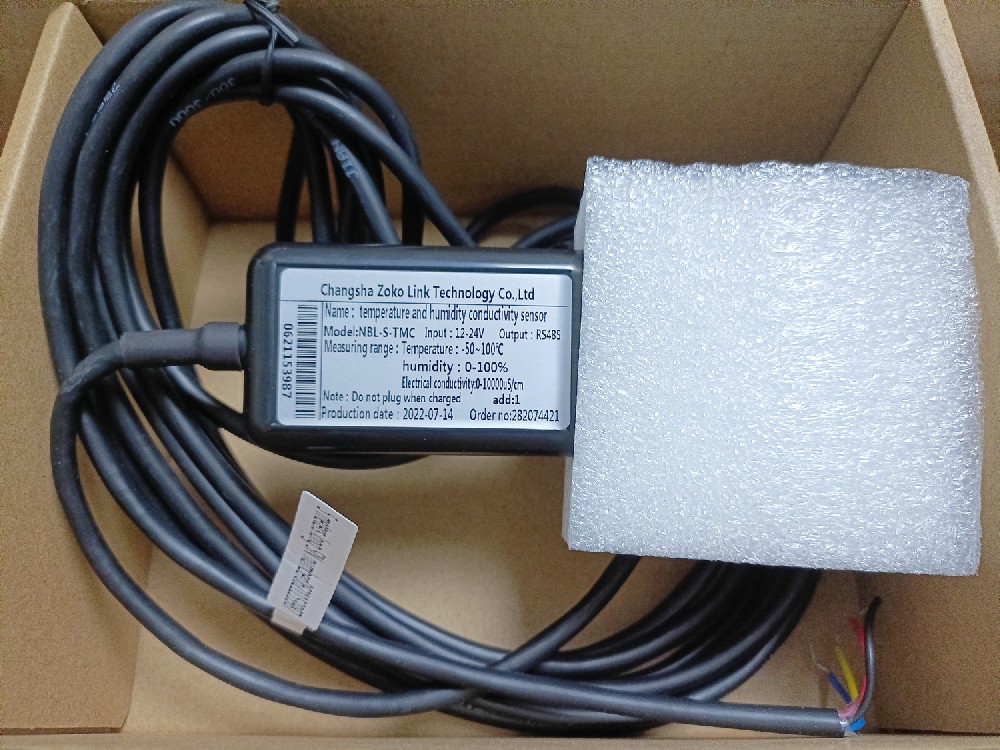
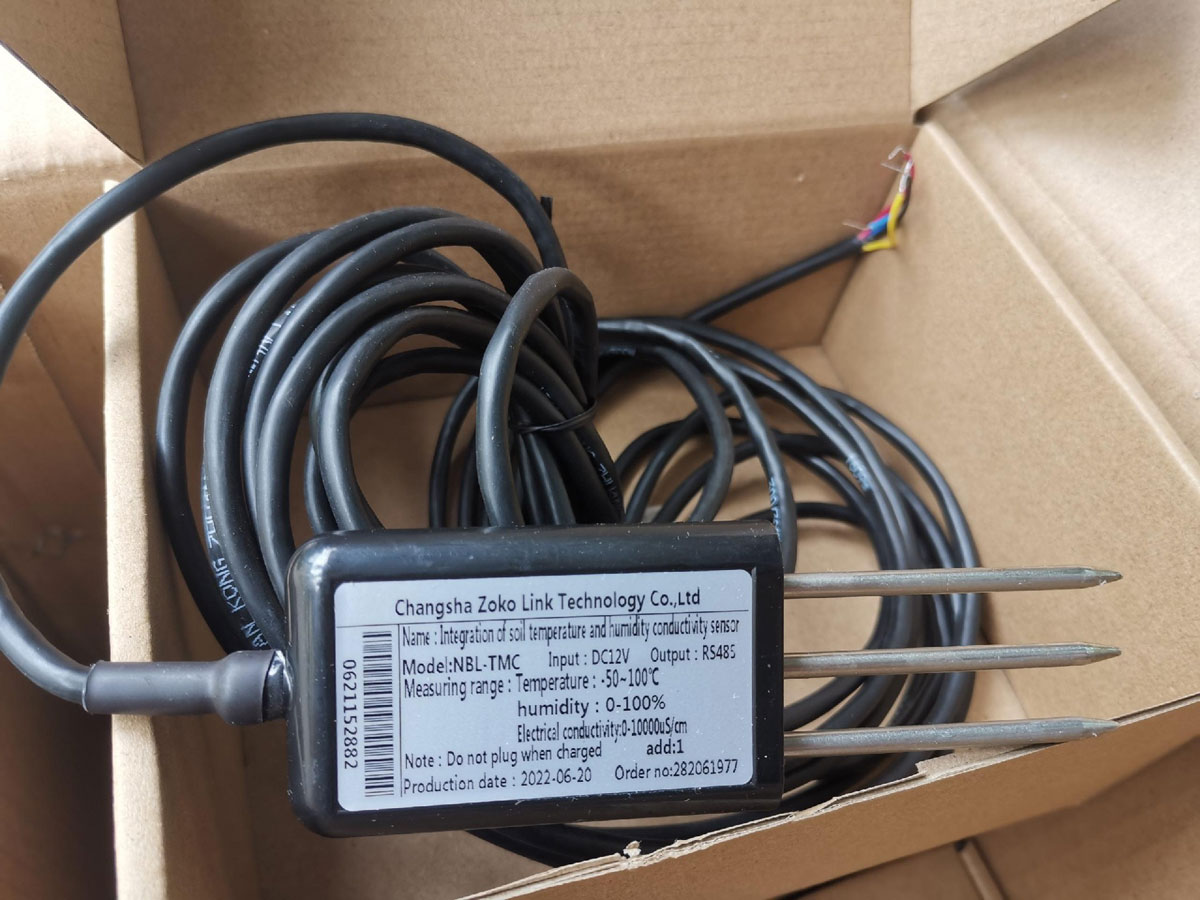
NiuBoL’s NBL-S-TMC soil conductivity sensor is a high-performance three-in-one sensor that integrates temperature, moisture, and conductivity (EC) measurement. It enables online, real-time, and accurate monitoring of soil water-salt dynamics, making it an ideal tool for studying soil environments and preventing salinization.
In recent years, unreasonable fertilization and improper water-heat management (e.g., strong evaporation, lack of rainwater leaching) have caused soil salt content to rise annually, leading to soil acidification and secondary salinization.
Salinization early warning: Real-time EC monitoring helps track the degree of soil salinization and pollution, providing data support for soil improvement.
Guiding fertilization and irrigation: High EC values can inhibit crop uptake of water and nutrients. EC monitoring enables scientific irrigation and fertilization decisions, avoiding unnecessary inputs.
Crop growth environment: Different crops have varying salt tolerance levels. EC data is a critical basis for determining whether soil is suitable for crop growth.
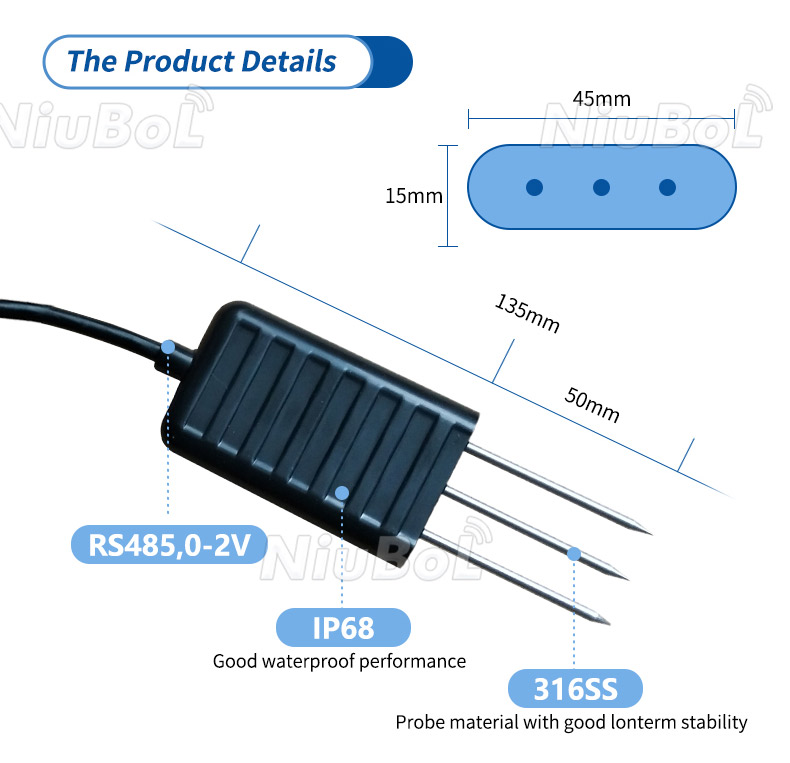
The NBL-S-TMC sensor combines conductivity measurement technology with advanced soil moisture measurement principles to achieve high-precision, multi-parameter synchronous monitoring.
This is a three-in-one sensor with the following measurement principles:
Soil Conductivity (EC): Directly measures the conductivity of soil extract using specially designed electrodes. Higher conductivity indicates higher salt content. The sensor has a simple structure and stable performance, ensuring reliable field monitoring.
Soil Moisture: Uses the FDR (Frequency Domain Reflectometry) method. By measuring the soil’s dielectric constant, it accurately reflects the true volumetric water content of various soil types — one of the current international standard methods.
Soil Temperature: Employs high-precision semiconductor or thermistor elements with built-in calibration and compensation circuits for accuracy across a wide temperature range.
| Component | Technical Features | Key Advantages |
|---|---|---|
| Probe/Electrode | Specially treated alloy material and anti-corrosion electrodes | Withstands strong external impacts, resistant to acid/alkali corrosion, suitable for long-term burial in soil |
| Protection Level | IP68 fully sealed | Can be submerged in water for long-term use, extremely high reliability for continuous dynamic monitoring |
| Data Output | RS485 interface with Modbus protocol | High transmission efficiency, strong anti-interference, easy integration with data loggers or cloud platforms |
| Measurement Performance | High accuracy, fast response, excellent interchangeability | Insert-type probe ensures precise and rapid measurement. Wide EC range (0–10000 μS/cm) |
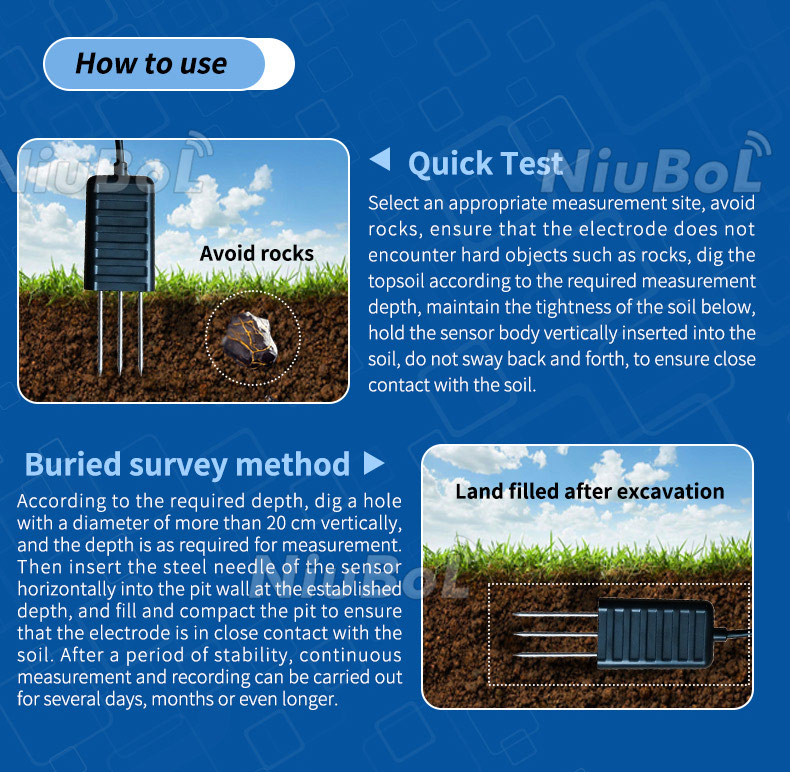
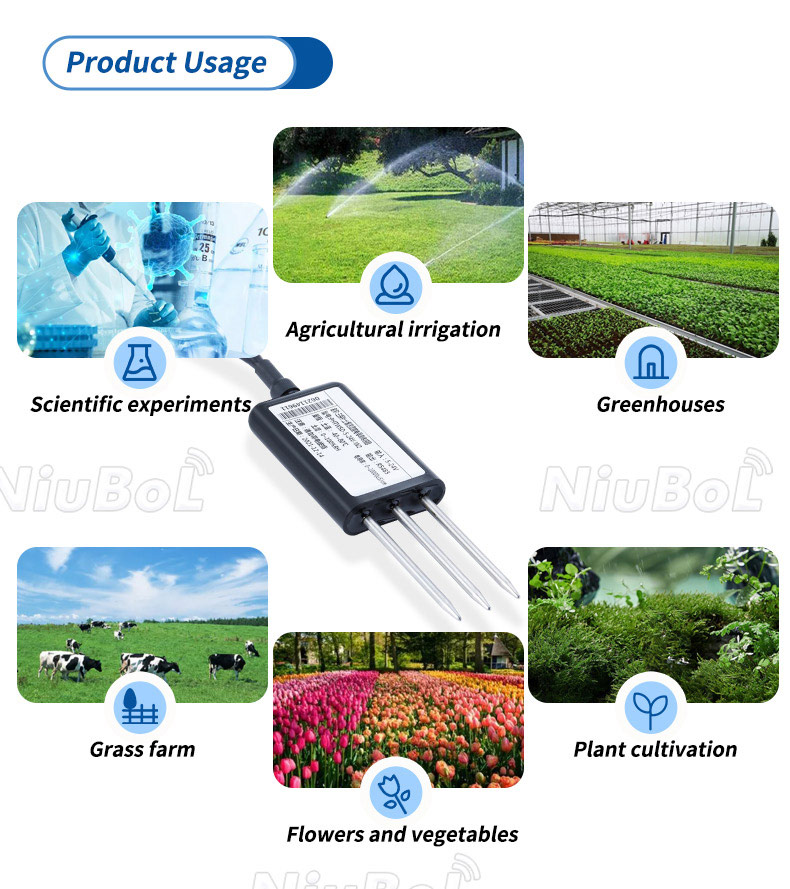
The NBL-S-TMC sensor, with its multifunctionality and high reliability, is widely used in key areas related to soil environmental monitoring.
1. Smart Agriculture & Precision Irrigation
Soil moisture monitoring: Simultaneously measures moisture, temperature, and EC, providing comprehensive data for irrigation, greenhouses, flower/vegetable cultivation.
Saline soil improvement: Monitors the formation and evolution of saline soil, guiding water washing, drainage, and amendment application to improve land utilization.
2. Grasslands, Pastures & Ecological Environment
Environmental assessment: Used in grasslands and scientific experiments to monitor soil salinity and water-heat dynamics, evaluating vegetation growth and soil quality relationships.
Pollution tracing: In contaminated areas, EC serves as a rapid indicator of mixed salt content, helping assess pollution status.
3. Scientific Research & Rapid Soil Testing
Long-term observation: Supports buried measurement for continuous monitoring over days, months, or longer — ideal for long-term research projects.
Field rapid testing: Simple operation enables quick on-site data acquisition, suitable for agricultural technicians’ field diagnostics.
| Q Common Questions | A NiuBoL Answers and Recommendations |
|---|---|
| 1. What does soil EC value reflect? | EC reflects the total concentration of soluble salt ions in soil solution — a key indicator for salinization or acidification. Excessively high EC inhibits crop water absorption. |
| 2. Can the sensor be buried in soil long-term? | Yes. NBL-S-TMC has IP68 protection and corrosion-resistant probes, fully sealed for long-term burial or submersion in water. Ensures high reliability in harsh environments. |
| 3. What are the advantages of FDR for soil moisture? | FDR measures dielectric constant to directly reflect volumetric water content with high accuracy, stability, and minimal salt interference. More stable and reliable than traditional methods. |
| 4. How to ensure accuracy in rapid testing? | Avoid rocks, insert vertically without shaking, ensure tight soil contact. Take multiple measurements in a small area and average. Best after irrigation/rainfall when water has fully infiltrated. |
| 5. Requirements for buried installation? | Dig a vertical pit, insert sensor horizontally into pit wall, backfill and compact tightly. Allow stabilization time before recording to eliminate disturbance. |
| 6. Why RS485 output? | RS485 and Modbus are industrial standards with strong anti-interference, long transmission distance, and multi-device networking support. Facilitates fast integration into various systems. |
| 7. Is 0–10000 μS/cm range sufficient? | Covers most scenarios from normal to severely salinized soil. Higher ranges available for extreme environments upon request. |
| 8. Precautions under strong sunlight? | Black casing heats rapidly in direct sun. Provide shading to prevent high temperature affecting accuracy. Shading is crucial for outdoor precision. |
| 9. How to install in hard soil? | Pre-drill a hole (smaller than probe diameter), insert, and compact soil. Never strike or shake violently to avoid electrode damage. |
| 10. Can cable length be customized? | Yes, default is 5 m, but longer cables can be customized. Signal may degrade beyond 200 m — consult professionals. |
Soil conductivity sensors, especially NiuBoL’s NBL-S-TMC three-in-one sensor, are critical tools driving modern agriculture and environmental monitoring toward intelligence and precision. The high-accuracy EC, moisture, and temperature data they provide help farmers and researchers quickly assess soil health and serve as the decision-making foundation for scientific fertilization, precision irrigation, and salinization prevention.
With IP68 protection, corrosion-resistant probes, and stable performance, NiuBoL soil sensors ensure reliable long-term dynamic monitoring in harsh outdoor environments, playing a vital role in ensuring agricultural product quality and maintaining soil ecological health.
Would you like to learn more about how NiuBoL integrates these sensor data into a smart agriculture cloud platform?
 NBL-S-TMC-Soil-temperature-and-moisture-conductivity-sensor.pdf
Prev:PV Module Temperature Sensor: The Key to Precision Operation of Photovoltaic Power Plants
Next:NiuBoL Smart City Environmental Monitoring Solution – Full Analysis
Related recommendations
Sensors & Weather Stations Catalog
Agriculture Sensors and Weather Stations Catalog-NiuBoL.pdf
Weather Stations Catalog-NiuBoL.pdf
Agriculture Sensors Catalog-NiuBoL.pdf
Water Quality Sensor Catalog-NiuBoL.pdf
Related products
 Combined air temperature and relative humidity sensor
 TDR Soil Moisture & Temperature Sensor for irrigation| RS485 |4-20mA| NBL-S-THR
 Soil pH sensor RS485 soil Testing instrument soil ph meter for agriculture |NBL-S-PH
 Wind Speed sensor Output Modbus/RS485/Analog/0-5V/4-20mA
 Tipping bucket rain gauge for weather monitoring auto rainfall sensor RS485/Outdoor/stainless steel
 Pyranometer Solar Radiation Sensor 4-20mA/RS485

Screenshot, WhatsApp to identify the QR code
WhatsApp number:+8615367865107
(Click on WhatsApp to copy and add friends)

