





— Blogs —
—Products—
 Consumer hotline +8618073152920
 WhatsApp:+8615367865107
Address:Room 102, District D, Houhu Industrial Park, Yuelu District, Changsha City, Hunan Province, China
Product knowledge
Time:2025-12-10 15:13:35 Popularity:959
A radiation sensor is a device used to detect and measure electromagnetic radiation (such as light, heat, radio frequency, nuclear radiation, etc.). It senses the measured radiation information and converts it into electrical signals or other required forms according to a certain law to meet the needs of information transmission, processing, recording, and control.
In a broader classification, radiation sensors belong to radiation-sensitive or photosensitive elements capable of perceiving specific electromagnetic spectrum bands.
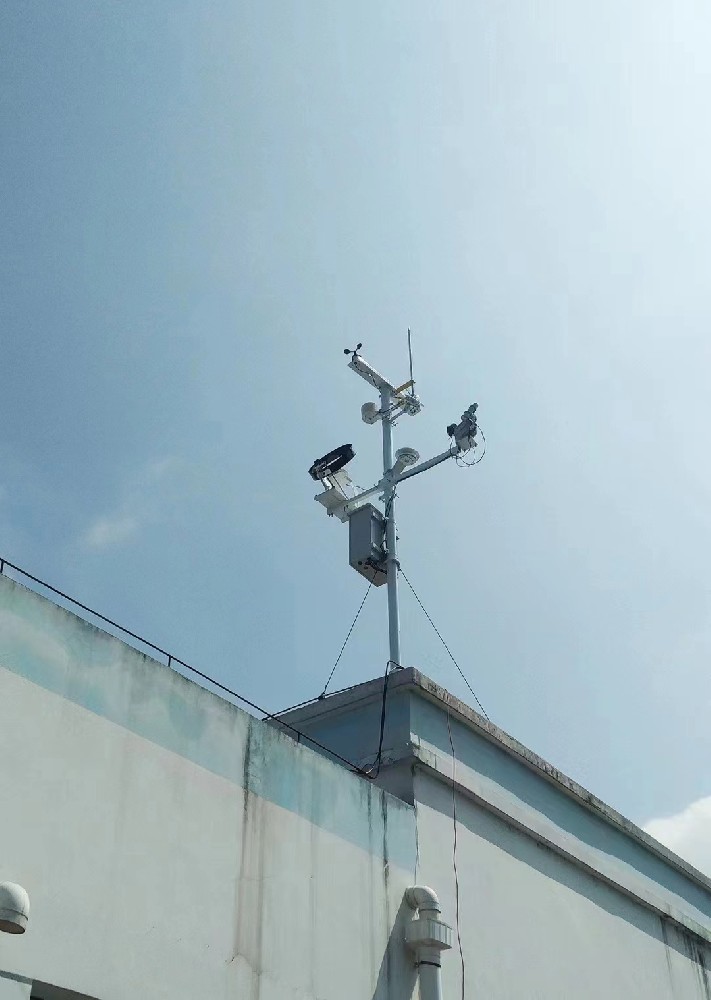
Among various radiation sensor types, the solar total radiation sensor (Pyranometer) is the most widely used. It is specifically designed to measure solar radiation reaching the Earth’s surface — total solar radiation (also known as shortwave radiation).
Total Solar Radiation: Refers to the radiation measured by a horizontally mounted instrument after sunlight (wavelength range 0.15–4.0 μm) passes through the atmosphere. It includes direct solar radiation and diffuse radiation scattered/reflected by the atmosphere and clouds.
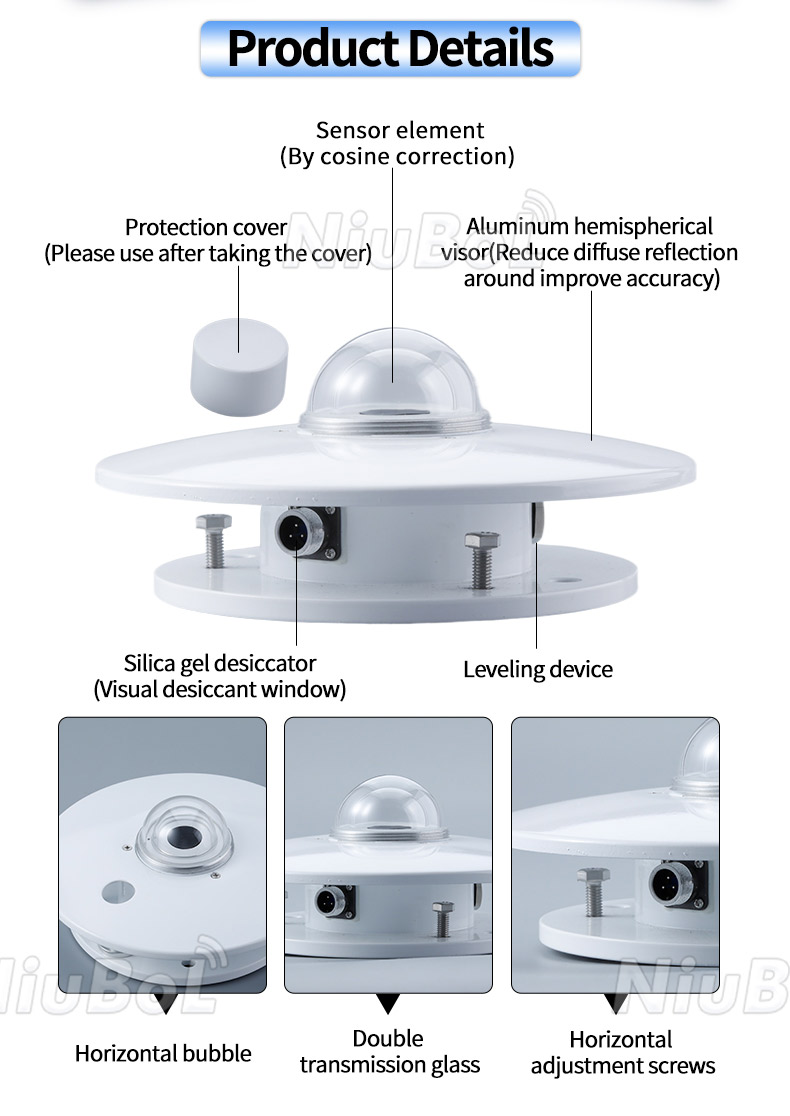
The Sun is the ultimate source of all energy on Earth. Precise monitoring and analysis of solar radiation changes are of great significance to human society and natural science research:
Solar Energy Utilization & Photovoltaic Power Generation:
• Determine the efficiency of solar panels converting solar energy into electricity
• Reference for deciding when to clean panels
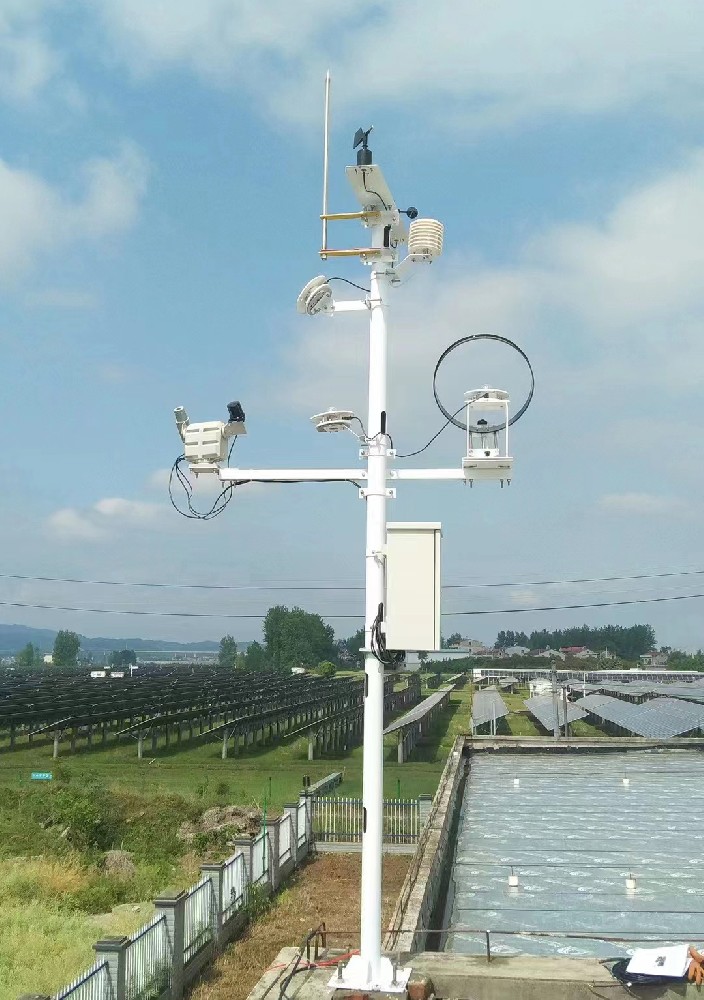
Sensors are typically mounted in the same plane as the array to measure actual received radiation
Meteorology & Climate Observation:
• Key input for weather forecasting models
• Long-term radiation trend analysis for climate change research
Agriculture & Ecological Research:
• Predict/quantify plant growth and crop yield
• Guide irrigation scheduling for golf courses and parks
Utilities: Predict natural gas and electricity demand for energy scheduling
Building Physics: Assess building thermal load and daylighting design
Other Fields: Atmospheric monitoring, oceanography, building material aging tests, etc.
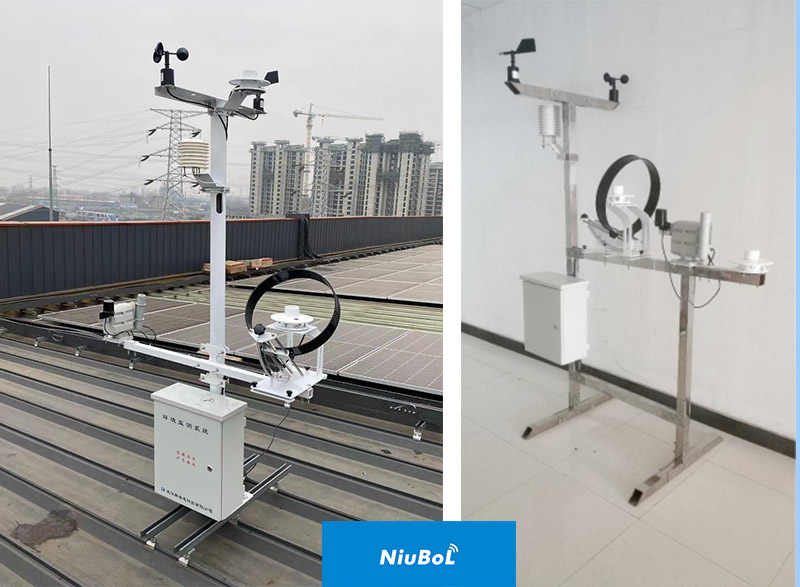
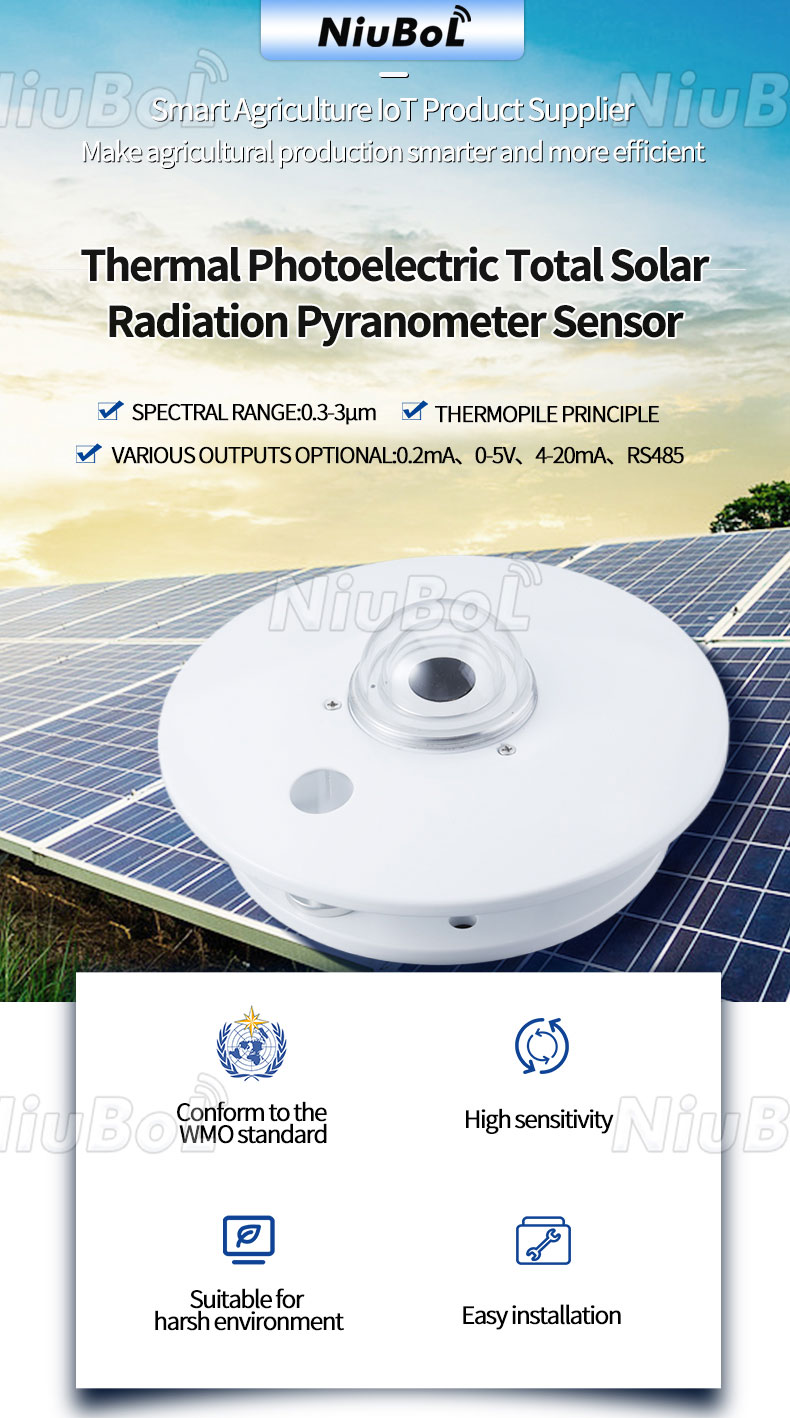
NiuBoL’s NBL-W-HPRS solar radiation sensor (Pyranometer) is based on the thermopile principle.
Sensing Element: Core element is a wire-wound electroplated multi-junction thermopile.
Radiation Absorption & Temperature Difference: The thermopile surface is coated with a high-absorption black coating. When solar radiation hits it, heat is absorbed, creating a temperature difference between hot junctions (surface) and cold junctions (inside the sensor).
Electromotive Force Output: According to the Seebeck Effect, this temperature difference generates an electromotive force (voltage signal). Within a certain linear range, the output voltage is proportional to incident solar irradiance (W/m²).
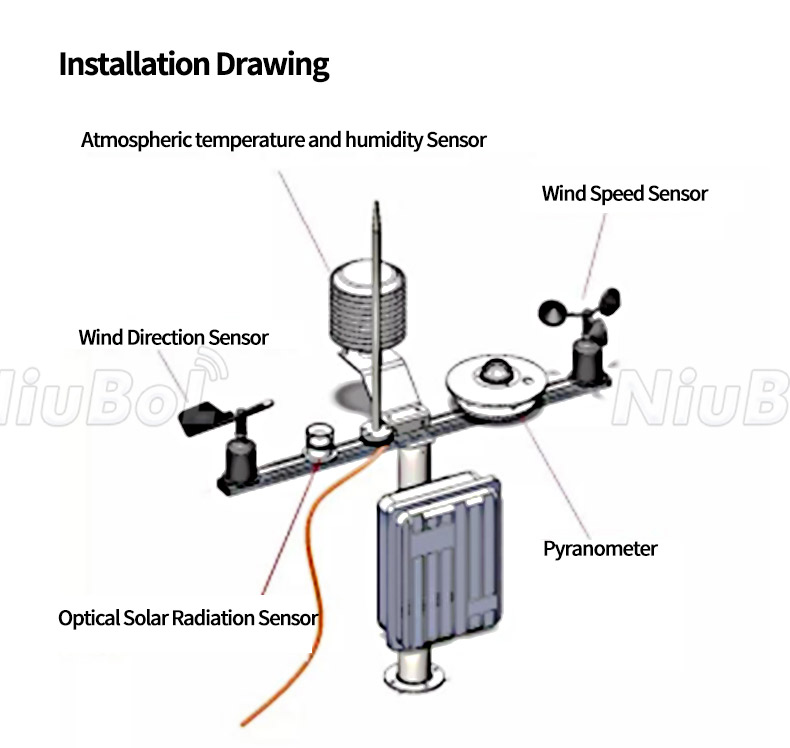
To ensure measurement accuracy and long-term stability, NBL-W-HPRS adopts precision structural design:
Double Transparent Glass Dome:
• Protects core sensing element and reduces environmental interference
• Outer dome: Protects against wind, rain, dust
• Inner dome: Blocks infrared radiation from the outer dome, reduces air convection impact on thermal balance
Temperature Compensation Circuit: Reduces ambient temperature effects on thermopile performance
Visible Desiccant Window: Allows monitoring of desiccant status for timely replacement
Level Bubble: Facilitates precise leveling during installation
| Parameter | Specification | Notes |
|---|---|---|
| Measurement Range | 0–2000 W/m² | Covers maximum intensity on clear days |
| Spectral Range | 0.3∼3 μm | Shortwave radiation range, meets total solar radiation standard |
| Sensitivity | 7∼14 μV/(W·m⁻²) | Ratio of radiation intensity to output voltage |
| Response Time | ≤35 s (99%) | Time to react to radiation changes |
| Annual Stability | ≤±2% | Long-term performance stability |
| Cosine Response | ≤7% (at 10° solar elevation) | Response to different incident angles |
| Operating Temperature | −40°C∼+50°C | Adapts to harsh climates |
| Output Types | Current (4–20 mA), Voltage (0–5 V), RS485 | Multiple industrial standard outputs |
| Pyranometer Type/Origin | Price Range (Estimate) | Features |
|---|---|---|
| Chinese-made (Mid-low/Industrial Grade) | 200–500 USD | Suitable for general industrial monitoring, agriculture, education — high cost-performance |
| International/European (High-end/Research Grade) | 1000–3000 USD | High accuracy, fast response, meets strict WMO standards (ISO 9060), used by meteorological bureaus, research institutions, high-precision PV plants |
Note: Prices are estimates only — actual quotes require contacting specific brands or suppliers.
Accuracy Grade & Standards: Compliance with WMO or ISO 9060 increases cost due to stricter manufacturing and calibration.
Principle: Thermopile-based pyranometers are more expensive than silicon photocell types due to better stability and wider spectral response.
Additional Features: Temperature compensation, heating, output type, protection level.
Brand & Origin: International brands command premium pricing due to technology accumulation and brand value.
| Q: Common Questions | A: NiuBoL Answers and Recommendations |
|---|---|
| 1.What is the difference between a total solar radiation sensor (Pyranometer) and an illuminance sensor (Lux sensor)? | Units: Pyranometer measures irradiance (W/m²); Lux sensor measures illuminance (Lux) Spectral range: Pyranometer 0.3–3.0 μm (full solar spectrum); Lux sensor 0.38–0.76 μm (visible light only) Applications: Pyranometer for solar energy; Lux sensor for human lighting perception |
| 2.What radiation types can NBL-W-HPRS measure? | Standard configuration measures total solar radiation (direct + diffuse). With accessories (shadow ring, inverted mounting), it can also measure reflected or diffuse radiation. |
| 3.What is “cosine response” and why is it important? | Cosine response is the sensor’s response error to different incident angles (solar elevation). Lower error means higher accuracy throughout the day, especially at sunrise/sunset. |
| 4.What is the role of desiccant in the sensor? | Absorbs internal moisture to prevent condensation on the dome or sensing element, which would severely affect light transmission and measurement accuracy. |
| 5.How to know if calibration is needed? | Recommended every 1–2 years. Also consider if data shows sudden deviation/drift or after physical shock/extreme conditions. |
| 6.What are the advantages of RS485 output? | Strong anti-interference, long-distance transmission, multi-device networking capability |
| 7.Advantages of thermopile over silicon photocell principle? | Full-spectrum response (0.3–3.0 μm), better temperature stability, more accurate total solar energy measurement |
| 8.Why are international brand pyranometers so expensive? | Strict international standards (ISO 9060), superior materials/processes, long-term low drift, rigorous WMO-recognized calibration |
| 9.What does response time ≤35 s mean? | When radiation changes suddenly (e.g., cloud cover), the sensor reaches 99% of final value within 35 seconds — acceptable for meteorological/climate applications |
| 10.Can this sensor measure infrared radiation? | Standard range 0.3–3.0 μm includes some near-infrared but is not a dedicated longwave radiometer (Pyrgeometer) |
| Q11: What certifications does NiuBoL have? | A11: CE, ISO9001, RoHS, and nationally recognized meteorological calibration certificates. |
Radiation sensors, especially NiuBoL’s NBL-W-HPRS total solar radiation sensor, are indispensable foundational equipment in modern meteorology, environmental monitoring, and new energy fields. Based on the thermopile principle, it achieves precise, stable, all-weather measurement of total solar radiation, effectively supporting applications from national meteorological monitoring to local PV plant efficiency evaluation and agricultural irrigation optimization.
When selecting a radiation sensor, balance technical parameters and price according to project accuracy requirements, budget, and application scenario (harsh environment resistance). For industrial or research applications seeking high performance and cost-effectiveness, NiuBoL NBL-W-HPRS provides a reliable solution compliant with WMO standards.
 NBL-W-SRS-Solar-radiation-sensor-instruction-manual-V4.0.pdf
NBL-W-HPRS-Solar-Radiation-Sensor-Instruction-Manual-V3.0.pdf
3-in-1 Fully Automatic Tracking Solar Radiation Meter.pdf
NBL-W-PSS Soiling Sensor Photovoltaic Dust Monitoring Instrument Data Sheet.pdf
Prev:NiuBoL Solar Photovoltaic Meteorological Solution and Products
Next:Construction Site Dust Monitoring Station: Role & Smart Monitoring System Practice
Related recommendations
Sensors & Weather Stations Catalog
Agriculture Sensors and Weather Stations Catalog-NiuBoL.pdf
Weather Stations Catalog-NiuBoL.pdf
Agriculture Sensors Catalog-NiuBoL.pdf
Water Quality Sensor Catalog-NiuBoL.pdf
Related products
 Combined air temperature and relative humidity sensor
 TDR Soil Moisture & Temperature Sensor for irrigation| RS485 |4-20mA| NBL-S-THR
 Soil pH sensor RS485 soil Testing instrument soil ph meter for agriculture |NBL-S-PH
 Wind Speed sensor Output Modbus/RS485/Analog/0-5V/4-20mA
 Tipping bucket rain gauge for weather monitoring auto rainfall sensor RS485/Outdoor/stainless steel
 Pyranometer Solar Radiation Sensor 4-20mA/RS485

Screenshot, WhatsApp to identify the QR code
WhatsApp number:+8615367865107
(Click on WhatsApp to copy and add friends)

