





— Blogs —
—Products—
 Consumer hotline +8618073152920
 WhatsApp:+8615367865107
Address:Room 102, District D, Houhu Industrial Park, Yuelu District, Changsha City, Hunan Province, China
Product knowledge
Time:2026-01-19 16:45:11 Popularity:951
Water level sensor principles differ in what they physically detect. A pressure probe senses liquid head, an ultrasonic or radar instrument senses surface distance, and a float system senses position or a switching threshold. The reported level is a conversion from that physical observation. Understanding the distinction helps engineers recognise which changes indicate real water movement and which can be caused by the measurement conditions.
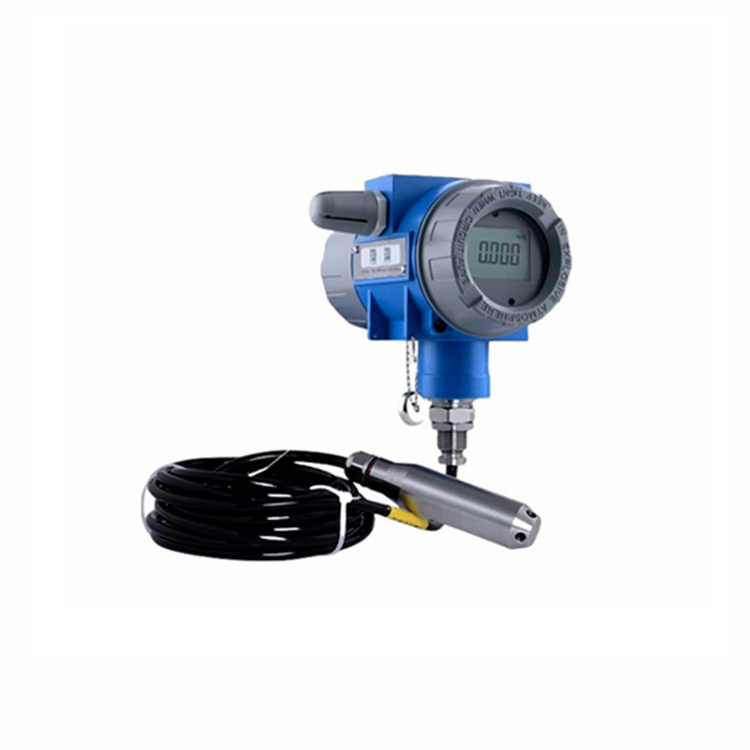
Two instruments can both display metres while measuring quite different things. One may report height above a submerged diaphragm; another may report the distance from an overhead antenna to the water. A third may already subtract the distance from an installation reference. The unit alone does not reveal the meaning.
| Principle | Direct observation | What is needed to report level |
|---|---|---|
| Hydrostatic | Pressure at a submerged sensing point. | Density, pressure reference and sensing-point position. |
| Ultrasonic | Round-trip travel time of sound. | Sound-speed treatment and installation reference. |
| Radar | Electromagnetic return related to surface distance. | Valid echo and antenna reference position. |
| Float or magnetostrictive arrangement | Float position or response at a set point. | Device geometry and the specified continuous or switching output. |
| Capacitive or optical arrangement | Change in an electrical or optical condition. | A suitable instrument design and medium-specific operating conditions. |
RS485 and 4–20 mA describe how a result is transmitted, not how water is detected. A Modbus register may contain distance, pressure, level or a status flag. Verify the quantity and conversion for the selected instrument instead of inferring the principle from its communication interface.
For a static liquid column, pressure difference is related to density, gravitational acceleration and height by ΔP = ρ × g × h. An atmosphere-referenced probe in an open tank can use that relationship to determine head above its diaphragm, provided its vent remains functional and the liquid density used for conversion is appropriate.
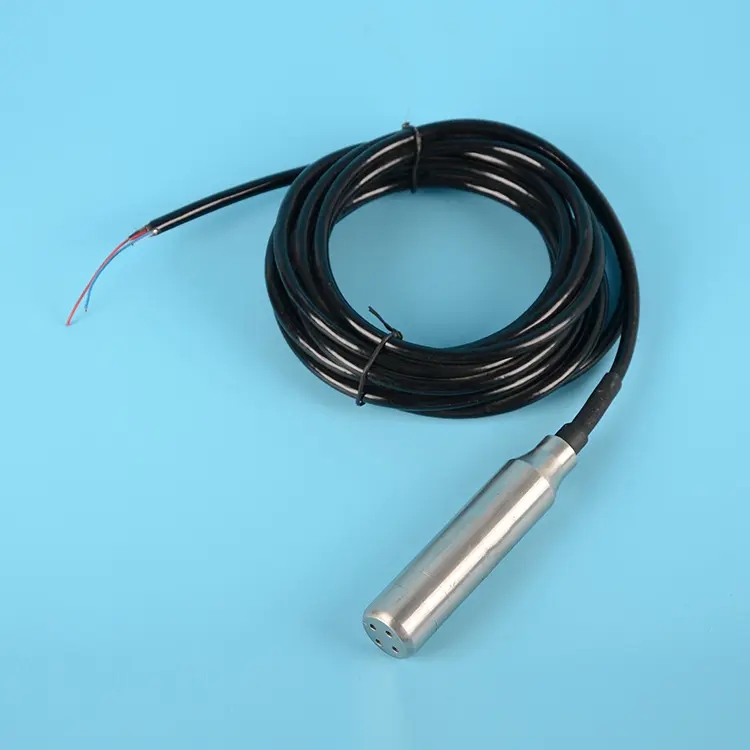
Temperature compensation has a specific role. It can correct temperature-dependent behaviour of the sensing element and electronics. It should not be assumed to identify liquid composition or automatically correct every density change. A temperature reading alone is not enough to determine the density of an arbitrary chemical mixture.
Dynamic pressure is another limitation of the simple static relationship. Direct flow against an inlet, pump suction disturbance or a moving probe can change pressure without an equivalent change in the representative free surface. Filtering may make that signal smoother without removing the underlying cause.
The NiuBoL NBL-L-WLPS RS485 configuration is a hydrostatic probe, while the NBL-L-SMP4603 current-output configuration supplies an analog signal. Their different outputs do not alter the need for a known pressure reference and fixed sensing position. Exact range, accuracy and materials remain configuration-specific.
An ultrasonic sensor emits an acoustic pulse and measures its return. Distance equals sound speed multiplied by round-trip travel time, divided by two. The division accounts for the outward and return journeys. The calculated distance is then converted to level using the installation reference.
Because the signal travels through the atmosphere above the water, temperature distribution and vapour conditions can influence the result. A local temperature measurement may not represent a strong gradient along the whole path. Foam, obstructions and condensation on the transducer can also weaken or redirect the return.
The near-field blind zone is a physical operating constraint, not an empty part of the measuring scale that can simply be removed with software. Check the closest possible surface position. A sensor may give a valid result at low water and fail when filling brings the surface too close.
Radar uses an electromagnetic signal rather than sound. Pulsed and FMCW instruments derive distance differently; FMCW varies the transmitted frequency and processes the relationship between the transmitted signal and its return. Its operation does not depend on the acoustic speed of sound in air.
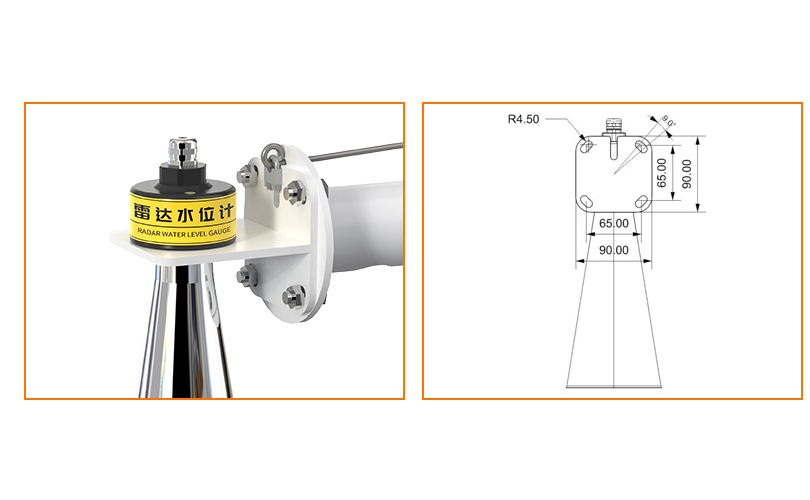
The NiuBoL hydrological radar configuration operates at 77–79 GHz, uses RS485 Modbus RTU and has an approximately 0.1 m blind zone. That is a concrete example of why radar should not be described as having no near-field limit. Obtain the limits for the actual selected instrument rather than transferring this value to every radar.
A narrow beam reduces some unwanted reflections but does not make them impossible. The target area widens with distance, so a pipe, wall or support may affect the reading at some levels and not others. Heavy foam can also change which surface provides the useful reflection.
Rain, waves and deposits on the antenna can increase measurement uncertainty or interrupt a usable echo. A nominal distance accuracy is not a guarantee of the same installed level accuracy under every condition. The mounting reference, echo quality and water surface still belong in the engineering assessment.

A buoyant float follows the liquid surface within the limits of its mechanical design. It may operate a switch at a particular height or form part of a continuous position instrument. Those outputs are not interchangeable. A float that sticks against a guide can stop representing the surface even though the electrical circuit remains intact.
In a magnetostrictive position instrument, timing of a mechanical wave in a waveguide is used to locate the magnetic float. It is not the time taken for the float to travel through the tank. Installation, float compatibility and the actual measuring assembly determine the usable range and performance.
A capacitive device responds to the electrical properties around its sensing structure. Changing liquid properties or buildup can change its response. An optical point detector responds to a change at its optical interface; fouling and the selected design matter. Neither label establishes universal suitability for clean water, oils or hygienic service.
When a pressure reading changes after the water composition changes, review density and material conditions. When a distance reading jumps only at one tank level, examine whether an obstruction becomes a competing target. When a float signal stays fixed through a known fill cycle, check movement and switching before assuming the controller is wrong.
| Observation | Principle-related question |
|---|---|
| Pressure and an independent level reference diverge | Has density, headspace pressure or the atmospheric vent condition changed? |
| Overhead reading fails near full level | Has the surface entered the blind zone or an unsuitable nozzle region? |
| Reading changes with mixer or pump operation | Is the sensing point affected by local pressure, waves or changing echoes? |
| Switch stays in one state | Is the point actually crossed, and can the mechanism or optical surface respond? |
These questions identify checks, not a diagnosis by appearance. Compare a raw reading and an independent observation before changing a calibration. For a NiuBoL technical review, describe the physical condition that triggers the discrepancy as well as the displayed value and model.
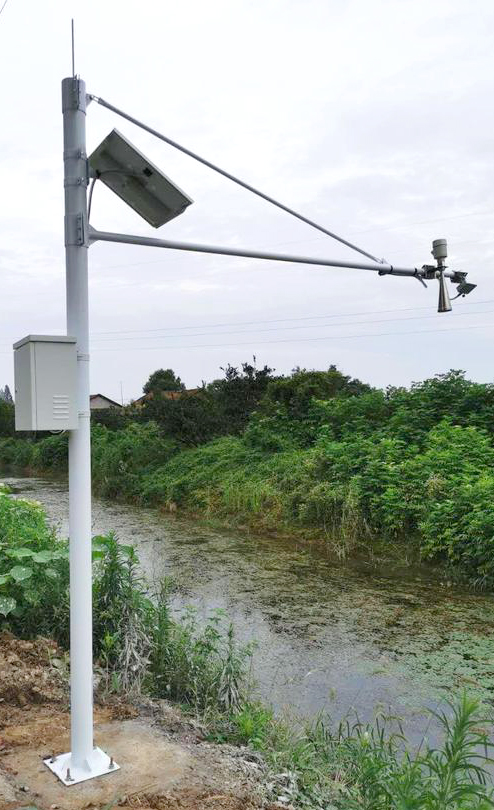
No. Hydrostatic, acoustic, radar, float and other instruments observe different physical effects. The installation converts that observation into the required level or threshold. Start by identifying what the actual device measures.
Not necessarily. Correcting the sensor's thermal response is different from determining the liquid density used in pressure-to-height conversion. Confirm a specific density-compensation function and its inputs before relying on it.
No. Radar instruments have configuration-specific near-field limits. The cited NiuBoL hydrological radar has an approximately 0.1 m blind zone. Check the highest possible water surface against the actual installation limit.
No. Update interval, resolution and accuracy are different characteristics. A rapidly updated reading can still reflect the wrong echo, a disturbed pressure point or an incorrect reference.
A point switch normally records whether a threshold has been crossed, not the intervening level. Some float-based instruments provide continuous position, so specify the actual output rather than judging only by the presence of a float.
No. Modbus RTU can carry values from different sensing principles. Check the register definition, units and whether conversion to level has already been performed before integrating the value into a PLC or data logger.
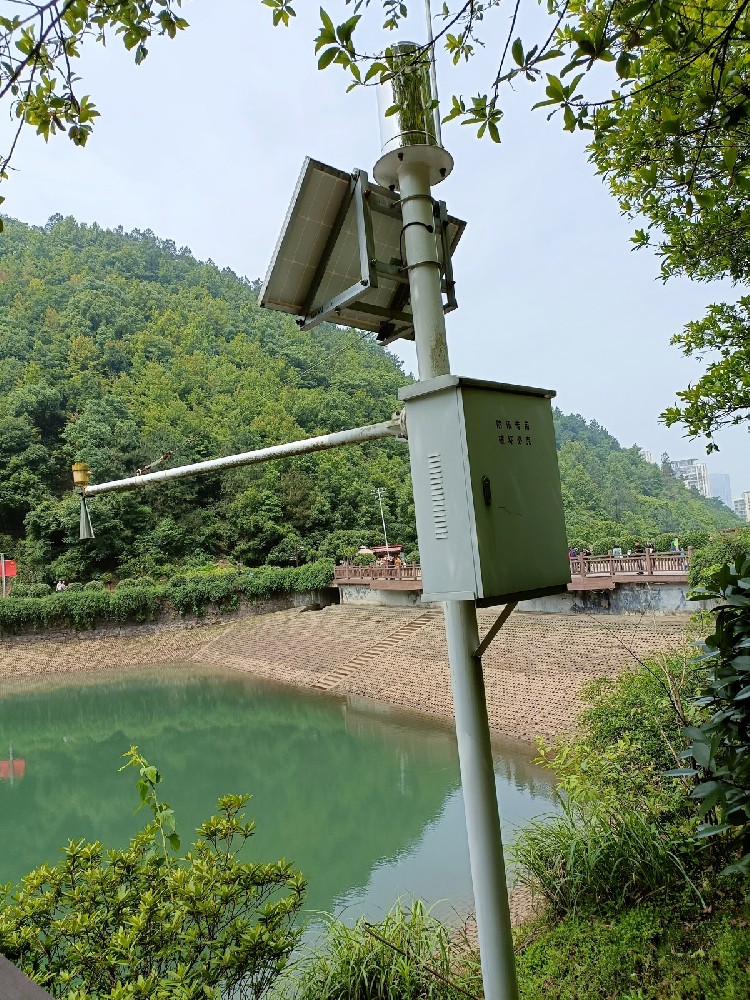
A water level sensor principle explains both the useful signal and the conditions that can imitate a level change. Identify the physical observation, its reference and the required conversion before comparing specifications. This gives engineers a sounder basis for choosing and checking an instrument than a universal ranking of sensor types.
Prev:How to Measure Liquid Level: References, Methods and Field Checks
Next:Liquid Pressure Sensor Working Principle: Diaphragm to Data
Related recommendations
Sensors & Weather Stations Catalog
 Agriculture Sensors and Weather Stations Catalog-NiuBoL.pdf
Weather Stations Catalog-NiuBoL.pdf
Agriculture Sensors Catalog-NiuBoL.pdf
Water Quality Sensor Catalog-NiuBoL.pdf
Related products
 Combined air temperature and relative humidity sensor
 TDR Soil Moisture & Temperature Sensor for irrigation| RS485 |4-20mA| NBL-S-THR
 Soil pH sensor RS485 soil Testing instrument soil ph meter for agriculture |NBL-S-PH
 Wind Speed sensor Output Modbus/RS485/Analog/0-5V/4-20mA
 Tipping bucket rain gauge for weather monitoring auto rainfall sensor RS485/Outdoor/stainless steel
 Pyranometer Solar Radiation Sensor 4-20mA/RS485

Screenshot, WhatsApp to identify the QR code
WhatsApp number:+8615367865107
(Click on WhatsApp to copy and add friends)

