





— Blogs —
—Products—
 Consumer hotline +8618073152920
 WhatsApp:+8615367865107
Address:Room 102, District D, Houhu Industrial Park, Yuelu District, Changsha City, Hunan Province, China
Product knowledge
Time:2026-01-19 16:40:40 Popularity:849
How to measure liquid level depends first on the quantity required: depth above a point, distance below a reference, elevation, or simply whether a limit has been reached. A useful measurement plan defines that quantity, provides a repeatable reference and checks the reading under the conditions in which it will be used. Choosing a sensor before defining the result can leave a project with accurate numbers that answer the wrong question.
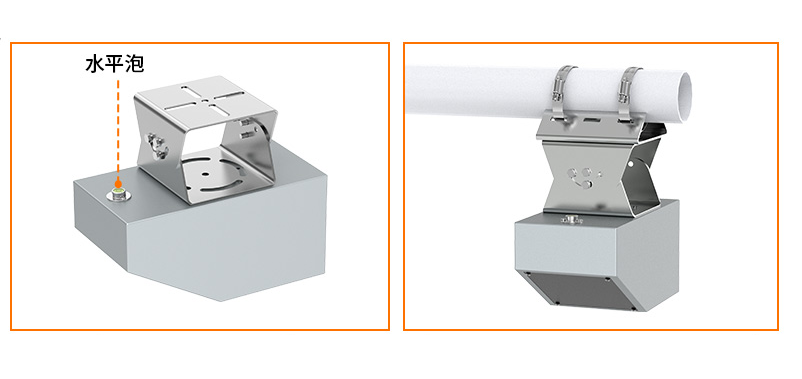
“Water level” is incomplete without a reference. A well operator may need depth below the wellhead, while a tank operator needs height above an outlet. A river station may report surface elevation against a surveyed datum. The same physical surface can have different valid numerical values under these conventions.
Choose the units and direction as well. Depth below a wellhead increases when the water falls; height above a probe decreases. Document this before creating alarm thresholds or comparing readings from different systems. A minus sign or an offset cannot be left to interpretation during commissioning.
| Required result | Reference to record | Common mistake |
|---|---|---|
| Depth below a wellhead | Permanent marked point at the wellhead. | Using a removable cover as the reference. |
| Tank liquid height | Floor, outlet or another defined zero. | Calling head above an elevated probe the floor-referenced height. |
| River stage or elevation | Established local gauge datum or surveyed elevation. | Comparing stations that use different zero levels. |
| High-level state | Physical switching position and the required switching action. | Expecting a single switch to provide a continuous depth history. |
If volume or flow is required, identify the additional relationship. Tank volume needs geometry or a calibration table; channel discharge needs an appropriate flow method. A level-only reading is not a direct measurement of either quantity.
Where safe access permits, compare the installed reading with an appropriate manual gauge, sounding device or surveyed observation. Select a reference suited to the required tolerance and the site rules. An improvised ruler viewed at an angle may be adequate for a coarse check but not for a tight acceptance limit.
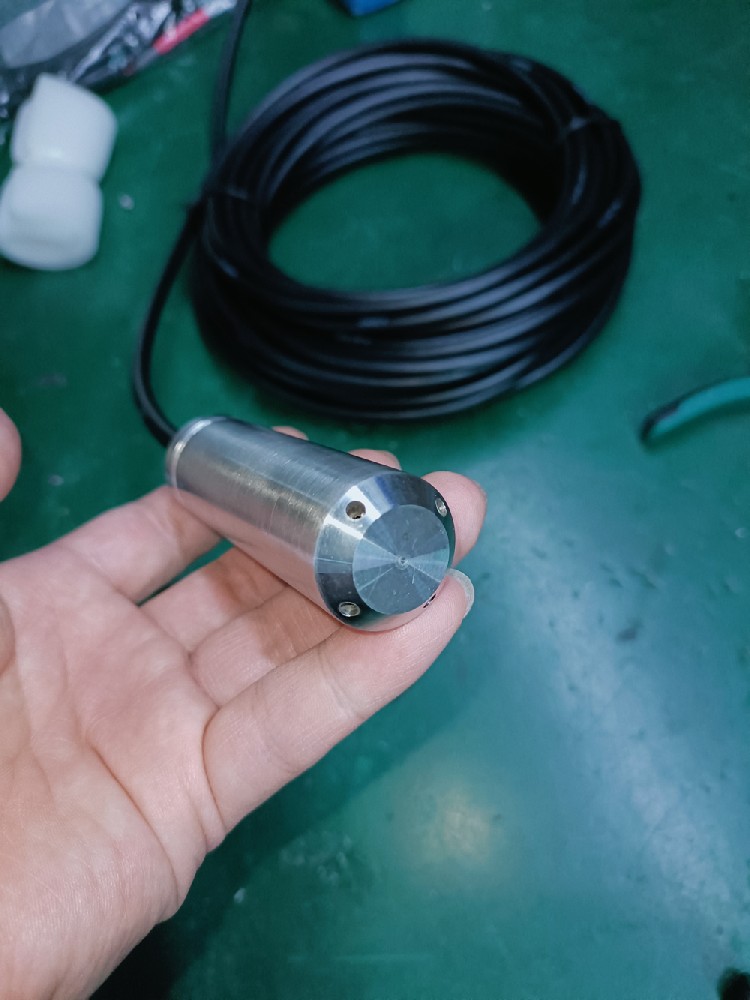
Take the reference and instrument reading as close together in time as practical. A tank that is filling during the comparison can produce disagreement even when both readings are correct at their respective times. Record whether the process was static, filling, draining or being pumped.
Do not enter a tank, approach an unsafe bank or open a pressurised connection just to obtain a comparison. Plan the reference access before commissioning. If a direct observation is not available, agree another valid method and its limitations rather than treating the sensor's own display as independent proof.
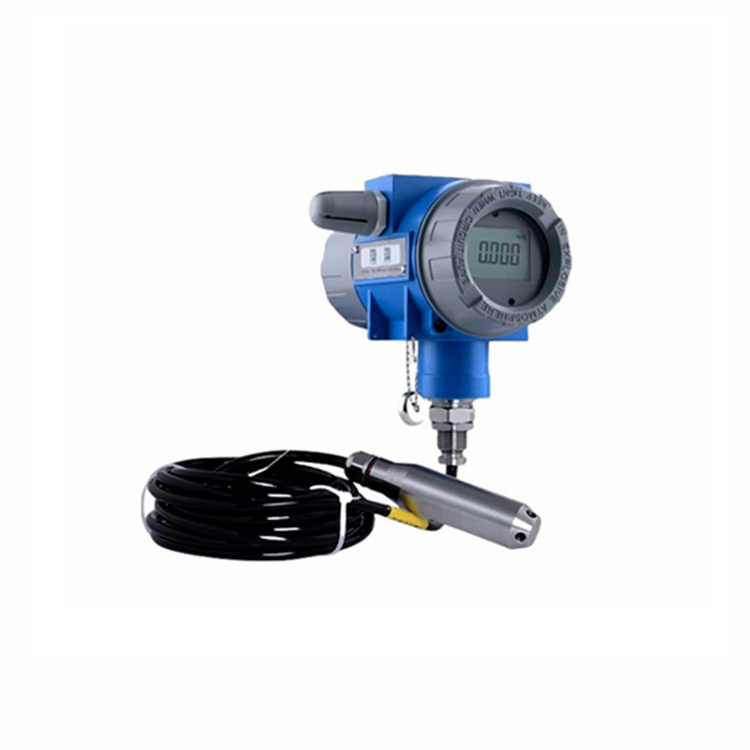
A hydrostatic probe measures pressure below the liquid surface. It is useful when an immersed sensing point can be kept submerged, stable and accessible. Specify the greatest expected liquid head above that point, not just total well depth or tank height. Check the liquid composition and temperature against the complete wetted assembly.
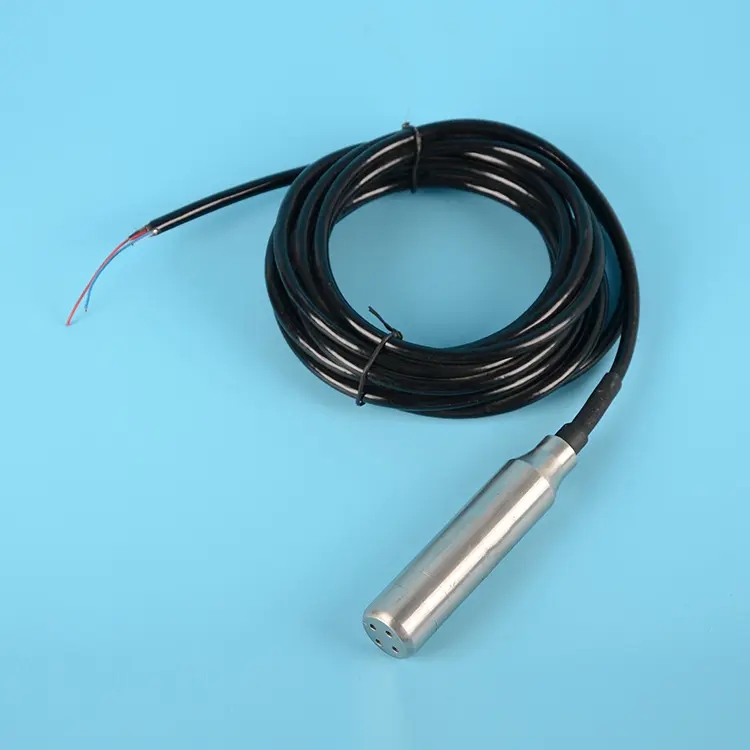
For a vented NiuBoL submersible configuration, the cable reference path must remain dry and open to the atmosphere. A flooded or obstructed vent can change the pressure reference. Keep the sensing inlet clear of deposits and out of direct inlet jets or strong pump disturbance.
For pressure-to-level conversion, use the appropriate liquid density and account for any pressure above the liquid. Temperature correction of the sensor electronics does not by itself identify an unknown liquid density. An open-water setup should not be transferred unchanged to a pressurised process tank.
An ultrasonic instrument derives distance from the return time of sound. The highest liquid surface must remain outside its specified blind zone, and the acoustic path needs a usable reflection. Foam, vapour conditions, temperature gradients and nearby structures can affect that return.
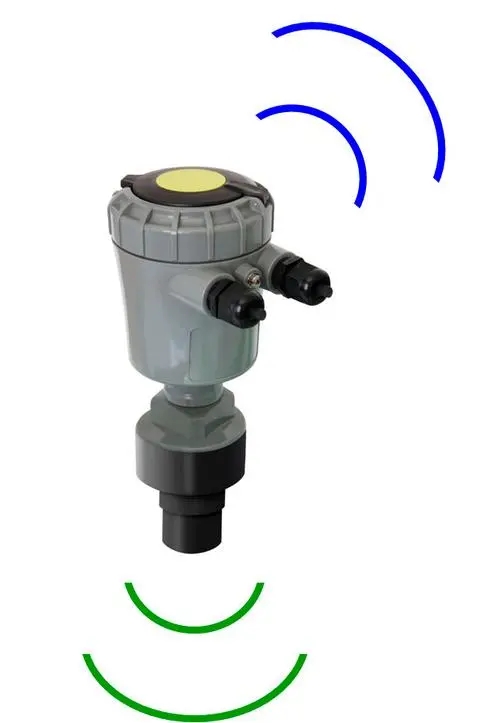
Assess the path at both high and low levels. A brace that is clear when the tank is full may enter the widening beam at a lower surface. Do not use a generic 10–30 cm clearance rule for every ultrasonic and radar instrument; obtain the near-field limit for the selected configuration.
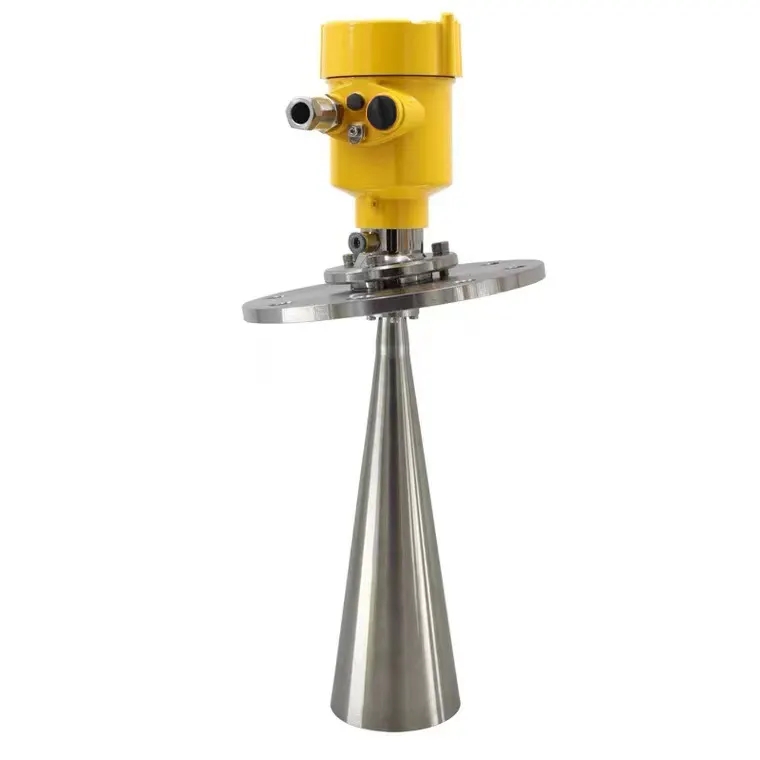
Radar also measures distance, but with an electromagnetic signal rather than sound. It can be useful where immersion is undesirable, provided mounting geometry and reflections are suitable. Non-contact measurement reduces water-contact maintenance; it does not make the sensor face, support and cable exempt from inspection.
Suppose a hypothetical instrument specification corresponds to ±5 mm under the test conditions, while the reference observation is only known within ±10 mm. A 12 mm difference does not by itself prove that the instrument has failed. Both uncertainties and the timing, datum and installation conditions matter.
Adding the two limits gives a simple conservative comparison allowance of 15 mm in this example; it is not a statistical uncertainty calculation or a universal acceptance rule. Agree the method before testing. If the project requires tighter discrimination, improve the reference and test arrangement rather than recalibrating until two displays agree.
Check several relevant operating levels when feasible, including a rising and falling sequence. A constant difference suggests a reference or zero issue; a difference that grows with level may indicate span, density or conversion problems. Preserve the initial observations so a correction can be evaluated rather than merely replacing the evidence.
Record the local raw output, the controller's converted value and the stored value for the same observation. For a 4–20 mA instrument, verify the configured endpoints and analog input range. For RS485 Modbus RTU, verify the register, numeric format, decimal scaling and units for the actual model.
A NiuBoL NBL-L-WLPS RS485 probe needs a compatible powered receiver. A separate display or gateway does not change its sensing principle. Remote reporting requires the selected acquisition and network arrangement; an old server value must not be accepted as a current reference measurement.
Document where offsets and conversions are applied. If the transmitter already outputs level above the chosen zero, applying the same correction in a PLC or platform will create an error. One traceable example through the full chain is more useful than checking only that numbers appear on every screen.
Record the point identifier, reference mark, probe or sensor position, raw quantity, converted result, units, timestamp and process state. Add the comparison method and any correction applied. These details allow later measurements to be compared without guessing whether the installation has changed.
After a sensor is moved, a bracket is repaired or a tank is modified, reassess the reference relationship. Do not merge a changed installation into a historical trend without marking the change. For a quotation, send NiuBoL the required result and reference arrangement alongside the liquid conditions and available mounting access.
No. It can be depth below a reference, height above a sensing point or elevation against a datum. Define the convention before selecting the sensor and comparing readings.
It can check one condition, but not the full span or operating response. Include relevant high and low levels and account for reference uncertainty, timing and installation effects when defining acceptance.
Not before checking datum, units, time alignment and the raw signal. A zero offset cannot repair an unsuitable pressure reference, incorrect span or unstable mounting position.
No. Flow requires additional information such as a verified stage-discharge relationship or velocity and area. A device combining those functions must be assessed as that complete arrangement.
Provide the required quantity, zero reference, expected level range, liquid conditions, mounting access and receiving interface. Add the intended comparison method and tolerance when the instrument must meet a project acceptance test.
A liquid-level measurement is useful when its reference, conversion and comparison can be reproduced. Define the required result first, choose a suitable sensing method and follow one observation through to the stored record. That approach avoids buying a sensor whose displayed value cannot be related reliably to the operator's actual task.
Prev:How Does a Water Tank Level Sensor Work? From Signal to Level
Next:Water Level Sensor Principles: Signals and Measurement Limits
Related recommendations
Sensors & Weather Stations Catalog
 Agriculture Sensors and Weather Stations Catalog-NiuBoL.pdf
Weather Stations Catalog-NiuBoL.pdf
Agriculture Sensors Catalog-NiuBoL.pdf
Water Quality Sensor Catalog-NiuBoL.pdf
Related products
 Combined air temperature and relative humidity sensor
 TDR Soil Moisture & Temperature Sensor for irrigation| RS485 |4-20mA| NBL-S-THR
 Soil pH sensor RS485 soil Testing instrument soil ph meter for agriculture |NBL-S-PH
 Wind Speed sensor Output Modbus/RS485/Analog/0-5V/4-20mA
 Tipping bucket rain gauge for weather monitoring auto rainfall sensor RS485/Outdoor/stainless steel
 Pyranometer Solar Radiation Sensor 4-20mA/RS485

Screenshot, WhatsApp to identify the QR code
WhatsApp number:+8615367865107
(Click on WhatsApp to copy and add friends)

