





— Blogs —
—Products—
 Consumer hotline +8618073152920
 WhatsApp:+8615367865107
Address:Room 102, District D, Houhu Industrial Park, Yuelu District, Changsha City, Hunan Province, China
Product knowledge
Time:2026-01-19 16:07:45 Popularity:674
In the fields of fluid monitoring and industrial automation, liquid level data is not just a simple number; it is the core of system decision-making, risk control, and resource optimization. With the rapid popularization of Internet of Things (IoT) technology, water level sensors have become the key bridge connecting the physical fluid world with digital management platforms.
This article, based on NiuBoL's years of practical industry experience, deeply analyzes the technical logic of water level sensors and their irreplaceable value in modern society.
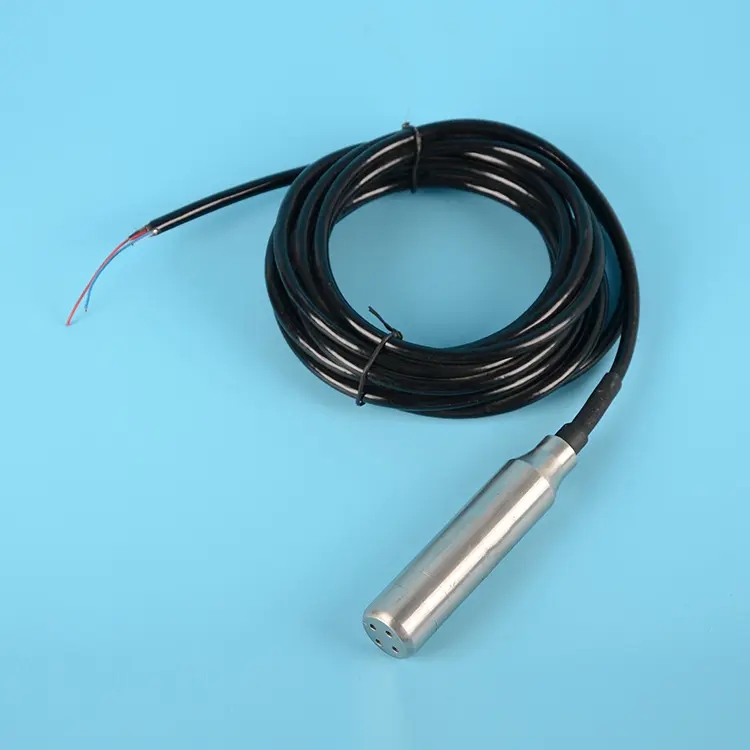
The importance of water level sensors (What is the importance of water level sensor?) is reflected in their ability to convert unquantifiable liquid level states into precise, standardized, and transmissible digital information.
Ensuring safe system operation: In industrial storage tanks or reservoirs, abnormal liquid levels (overflow from too high, dry pump running from too low) often lead to huge economic losses or even safety accidents. Sensors provide millisecond-level early warning capability.
Enabling automated closed-loop control: In unattended pump stations or smart agricultural irrigation, sensors act as the “eyes” of PLC systems, determining pump start/stop and valve opening, achieving true intelligent operation.
Precise resource management: Water is a core asset. Water level sensors with 0.1% FS accuracy help managers monitor reservoir capacity or fuel inventory in real time for refined allocation.
Handling extreme measurement environments: In deep wells, highly corrosive, high-temperature/high-pressure scenarios inaccessible to humans, sensors are the only way to acquire data.
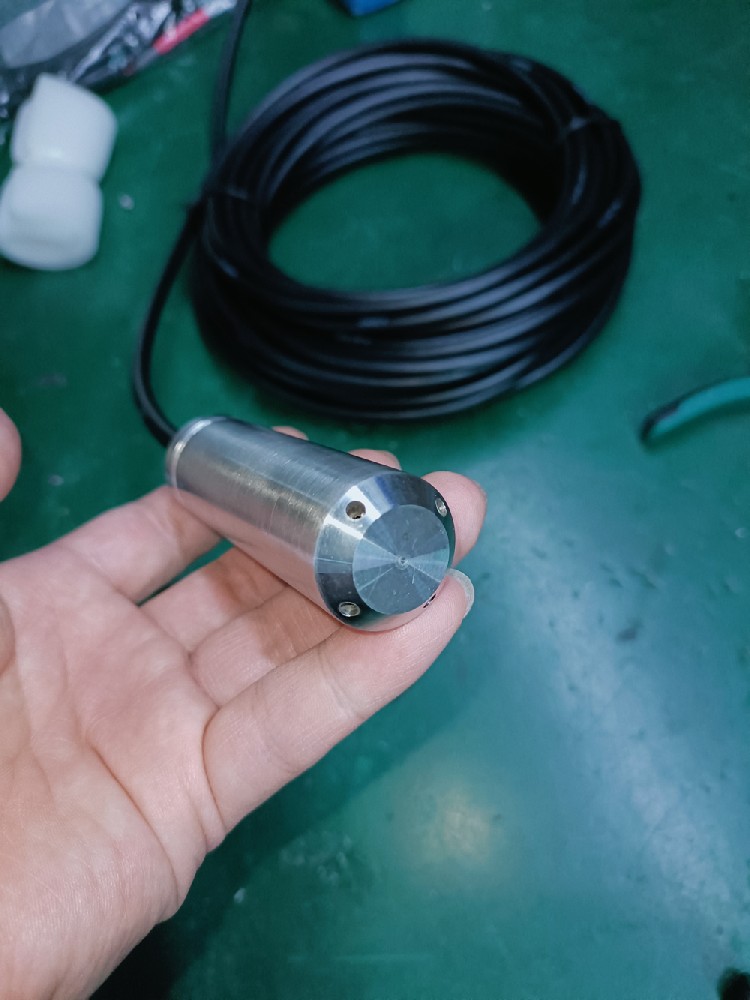
Understanding the working mechanism of sensors is the foundation for successful engineering selection. The current mainstream market includes the following six core technologies:
1. Submersible Hydrostatic Pressure Level Sensor (Hydrostatic Pressure)
Principle: Based on the physical formula P = ρ × g × h, where liquid hydrostatic pressure is proportional to height.
Function: A high-precision diffused silicon sensing element is submerged at the liquid bottom to sense pressure and linearly convert it to level.
Value: Extremely simple installation, unaffected by surface foam or steam. NiuBoL submersible sensors feature dedicated vented cables for automatic atmospheric pressure compensation — preferred for deep wells and reservoirs.
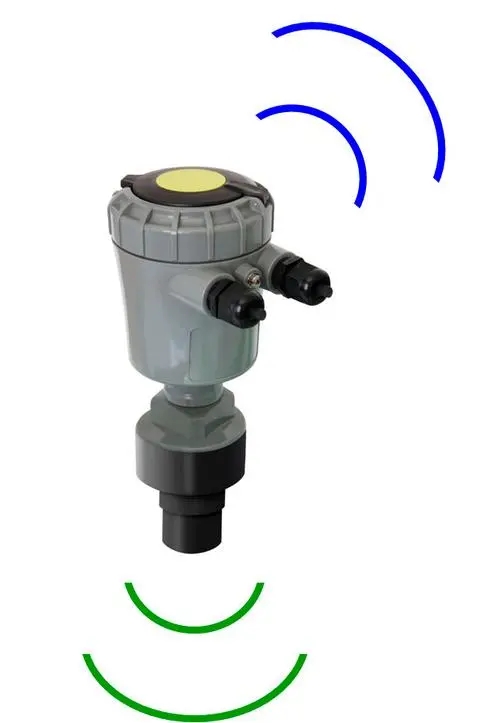
2. Ultrasonic Level Sensor
Principle: Emits ultrasonic pulses to the surface and calculates distance via time-of-flight (ToF).
Function: True non-contact measurement — sensor does not touch the medium.
Value: Avoids chemical corrosion, suitable for sewage tanks, open channels, and general tanks, with very low maintenance.
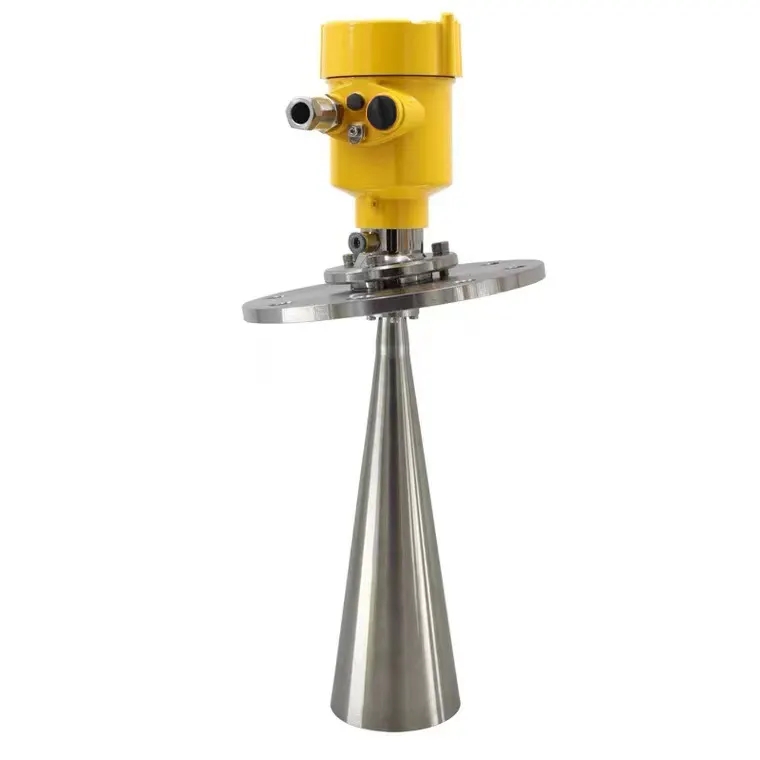
3. Radar Level Sensor (Radar/Microwave)
Principle: Emits high-frequency electromagnetic waves (e.g., 26GHz/80GHz) and measures distance based on echo time difference.
Function: Extremely strong environmental immunity.
Value: Unaffected by temperature, pressure, steam, dust. Offers unparalleled stability and ±2mm accuracy in high-value custody transfer or harsh chemical tanks.
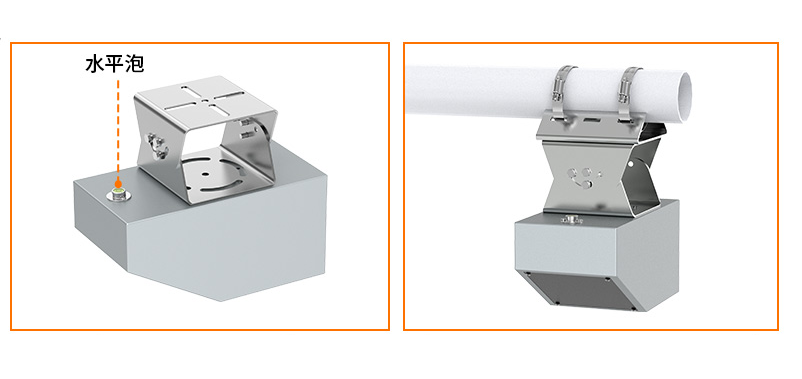
4. Capacitive Level Sensor
Principle: Changes in medium height alter capacitance between plates, changing circuit output.
Function: Detects changes in dielectric constant.
Value: Extremely fast response, no moving parts. Ideal for non-conductive media like lubricating oil and fuel in precision lubrication systems.
5. Float Level Sensor
Principle: Uses Archimedes' buoyancy; float rises/falls with level, actuating internal magnetic switches.
Function: Classic physical point-level switch.
Value: Simple, reliable structure without complex algorithms. Often serves as the final hard interlock protection against overflow or dry running.
6. Non-Contact Induction Level Sensor (Contactless Induction)
Principle: Attached to outer wall of non-metallic container; senses internal level via inductive/capacitive coupling.
Function: Completely non-invasive — no container penetration.
Value: Ultimate hygiene and convenience. Perfect for lab vessels, small appliances, hemodialysis equipment, and other high-hygiene scenarios.
| Sensor Type | Measurement Method | Communication Interface | Core Advantages | Recommended Application Scenarios |
|---|---|---|---|---|
| Submersible | Contact / Pressure | RS485 / 4-20mA | Economical & durable, large range | Reservoirs, deep wells, river channels |
| Ultrasonic | Non-contact / Sound wave | RS485 / Modbus | Corrosion-resistant, easy installation | Sewage tanks, urban flooding, open channels |
| Radar | Non-contact / High-frequency wave | RS485 / HART | High precision, resistant to temp/pressure/steam | Chemical tanks, precision industrial processes |
| Capacitive | Contact / Induction | Analog signal | Fast response, suitable for oils | Industrial oil tanks, engine monitoring |
| Float | Contact / Magnetic | Switch signal | Low cost, high reliability | Water tank refill control, pump protection |
| Induction (Non-contact) | Non-contact / Through-wall | Switch / Digital | No drilling, hygienic | Medical devices, household appliance tanks |
Liquid level measurement technology has penetrated every corner of modern society. NiuBoL products play a central role in the following fields:
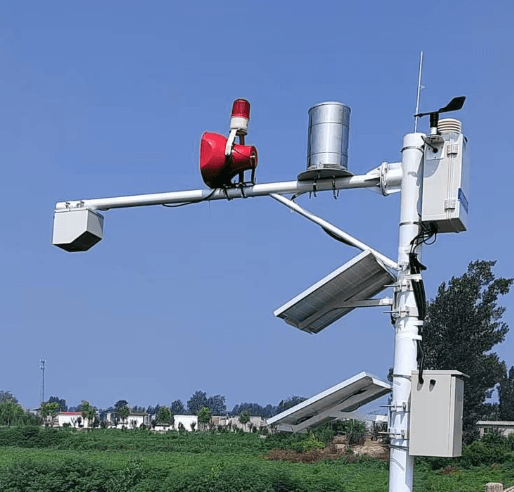
1. Smart Water Management & Urban Drainage
Sewer networks, bridge low-lying areas prone to ponding. Real-time RS485 data transmission to command centers forms the lifeline of urban flooding warning systems.
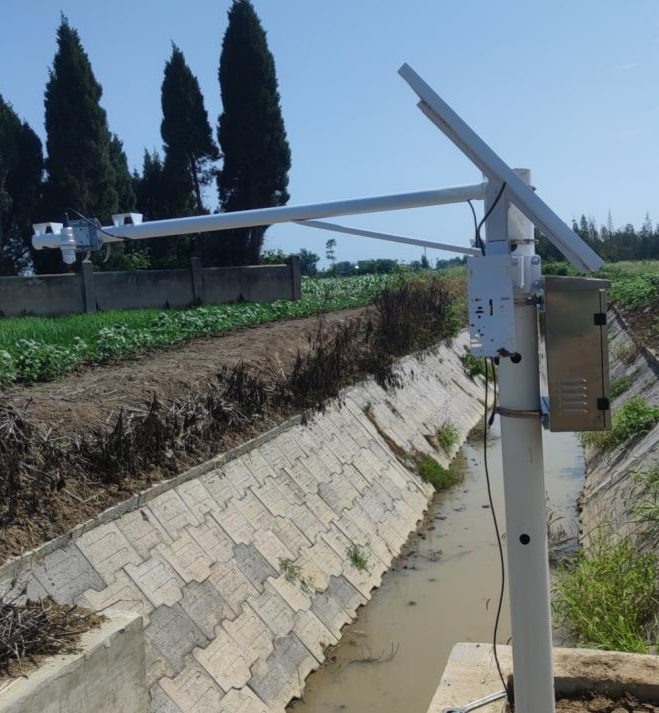
2. Smart Agriculture & Precision Irrigation
Monitors storage ponds and irrigation canals; links with VFDs to automatically adjust pump speed based on level for scientific water use.
3. Environmental Protection & Industrial Wastewater Treatment
Chemical plants, paper mills wastewater pools. Non-contact ultrasonic or radar sensors excel in corrosive wastewater level monitoring.
4. Industrial Storage & Energy Management
Fuel, chemical storage tanks. High-precision continuous monitoring enables digital inventory, optimized procurement, and leak prevention.
5. Groundwater Monitoring & Geological Disaster Prevention
Tracks groundwater dynamics, providing research-grade data to prevent subsidence and over-extraction.
Q1: Why are water level sensors more important than manual inspection?
A: They solve data continuity issues. Manual checks cannot capture instantaneous level jumps, while sensors enable real-time monitoring and automatic protection, nipping risks in the bud.
Q2: How do submersible sensors handle sludge blockage?
A: NiuBoL uses special anti-silt filter covers. In heavy sediment, suspend sensor ~20 cm above bottom or add protective sleeve.
Q3: Is non-contact measurement (e.g. ultrasonic) always the best?
A: Not necessarily. While corrosion-resistant, it fails in heavy foam or vacuum. In such cases, hydrostatic (pressure) sensors are more stable. Selection depends on actual conditions.
Q4: What are the advantages of RS485 digital signals over analog?
A: RS485 (Modbus RTU) has strong anti-interference, supports multi-sensor daisy-chaining, and long-distance transmission (>1000m), ideal for complex industrial IoT networks.
Q5: How to select materials for corrosive liquids?
A: Use PTFE-encapsulated submersible sensors for strong acids/alkalis, or opt for non-contact radar/ultrasonic solutions.
The importance of water level sensors lies not only in what they measure, but in how much “certainty” they bring to the system. From the technical foundation of How do level sensors work? to the wide coverage of Where are liquid level sensors used?, liquid level monitoring has become the lifeline of digital fluid resource management.
As a deep practitioner in this field, NiuBoL is committed to providing precise, durable, and easy-to-integrate sensing solutions. Understanding the value of water level sensors is understanding the logic of a data-driven future.
Related recommendations
Sensors & Weather Stations Catalog
 Agriculture Sensors and Weather Stations Catalog-NiuBoL.pdf
Weather Stations Catalog-NiuBoL.pdf
Agriculture Sensors Catalog-NiuBoL.pdf
Water Quality Sensor Catalog-NiuBoL.pdf
Related products
 Combined air temperature and relative humidity sensor
 TDR Soil Moisture & Temperature Sensor for irrigation| RS485 |4-20mA| NBL-S-THR
 Soil pH sensor RS485 soil Testing instrument soil ph meter for agriculture |NBL-S-PH
 Wind Speed sensor Output Modbus/RS485/Analog/0-5V/4-20mA
 Tipping bucket rain gauge for weather monitoring auto rainfall sensor RS485/Outdoor/stainless steel
 Pyranometer Solar Radiation Sensor 4-20mA/RS485

Screenshot, WhatsApp to identify the QR code
WhatsApp number:+8615367865107
(Click on WhatsApp to copy and add friends)

