





— Blogs —
—Products—
 Consumer hotline +8618073152920
 WhatsApp:+8615367865107
Address:Room 102, District D, Houhu Industrial Park, Yuelu District, Changsha City, Hunan Province, China
Product knowledge
Time:2026-06-01 11:11:48 Popularity:392
Quick Answer: TSS and sludge concentration meter selection must distinguish clarified-water solids from mixed liquor or thickened sludge. NiuBoL TSS-4A and TSS-408S cover 0-2000 mg/L; the self-cleaning MLSS-408-S covers 0-20.000 g/L. Choose the range and installation for the actual stream, then verify the optical reading against representative laboratory solids results before using it for control.
TSS describes suspended solids concentration; MLSS is the suspended solids concentration of mixed liquor in an activated sludge process. The sampling location changes what the number means. Clarifier overflow, aeration mixed liquor, return sludge and thickener underflow cannot be assigned one range merely because all contain solids.
Record normal concentration, credible peaks and the required decision at each point. A clarifier outlet channel may be intended to detect carryover. An aeration channel may support sludge inventory calculations. A thickener channel may need to follow a concentrated stream. The same numerical alarm and cleaning interval will not serve all three.
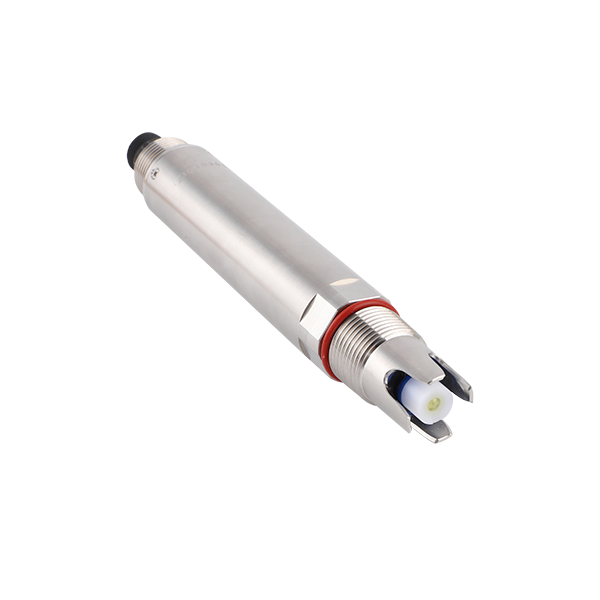
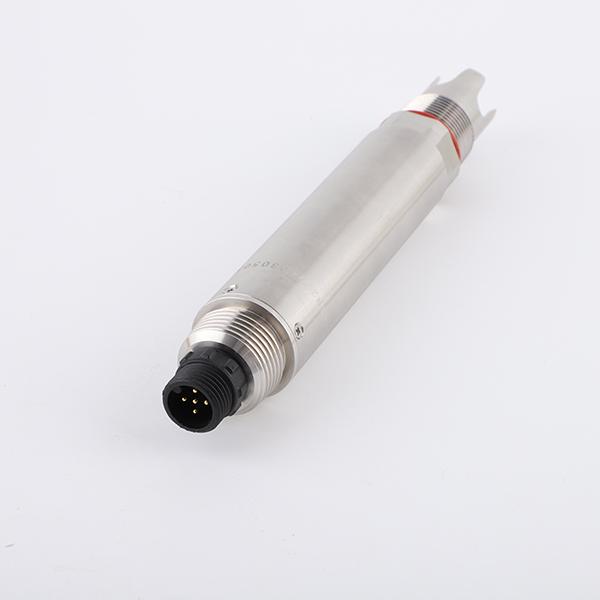
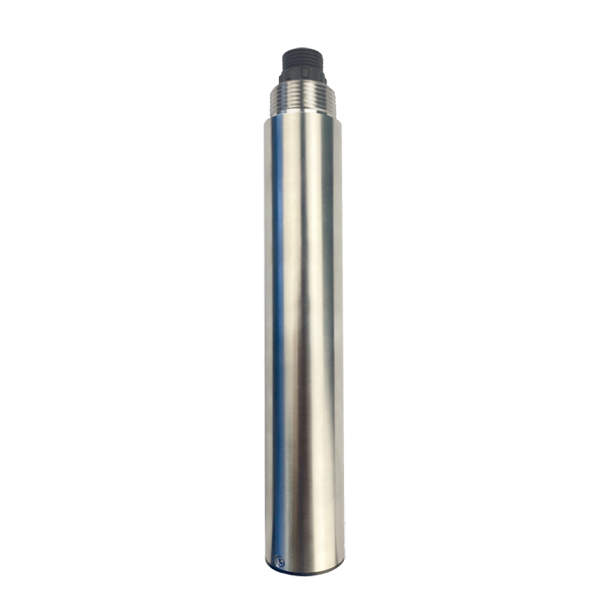
The stainless steel TSS-408S pictured here has a 0-2000 mg/L range. If a proposed aeration application normally exceeds 2 g/L, this range is already insufficient before allowing for peaks. Order the appropriate high-concentration measurement rather than multiplying an over-range value in software.
| Selection item | Model-specific specification |
|---|---|
| Range / resolution | TSS-4A: 0-2000.0 mg/L / 0.1 mg/L. TSS-408S: 0-2000 mg/L / 0.1 mg/L. MLSS-408-S: 0-20.000 g/L / 0.001 g/L. |
| Accuracy | TSS-4A and TSS-408S: +/-5%, dependent on sludge homogeneity. MLSS-408-S: +/-5% of reading, dependent on sludge homogeneity. |
| Temperature accuracy / compensation | All three: +/-0.3 degrees C; Pt1000. |
| Wetted housing | TSS-4A: POM and ABS. TSS-408S and MLSS-408-S: 316L stainless steel. |
| Cleaning arrangement | TSS models: confirm the mechanism and service arrangement for the ordered assembly. MLSS-408-S: built-in automatic mechanical brush. |
| Water conditions | TSS-4A and TSS-408S: 0-50 degrees C; below 0.2 MPa. MLSS-408-S: 0-60 degrees C; up to 0.2 MPa. |
| Output / supply | All three: RS485 Modbus RTU; optional 4-20 mA; 12-24 V DC. |
| Consumption at 12 V | TSS models: 0.2 W. MLSS-408-S: 0.2 W excluding brush operation. |
| Mounting / cable / protection | All three: immersion, 3/4 NPT; standard 5 m cable; IP68. |
For the two TSS models, establish the basis of the percentage accuracy before calculating an acceptance band. Cable jacket material, permitted extensions and chemical compatibility also need checking for the chosen assembly. A family name does not establish these details. The MLSS-408-S configuration is a distinct higher-range, brushed instrument, not a software setting on every TSS probe.
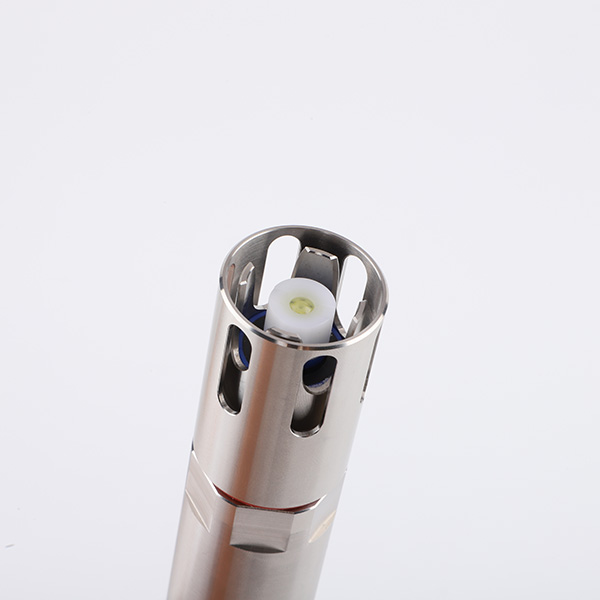
An optical concentration reading depends on particle scattering as well as dry mass. Changes in floc size, mineral content, color or particle distribution can alter the relationship between optical response and laboratory concentration. A calibration obtained in one stream may not transfer to another after chemical dosing or a process change.
Take comparison samples from the water actually seen by the probe, at the same time as the logged reading. Avoid a surface grab compared with a deeply immersed probe when solids stratify. Keep a mixed sample representative during splitting and transport, and use the agreed laboratory method consistently. Retain results across low, normal and high operating concentrations.
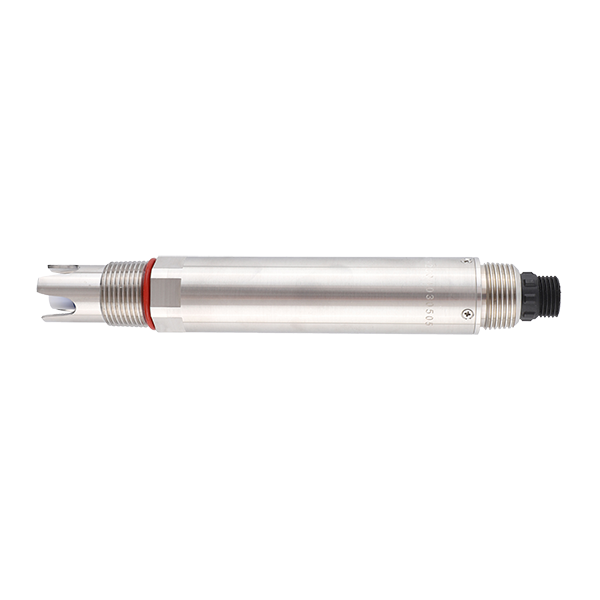
Look for concentration-dependent bias and changing scatter, not only one matching pair. A consistent offset may justify checking zero or background; a different slope across changing solids composition calls for a broader correlation review. Do not recalibrate around a sample disturbed by bubbles, settling or a dirty window. The TSS-4A below is another optical configuration with its own material and range limits.
Immersion avoids sample transport and can follow the tank directly, but the mounting location must remain submerged, mixed and accessible. Keep the optical region away from deposited solids, direct aerator plumes, walls and moving equipment. The TSS-408S installation guidance calls for more than 5 cm from the side wall and more than 10 cm above the bottom; these are optical clearances, not a recommended immersion depth.
A side stream can isolate maintenance from the main process, but it introduces another risk: particles may settle in the take-off or tubing. Check flow during the lowest operating rate, provide flushing access and compare the side-stream sample with the main stream. Removing bubbles must not also remove the particles the instrument is supposed to measure.
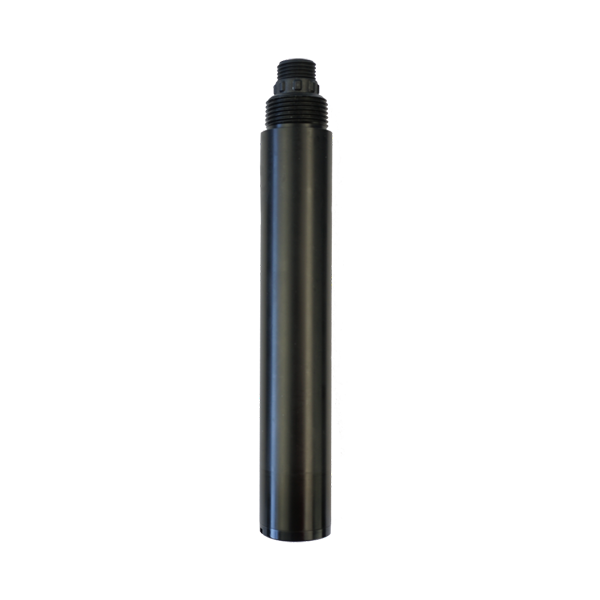
Do not prohibit every aeration-tank immersion installation solely because bubbles are present. First move outside the direct air plume and test the reading under normal aeration cycles. If a representative bubble-free position cannot be achieved, evaluate a suitable alternative sample arrangement. The stainless steel TSS-4S shown below is a separate model; confirm its installation requirements rather than assuming it inherits every 408S detail.
At a clarification outlet, a sustained increase can indicate solids carryover, but it does not by itself identify the cause or prove a discharge breach. Check the sample, window, settling performance and laboratory result. Do not use a low-range resolution figure as evidence that the instrument can verify any trace-level discharge requirement.
At an aeration tank, MLSS contributes to inventory and wasting decisions, but one concentration channel does not determine sludge age or active biomass. Those assessments require other process quantities, including tank volumes and solids flows. At a thickener or dewatering feed, compare the maximum solids concentration with the 20 g/L MLSS upper limit; some duties may exceed even that range.
Where a representative concentration and measured flow are both available, solids loading in kg/h equals concentration in mg/L multiplied by flow in cubic meters per hour, divided by 1000. For example, 1500 mg/L at 20 cubic meters per hour gives 30 kg/h. This is a unit-conversion example, not a promised dosing rate or plant performance result.
A cleanable mounting must allow withdrawal without pulling on the signal cable. Identify how operators will reach the optical window and where the probe can be checked after cleaning. Inspect for film, scratches and trapped solids. A brush reduces some deposits but does not remove the need to inspect wear, obstructions or chemically resistant scale.
For a brushed MLSS instrument, include cleaning power and the cleaning interval in the station design. Check whether the supplied protocol exposes cleaning status; if it does not, establish another documented way to prevent cleaning transients from being treated as process changes. Do not invent a status register from a different model.
Map concentration and temperature separately in the PLC. Verify mg/L versus g/L, scaling and data format with the supplied register map. Set distinct handling for over-range, timeout and maintenance. RS485 wiring length, termination and isolation depend on the installed bus; a protocol name does not guarantee a fixed distance or immunity to inverter interference.
No. Eight g/L equals 8000 mg/L and exceeds that range. The MLSS-408-S has a 20 g/L upper limit, but still requires a suitability check and site-specific comparison for the actual sludge.
No. Check the complete wetted assembly, seals, optical parts and cable against process chemicals and cleaning agents. Housing material alone is insufficient for approving chemical exposure.
No. Cable routing length and pressure rating are separate. The 408S pages refer to 20 m water depth alongside a pressure limit around 0.2 MPa; obtain the allowable installed conditions and margin instead of treating the two limits as independent permissions.
Not through a universal conversion factor. Particle properties affect the optical relationship. Use the required mass measurement and validate any site-specific optical correlation against representative samples.
Check range margin, representative sample agreement, recovery after cleaning, behavior during aeration or flow changes, unit scaling and communication failure. A matching reading in one clean sample is not sufficient.
Provide the stream, concentration distribution, process temperature and pressure, solids characteristics, cleaning needs, mounting arrangement, cable route and output. Separate probe, mounting, cleaning accessories and controller costs in the quotation.
Select TSS and sludge concentration meters by stream and concentration, then prove that the installation preserves a representative sample. NiuBoL's 0-2000 mg/L TSS options and 0-20 g/L brushed MLSS configuration serve different duties. Range margin, laboratory comparison and service access matter more than a shared sensor label.
 NBL-WQ-TSS-408S Suspended Solids Sensor.pdf
Prev:Residual Chlorine System Design: Sample Flow, pH and Dosing Interlocks
Next:Online Turbidity Sensor Selection: Range, Error Limits and PLC Mapping
Related recommendations
Sensors & Weather Stations Catalog
Agriculture Sensors and Weather Stations Catalog-NiuBoL.pdf
Weather Stations Catalog-NiuBoL.pdf
Agriculture Sensors Catalog-NiuBoL.pdf
Water Quality Sensor Catalog-NiuBoL.pdf
Related products
 Combined air temperature and relative humidity sensor
 TDR Soil Moisture & Temperature Sensor for irrigation| RS485 |4-20mA| NBL-S-THR
 Soil pH sensor RS485 soil Testing instrument soil ph meter for agriculture |NBL-S-PH
 Wind Speed sensor Output Modbus/RS485/Analog/0-5V/4-20mA
 Tipping bucket rain gauge for weather monitoring auto rainfall sensor RS485/Outdoor/stainless steel
 Pyranometer Solar Radiation Sensor 4-20mA/RS485

Screenshot, WhatsApp to identify the QR code
WhatsApp number:+8615367865107
(Click on WhatsApp to copy and add friends)

