





— Blogs —
—Products—
 Consumer hotline +8618073152920
WhatsApp:+8615367865107
Address:Room 102, District D, Houhu Industrial Park, Yuelu District, Changsha City, Hunan Province, China
Product knowledge
Time:2025-11-04 14:11:36 Popularity:1245
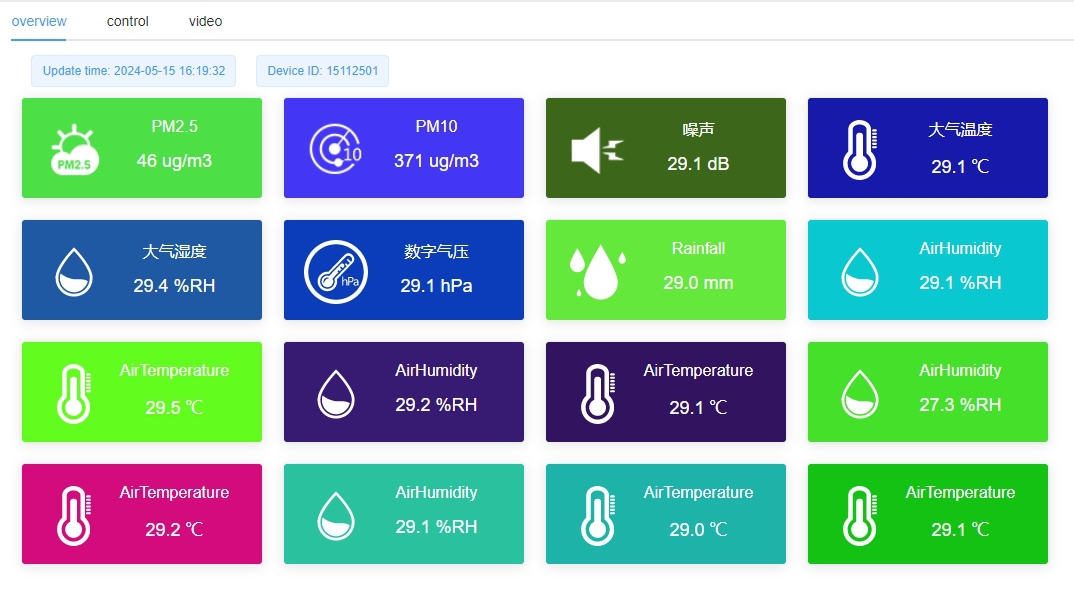
Agriculture vs PV weather station configuration is a comparison of measurement tasks, not two universal equipment grades. Both may use air, wind and rainfall observations, but a farm may need representative soil measurements while a PV project needs the correct radiation plane and separate module-temperature information. NiuBoL configurations should be specified by actual instruments and records rather than an assumed agricultural or solar package name.
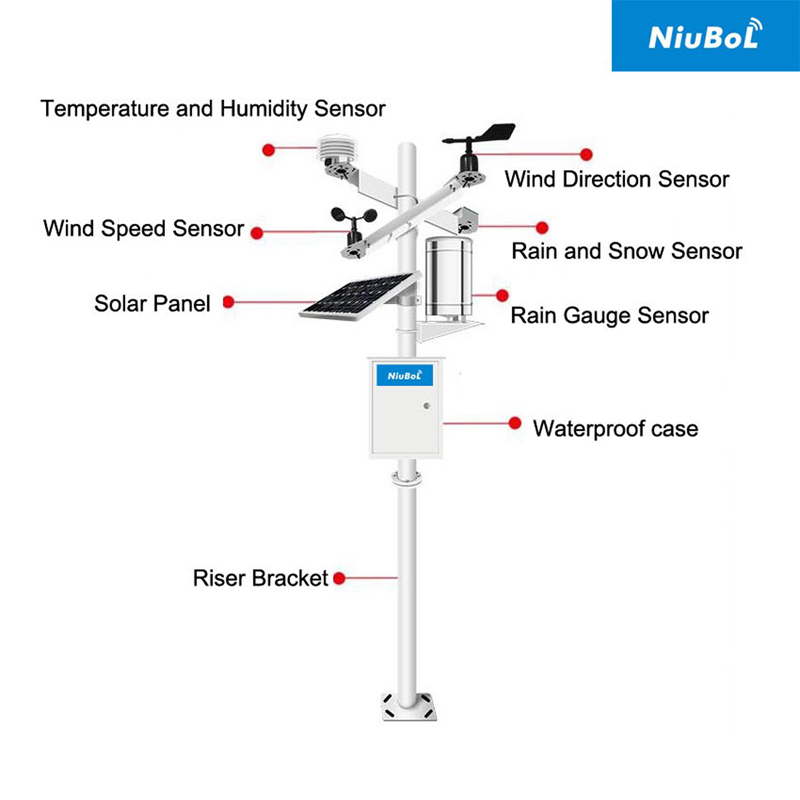
A farm manager may use weather observations to interpret field water conditions. A solar engineer may compare irradiance and temperature with electrical generation over matching periods. The same temperature channel can provide context to both, but the additional measurements and interpretation differ.
Do not start with a promised yield increase or power gain. Start with the comparison the customer needs to make. A station measures selected conditions; it does not establish crop response, irrigation delivery or plant performance without the relevant additional information.
| Design item | Agricultural task | PV task |
|---|---|---|
| Air conditions | Background weather or a defined crop environment | Ambient context for the plant's operating records |
| Solar measurement | Irradiance, illuminance or PAR selected for a defined use | Identified irradiance plane and any required instrument classification |
| Temperature additions | Soil, canopy or other separately selected measurements | Separate module-temperature measurement where required |
| Rainfall | Weather input alongside irrigation and soil response | Rain-event context, not a direct measure of panel cleanliness |
| Location | Representative field, crop or irrigation-zone exposure | Position and radiation plane suited to the intended plant comparison |
| Receiving records | Match farm events and any agronomic calculation | Match electrical records and the required analysis period |
A project may require both sets of observations. Keep their identities and positions explicit rather than forcing every quantity into one mounting point. An expanded parameter count is useful only when the additional channels answer a real project question.
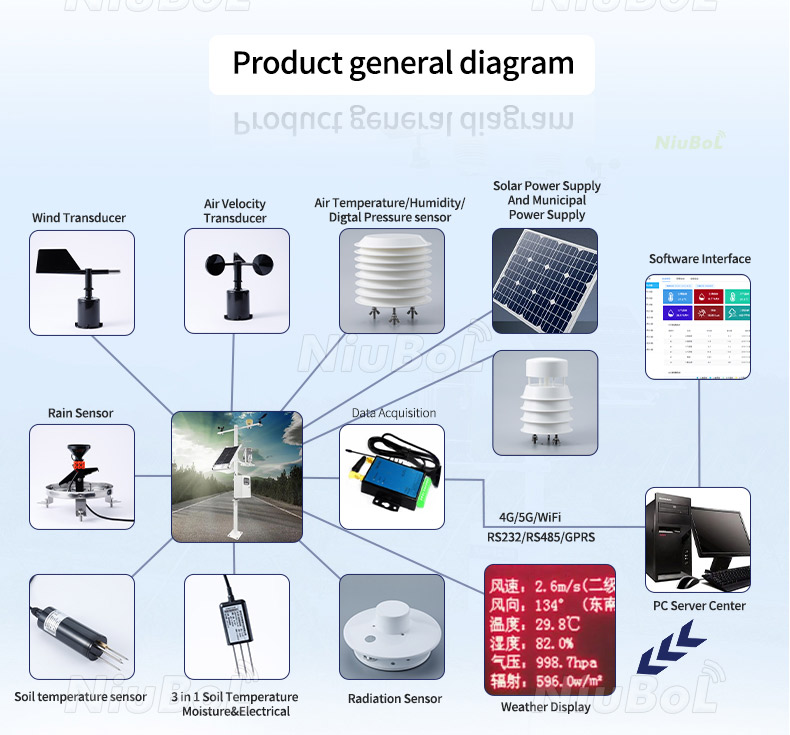
The NBL-W-LBTH supplies air temperature, humidity and atmospheric pressure. It can form part of either station, but its air measurement cannot replace soil or module temperature. Check its actual performance against the required analysis.
| NBL-W-LBTH item | Specification | Configuration check |
|---|---|---|
| Temperature | -40 to 80 C; +/-0.5 C | Representative atmospheric exposure |
| Relative humidity | 0-100% RH; +/-5% RH | Required error limit, not a generic station claim |
| Pressure | 10-1200 hPa; +/-1.5 hPa | Pressure at the instrument location |
| Supply and signal | DC 12-24 V; RS485 Modbus RTU or selected 4-20 mA | Ordered output and receiving input |
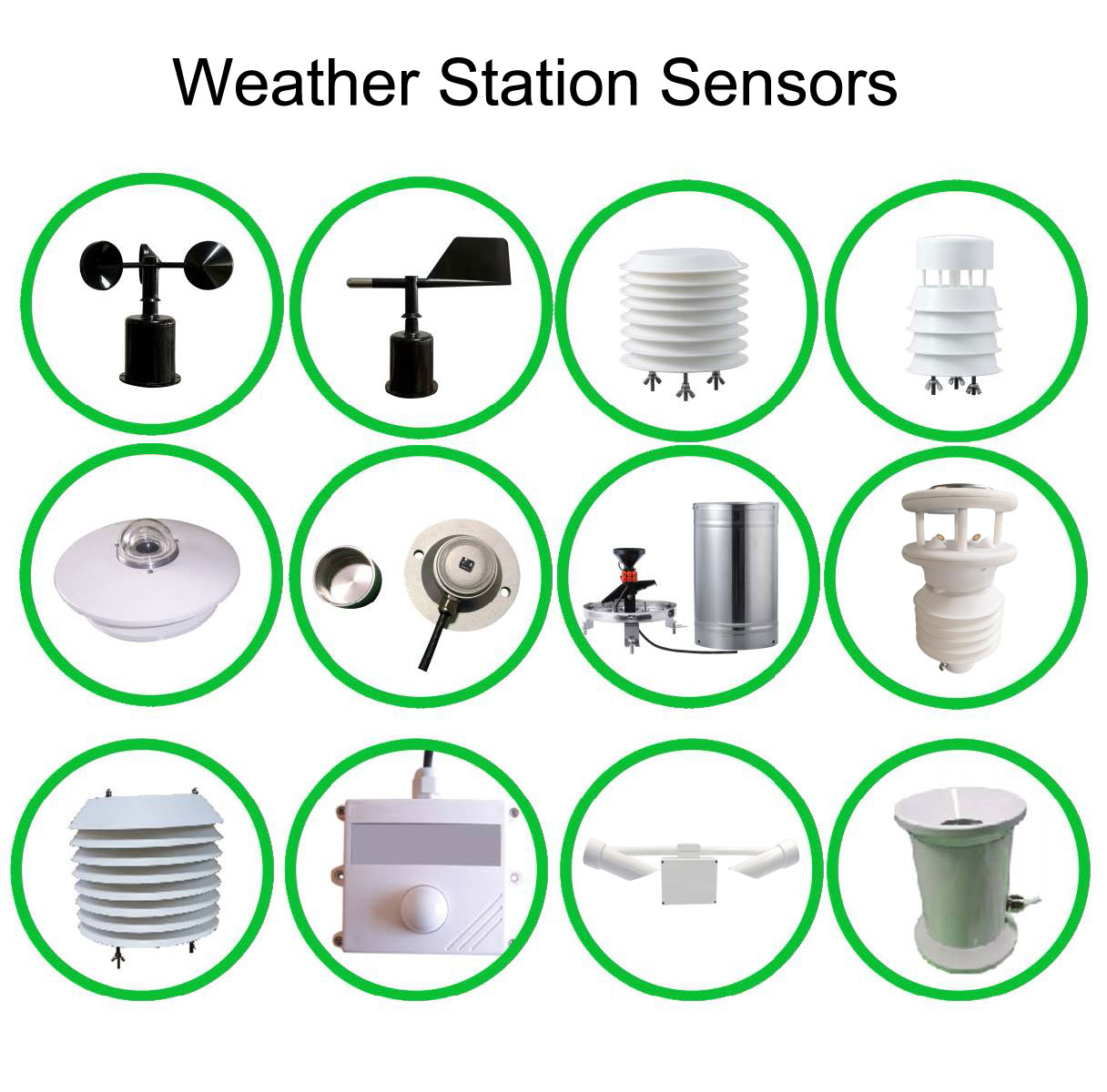
The NBL-W-HPRS pyranometer measures solar irradiance over a 0-2000 W/m2 range with output alternatives including millivolts, conditioned voltage, current and optional RS485. Choose a version the logger can acquire and convert correctly. The radiation sensor itself does not supply a complete network connection.
For PV, distinguish a horizontal observation from an array-plane observation. For agriculture, do not treat lux or broadband W/m2 as a dedicated PAR measurement. If a calculation needs a particular quantity or exposure, select that channel rather than relabel a convenient alternative.
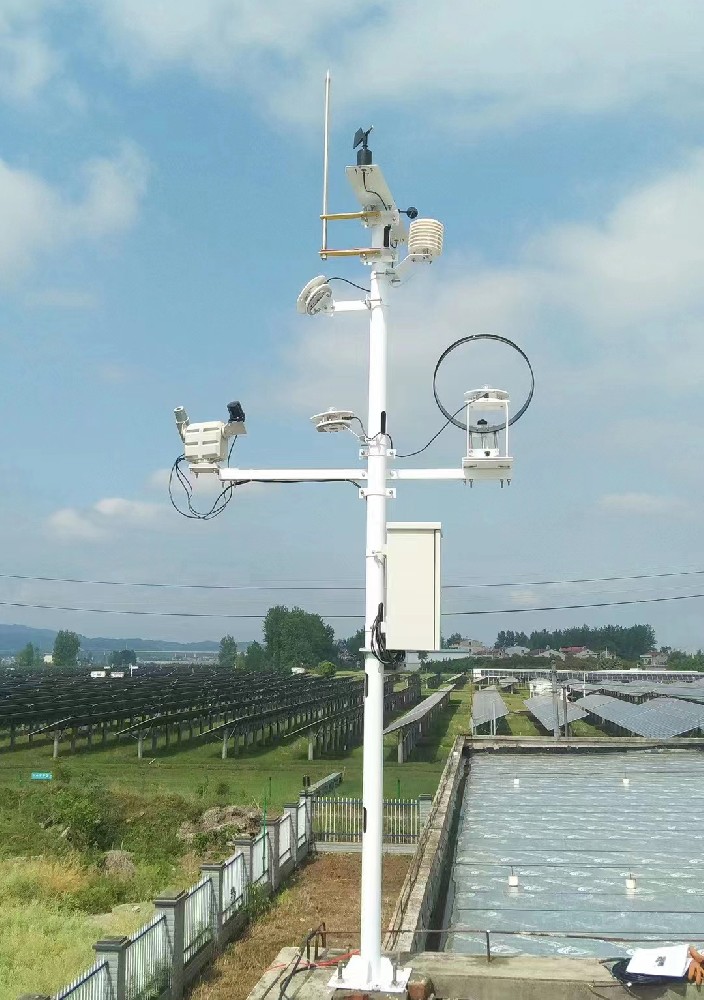
A farm can compare rainfall with irrigation timing and measured soil response, but rainfall alone does not establish how much water reached the roots. On a solar site, a rain event does not prove that modules are clean or that output should return to a particular level. Use suitable process or inspection information for those conclusions.
Wind observations can support operating review in both settings. Separate NBL-W-SS and NBL-W-DS instruments are IP65. If the project requires machinery protection or an automatic movement command, assess that function separately with its required input validity, response and equipment suitability.
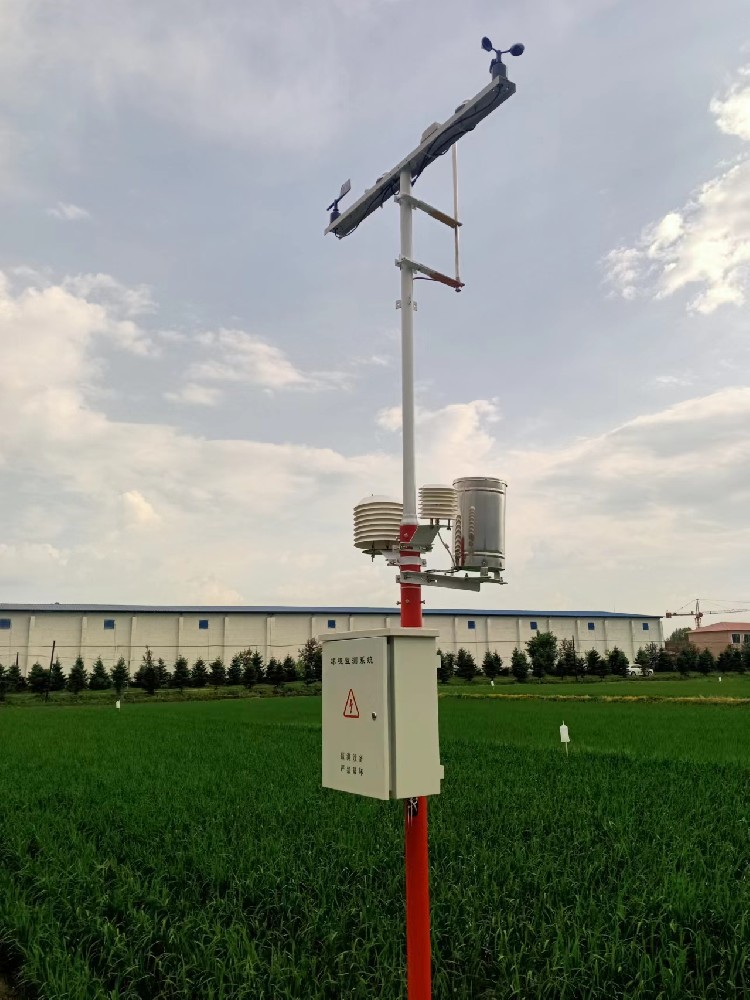
Define the observation interval, required statistic and time basis. A farm's daily review and a short-period PV comparison may need different records. Do not assume that a faster modem produces faster physical measurements or retains short variations that were never recorded.
The NBL-PH-1 offers local FLASH recording with a saving interval of 1-240 minutes and configured 4G transfer. Review the actual input allocation, receiving system and history requirements. Optional analysis or third-party integration should be defined independently of the logger's transport functions.
A farm offer without the required soil observations and a PV offer without suitable radiation measurement are incomplete for those tasks, even if both contain several air channels. Identify which essential measurement is absent before comparing package totals.
Send NiuBoL the intended decision, location plan and receiving-record requirements. Request itemized instruments, acquisition, mounting and power. This makes it possible to compare configurations without unsupported fixed prices, universal station coverage or assumed production benefits.
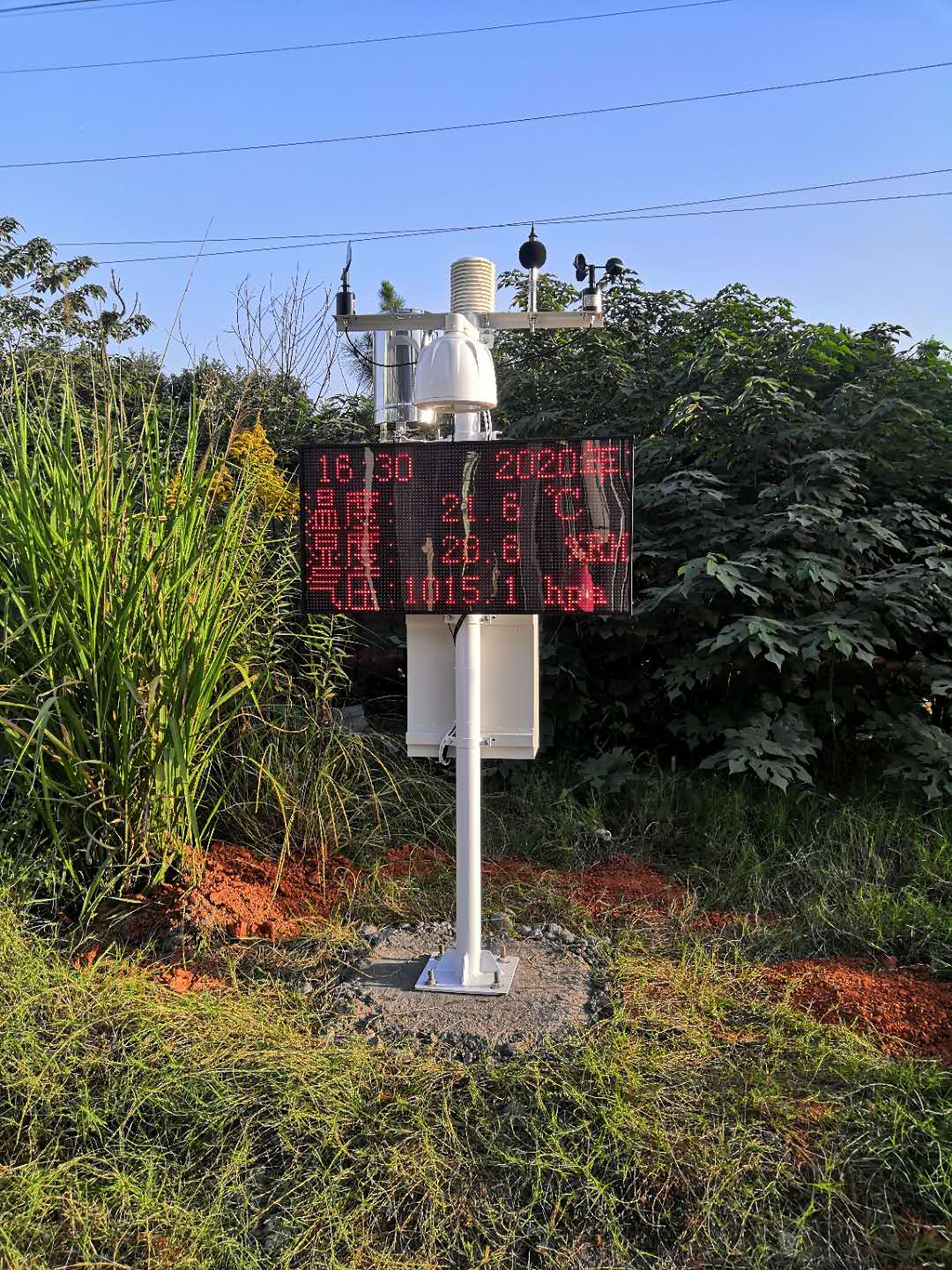
Some instruments can be shared, but the measurement positions, solar quantities and additional channels must suit both tasks. One common display does not establish that all observations are representative.
No. Ambient air and the module surface are different measurements. Add an appropriate module-temperature instrument when the analysis requires it.
No. Select irradiance, illuminance or PAR from the intended use or calculation. Their units and spectral meaning are different.
It provides event context. Irrigation needs field and crop information; cleaning decisions need relevant plant or inspection information. Neither action follows from rainfall alone.
Specify the agricultural or PV decision, required extra measurements, exposure and matching record interval. Include the receiving system so the proposed instruments and acquisition are selected together.
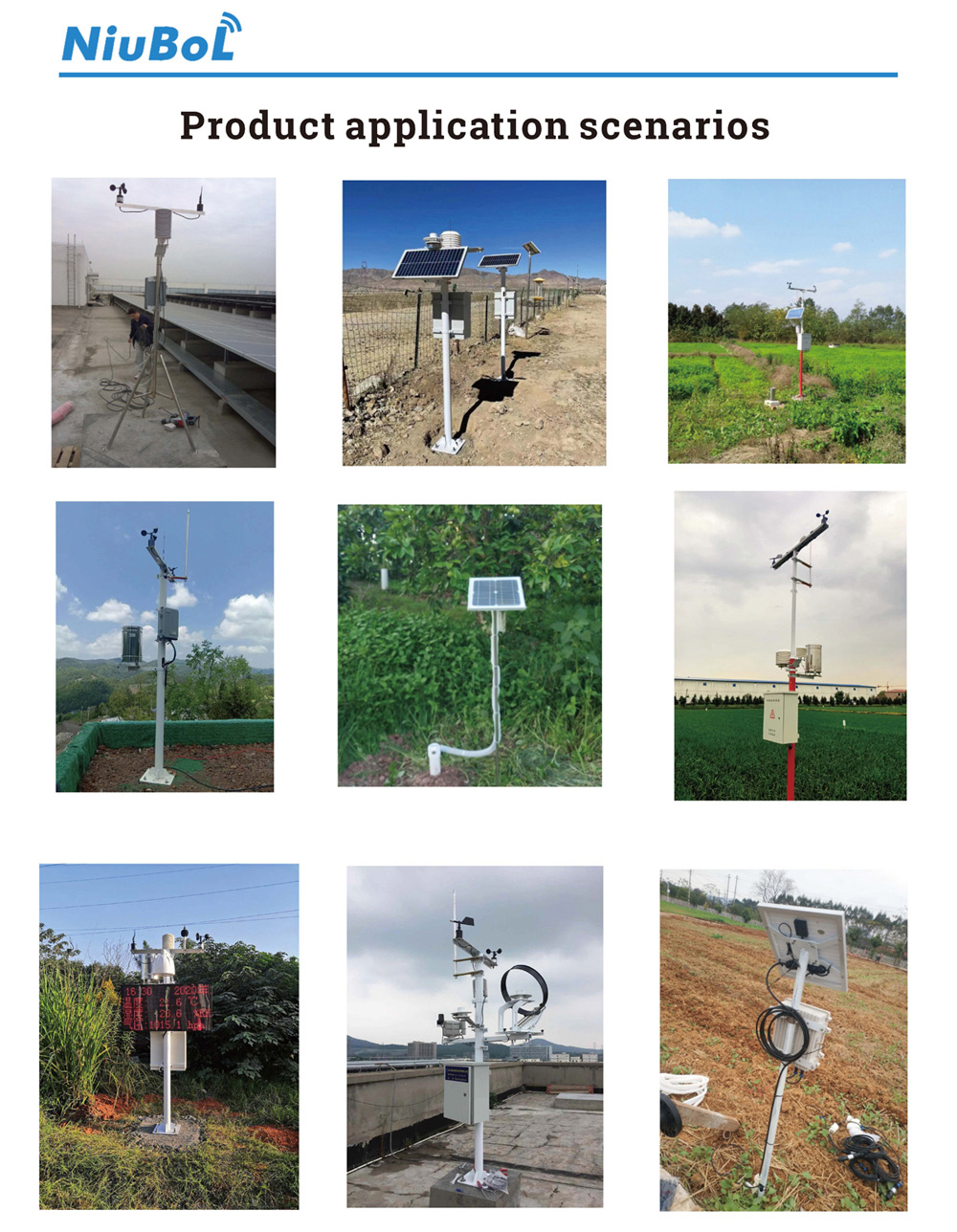
Agriculture vs PV weather station configuration turns on the measurements that differ, not the channels that happen to be shared. Select the right solar quantity, add the required soil or module observations and define matching records. Those choices make the station useful for the customer's actual analysis.
Prev:Buy Weather Station Online — Complete Guide for Professional Users
Next:What Is an Automated Weather Station (AWS)? How Does It Work?
Related recommendations
Sensors & Weather Stations Catalog
 Agriculture Sensors and Weather Stations Catalog-NiuBoL.pdf
Weather Stations Catalog-NiuBoL.pdf
Agriculture Sensors Catalog-NiuBoL.pdf
Water Quality Sensor Catalog-NiuBoL.pdf
Related products
 Combined air temperature and relative humidity sensor
 TDR Soil Moisture & Temperature Sensor for irrigation| RS485 |4-20mA| NBL-S-THR
 Soil pH sensor RS485 soil Testing instrument soil ph meter for agriculture |NBL-S-PH
 Wind Speed sensor Output Modbus/RS485/Analog/0-5V/4-20mA
 Tipping bucket rain gauge for weather monitoring auto rainfall sensor RS485/Outdoor/stainless steel
 Pyranometer Solar Radiation Sensor 4-20mA/RS485


Screenshot, WhatsApp to identify the QR code
WhatsApp number:+8615367865107
(Click on WhatsApp to copy and add friends)

