





— Blogs —
—Products—
 Consumer hotline +8618073152920
 WhatsApp:+8615367865107
Address:Room 102, District D, Houhu Industrial Park, Yuelu District, Changsha City, Hunan Province, China
Product knowledge
Time:2026-04-18 10:56:22 Popularity:447
Total Organic Carbon (TOC), as a comprehensive indicator for evaluating the total carbon content of organic matter in water, has become the core means for rapid monitoring of organic pollution in fields such as drinking water purification, pharmaceutical production, semiconductor manufacturing, and wastewater treatment. The TOC online analyzer uses non-dispersive infrared (NDIR) detection technology combined with ultraviolet digestion or persulfate oxidation processes to achieve real-time continuous measurement, replacing the lengthy traditional BOD5 and COD tests, and providing efficient process control data support for system integrators, IoT solution providers, project contractors, and engineering companies.
The NiuBoL TOC online analyzer series features designs such as automatic quantitative sampling, non-contact injection pumps, fully automatic operation, and multi-mode monitoring to meet the needs of multiple scenarios including pharmaceutical water for injection, semiconductor ultrapure water, power plant deionized water, and industrial wastewater treatment. This article details the working principle, advantages, application scenarios, selection and integration points, and maintenance specifications of the TOC online analyzer to help engineering teams build reliable water quality organic matter monitoring systems.
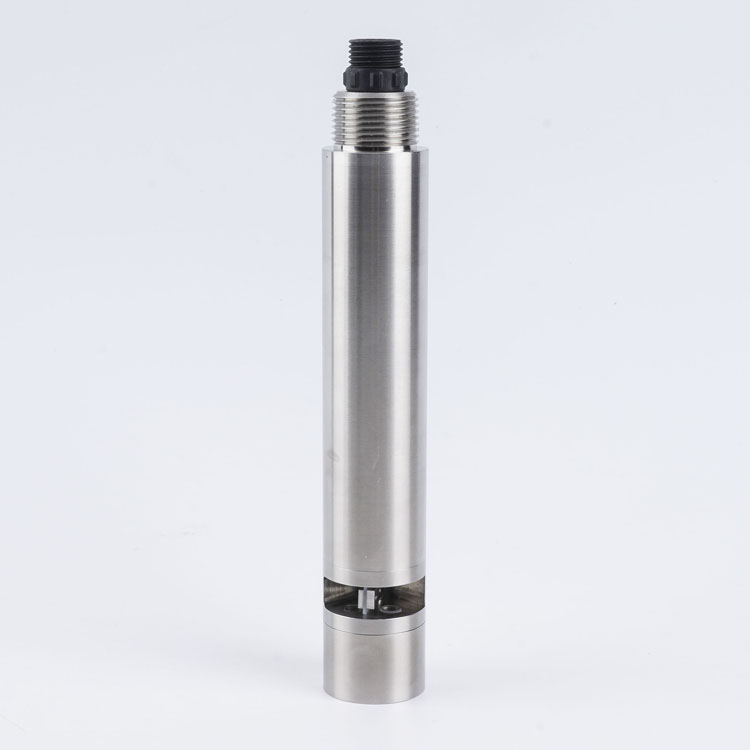
TOC measurement is based on first removing inorganic carbon (IC), then oxidizing organic matter into CO₂, and finally calculating the total organic carbon content (unit: mg/L, calculated as C) through NDIR detection of CO₂ concentration. The typical process includes:
After pretreatment, the water sample is injected into the system by an injection pump. Under the action of strong acid, inorganic carbon is converted into CO₂ gas and escapes through a gas-liquid separator. Subsequently, the total organic carbon in the remaining water sample undergoes an oxidation reaction with a strong oxidant in the ultraviolet digestion reactor to generate CO₂ gas. The carrier gas drives the CO₂ through a condenser and filter to remove solid particles and interfering substances, then enters the non-dispersive infrared NDIR gas measurement chamber. The photoelectric signal output by NDIR is directly related to the CO₂ concentration, thereby accurately reflecting the TOC value in the water sample.
This process realizes the TC - IC = TOC calculation to avoid inorganic carbon interference. Ultraviolet digestion technology significantly shortens the reaction time and supports online continuous monitoring, making it particularly suitable for low-concentration pure water and high-concentration wastewater scenarios. When organic compounds containing heteroatoms (such as N, P, S, Cl) are oxidized, corresponding ions are generated. System design must consider interference suppression to ensure measurement accuracy.
The NiuBoL TOC online analyzer optimizes this process by adopting an adjustable quantitative sampling device to ensure sampling accuracy and a non-contact injection pump to reduce corrosion of core components by reagents, thereby improving long-term equipment reliability.
The NiuBoL TOC online analyzer is designed for industrial field requirements and possesses the following engineering practical features:
Quantitative sampling adjustment function: Adjust the sampling volume according to actual water sample characteristics to ensure monitoring accuracy.
Non-contact injection pump: Avoids direct contact of reagents with the pump body, extends the service life of core components, and reduces maintenance frequency.
Fully automatic operation mode: Supports automatic calibration, automatic measurement, and automatic diagnosis, reducing manual intervention.
Diversified monitoring modes: Flexible switching between manual, timed, or periodic monitoring to adapt to different project operation and maintenance rhythms.
Intelligent warning mechanism: Automatic alarms for faults such as reagent leakage and abnormal states, reminding on-site maintenance and ensuring system continuity.
These designs enable the instrument to maintain stable output in high-frequency operating environments and are suitable for integration with PLC, DCS, or IoT platforms to achieve remote data acquisition and process optimization.
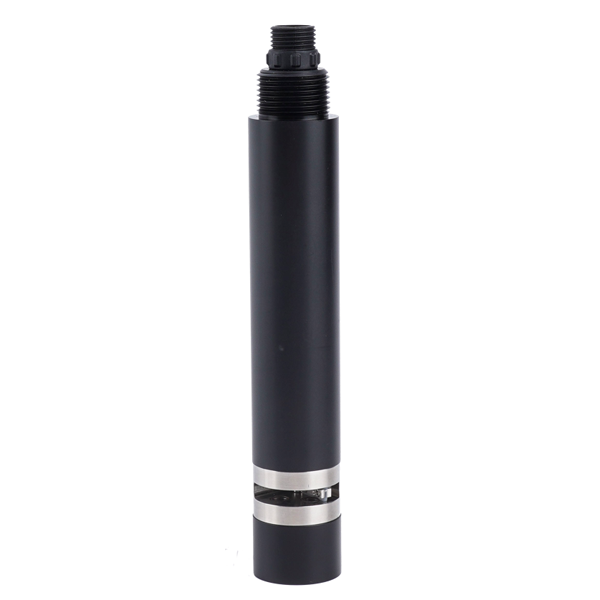
The TOC online analyzer is widely used in industrial processes that require strict control of organic pollution. It reflects the concentration of organic matter in water quality in real time and assists in process adjustment and compliance management.
Pharmaceutical Industry: Water for injection, purified water, and water production systems are core application scenarios. TOC, as a non-specific indicator, is used to monitor equipment cleanliness and water quality purity, complying with pharmacopoeia requirements for purified water and water for injection. Real-time online monitoring can quickly detect pollution events, support CIP/SIP cleaning validation, and ensure production safety and product quality.
Semiconductor Industry: Ultrapure water preparation systems and wafer processing require extremely high TOC levels (often requiring ppb-level control). Trace organic matter may cause wafer defects or process contamination. The TOC online analyzer monitors ultrapure water quality in real time to prevent organic pollution from affecting product yield. In engineering projects, it is often combined with conductivity, particle counters, etc., to form a multi-parameter ultrapure water monitoring network.
Power Industry: Deionized water preparation and boiler feedwater circulation systems require strict control of organic matter to avoid corrosion and scaling. TOC monitoring helps optimize desalination processes and ensures steam quality and safe equipment operation.
Municipal and Industrial Wastewater Treatment: Monitor TOC concentrations in the influent and effluent of civil and industrial water treatment facilities, evaluate organic pollution loads, and assist in optimizing biochemical treatment processes. Wastewater treatment plants can use TOC data to determine organic matter removal efficiency and achieve process control by combining with COD conversion functions. In drinking water sources and pipeline network monitoring, TOC serves as a rapid indicator to quantify natural organic matter (NOM) content and predict the risk of chlorinated disinfection by-products (DBPs) generation.
In addition, in the food and beverage, chemical, and other industries, the TOC online analyzer is also used for source water monitoring and process water quality control, supporting IoT solution providers in building distributed monitoring platforms to achieve cloud-based data analysis and early warning linkage.
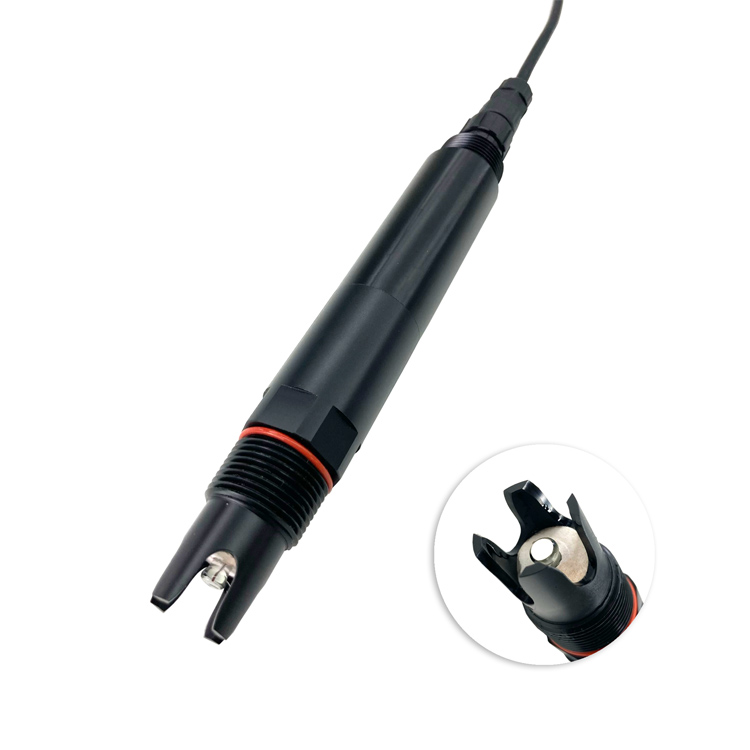
Selection must be evaluated based on application scenarios, water sample characteristics, and system integration requirements:
Concentration range: For pharmaceutical and semiconductor ultrapure water, prioritize low-concentration high-sensitivity models; for wastewater treatment or industrial wastewater, select wide-range, pollution-resistant designs.
Oxidation method: Ultraviolet digestion or UV persulfate oxidation is suitable for most water samples; high-concentration wastewater requires evaluation of oxidation efficiency.
Detection technology: NDIR detection provides direct CO₂ measurement with strong anti-interference capability.
To maintain measurement accuracy, a regular maintenance plan must be established. During monitoring, pay attention to reagent consumption and leakage warnings, and replenish or replace them in time. Regularly clean the sampling pipelines and reactors to prevent organic matter residue or blockage. The automatic calibration function can be used daily, and manual calibration should be combined for verification in case of abnormalities.
The non-contact injection pump design reduces corrosion risks, but the pump body and pipeline seals still need to be checked regularly. When not in use for a long time, drain the reagents and perform protective maintenance according to the instructions. Standardized maintenance can extend equipment service life and reduce unplanned downtime.
A: TOC provides fast and continuous total organic carbon data, replacing lengthy biochemical or chemical oxygen demand tests, and is suitable for real-time process control and pollution early warning.
A: TOC limits for water for injection and purified water usually refer to pharmacopoeia requirements (e.g., ≤500 ppb). Online analyzers provide real-time monitoring to ensure compliance.
A: Advanced processes often require TOC control at 1–10 ppb or even lower. Online instruments can promptly detect pollution events and ensure wafer process quality.
A: It reflects changes in organic load in real time, guides biochemical tank aeration or dosing adjustment, improves removal efficiency, and reduces energy consumption.
A: It directly measures CO₂ concentration with strong anti-interference capability and is suitable for accurate quantification of water samples with different concentrations.
A: It supports manual, timed, periodic, and other modes, and features automatic calibration and fault warning functions.
A: Avoid high temperature, high humidity, strong light, and strong corrosive environments. The water flow at the sampling point should be stable, and the pipeline material must be compatible with the water sample characteristics.
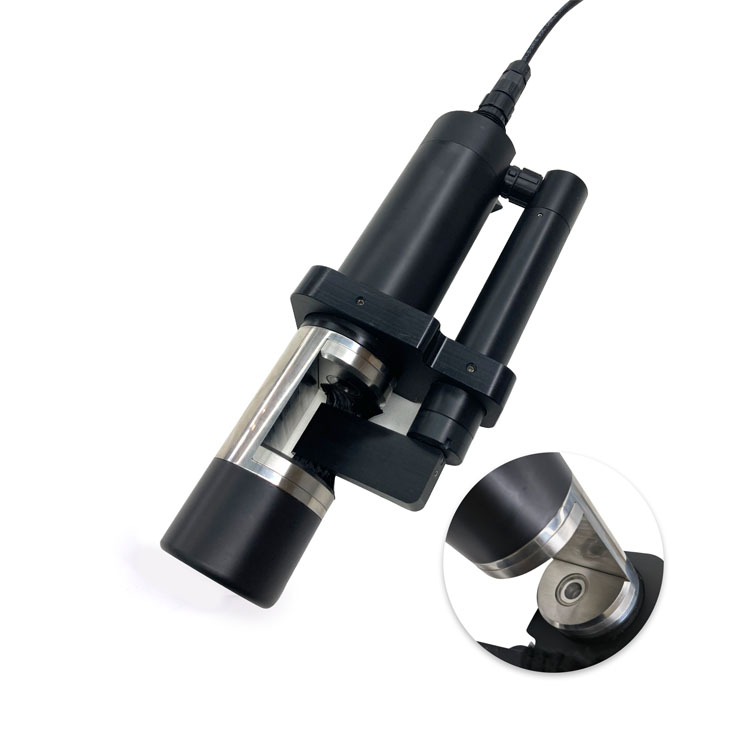
The Total Organic Carbon TOC online analyzer, with NDIR detection and ultraviolet digestion technology as the core, provides real-time and reliable organic pollution monitoring data for industrial fields such as pharmaceuticals, semiconductors, power, and wastewater treatment. The NiuBoL TOC online analyzer, with features such as automatic sampling, non-contact pumps, fully automatic operation, and intelligent warnings, reduces operation and maintenance difficulty and improves system integration efficiency.
 NBL-NHN-302 Industrial-grade Multi-parameter Online Ammonia Nitrogen Sensor.pdf
NBL-RDO-206 Online Fluorescence Dissolved Oxygen Sensor.pdf
NBL-COD-208 Online COD Water Quality Sensor.pdf
NBL-CL-206 Water Quality Sensor Online Residual Chlorine Sensor.pdf
Related recommendations
Sensors & Weather Stations Catalog
Agriculture Sensors and Weather Stations Catalog-NiuBoL.pdf
Weather Stations Catalog-NiuBoL.pdf
Agriculture Sensors Catalog-NiuBoL.pdf
Water Quality Sensor Catalog-NiuBoL.pdf
Related products
 Combined air temperature and relative humidity sensor
 Soil Moisture Temperature sensor for irrigation|NBL-S-THR
 Soil pH sensor RS485 soil Testing instrument soil ph meter for agriculture |NBL-S-PH
 Wind Speed sensor Output Modbus/RS485/Analog/0-5V/4-20mA
 Tipping bucket rain gauge for weather monitoring auto rainfall sensor RS485/Outdoor/stainless steel
 Pyranometer Solar Radiation Sensor 4-20mA/RS485

Screenshot, WhatsApp to identify the QR code
WhatsApp number:+8615367865107
(Click on WhatsApp to copy and add friends)

