





— Blogs —
—Products—
 Consumer hotline +8618073152920
WhatsApp:+8615367865107
Address:Room 102, District D, Houhu Industrial Park, Yuelu District, Changsha City, Hunan Province, China
Product knowledge
Time:2025-11-29 17:13:38 Popularity:900
Four agricultural conditions terminology groups several kinds of farm information; it does not define four universal sensor outputs. Project descriptions may combine soil moisture, crop growth, pest observations and weather or disaster-related information. Translate each heading into a required observation or report before selecting NiuBoL instruments. A field photograph, a soil percentage and a damage assessment are different deliverables.

The terms used in agricultural monitoring can describe a measured quantity, the condition of a crop or an assessment made from several observations. Treating them as interchangeable leads to incomplete equipment orders. In particular, weather describes atmospheric conditions; disaster impact describes what happened to the crop or field. The former does not automatically establish the latter.
| Term in a project description | Meaning to clarify | Example of a specific deliverable |
|---|---|---|
| Soil moisture condition | Water status in a specified soil volume or layer | Moisture reading with plot, depth, method and unit |
| Crop growth condition | Observed development or a defined growth indicator | Dated field image or a measured plant dimension |
| Pest condition | Trap observations or findings from crop inspection | Reviewed count for a stated sampling period |
| Weather conditions | Atmospheric observations at a site | Air temperature or accumulated liquid rainfall |
| Disaster impact | Assessed damage following an event | Field inspection linked to location and event time |
Where a tender uses four headings but includes both weather and damage reporting, identify which heading contains each function. Do not silently remove one to make the equipment fit four boxes. The scope should remain clear even if the headings are translated differently.
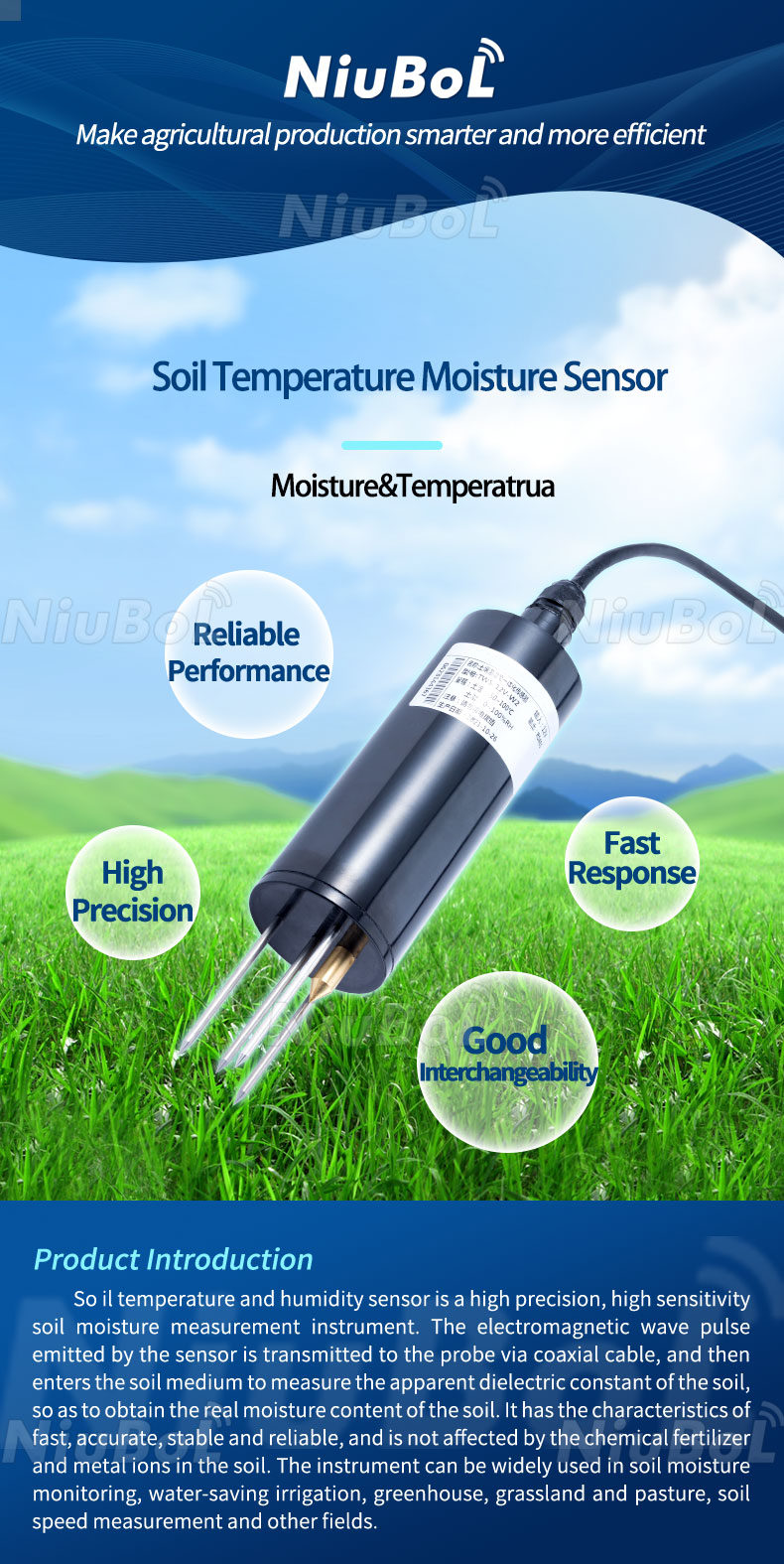
The NBL-S-THR measures soil moisture and temperature. It does not measure soil pH, EC or NPK. If a schedule simply says soil condition, ask which of those quantities is actually needed. Adding a channel name in the receiving software does not add the corresponding measurement to the probe.
| NBL-S-THR item | Specification | Meaning in the data schedule |
|---|---|---|
| Moisture output | 0-100%; 0.1% resolution | Local soil measurement, not an aerial crop image indicator |
| Soil temperature | -50 to 100 C; +/-0.5 C accuracy | Separate temperature channel |
| Supply and digital output | DC 12-24 V; RS485 Modbus RTU option | Specify the output version and receiving interface |
Retain soil type and installation depth in the record. A moisture percentage without its measurement basis and location is difficult to compare across fields. Soil water content and water potential also require different interpretation; neither term should be substituted for the other just to reuse a dashboard label.
A crop camera provides images of its field of view. Quantitative plant height, leaf area or a vegetation index requires an appropriate measurement method or separately validated image-processing function. An ordinary image does not automatically provide all those indicators. Identify whether the project wants visual inspection, numerical analysis or both.
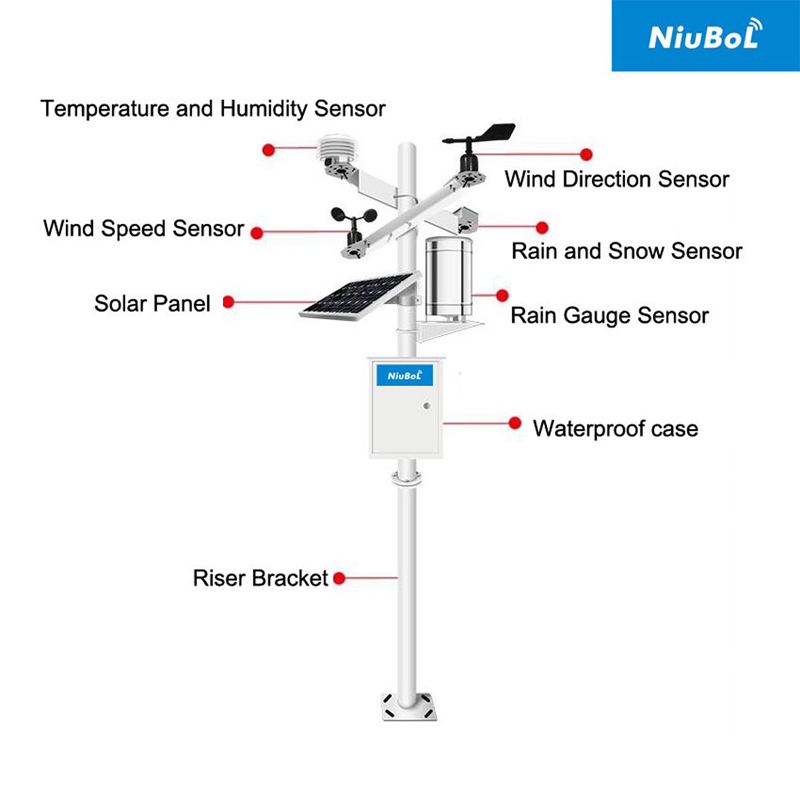
A weather station supplies selected atmospheric measurements. For example, the NBL-W-LBTH measures air temperature, RH and pressure. These can help interpret growing conditions, but air temperature alone does not measure a crop's leaf temperature, and a low reading does not establish the extent of frost damage. Field observations remain necessary when reporting actual damage.
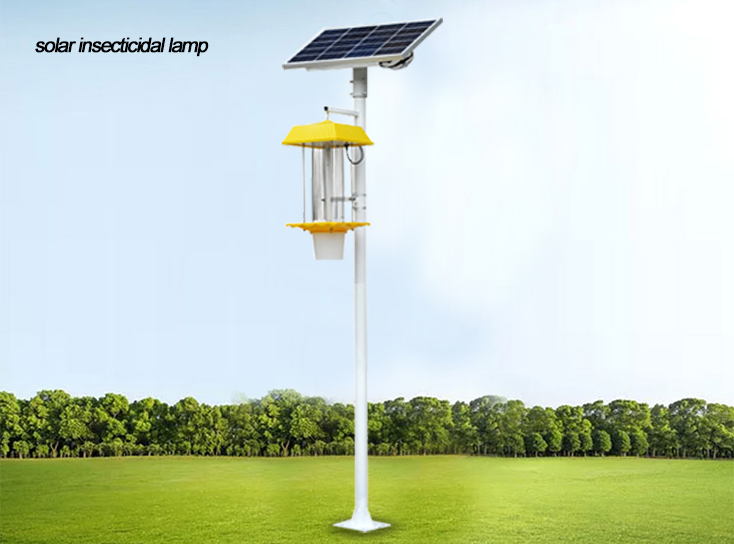
An insecticidal lamp is intended to attract and kill susceptible insects. It should not be specified as an automated monitoring terminal unless the ordered configuration actually collects the required observations. A monitoring system needs a defined sample period, a usable record and a way to review the result. A collection container alone is not a verified species count.
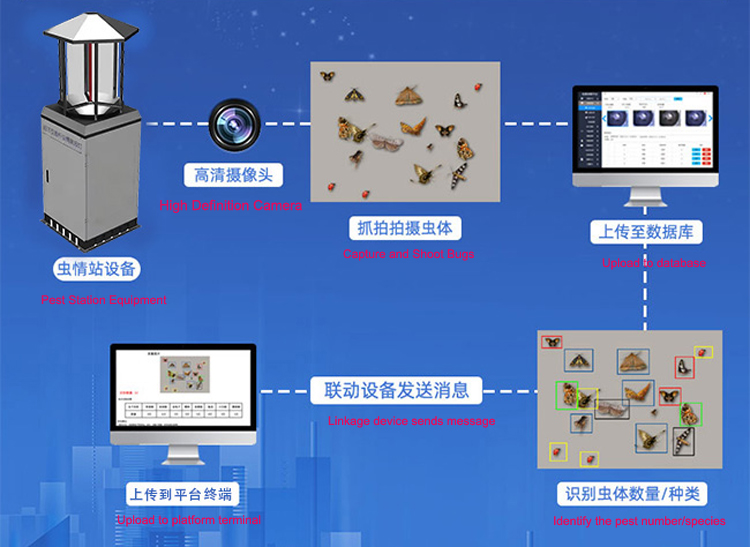
The NiuBoL remote insect monitoring system combines insect collection and imaging functions. Evaluate its output for the local target insects. Trap counts describe the collected sample, not the number of insects per hectare or the percentage of damaged plants. Disease incidence and severity need their own assessment method; neither can be read directly from a lamp's catch total.
For each required output, name its quantity or observation, unit or file type, location and collection period. Then assign the instrument or inspection method. This is more useful than ordering a complete four-condition system without stating whether the crop module supplies images, measurements or a calculated score.
Keep measured inputs separate from calculated indicators and operator assessments in the receiving records. The NBL-PH-1 can acquire compatible sensor data, but its serial interface does not imply that camera images or agronomist reports travel through the same register map. Review those routes separately. Use the required outputs to compare an itemized system quotation and ask NiuBoL for equipment matched to that scope.
No. One instrument may supply several measured channels, while a single heading may require multiple locations or observation methods. Specify the outputs and sites before counting equipment.
No. They describe environmental conditions at the instrument. A damage report also needs observations of the affected crop or land and the relevant assessment procedure.
Not unless those channels are explicitly part of the model. The NBL-S-THR provides moisture and temperature only. A nutrient requirement needs a separately selected method and instrument.
Not directly. Catch depends on the sampling method, operating period and insect behavior. Preserve those details and use an appropriate field assessment before expressing a population or crop-damage measure.
Identify whether each heading requires numerical sensor data, images, reviewed counts, calculated indicators or field reports. Include locations and the receiving system's requirements. That definition prevents unlike packages from being compared as equivalent.
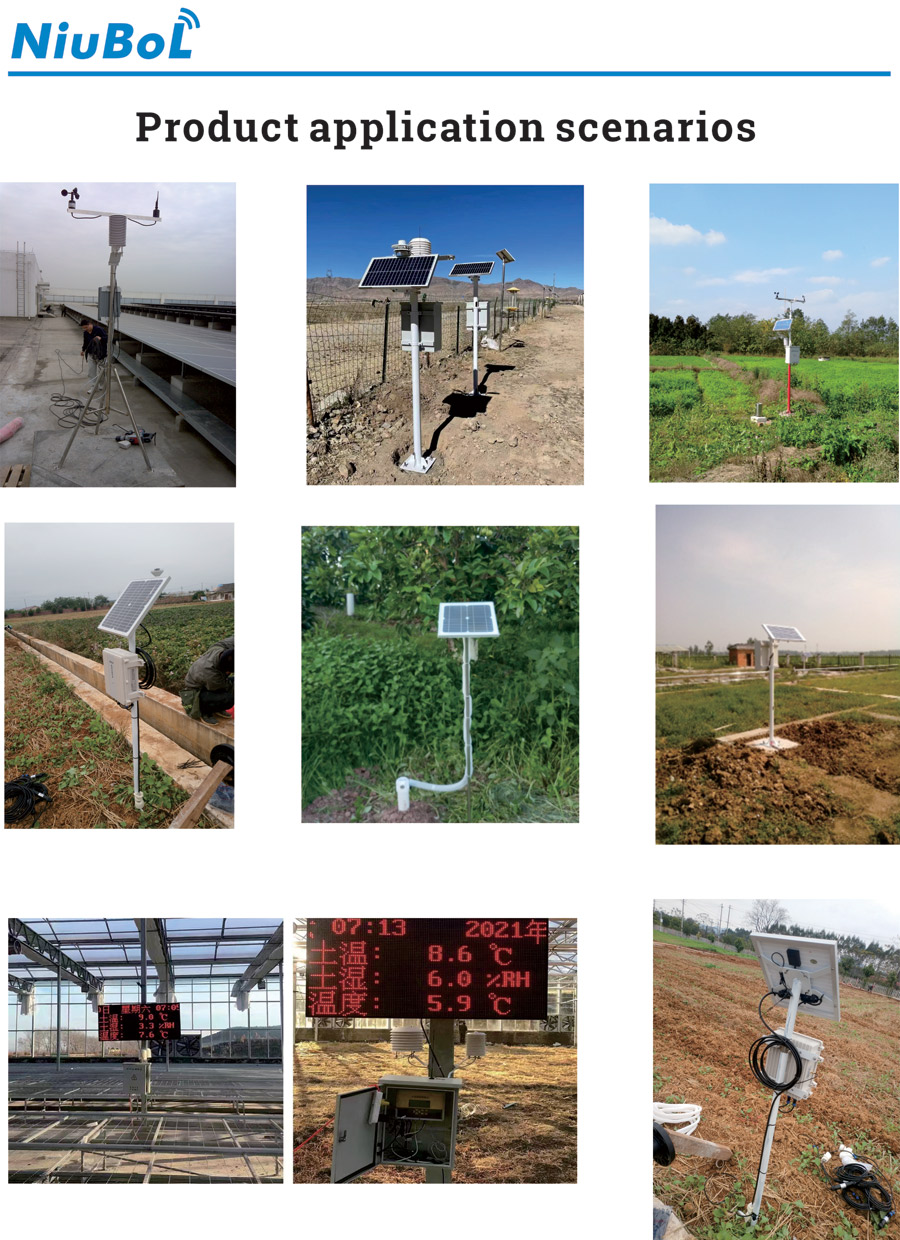
Clear four agricultural conditions terminology prevents a broad project label from becoming an incomplete equipment specification. Name the observations required, preserve their units and methods, and separate weather, crop condition, pest samples and damage assessments. Select the instruments after those deliverables are clear.
Prev:Four-Condition Monitoring System Cost: Compare the Quotation
Next:In-Depth Comparison and Selection Guide: Mechanical Weather Stations vs. Ultrasonic Weather Stations
Related recommendations
Sensors & Weather Stations Catalog
 Agriculture Sensors and Weather Stations Catalog-NiuBoL.pdf
Weather Stations Catalog-NiuBoL.pdf
Agriculture Sensors Catalog-NiuBoL.pdf
Water Quality Sensor Catalog-NiuBoL.pdf
Related products
 Combined air temperature and relative humidity sensor
 TDR Soil Moisture & Temperature Sensor for irrigation| RS485 |4-20mA| NBL-S-THR
 Soil pH sensor RS485 soil Testing instrument soil ph meter for agriculture |NBL-S-PH
 Wind Speed sensor Output Modbus/RS485/Analog/0-5V/4-20mA
 Tipping bucket rain gauge for weather monitoring auto rainfall sensor RS485/Outdoor/stainless steel
 Pyranometer Solar Radiation Sensor 4-20mA/RS485


Screenshot, WhatsApp to identify the QR code
WhatsApp number:+8615367865107
(Click on WhatsApp to copy and add friends)

