





— Blogs —
—Products—
 Consumer hotline +8618073152920
WhatsApp:+8615367865107
Address:Room 102, District D, Houhu Industrial Park, Yuelu District, Changsha City, Hunan Province, China
Product knowledge
Time:2025-12-09 15:29:06 Popularity:1544
A temperature and humidity monitoring system is a combination of environmental sensors, data acquisition equipment and monitoring software used to measure, record and analyze air temperature and relative humidity at one or more locations.
These systems are widely used in greenhouses, agricultural facilities, warehouses, data centers, laboratories, archives, industrial buildings and other environments where temperature and humidity conditions need to be monitored continuously.
A typical system includes temperature and humidity sensors, a data logger or controller, a communication network and a local or remote monitoring interface. Data recording, remote alarms and automatic environmental control depend on the selected hardware and software configuration.
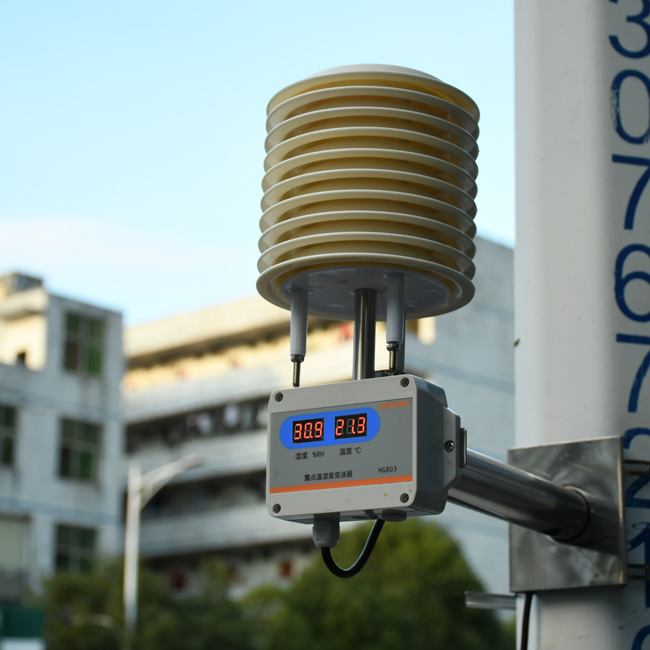
A temperature and humidity monitoring system operates by collecting measurements from sensors installed in representative locations. The sensor electronics convert physical measurements into electrical or digital signals that can be read by a compatible controller or data logger.
Temperature is commonly measured using thermistors, resistance temperature detectors or semiconductor sensing elements. Relative humidity is commonly measured using humidity-sensitive materials whose electrical properties change with ambient moisture conditions.
The data logger receives these measurements, records them at a configured interval and makes them available to a local display, PLC, SCADA system or monitoring platform.
Temperature & Humidity Sensors → RS485 / Analog Output → Data Logger / PLC → Communication Gateway → Monitoring Platform
For remote installations, a compatible gateway can use 4G, Ethernet, Wi-Fi or another supported communication network to transmit sensor data. The individual sensor does not need to contain a cellular modem or cloud connection.
The design of a monitoring system depends on how many locations must be measured, the required accuracy, the installation environment and whether local or remote data access is necessary.
| Component | Function |
|---|---|
| Temperature Sensor | Measures the temperature at the selected monitoring point. |
| Humidity Sensor | Measures relative humidity, normally expressed as %RH. |
| Data Logger / PLC | Reads sensor outputs and records or processes measurements. |
| Communication Gateway | Transfers measurement data to remote systems using a supported network. |
| Monitoring Software | Displays current measurements, historical records and other supported monitoring information. |
| Power Supply | Provides electrical power to sensors and data acquisition equipment. |
| Alarm / Control Equipment | Optional controllers, relays and software used for alarms or equipment control. |
Temperature and humidity sensors are the primary measurement devices in the system. They may be supplied as separate probes or integrated into a single transmitter.
For indoor monitoring, wall-mounted instruments are commonly used. Outdoor meteorological applications normally require sensors with suitable environmental protection and radiation shielding.

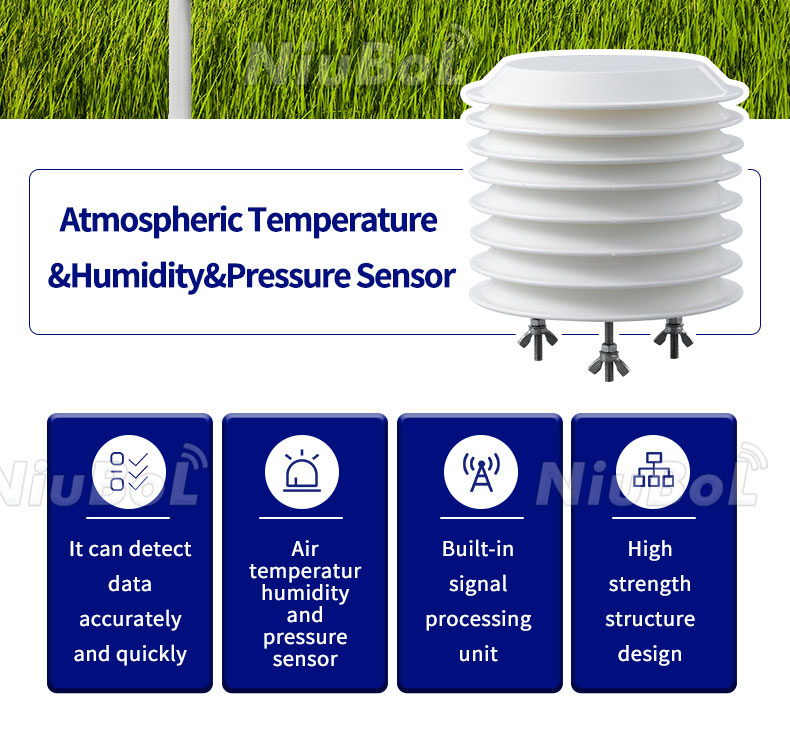
The NBL-W-LBTH integrates air temperature, relative humidity and atmospheric pressure measurements for meteorological and environmental monitoring.
According to its published technical specifications, the NBL-W-LBTH provides a temperature range of -40 to +80°C, relative humidity measurement from 0 to 100%RH and atmospheric pressure measurement from 10 to 1200 hPa. Available output configurations include RS485 and 4–20mA, depending on the selected version.
The NBL-W-WHT wall-mounted temperature and humidity sensor is designed for monitoring indoor or suitable sheltered environments. It combines air temperature and relative humidity measurement in one enclosure.
The published NBL-W-WHT manual specifies a temperature measurement range of -50 to +100°C, relative humidity range of 0 to 100%RH and output options including RS485 or 4–20mA. The operating environment and required installation protection should be considered separately from the measuring range.
For additional sensor options, see the NiuBoL Temperature and Humidity Sensors category.
Depending on the project, a temperature and humidity monitoring system may also include atmospheric pressure, soil moisture, soil temperature and leaf wetness measurements.
| Sensor | Measurements | Typical Application |
|---|---|---|
| NBL-W-LBTH | Air temperature, relative humidity and pressure | Weather stations, agriculture and outdoor monitoring |
| NBL-W-WHT | Air temperature and relative humidity | Indoor environmental monitoring, buildings and storage facilities |
| NBL-S-TM | Soil temperature and volumetric soil moisture | Agriculture, irrigation and greenhouse root-zone monitoring |
| NBL-W-LM | Leaf surface wetness and temperature | Agriculture, greenhouses and plant-environment research |
Soil moisture and air relative humidity are different measurements. Soil moisture is commonly reported as volumetric water content, while atmospheric relative humidity is expressed as %RH. These values should not be treated as interchangeable.
Greenhouse and agricultural monitoring may require more than air temperature and relative humidity measurements. Soil moisture and temperature sensors provide information about root-zone conditions, while leaf wetness sensors respond to moisture on a leaf-like sensing surface.
The NBL-W-LM Leaf Wetness and Temperature Sensor is intended to monitor leaf-surface wetness and temperature. These measurements can help assess periods of leaf wetness and support plant-environment studies and appropriately designed disease-risk models.
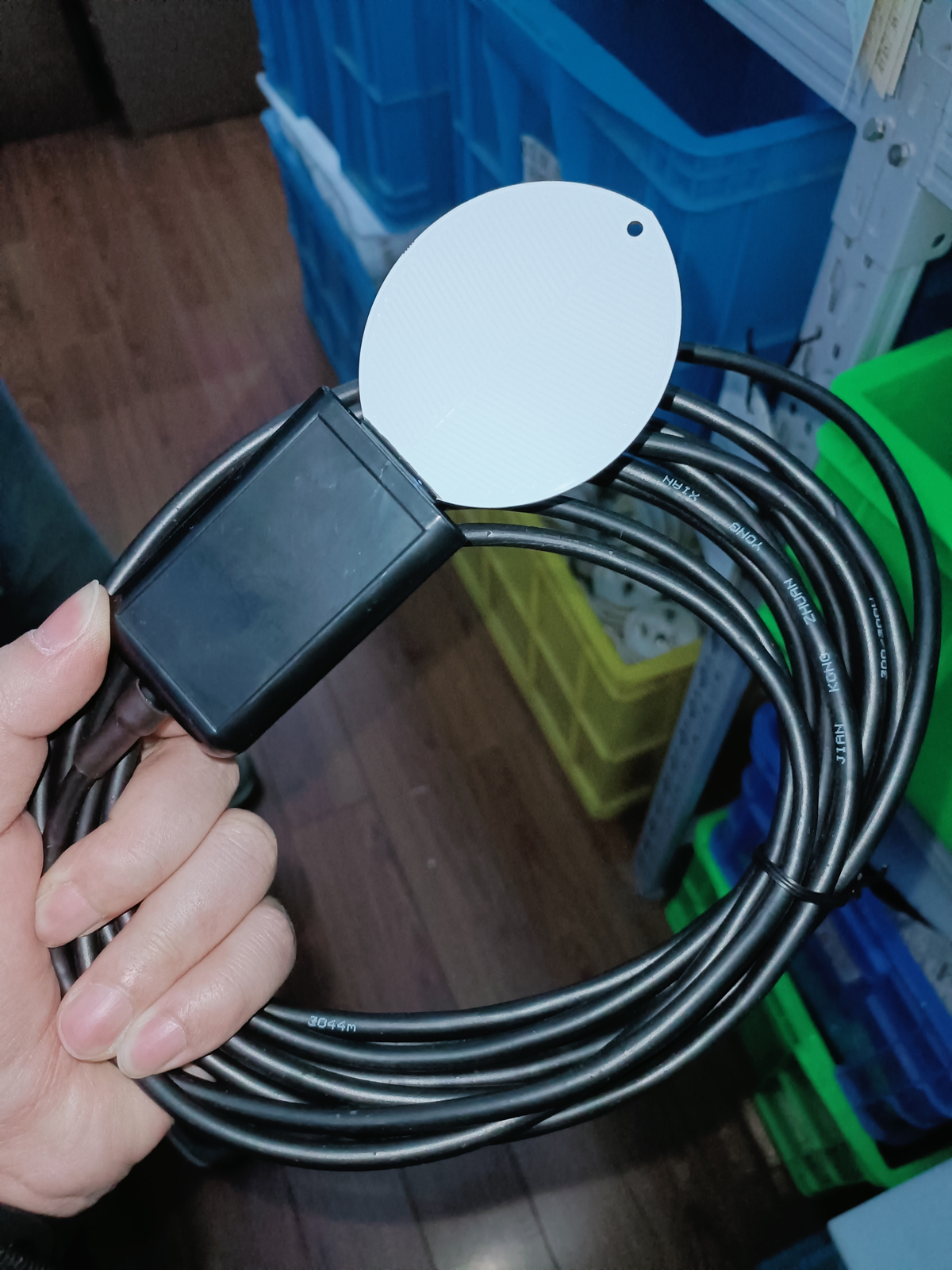
Leaf wetness data alone does not diagnose plant diseases or automatically determine pesticide requirements. Interpretation requires suitable agronomic context, environmental data and analytical methods.
Industrial temperature and humidity transmitters commonly use digital or analog output signals. The correct interface depends on the receiving system and available input channels.
| Interface | Typical Connection | Selection Consideration |
|---|---|---|
| RS485 Modbus RTU | PLC, RTU, data logger or IoT gateway | Digital measurements and suitable multi-device communication networks |
| 4–20mA | PLC analog input or process controller | Conventional industrial analog measurement systems |
| Wireless Communication | Compatible gateway or wireless node | Remote or distributed monitoring where network equipment is available |
RS485 is a local electrical communication interface. It does not provide Internet connectivity by itself. A compatible gateway or data logger is required when measurements need to be transferred through 4G, Ethernet, Wi-Fi or another remote communication network.
For RS485 Modbus RTU integration, the receiving equipment must support the correct communication settings, device address, register mapping and value conversion. For analog transmitters, the receiving device must support the specified input range and signal scaling.
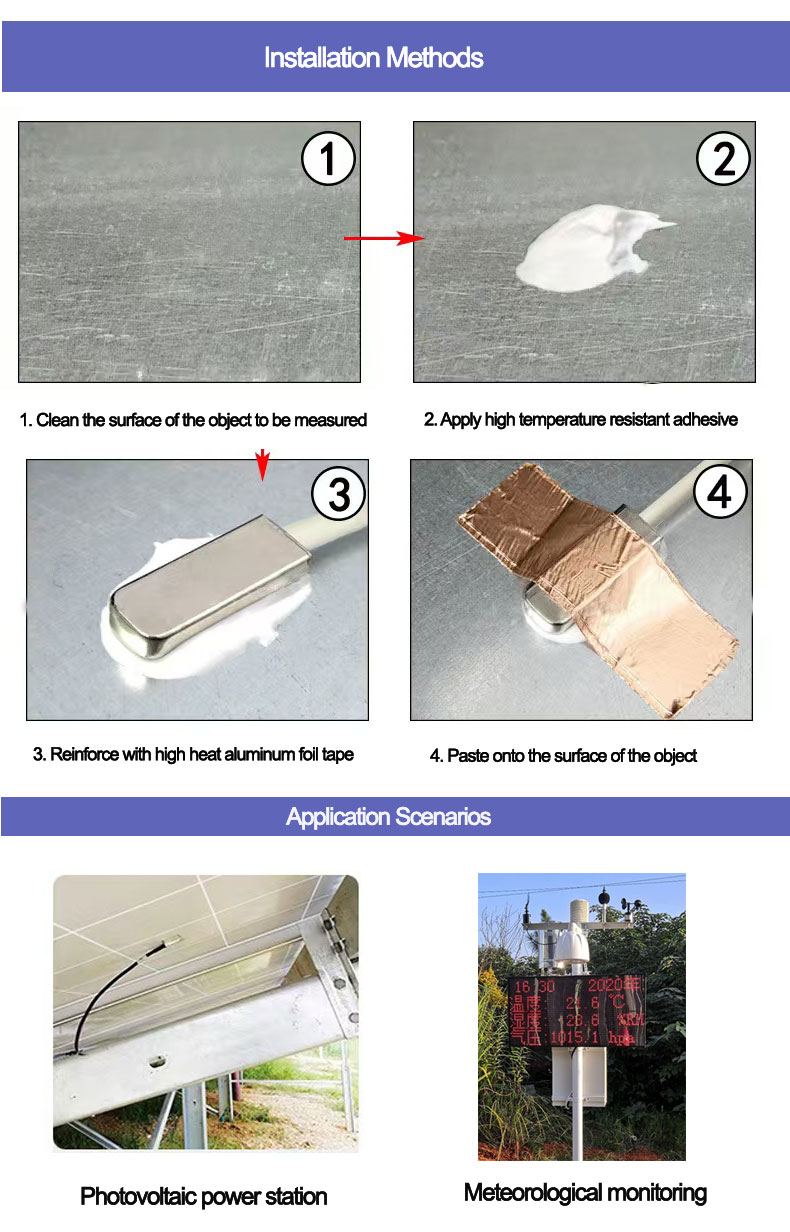
A monitoring system may operate locally, remotely or through a combination of both methods.
| Monitoring Method | How It Works |
|---|---|
| Local Monitoring | Sensor data is collected by a nearby display, PLC or data logger. |
| Remote Monitoring | A compatible communication device transfers measurements to a remote server or monitoring platform. |
| Hybrid Monitoring | Local records are maintained while remote data transmission is also provided. |
Remote monitoring features may include live data display, historical records, charts, event notifications and data export. Availability depends on the data logger, communication equipment, monitoring software and service configuration.

Temperature and humidity monitoring systems can be used to identify environmental conditions outside a defined operating range. Alarm and control functions require additional hardware or software capable of evaluating measurement data and taking the appropriate action.
For example, a greenhouse monitoring system may send temperature and humidity measurements to a controller. When configured thresholds are reached, the controller may operate suitable ventilation, heating or dehumidification equipment.
Sensor Measurement → Controller / Monitoring Software → Threshold Evaluation → Alarm or Control Output
The sensor itself does not automatically activate fans, heaters, air conditioners or irrigation valves unless it is integrated with the necessary control equipment. Alarm delivery, mobile notifications and remote equipment operation should be confirmed for the actual system configuration.
Continuous temperature and humidity data helps operators understand environmental conditions, identify deviations and maintain records for operational or research purposes.
| Application | Monitoring Purpose |
|---|---|
| Greenhouses | Monitor air temperature and humidity to support greenhouse environmental management. |
| Agricultural Facilities | Record environmental conditions in cultivation and agricultural production areas. |
| Warehouses | Track storage conditions and identify environmental changes affecting stored goods. |
| Data Centers | Monitor environmental conditions around IT equipment and infrastructure. |
| Archives and Libraries | Maintain environmental records relevant to preservation and storage management. |
| Laboratories | Measure room conditions for environmental observation and process management. |
| Food and Pharmaceutical Storage | Monitor conditions against product-specific storage requirements and applicable procedures. |
| Animal Housing | Provide environmental measurements for livestock facility monitoring. |
Required temperature and humidity limits vary by application, stored material, equipment manufacturer and applicable operating requirements. There is no single temperature and humidity range that is appropriate for every data center, warehouse or pharmaceutical storage facility.
Sensor placement is important for representative measurements. The correct installation location depends on the monitored environment and how the resulting data will be used.
| Installation Factor | Consideration |
|---|---|
| Measurement Location | Select points representative of the area or equipment being monitored. |
| Direct Sunlight | Avoid direct solar heating or use an appropriate radiation shield for outdoor air measurements. |
| Airflow | Avoid locations where restricted or unusual airflow causes unrepresentative readings. |
| Heat and Moisture Sources | Consider nearby heaters, machinery, exhaust outlets, humidifiers and water sources. |
| Outdoor Protection | Use suitable sensor housings, mounting accessories and environmental protection. |
| Communication Wiring | Follow the selected sensor manual for power, RS485 or analog wiring and cable requirements. |
| Maintenance Access | Ensure sensors can be inspected, cleaned and replaced when required. |
A monitoring system should be selected according to the measured environment, required performance and system integration needs rather than by the sensor name alone.
| Selection Item | Information to Confirm |
|---|---|
| Measurement Parameters | Air temperature, relative humidity, pressure or additional environmental measurements |
| Measurement Range | Minimum and maximum expected environmental conditions |
| Accuracy and Resolution | Required measurement performance and any project acceptance criteria |
| Number of Monitoring Points | Number of rooms, zones, greenhouses or outdoor locations |
| Output Interface | RS485 Modbus, 4–20mA or another required interface |
| Data Recording | Required sampling interval, data storage and historical records |
| Remote Communication | 4G, Ethernet, Wi-Fi or other supported network options |
| Alarm Requirements | Threshold notifications, local alarms or external control outputs |
| Installation Conditions | Indoor, outdoor, industrial, agricultural or other environmental conditions |
| Data Destination | Local display, PLC, SCADA, cloud platform or private server |
A1. It is a system that uses environmental sensors and data acquisition equipment to measure, record and monitor temperature and relative humidity at one or more locations.
A2. Monitoring collects and displays environmental measurements. Automatic control uses those measurements together with a controller, software and suitable output equipment to operate connected devices.
A3. Yes, when the data logger has sufficient compatible input capacity. RS485 Modbus sensors can share a suitable communication bus with correctly configured device addresses, wiring and communication settings.
A4. Selected NiuBoL temperature and humidity sensors support RS485 Modbus RTU. Other model configurations provide analog signals such as 4–20mA.
A5. Yes. A compatible data logger or IoT gateway can transmit measurements to a private server using supported network connections and communication protocols.
A6. Alarm functions are available when the system includes suitable monitoring software or controllers configured to evaluate measurement thresholds and generate notifications or outputs.
A7. Air relative humidity represents the moisture condition of the air relative to saturation and is expressed as %RH. Soil moisture sensors commonly report volumetric water content, which is a different physical measurement.
A8. Outdoor applications require sensors suitable for environmental exposure, with appropriate protection and radiation shielding when representative ambient air measurements are needed.
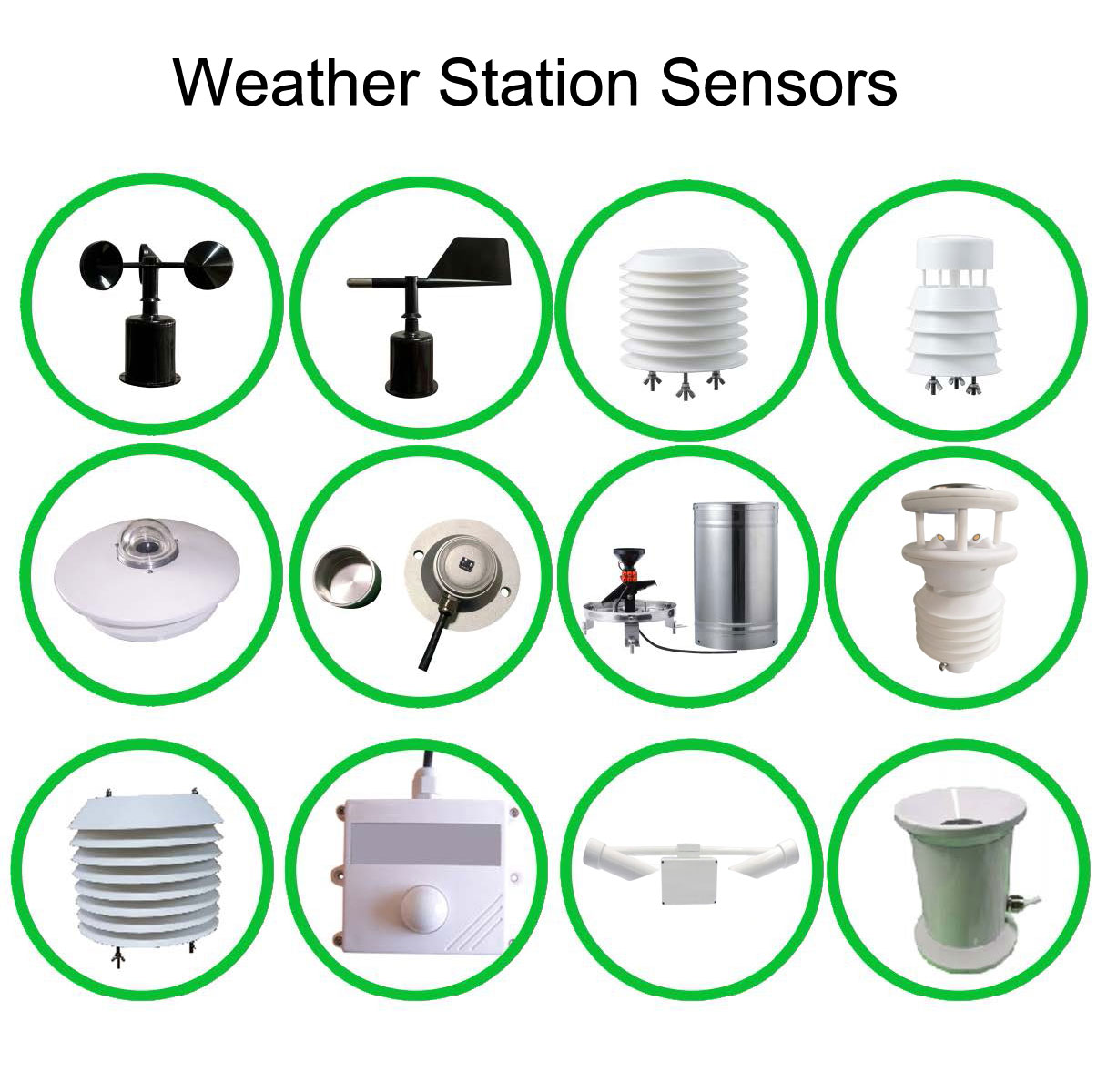
The following NiuBoL technical documents provide specifications and installation information for selected atmospheric, wall-mounted and related temperature sensors.
 NBL-W-LBTH Atmosphere Temperature, Humidity and Pressure Sensor Instruction Manual V4.0
NBL-W-WHT Wall-Mounted Temperature and Humidity Sensors Instruction Manual
NBL-W-PPT-SMD Solar Panel Temperature Sensors
NiuBoL provides temperature and humidity sensors, atmospheric monitoring instruments and data acquisition equipment for agriculture, weather stations, environmental monitoring and industrial applications.
For indoor and outdoor sensor options, explore the Temperature and Humidity Sensors category. For weather station applications, see the Automatic Weather Station selection page.
For system selection and quotation, specify the monitoring application, required measurement parameters, number of locations, accuracy requirements, output interface, power supply, cable length, communication method, software requirements and project quantity.
Prev:Water Resource Monitoring System: Measurements, Forecasts and Control Boundaries
Next:PV Module Temperature Sensor: The Key to Precision Operation of Photovoltaic Power Plants
Related recommendations
Sensors & Weather Stations Catalog
 Agriculture Sensors and Weather Stations Catalog-NiuBoL.pdf
Weather Stations Catalog-NiuBoL.pdf
Agriculture Sensors Catalog-NiuBoL.pdf
Water Quality Sensor Catalog-NiuBoL.pdf
Related products
 Combined air temperature and relative humidity sensor
 TDR Soil Moisture & Temperature Sensor for irrigation| RS485 |4-20mA| NBL-S-THR
 Soil pH sensor RS485 soil Testing instrument soil ph meter for agriculture |NBL-S-PH
 Wind Speed sensor Output Modbus/RS485/Analog/0-5V/4-20mA
 0.2mm Tipping Bucket Rain Gauge for Weather & Hydrology | NiuBoL
 Pyranometer Solar Radiation Sensor 4-20mA/RS485


Screenshot, WhatsApp to identify the QR code
WhatsApp number:+8615367865107
(Click on WhatsApp to copy and add friends)

