





— Blogs —
—Products—
 Consumer hotline +8618073152920
WhatsApp:+8615367865107
Address:Room 102, District D, Houhu Industrial Park, Yuelu District, Changsha City, Hunan Province, China
Product knowledge
Time:2024-10-19 21:24:40 Popularity:2440
A simple weather station is a configuration with a limited, clearly defined measurement task. It is not a formal accuracy class or a fixed six-sensor package. Reduce unnecessary channels and accessories while retaining the exposure, acquisition and records the task needs. A small station can support a focused professional study; a larger package can still be unsuitable if it does not measure the required quantity.
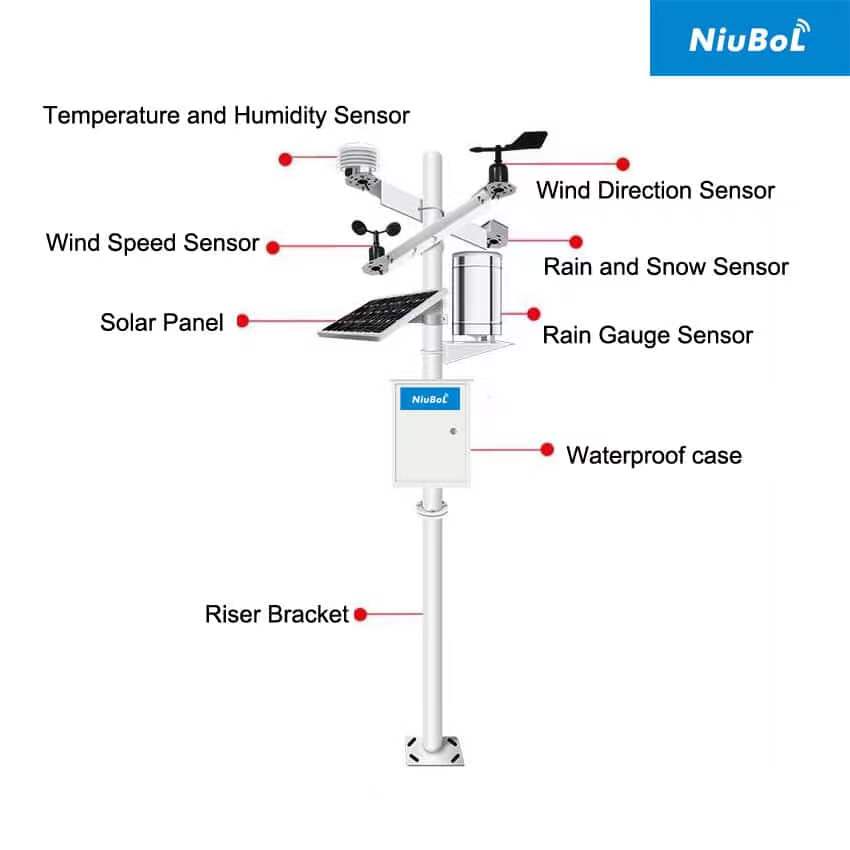
Start with a sentence describing the required observation: record rainfall at this site, compare air conditions in this greenhouse, or observe local wind during a field campaign. Those tasks lead to different configurations. None automatically requires every sensor on a weather-station catalogue page.
Then state how the result must be used. A current display for an attended inspection differs from an archived daily record. Reducing the number of sensors may be reasonable; removing recording from a project that needs overnight history changes the deliverable. Define both the quantity and the required record before comparing offers.
| Focused task | Configuration to assess | What it does not establish |
|---|---|---|
| Local liquid-rain record | Suitable rain gauge, compatible acquisition, power and recording | Root-zone moisture or water in an excavation |
| Air temperature and RH history | Suitable shielded air probe and recorder at the intended exposure | Rainfall, leaf temperature or a complete crop-risk assessment |
| Wind observations | Speed and, where required, direction instruments with appropriate acquisition | A forecast or automatic permission for a hazardous operation |
These are task examples, not universal packages. The project may need additional observations, but each should answer an identified question. A basic station does not become a complete irrigation system merely because air temperature and rainfall are present.
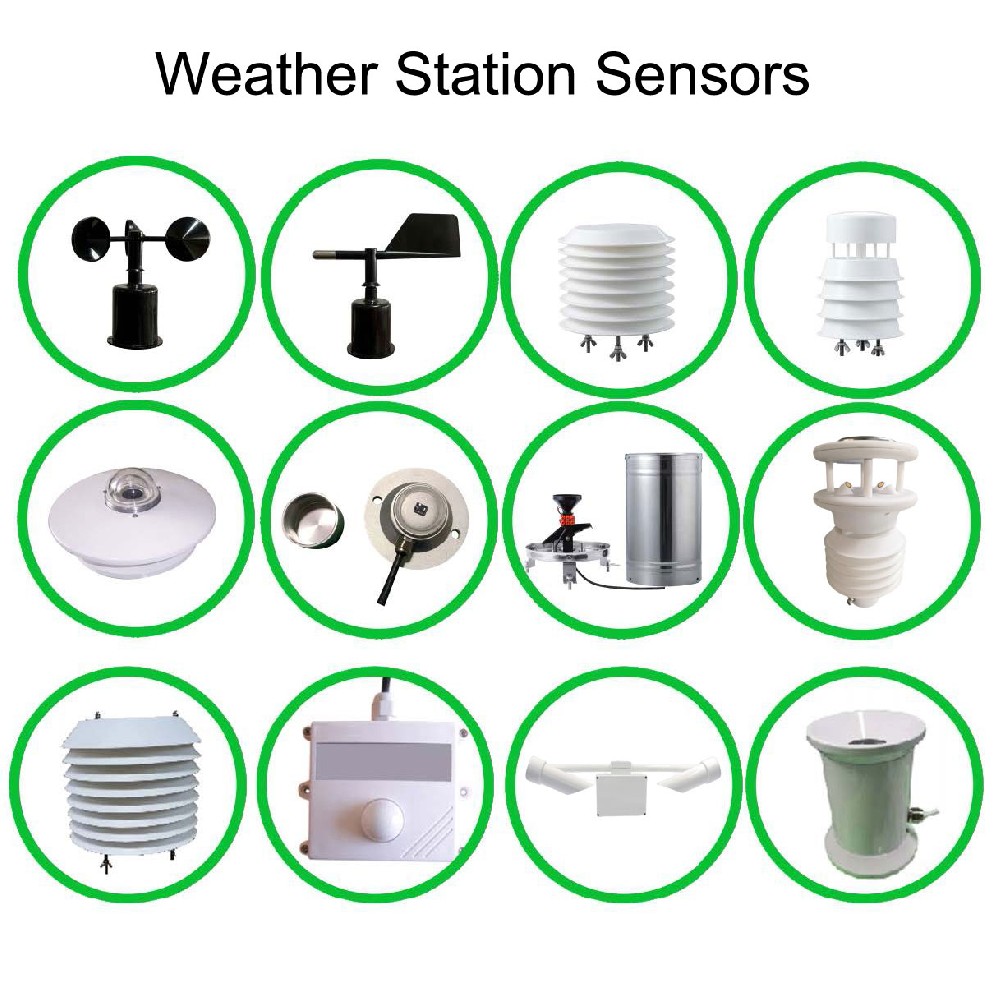
The NiuBoL NBL-W-LBTH provides air temperature, RH and pressure in one shielded assembly. Its selected RS485 Modbus RTU version can supply those channels through one instrument connection. The installation can remain focused on air history without adding wind or rain when neither is required by the task.
If wind is required, NBL-W-SS speed and NBL-W-DS direction instruments are separate choices, with IP65 protection. Do not assume a wind vane measures speed or that a combined channel name identifies the exact fitted instruments. Retain the relevant measuring range and output version even when the rest of the configuration is small.
| Example component | Relevant characteristic | Limit to check |
|---|---|---|
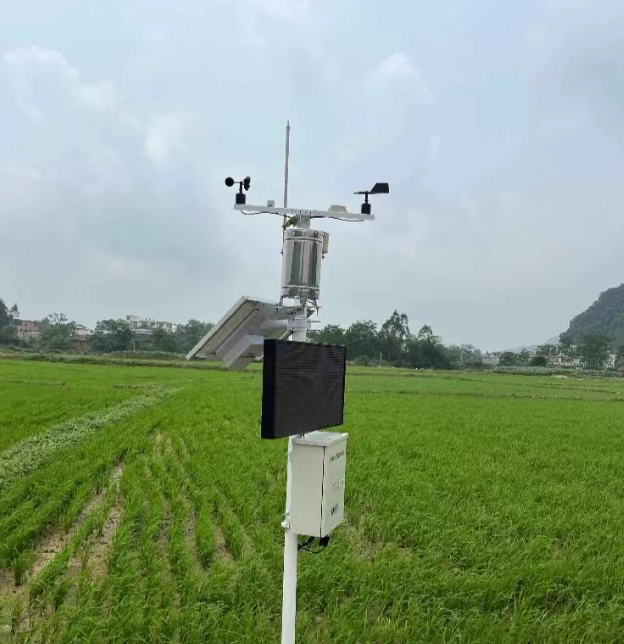
| NBL-W-LBTH | Temperature -40 to 80 C; RH 0-100%; DC 12-24 V | Selected output and representative shield exposure |
| NBL-W-SS / NBL-W-DS | Wind speed / horizontal direction; IP65 | Actual range, orientation and observation position |
| NBL-W-RS standard configuration | 0.2 mm resolution; 0-4 mm/min intensity range | Liquid-rain duty, output version and 0-50 C operating range |
The NBL-W-RS example illustrates why a small equipment list still needs model-specific limits. A storage-temperature rating is not permission for winter precipitation measurement. Likewise, fewer channels do not eliminate the need to distinguish resolution from accuracy or to match a sensor's signal to the receiving input.
A remote display is optional when a project only needs local retrieval. Cellular communications may be unnecessary where records can be collected on site. Local logging still needs compatible acquisition and sufficient storage even when no screen or modem is ordered. Identify which component performs each required function before removing accessories.
For a PLC or data logger connection, confirm the selected RS485 Modbus RTU or analog version and its units. A short sensor list still needs a complete power and signal path. Where another controller already supplies compatible acquisition, specify that interface rather than purchasing a second collection system without a reason.
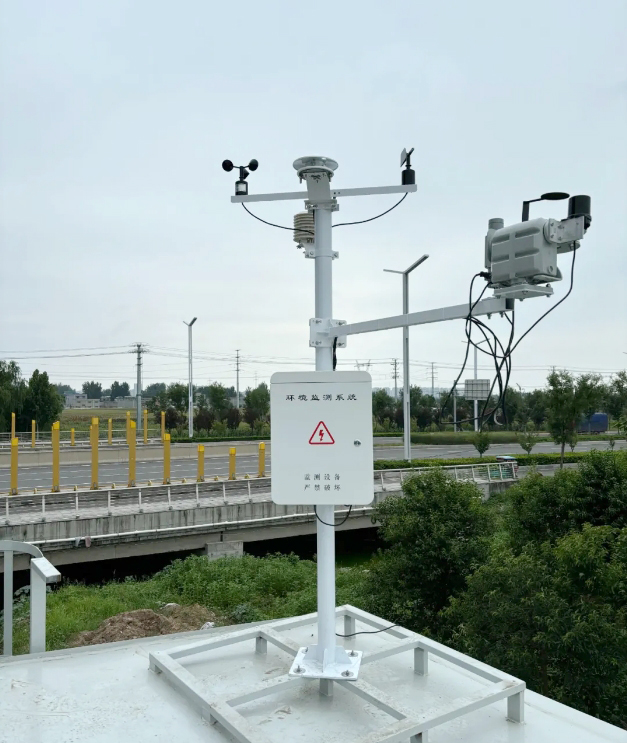
Choose accessible sensing points without placing them where the desired quantity is distorted. A rain collector under an eave can be convenient to service and still miss rain. A shield beside an exhaust can report local heated air. The correct location depends on what the project intends to observe, not on a universal rule that all instruments share one height.
Provide a stable mount, suitable cable protection and the required electrical protection for the installation. A portable support does not establish a structural wind rating, and a solar panel does not establish continuous power. Check the selected assembly instead of assuming that simple means no installation work or no maintenance.
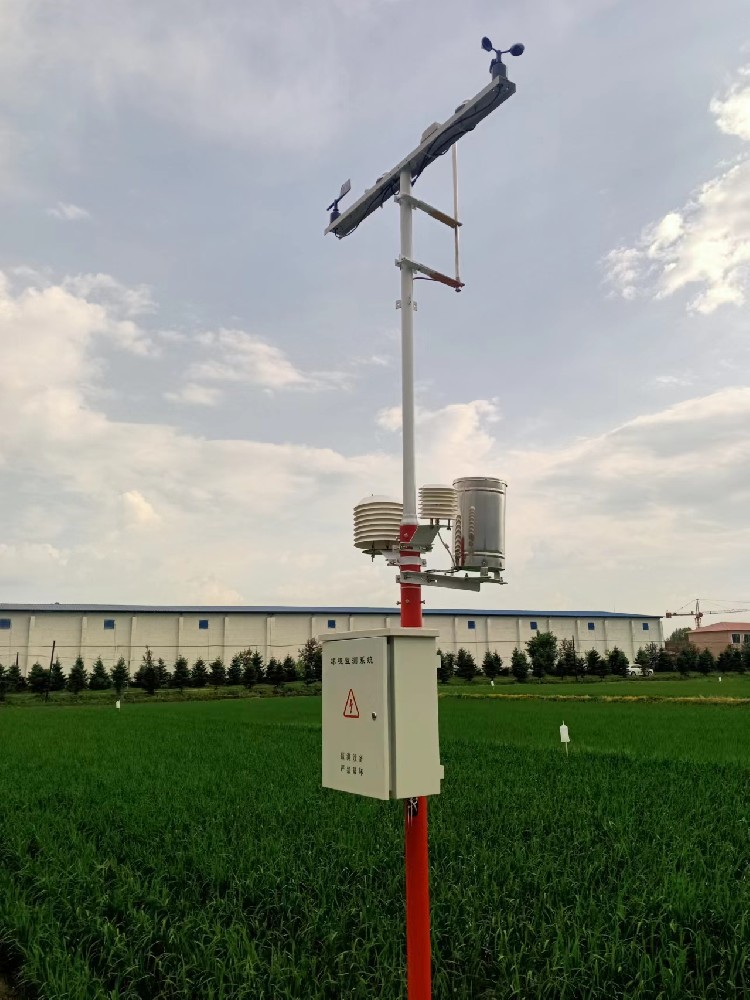
A greenhouse may need a small air-monitoring point inside the crop space rather than a complete outdoor weather mast. Outside wind and rain can be relevant companion observations, but they do not reproduce the indoor effects of ventilation, heating and shading. Select the indoor quantities and locations first; add an outside reference when it serves a separate decision.
The same principle applies to focused research. Suitability follows from the required quantity, method, uncertainty and exposure, not from the words simple or professional. A narrow study can need only a few well-chosen channels. It may also require a measurement that the proposed weather package does not provide.
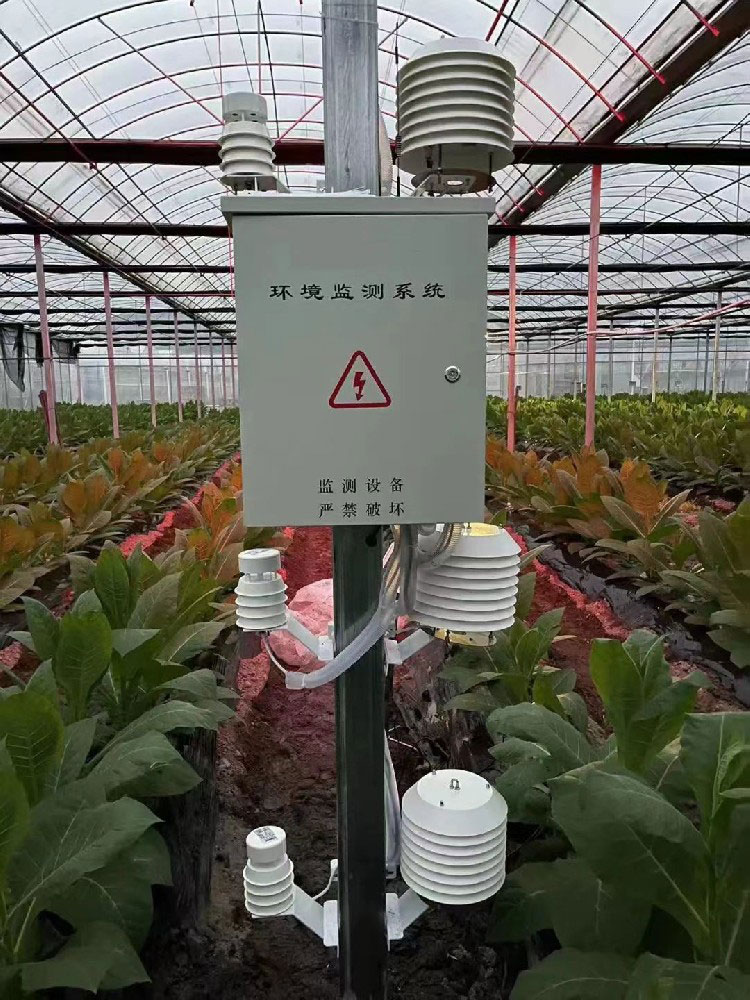
Demonstrate the actual task: obtain the observation at the installed point, verify its interpretation and retrieve the required record. For a rain-only station, test counting and period totals. For an air-history point, check channel identity, units and saved times. A functioning enclosure display is insufficient if the ordered result is a usable archive.
Send NiuBoL the task, required quantities, reporting needs and existing infrastructure. Identify what the project can supply and what must be included. If later additions are already planned, the weather-station expansion guide helps check their actual input and power requirements; do not buy unspecified extra capacity merely because expansion is possible.
No. The term does not define a fixed channel set. Specify the quantities needed for the observation and identify any required companion instruments.
No. Fewer channels and lower quality are different choices. Evaluate each instrument, exposure and acquisition path against the intended method.
Yes, where its measured quantities and performance suit the study. Neither a small package nor a large package establishes suitability without that assessment.
Only if the required workflow needs remote access. Local recording and retrieval may suffice, but they must still preserve the observations and timing the project needs.
Remove an item only after identifying that no required observation, acquisition, power or retrieval function depends on it. Compare the remaining configuration against the stated task, not an arbitrary sensor-count target.
A useful simple weather station is small in scope, not incomplete in function. Choose the minimum observations that answer the project question, then retain the installation and records needed to make those observations dependable. This produces a clearer purchase than a generic basic package with unspecified limits.
Prev:Small Weather Station Installation: Check the Wind Direction Reference
Next:Rain Sensor in IoT: Map Rainfall Fields Before Integration
Related recommendations
Sensors & Weather Stations Catalog
 Agriculture Sensors and Weather Stations Catalog-NiuBoL.pdf
Weather Stations Catalog-NiuBoL.pdf
Agriculture Sensors Catalog-NiuBoL.pdf
Water Quality Sensor Catalog-NiuBoL.pdf
Related products
 Combined air temperature and relative humidity sensor
 TDR Soil Moisture & Temperature Sensor for irrigation| RS485 |4-20mA| NBL-S-THR
 Soil pH sensor RS485 soil Testing instrument soil ph meter for agriculture |NBL-S-PH
 Wind Speed sensor Output Modbus/RS485/Analog/0-5V/4-20mA
 Tipping bucket rain gauge for weather monitoring auto rainfall sensor RS485/Outdoor/stainless steel
 Pyranometer Solar Radiation Sensor 4-20mA/RS485


Screenshot, WhatsApp to identify the QR code
WhatsApp number:+8615367865107
(Click on WhatsApp to copy and add friends)

