





— Blogs —
—Products—
 Consumer hotline +8618073152920
 WhatsApp:+8615367865107
Address:Room 102, District D, Houhu Industrial Park, Yuelu District, Changsha City, Hunan Province, China
Product knowledge
Time:2025-12-12 14:43:17 Popularity:945
In recent years, extreme weather events caused by climate change have become increasingly frequent, posing severe challenges to the safety and development of both urban and rural areas. To enhance disaster prevention, mitigation, and emergency management capabilities, governments at all levels have significantly increased investment in meteorological and hydrological monitoring infrastructure, among which the automatic rain gauge station has become one of the core observation devices.
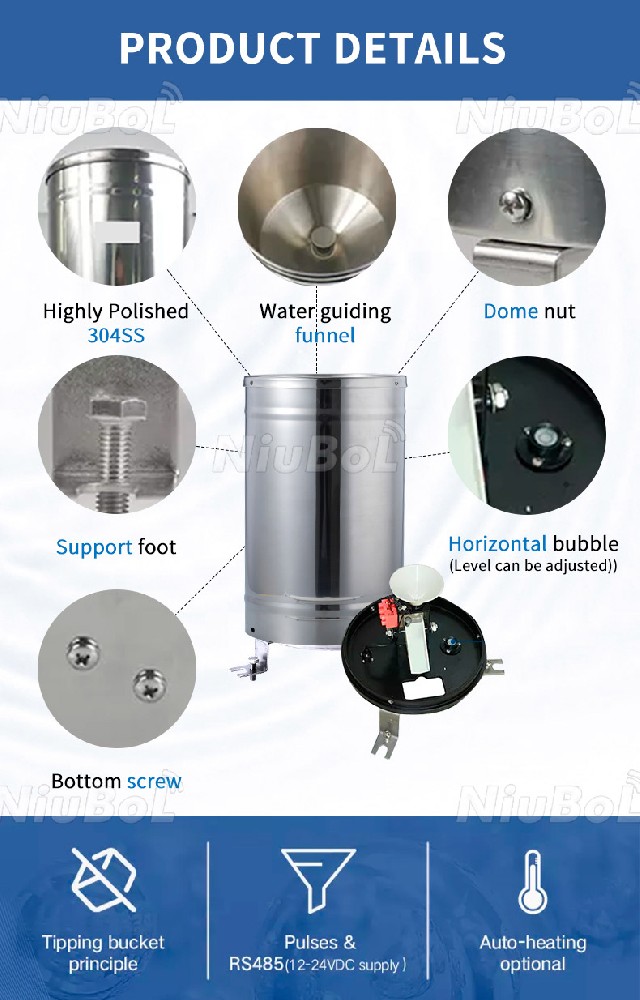
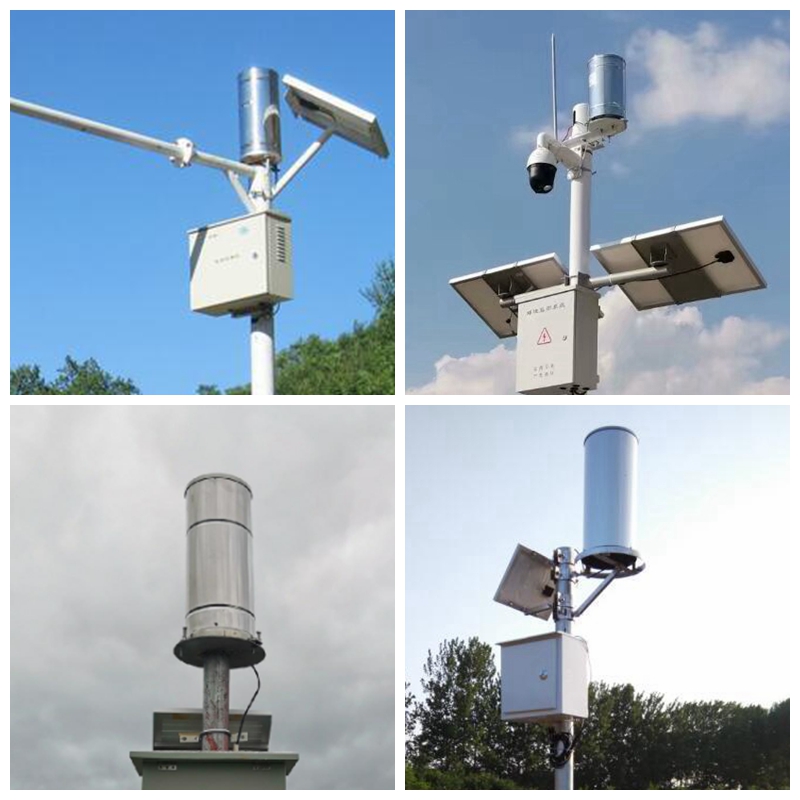
An automatic rain gauge station is a comprehensive observation instrument used to measure in real time and continuously, and automatically record rainfall amount, precipitation intensity, and precipitation start/end times over different periods.
Its core roles are:
Disaster prevention and early warning: Provides critical hydrological data support for warnings of floods, flash floods, debris flows, and other disasters.
Water resource management: Supplies accurate precipitation input for reservoir scheduling, irrigation water use, urban water supply, etc.
Meteorological research: Used by meteorological departments for climate analysis and calibration/improvement of weather forecasting models.
Engineering construction: Provides long-term rainfall data reference for water conservancy, transportation, construction, and other engineering designs.
Equipment such as NiuBoL automatic rain gauge stations typically possesses the following functions:
Fully automatic unattended operation
High-precision measurement
Large-capacity storage
Remote communication networking
High-stability design
Wide applicability across multiple industries
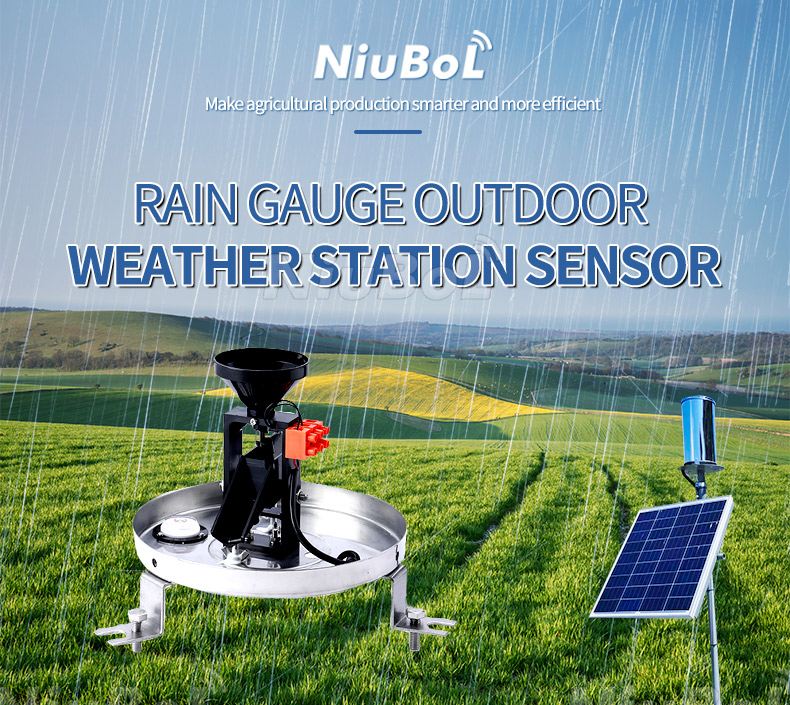
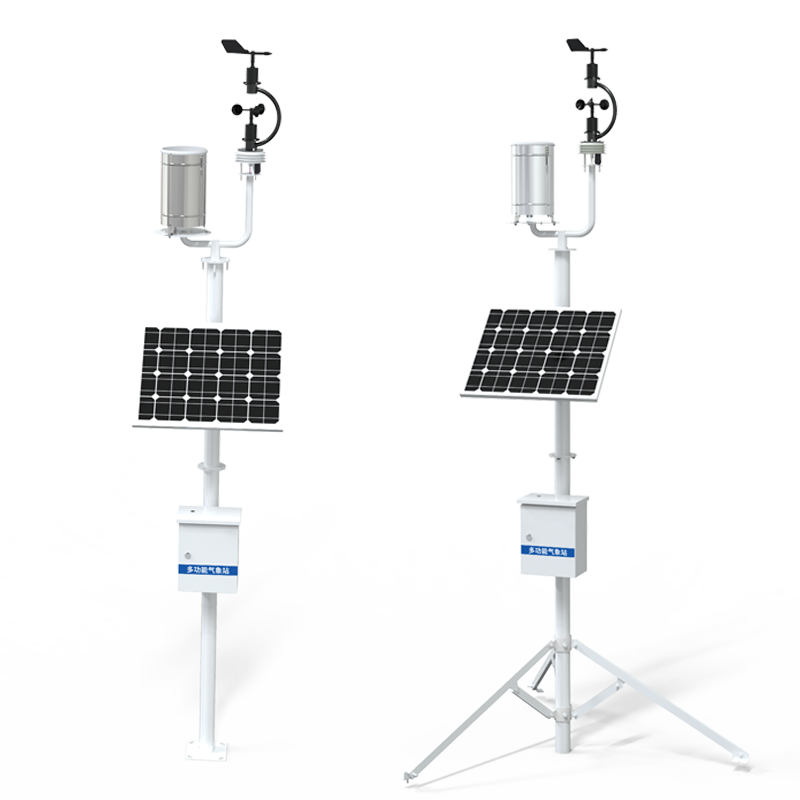
A complete automatic rain gauge station mainly consists of the following components:
| Component | Core Role |
|---|---|
| Data Logger | Receives and processes sensor signals, performs data storage and timed transmission. |
| Tipping Bucket Rain Gauge Sensor | Measures rainfall and converts mechanical action into electrical pulse signals (e.g., NBL-W-RS type). |
| Host Computer Software | Used for remote reception, display, analysis, and management of rain gauge station data. |
| Communication Unit | Such as GPRS/4G module, responsible for sending collected data to the central station. |
| Power Supply System | Solar panel, battery, or external power supply to ensure 24/7 equipment operation. |
The core of an automatic rain gauge station is the tipping bucket rain sensor, whose working principle is based on a mechanical bistable structure:
Collection: Rainwater is collected by the water collection port and guided into the measuring bucket through the upper cylinder (funnel).
Metering: The tipping bucket is divided by a central partition into two triangular chambers of equal volume. When one chamber receives water, the other is in waiting state.
Tipping: When the volume of water received reaches the preset value (for example, equivalent to 0.2 mm or 0.5 mm of precipitation), the bucket loses balance due to gravity and automatically tips over.
Signal Output: A magnet is mounted on the side wall of the tipping bucket. Each tip causes the magnet to scan past a dry reed switch, momentarily closing it and sending one switch signal (pulse signal).
Data Recording: The data logger receives and records the number of pulse signals. By accumulating the pulse count, the total precipitation can be calculated.
| Parameter Name | Technical Specification | Explanation |
|---|---|---|
| Collection Port Diameter | Φ200 ± 0.6 mm | Affects collection efficiency and accuracy, complies with national standards. |
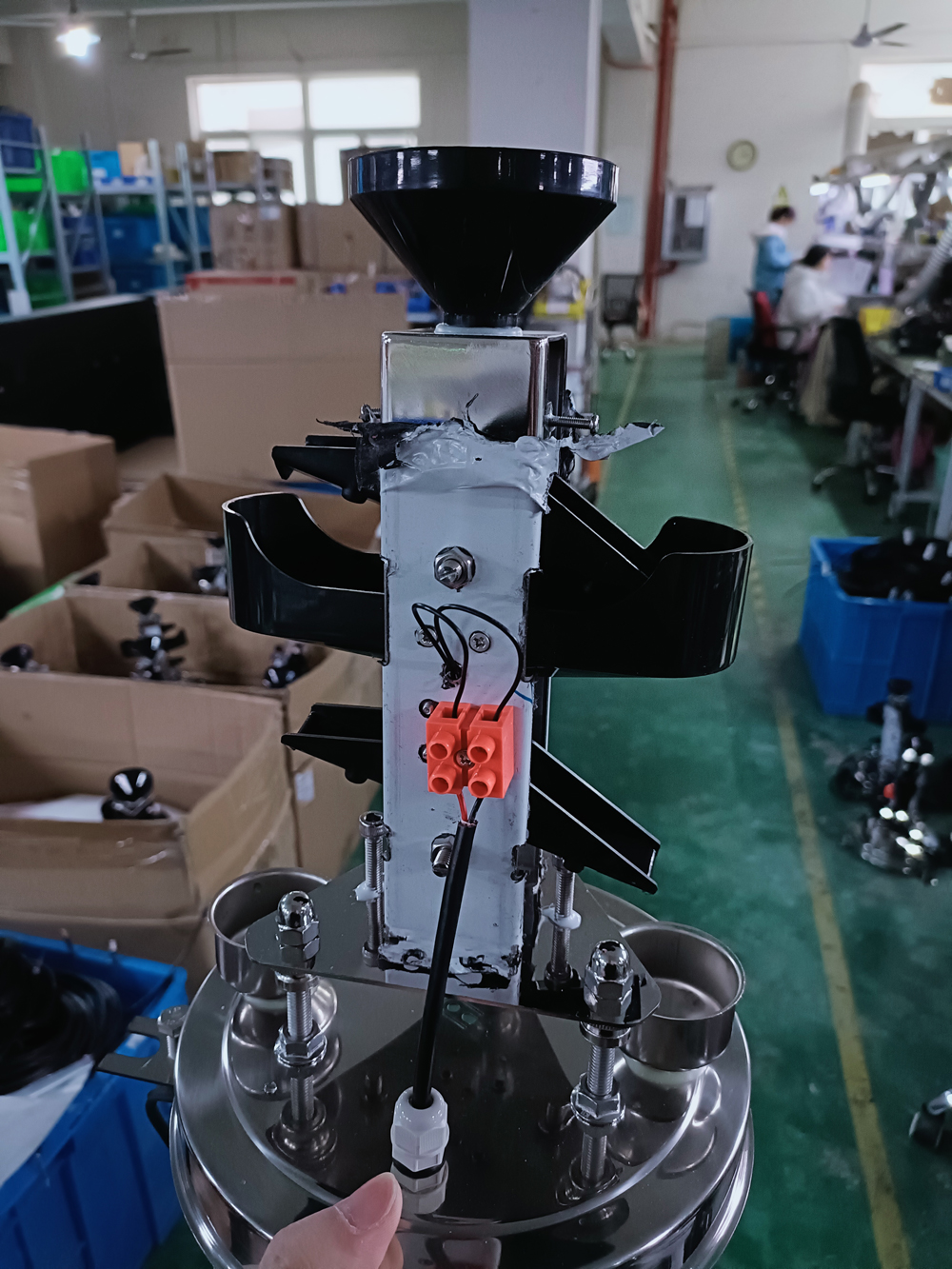
| Measurement Range | 0–4 mm/min | For precipitation intensity, meets needs of most regions. |
| Resolution | 0.2 mm (or 6.28 ml) | Minimum rainfall represented by each bucket tip. |
| Accuracy | ±4% (indoor static test, rain intensity 2 mm/min) | Measures deviation between measurement result and true value. |
| Output Format | Switch signal (reed switch), RS485, voltage (0–2.5 V/0–5 V), etc. | Compatible with multiple data acquisition systems. |
| Power Supply | DC 5 V or DC 12–24 V | Low power consumption design, suitable for field battery or solar power. |
| Operating Temperature | 0 °C ∼ 50 °C | Normal operating ambient temperature range. |
Site Requirements:
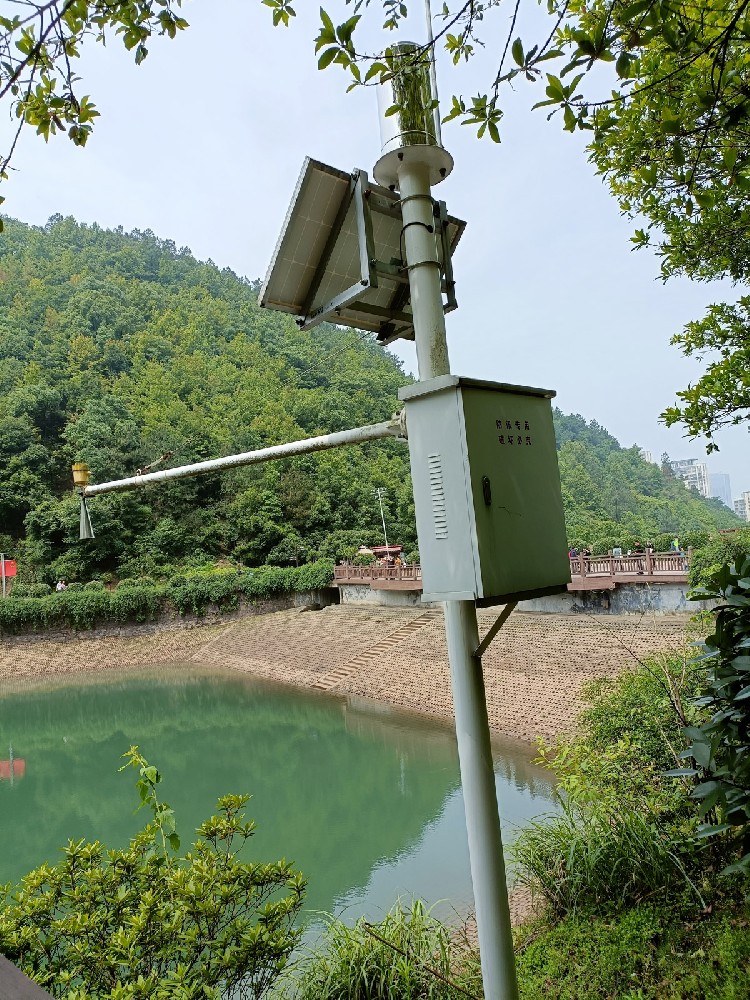
Site Selection: Choose an open, elevated location with no tall obstacles blocking rainfall. For water level + rain gauge stations, the site elevation must be 3–5 m above the historical highest water level, with good communication conditions.
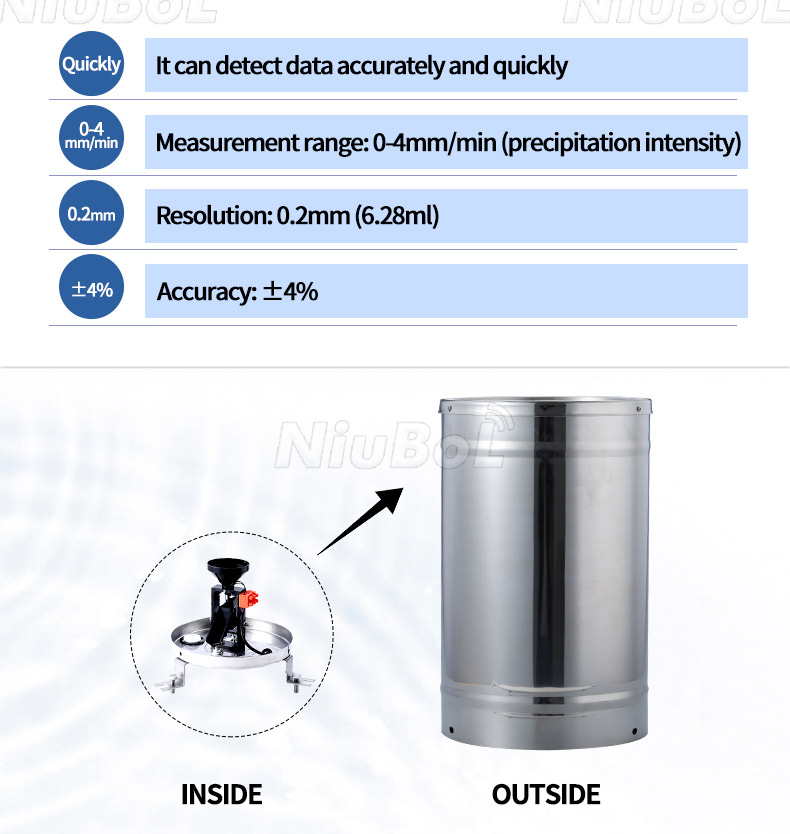
Leveling: Use the leveling screws on the base to adjust until the bubble level indicates horizontal (bubble in the center of the circle), ensuring balanced force on both sides of the tipping bucket and measurement accuracy.
Installation Steps and Self-Check:
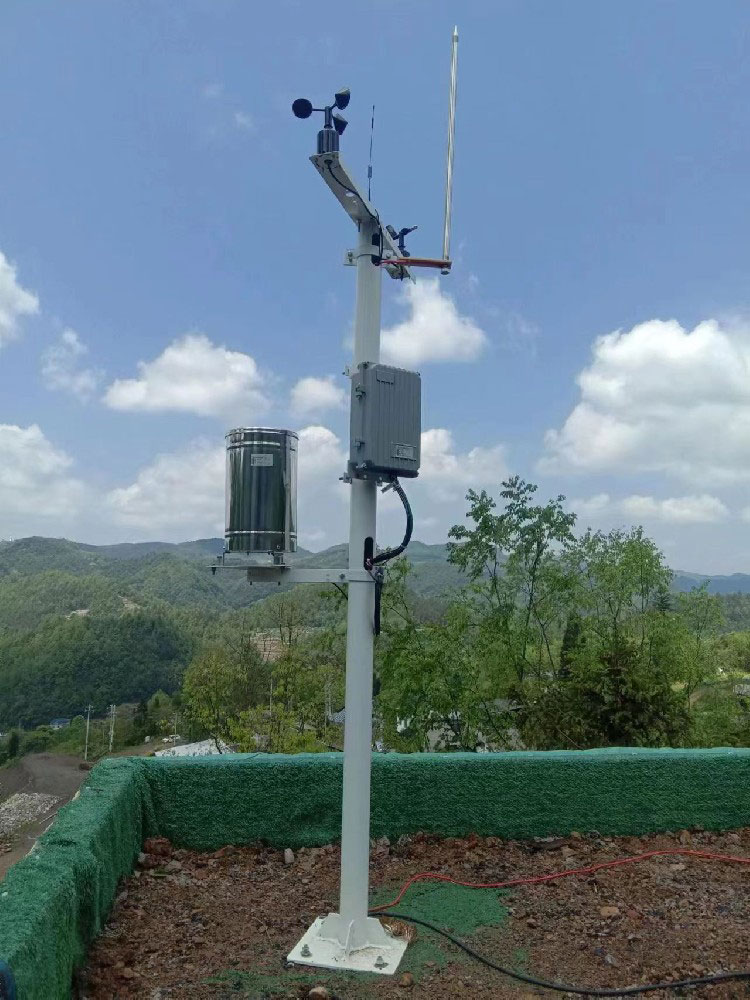
Select installation method according to requirements (ground, iron pole flange, or rooftop).
Adjust and tighten leveling screws and fixing screws.
Assemble and fix the sensor.
Important Self-Check: Open the rain bucket, cut the nylon tie on the funnel, slowly pour clean water, observe whether the bucket tips smoothly, and check whether the data logger receives pulse data.
Precautions:
Never wire while powered on: After wiring, check correctness before powering up.
Avoid modifying wiring: Sensor cable length is fixed; arbitrary changes are not recommended to avoid affecting signal output.
| Fault Symptom | Possible Cause | Troubleshooting Method |
|---|---|---|
| Display shows no reading | 1. Wiring error or loose connection. 2. Internal bucket nylon tie not cut. | 1. Check and ensure correct, secure wiring. 2. Must cut the nylon tie on the funnel. |
| Reading significantly inconsistent with actual (low) | 1. Dirt on bucket inner wall or funnel. 2. Bucket metering volume deviation. | 1. Clean collection bucket and bucket inner wall, ensure water passage clear. Strictly prohibit wiping bucket inner wall. 2. After emptying, inject 60–70 mm of water for comparison calibration. |
| Abnormal reading after winter icing | Snow or ice preventing normal bucket tipping. | Stop use during winter icing periods and store indoors to avoid damage. |
| Communication interrupted, unable to upload data | Communication module (GPRS/4G) fault or SIM card arrears. | Check power supply and communication module indicators, contact operator to check SIM card status. |
| Equipment stops working after running for some time | Power system failure (battery depleted or solar panel fault). | Check supply voltage, clean or repair solar panel and battery. |
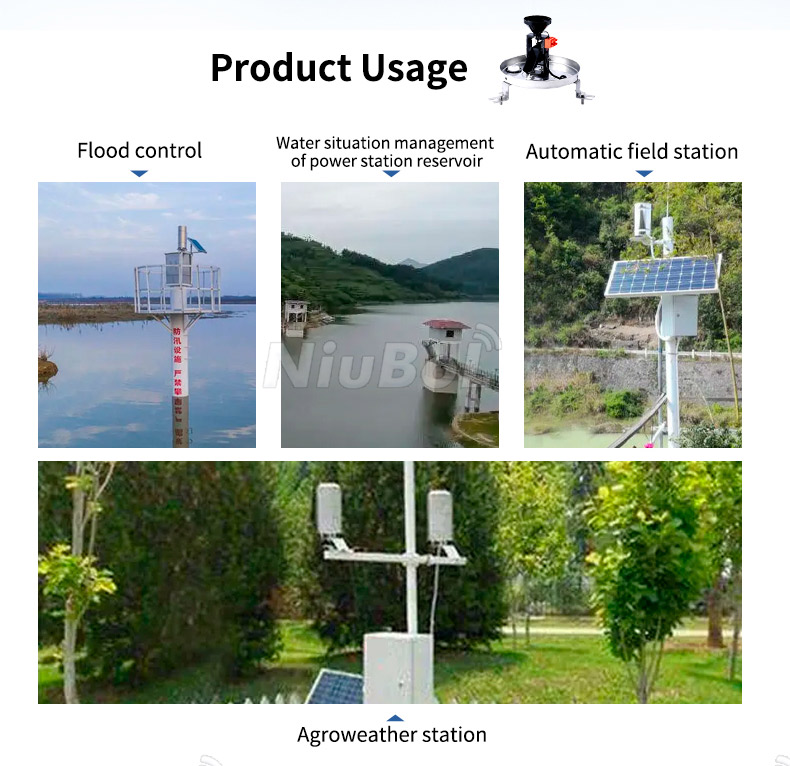
Automatic rain gauge stations have a very wide range of applications, mainly including:
Hydrological monitoring
Meteorological monitoring
Agricultural irrigation
Environmental monitoring
The price of an automatic rain gauge station is affected by multiple factors and cannot be given as a fixed number. It specifically depends on:
Configuration level: Only includes rain gauge sensor (basic type) or includes data logger, communication module, solar panel (system type).
Communication method: RS485 wired vs. GPRS/4G wireless — the latter is more expensive.
Brand and accuracy: Well-known brands and higher resolution/accuracy products are more expensive.
After-sales service: Warranty and technical support from the manufacturer are also factored into the cost.
Preliminary Estimate:
Basic rain gauge sensor (such as NBL-W-RS): Relatively low price, approximately 100–200 USD, mainly used to connect to existing acquisition systems.
Complete automatic rain gauge station system (including data logger, communication, power supply, pole): Price significantly higher, usually requiring customized quotation based on specific project requirements and installation environment.
Recommendation: It is recommended to directly contact professional equipment manufacturers (such as NiuBoL) or distributors, provide specific project requirements (resolution, communication distance, installation environment, etc.), to obtain the most accurate quotation and technical support.
1. What does the 0.2 mm resolution of an automatic rain gauge station mean?
A: It means that each recorded pulse signal represents 0.2 mm of rainfall. Higher resolution (smaller value) indicates stronger ability to capture tiny rainfall.
2. Why can’t the tipping bucket inner wall be wiped with hands or cloth?
A: The tipping bucket inner wall is a precision metering surface. Wiping may leave oil stains or cause scratches, affecting water droplet adhesion and sliding characteristics, thereby destroying the bucket’s weight balance and reducing measurement accuracy.
3. Can an automatic rain gauge station measure snowfall?
A: Standard tipping bucket rain stations can only measure liquid precipitation. To measure solid precipitation (snow), a heating device or weighing-type rain/snow gauge is required to melt the snow into water before measurement.
4. How to determine if the automatic rain gauge station installation position is level?
A: Observe the bubble level on the instrument base. When the bubble is completely centered in the circle, the instrument has been adjusted to horizontal. This is a key step to ensure accuracy.
5. Why sometimes it rains but the data logger shows no data?
A: First check whether the nylon tie on the bucket has been cut; second check whether the data cable connection is secure; finally check whether the rainwater passage is blocked by leaves, sediment, etc.
6. What is the difference between RS485 and 4G communication methods?
A: RS485 is a field wired communication method suitable for short-distance connection to nearby acquisition or display devices; 4G is a wireless communication method suitable for remote transmission of data to monitoring centers.
7. Does an automatic rain gauge station require regular maintenance? What is the maintenance cycle?
A: Yes, regular maintenance is required. It is recommended to check at least once per quarter, mainly to remove dust, sediment, leaves, and other debris from the collection port, funnel, and tipping bucket.
8. If special output signals need to be customized, can NiuBoL provide them?
A: Yes. Professional manufacturers can provide customization or optional configurations of multiple output forms according to project requirements to ensure compatibility with the user’s existing acquisition system.
9. What are the special requirements for site selection of an automatic water level + rain gauge station?
A: In addition to rainfall measurement requirements, the site elevation must be 3–5 m above the historical highest water level to prevent equipment from being submerged. At the same time, good communication conditions are required for synchronous transmission of water level and rainfall data.
10. What certifications does NiuBoL have?
CE, ISO9001, RoHS, and nationally recognized meteorological calibration certificates.
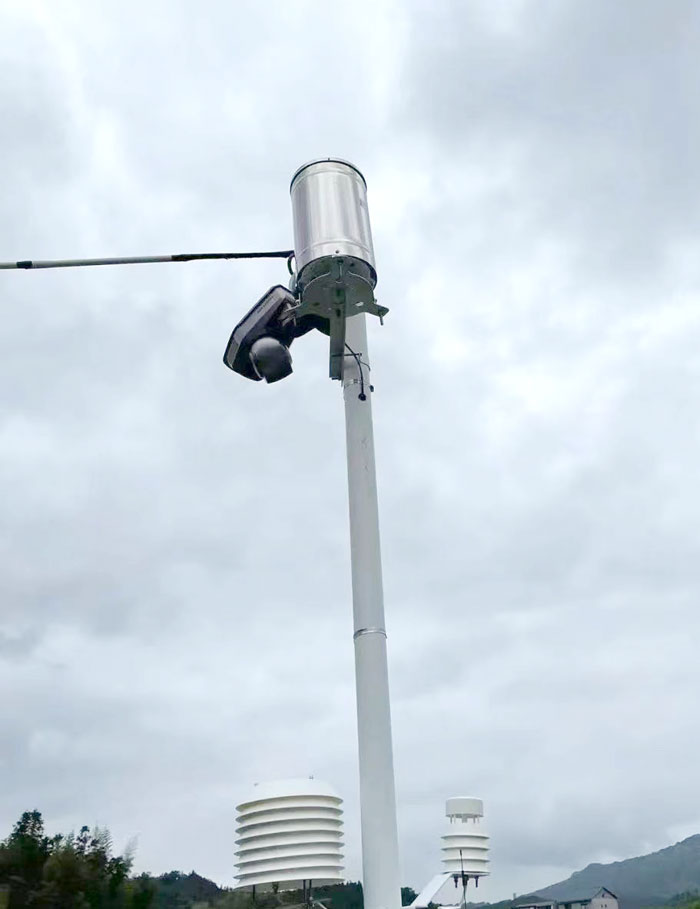
The automatic rain gauge station is an indispensable basic equipment in modern hydrological and meteorological monitoring networks. Through its high-precision tipping bucket metering principle, it achieves real-time, continuous, and automated collection and transmission of rainfall data. As the front-end nerve endings of disaster prevention/mitigation and water resource management, the accuracy and timeliness of its data directly affect the effectiveness of early warnings and the scientific nature of decision-making.
Choosing a technically mature and reliable automatic rain gauge station like NiuBoL, and strictly following the requirements for installation and maintenance, will greatly enhance regional hydrological and meteorological monitoring capabilities and provide solid guarantees for the safe development of cities and countryside.
Do you have specific installation environment or technical parameter requirements? I can help you further inquire and compare information on automatic rain gauge station products with different configurations.
 NBL-W-ARS-Tipping-bucket-rain-gauge-instruction-manual.pdf
Prev:Construction Site Dust Monitoring Station: Role & Smart Monitoring System Practice
Next:Rainfall Sensor Working Principle, Role & Technical Analysis | NiuBoL
Related recommendations
Sensors & Weather Stations Catalog
Agriculture Sensors and Weather Stations Catalog-NiuBoL.pdf
Weather Stations Catalog-NiuBoL.pdf
Agriculture Sensors Catalog-NiuBoL.pdf
Water Quality Sensor Catalog-NiuBoL.pdf
Related products
 Combined air temperature and relative humidity sensor
 TDR Soil Moisture & Temperature Sensor for irrigation| RS485 |4-20mA| NBL-S-THR
 Soil pH sensor RS485 soil Testing instrument soil ph meter for agriculture |NBL-S-PH
 Wind Speed sensor Output Modbus/RS485/Analog/0-5V/4-20mA
 Tipping bucket rain gauge for weather monitoring auto rainfall sensor RS485/Outdoor/stainless steel
 Pyranometer Solar Radiation Sensor 4-20mA/RS485

Screenshot, WhatsApp to identify the QR code
WhatsApp number:+8615367865107
(Click on WhatsApp to copy and add friends)

