





— Blogs —
—Products—
 Consumer hotline +8618073152920
WhatsApp:+8615367865107
Address:Room 102, District D, Houhu Industrial Park, Yuelu District, Changsha City, Hunan Province, China
Product knowledge
Time:2023-11-09 14:04:50 Popularity:6771
A tipping bucket rain gauge is an automatic precipitation measuring instrument that collects rainwater and converts calibrated tipping events into rainfall measurements. It is commonly used in weather stations, agricultural monitoring, hydrological observation and environmental monitoring systems.
The main advantages of tipping bucket rain gauges include automatic rainfall measurement, a relatively simple mechanical structure, self-emptying operation and compatibility with electronic data acquisition equipment. Their main disadvantages include errors during heavy rainfall, sensitivity to wind and freezing conditions, mechanical maintenance requirements and the inability of ordinary unheated models to measure solid precipitation reliably.
This guide compares the advantages and disadvantages, explains the measurement limitations and provides practical criteria for selecting a suitable rain gauge.
| Advantages | Disadvantages |
|---|---|
| Automatic rainfall measurement | Dynamic errors during intense rainfall |
| Self-emptying bucket mechanism | Maintenance of moving components |
| Relatively simple mechanical construction | Sensitivity to debris and blocked water flow |
| Pulse and digital output options | Wind-related collection errors |
| Suitable for automatic data logging | Limited performance in freezing conditions |
| Passive contact-output versions available | Rainfall resolution and timing limitations |
These characteristics describe common tipping bucket designs. Actual measurement performance depends on the sensor model, calibration, installation and environmental conditions.
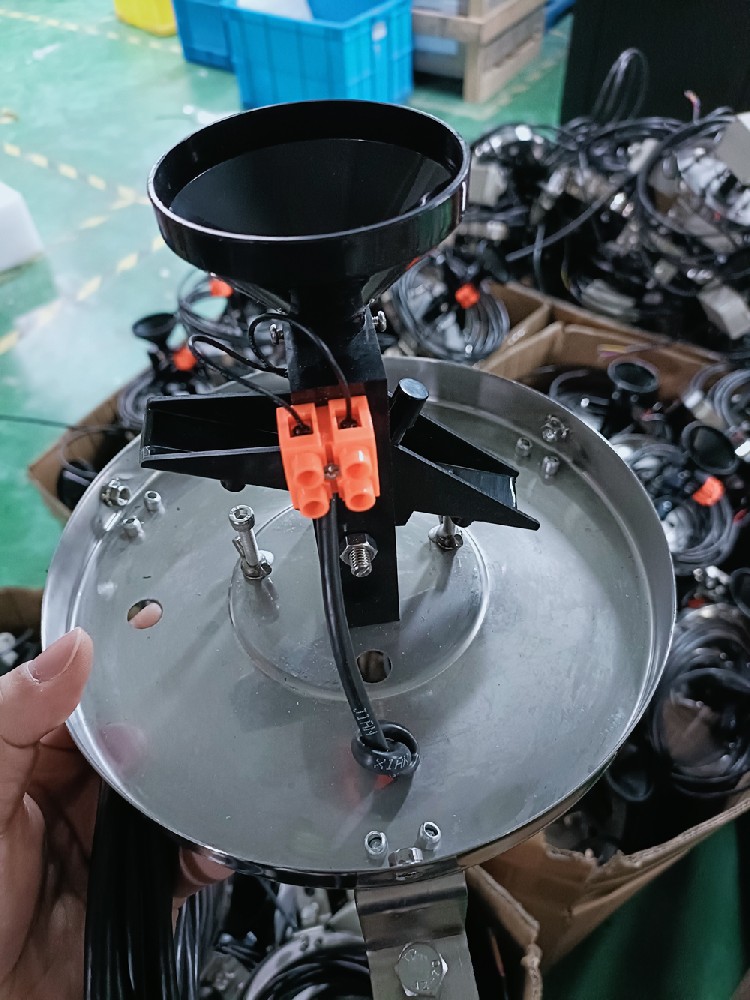
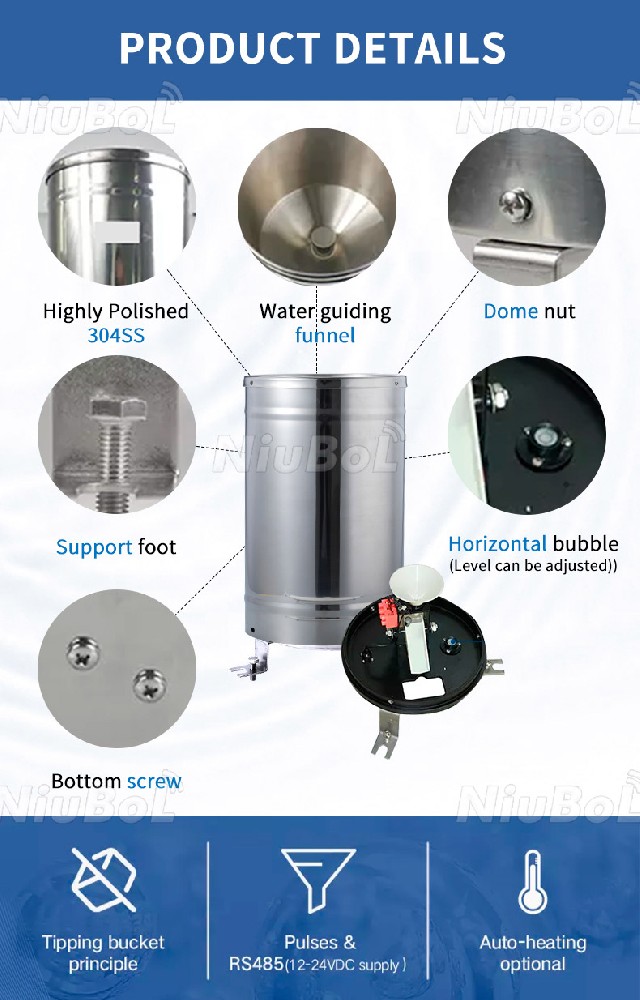
A tipping bucket rain gauge includes a rainfall collection funnel, a water guide, a balanced tipping mechanism and an electrical switching or signal processing system.
Rainwater enters the collection opening and flows into one side of the bucket. When the collected volume reaches the calibrated threshold, the bucket tips, empties and places the opposite side in the receiving position.
A reed switch or another sensing element detects the tipping event. The number of tips is converted into accumulated rainfall using the calibrated rainfall increment.
Accumulated Rainfall (mm) = Number of Tips × Rainfall per Tip (mm)
For example, a rain gauge configured for 0.2 mm per tip produces a calculated accumulation of 4.0 mm after 20 tips. This is an illustrative calculation rather than a field test result.
The measurement represents discrete rainfall increments. Water remaining in the bucket before the next tipping event may not yet appear in the recorded total.
A tipping bucket rain gauge automatically produces an electrical event whenever the calibrated mechanism tips. This makes the instrument useful for unattended rainfall monitoring when connected to compatible recording equipment.
With an appropriate data logger, the system can record rainfall events, calculate accumulated rainfall and provide timestamps for analysis.
Automatic observation reduces the need for an operator to visit the site after each rainfall event, although regular inspection and maintenance remain necessary.
After each tipping event, the bucket empties and moves the opposite receiving compartment into position. This allows the instrument to continue measuring subsequent rainfall without manually emptying a large collection container after each event.
The self-emptying design is useful for continuous monitoring. However, water can remain in the mechanism between tipping events, and collection surfaces may still experience evaporation or wetting losses.
Tipping bucket rain gauges use an established mechanical measurement principle. Their main parts are relatively straightforward to inspect, clean and maintain.
The simple construction supports use in automatic weather stations and hydrological monitoring systems. Actual durability depends on the materials, bearing or pivot design, enclosure and environmental exposure.
Depending on the model, tipping bucket rain gauges can provide reed-switch contact signals, voltage signals or RS485 Modbus RTU output.
A passive reed-switch version can be connected to a suitable counting input. A powered digital version can provide measurement data to compatible data acquisition equipment.
The required output should be selected according to the connected PLC, data logger or monitoring gateway.
When installed and maintained properly, a tipping bucket rain gauge can provide repeated rainfall observations over extended periods.
Applications include agricultural weather stations, rainfall monitoring networks, watershed studies, reservoirs, forestry and environmental research.
The data can support hydrological and agricultural decisions when combined with other relevant measurements and appropriate models.
Some tipping bucket gauges have passive reed-switch outputs that do not require a separately powered transmitter. However, the receiving counter or data logger still requires a suitable electrical interface and power source.
RS485 and active analog-output versions typically require external DC power.
This flexibility can be useful in remote monitoring projects, but the total system power budget must include data acquisition and communication equipment.
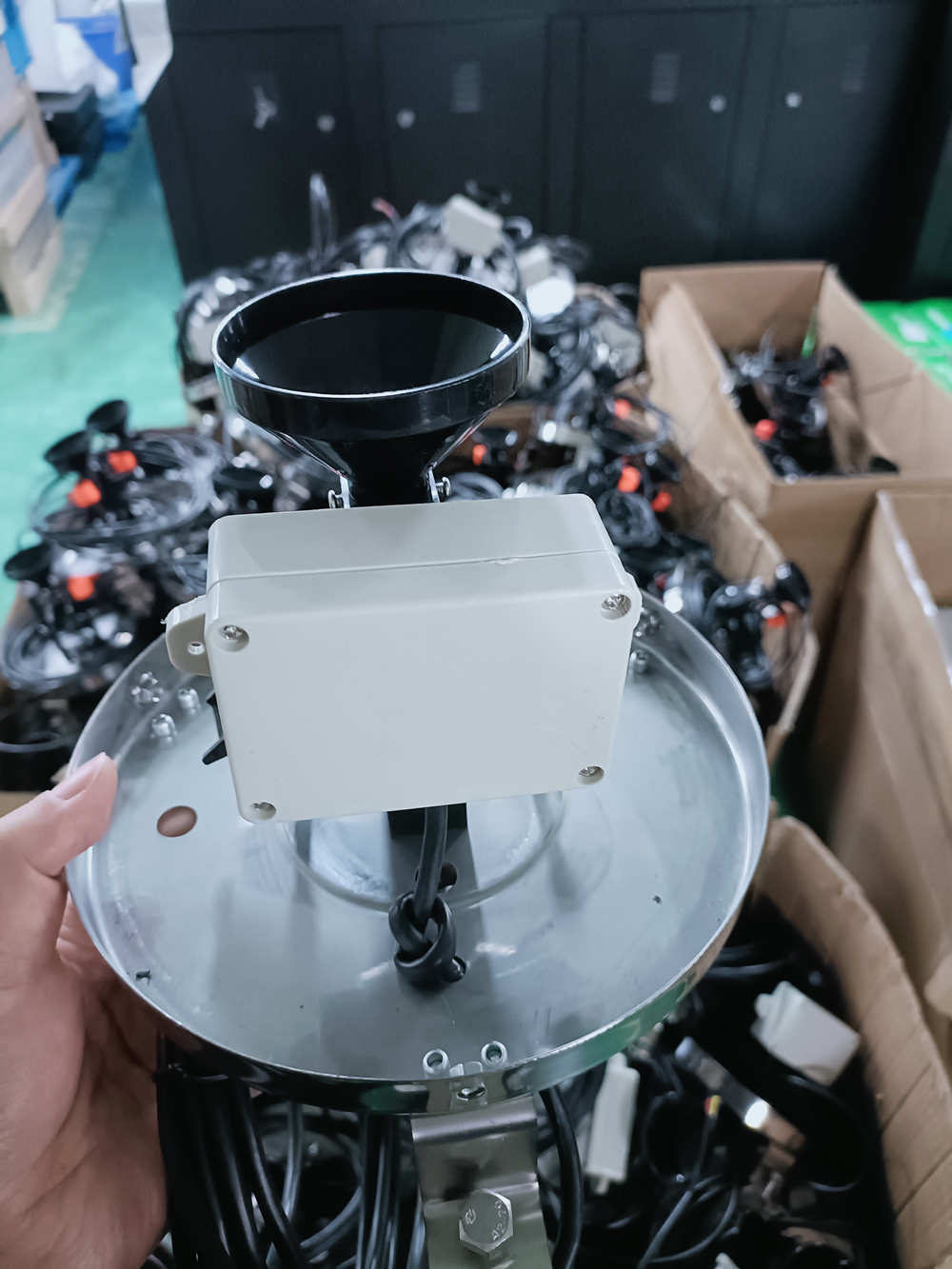
The NiuBoL NBL-W-RS is an automatic tipping bucket rain gauge designed for liquid precipitation monitoring. Its main documented specifications are shown below.
| Parameter | Specification |
|---|---|
| Model | NBL-W-RS |
| Measurement Principle | Tipping bucket |
| Collector Diameter | 200 ±0.6 mm |
| Rainfall Resolution | 0.2 mm |
| Rainfall Intensity Range | 0–4 mm/min |
| Specified Accuracy | ±4% under the specified indoor static test at 2 mm/min |
| Output Options | Reed switch, 0–2.5 V, 0–5 V or RS485 |
| Power Supply Options | DC 5 V or DC 12–24 V, depending on version |
| Standard Cable Length | 5 m |
| Operating Temperature | 0–50°C |
Resolution is not the same as accuracy. A resolution of 0.2 mm means the measurement increments are represented in 0.2 mm steps. It does not mean every outdoor rainfall total is accurate to ±0.2 mm.
The ±4% statement applies to the documented test conditions and should not be presented as a guaranteed accuracy level for every rainfall intensity or outdoor installation.
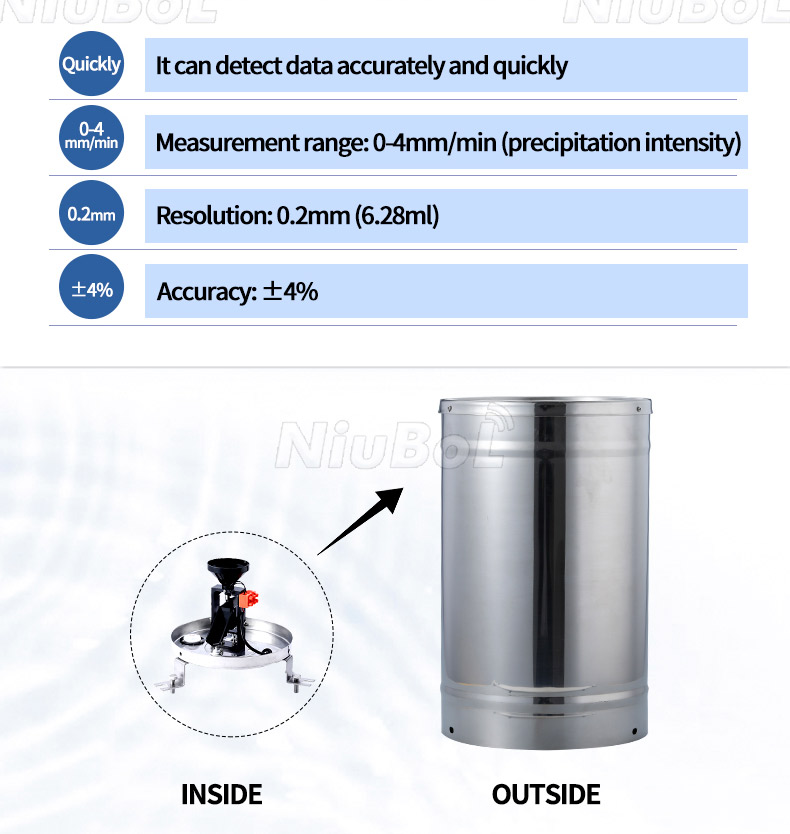
One important limitation is the mechanical tipping process itself.
When rainfall is intense, water may continue entering the instrument while the bucket moves between its two positions. Depending on the mechanism and calibration, some incoming water may not be accounted for correctly.
This can produce systematic underestimation or other dynamic errors at high rainfall intensities.
The error depends on the instrument design, rainfall intensity and calibration conditions. Higher nominal resolution alone does not guarantee better performance during extreme rainfall.
Tipping bucket gauges contain moving parts. Dirt, deposits, insects or other contamination can restrict movement or change the tipping behavior.
The bucket mechanism and supporting components should be inspected periodically. Mechanical damage, incorrect adjustment or wear may affect measurement consistency.
The use of durable materials reduces some environmental risks but does not eliminate the need for maintenance.
Wind can affect the amount of precipitation entering the collection funnel. Airflow around the rain gauge may cause some raindrops to miss the opening, especially under unfavorable exposure conditions.
Nearby structures can also alter the local airflow and collection efficiency.
A rain gauge must be positioned and mounted appropriately. In addition, the tipping mechanism should be properly leveled.
The gauge's enclosure protection and mechanical durability do not eliminate collection errors caused by unsuitable installation.
Standard unheated tipping bucket rain gauges are primarily intended for liquid rainfall.
During freezing conditions, ice can obstruct the funnel or prevent the bucket from tipping. Snow may accumulate without being measured reliably.
The standard NBL-W-RS specifies an operating temperature of 0–50°C. It should not be assumed suitable for snowfall measurement or uninterrupted use during freezing precipitation.
Applications requiring snow or mixed-precipitation measurements should use instruments specifically designed for those conditions.
Leaves, dust, sand, insects and other debris can block the funnel or water path, preventing rainfall from reaching the bucket correctly.
Regular inspection of the collection opening, inlet filter and tipping mechanism is necessary.
Cleaning frequency depends on local conditions. A rain gauge installed beneath trees or in a dusty environment may require more frequent service than one in a relatively clean, open location.
A tipping bucket reports discrete events when the collected volume reaches the calibrated tipping threshold.
Small amounts of rain that do not produce a complete tip may remain temporarily unrecorded. The timing of the first tip can also occur after rainfall begins.
Rainfall intensity calculated from short measurement periods may therefore be sensitive to the timing and size of individual tipping increments.
For applications requiring detailed precipitation intensity or event timing, verify that the selected technology and data acquisition interval meet the measurement requirements.
A standard pulse-output rain gauge does not independently store historical measurements or transmit data to the internet.
A compatible data logger, PLC or gateway is required to count, record or transmit its output.
Likewise, an RS485 Modbus RTU rain gauge provides local digital communication rather than direct cellular or cloud connectivity.
Remote monitoring requires suitable communication equipment and a receiving platform.
| Problem | Possible Cause | Recommended Action |
|---|---|---|
| Rainfall lower than expected | High rainfall intensity, wind exposure or partial blockage | Inspect collection conditions and verify the measurement interval |
| No recorded rainfall | Blocked inlet, restricted bucket, wiring or acquisition problem | Check mechanical operation and the receiving equipment |
| Unexpected tip counts | Contact bounce, vibration or incorrect pulse configuration | Check counting logic, cable connections and mounting stability |
| Unreliable winter readings | Frozen precipitation or ice accumulation | Use equipment appropriate to freezing conditions |
| Different totals between stations | Exposure, gauge type, timing or calibration differences | Compare matching observation periods and site conditions |
A field comparison should use a suitable reference instrument and matching observation periods. Differences between gauges should be investigated before changing any calibrated adjustment.
Tipping bucket gauges are not necessarily the best choice for every precipitation measurement application.
| Technology | Main Advantage | Main Limitation |
|---|---|---|
| Tipping Bucket | Established automatic liquid-rainfall measurement | Moving parts and high-intensity dynamic errors |
| Weighing Gauge | Measures accumulated precipitation mass | Requires a suitable weighing mechanism and maintenance |
| Piezoelectric Rain Sensor | No tipping mechanism; uses raindrop impacts | Depends on impact characteristics and estimation algorithms |
| Manual Rain Gauge | Simple accumulated-rainfall collection | Requires manual reading and recording |
The choice depends on the expected precipitation type, rainfall intensity, maintenance access, data requirements and environmental conditions.
For a more detailed comparison, see Difference Between Tipping Bucket and Piezoelectric Rain Gauges.
The choice of signal output affects how rainfall measurements are collected and processed.
A passive reed-switch version produces contact switching events corresponding to tipping movements.
A compatible pulse counter or data logger must count the events and apply the correct rainfall increment.
For example, a receiver connected to a 0.2 mm tipping bucket must use the appropriate 0.2 mm per tip conversion. An incorrect counting or scaling factor will produce incorrect rainfall totals.
The NBL-W-RS is also available with an RS485 Modbus RTU interface, depending on the selected version.
The instruction manual specifies a default communication speed of 9600 bps and a minimum interval of 1000 ms between requests.
For the documented example using device address 1, rainfall is read using Modbus function code 03 from register offset 0x0000.
Example request:
01 03 00 00 00 01 84 0A
Example response:
01 03 02 00 1A 39 8F
The returned value 0x001A is decimal 26. Using the documented scale factor of 0.1 gives 2.6 mm. This is a manual communication example, not an actual rainfall test result.
The actual register map, communication settings and accumulation behavior must be checked for the delivered sensor version.
A typical monitoring system may use the following arrangement:
Tipping Bucket Rain Gauge → Data Logger / RS485 Gateway → Communication Network → Monitoring Platform
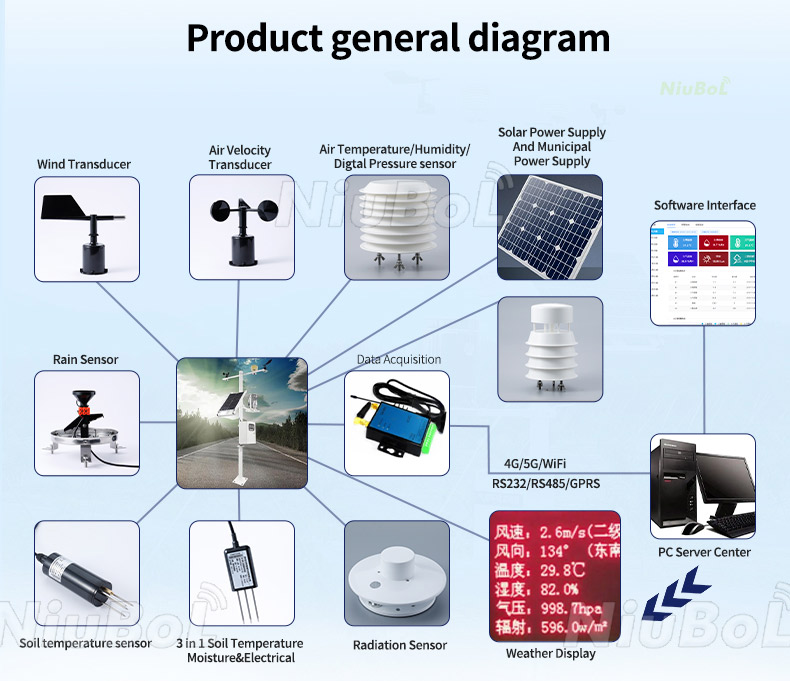
The rain gauge measures precipitation. The acquisition equipment records or processes measurements, and a suitable gateway transmits data when remote monitoring is required.
Some installations use a PLC or controller for configured alarm logic. Flood prediction or automatic warning functions require suitable additional instruments, models and software.
A tipping bucket rain gauge is a practical option when the project mainly requires automatic monitoring of liquid rainfall and has suitable installation and maintenance conditions.
| Application Condition | Selection Consideration |
|---|---|
| Agricultural Weather Station | Suitable for recording liquid rainfall as part of a weather monitoring system |
| Hydrological Monitoring | Provides precipitation data for catchment and water resource assessment |
| Remote Monitoring | Select an appropriate output and external data acquisition system |
| Heavy Rainfall Research | Evaluate dynamic response and applicable intensity range carefully |
| Snow or Freezing Rain | Use instrumentation designed for frozen precipitation |
| Limited Maintenance Access | Evaluate clogging risks and alternative sensor technologies |
For the detailed specifications and available output versions, visit the NiuBoL Tipping Bucket Rain Gauge product page.
A1: Its main advantage is automatic measurement of liquid rainfall using a relatively simple self-emptying mechanism. The resulting signals can be recorded by compatible data acquisition equipment.
A2: Important limitations include dynamic errors during heavy rainfall, wind-related collection losses, blockage, mechanical maintenance and poor suitability for freezing precipitation in standard unheated versions.
A3: Accuracy depends on the instrument and measurement conditions. The NBL-W-RS specifies ±4% under an indoor static test at 2 mm/min. This does not guarantee the same accuracy under all outdoor conditions.
A4: Water continues entering the instrument during bucket movement. Depending on the design and calibration, this can cause uncounted or incorrectly allocated water during intense rainfall.
A5: Standard unheated tipping bucket rain gauges are intended mainly for liquid precipitation. Snow and freezing rain require appropriate specialized equipment or operating arrangements.
A6: A passive reed-switch output may not require a powered transmitter. However, active RS485 or analog versions require their specified power supply, and the external data acquisition system also needs power.
A7: Yes. A compatible data logger or communication gateway can acquire rainfall measurements and forward them to a server or cloud platform using a supported network connection.
A8: Maintenance frequency depends on the location. The collection funnel, filter, tipping mechanism, level and electrical connections should be checked regularly, especially in dusty locations or areas with leaves and insects.
The following original NiuBoL PDF manuals contain model-specific specifications, installation instructions, wiring information and Modbus communication details.
 NBL-W-ARS-Tipping-bucket-rain-gauge-instruction-manual.pdf
NBL-W-RS-Rain-sensors-instruction-manual-V4.0.pdf
Tipping bucket rain gauges are useful automatic instruments for measuring liquid rainfall. Their main advantages include simple construction, self-emptying operation and compatibility with electronic data acquisition systems.
Their main limitations involve dynamic errors during heavy rainfall, environmental effects, maintenance requirements and freezing conditions. Proper instrument selection, installation, inspection and data processing are important for reliable monitoring.
For agricultural, meteorological and hydrological projects, NiuBoL provides tipping bucket rain gauges and related monitoring equipment. For model selection and system integration, contact NiuBoL with the required rainfall resolution, output signal, site conditions and data collection requirements.
Related recommendations
Sensors & Weather Stations Catalog
 Agriculture Sensors and Weather Stations Catalog-NiuBoL.pdf
Weather Stations Catalog-NiuBoL.pdf
Agriculture Sensors Catalog-NiuBoL.pdf
Water Quality Sensor Catalog-NiuBoL.pdf
Related products
 Combined air temperature and relative humidity sensor
 TDR Soil Moisture & Temperature Sensor for irrigation| RS485 |4-20mA| NBL-S-THR
 Soil pH sensor RS485 soil Testing instrument soil ph meter for agriculture |NBL-S-PH
 Wind Speed sensor Output Modbus/RS485/Analog/0-5V/4-20mA
 Tipping bucket rain gauge for weather monitoring auto rainfall sensor RS485/Outdoor/stainless steel
 Pyranometer Solar Radiation Sensor 4-20mA/RS485


Screenshot, WhatsApp to identify the QR code
WhatsApp number:+8615367865107
(Click on WhatsApp to copy and add friends)

