





— Blogs —
—Products—
 Consumer hotline +8618073152920
 WhatsApp:+8615367865107
Address:Room 102, District D, Houhu Industrial Park, Yuelu District, Changsha City, Hunan Province, China
Product knowledge
Time:2026-06-27 11:40:06 Popularity:238
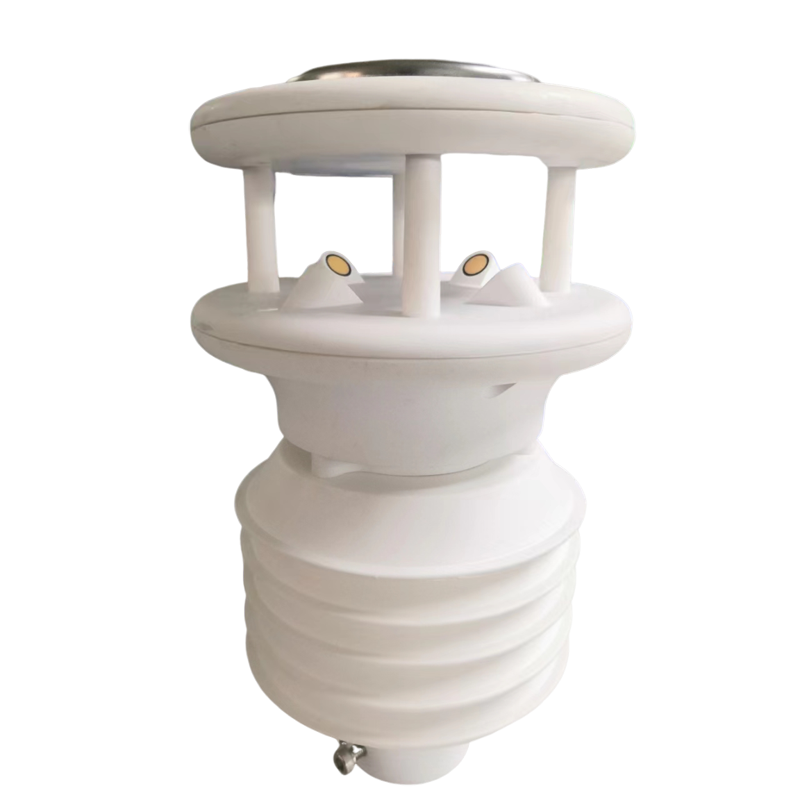
An automatic weather station is a complete observation system. An ultrasonic integrated weather station is usually a compact sensor unit or station head that measures several variables in one body, especially wind speed and wind direction by ultrasonic transit-time principle. Buyers often compare them because both can appear in agriculture, environmental monitoring, traffic, ports, airports and industrial sites.
The procurement decision should not be based on the product name alone. A conventional automatic station may use separate sensors on a mast. An ultrasonic integrated station reduces moving parts and installation complexity. The choice depends on required variables, maintenance access, wind measurement requirements, platform architecture and budget.
| Item | Conventional Automatic Weather Station | Ultrasonic Integrated Weather Station |
|---|---|---|
| Structure | Separate sensors, bracket, collector and enclosure | Compact multi-parameter sensor body |
| Wind measurement | Often mechanical wind cup and vane | Ultrasonic time-difference measurement |
| Moving parts | May include rotating parts | No wind-speed moving parts |
| Installation | More component assembly | Simpler mast-mounted installation |
| Maintenance | Mechanical parts may require more inspection | Probe cleaning and orientation check are important |
| Expansion | Flexible separate sensor expansion | Integrated variables plus optional modules |
| Suitable use | Full station projects and customized networks | Compact unattended or harsh-site monitoring |
| NBL-W-10GUWS Item | Specification | Why It Matters |
|---|---|---|
| Supply voltage | DC 9-24V | Compatible with common field power systems |
| Signal output | RS485 | Industrial digital connection |
| Protocol | Standard Modbus protocol | Gateway and controller integration |
| Baud rate | 9600 bps | Common Modbus RTU setting |
| Average power | 0.4W without dust sensor; 1W with dust sensor | Solar and battery sizing |
| Working temperature | -40 to 80℃ | Outdoor unattended deployment |
| Protection grade | IP65 | Outdoor weather resistance |
| Wind speed | 0-60 m/s, ±0.3+3%FS, 0.01 m/s resolution | Wind monitoring and warning |
| Wind direction | 0-359°, ±3°, 1° resolution | Spraying, safety and meteorological analysis |
| Temperature / humidity | -40-80℃ ±0.5℃; 0-100%RH ±5%RH | Local weather reference |
| Pressure | 10-1100 hPa, ±1.5 hPa | Weather trend observation |
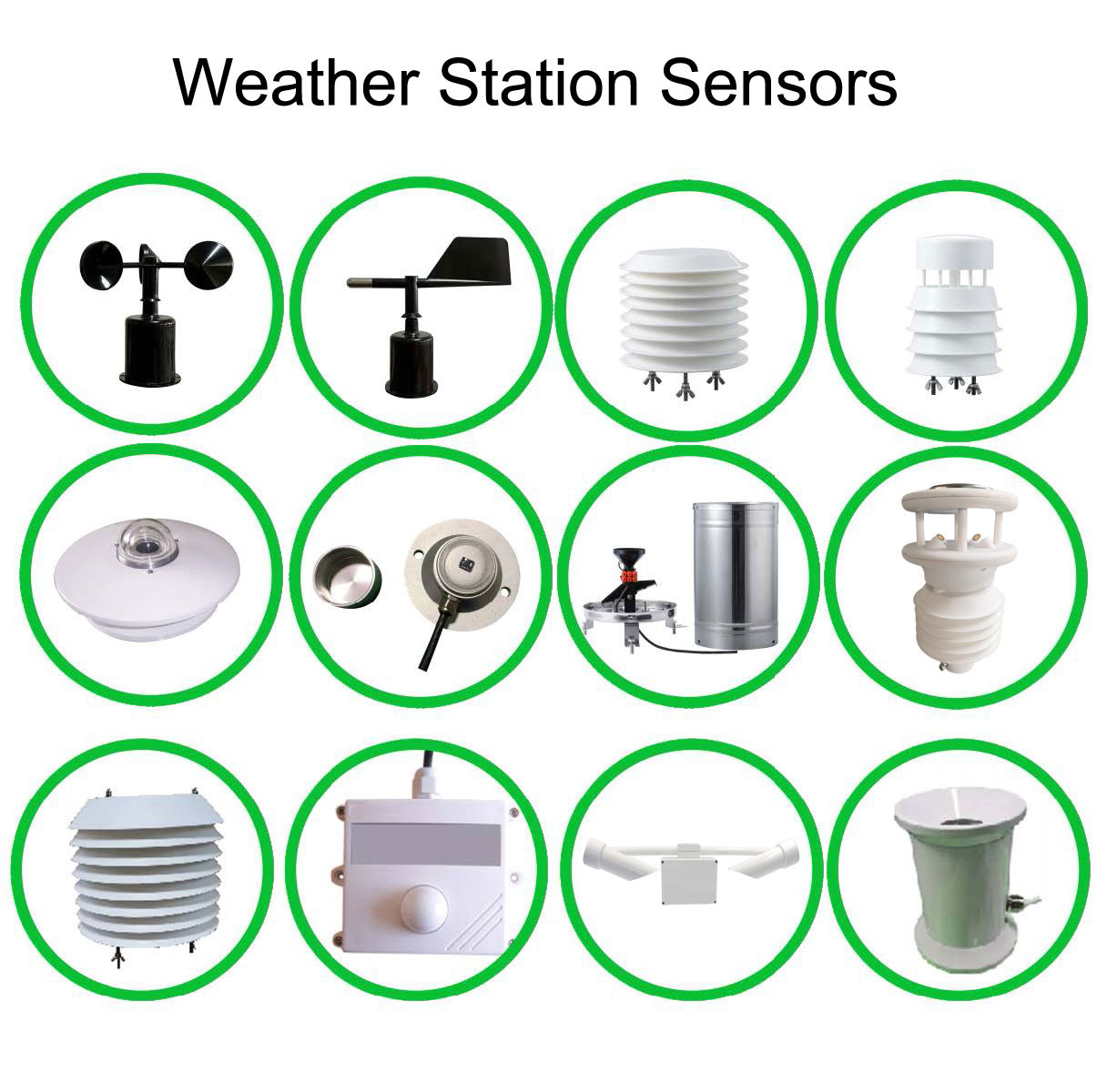
| Optional variables | PM2.5, PM10, noise, illuminance, rainfall, radiation | Integrated environmental monitoring |
Integrated ultrasonic design is useful when the site needs compact installation, reduced mechanical wear and quick deployment. It is also useful when wind data must be collected together with temperature, humidity and pressure in a small device body. These advantages matter for remote monitoring points, factory yards, ports, solar farms and agricultural sites with limited maintenance access.
However, integrated design is not automatically the correct answer for every formal observation project. If each sensor must be installed at a different height or if a project needs a special sensor layout, a conventional automatic station with separate sensors may still be more flexible.
For a farm or greenhouse project, an integrated ultrasonic station is attractive when installation must be simple and the main requirement is local weather reference. For a formal meteorological observation point, separate sensors may be preferred if the project requires specific installation heights or sensor spacing. For industrial yards, ports and traffic sites, compact ultrasonic design often reduces moving-part maintenance.
Buyers should also consider spare parts strategy. Separate mechanical sensors can sometimes be replaced one by one, while integrated devices simplify wiring but may require replacing the whole sensor head if a major fault occurs. This tradeoff should be considered before purchase.
NBL-W-10GUWS uses RS485 output and standard Modbus protocol, with 9600 bps baud rate. This makes it suitable for gateways, data loggers, PLC systems and IoT platforms. For procurement, buyers should request register tables, cable definition, power requirements and installation orientation instructions.
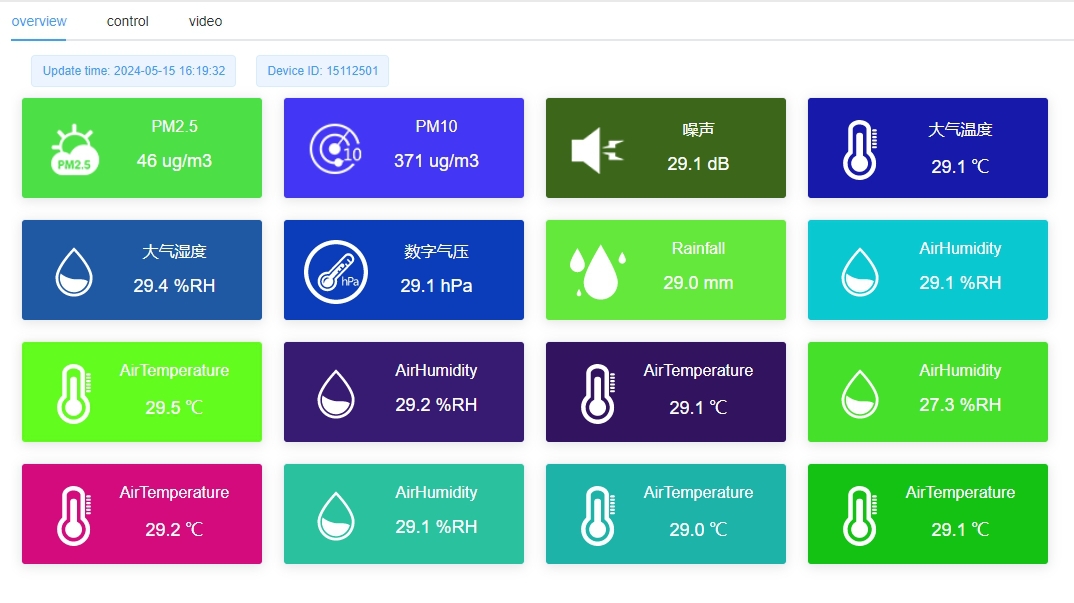
The RS485 Modbus output makes ultrasonic sensors easy to connect to gateways, but register mapping must be checked carefully. Wind speed, wind direction, pressure, humidity, temperature and optional variables should all display with correct units. The acceptance test should include more than one weather condition when possible because wind response is easier to confirm when airflow changes.
Site challenge: Fields need wind, temperature, humidity and pressure data with simple maintenance.
System integration plan: Use an integrated ultrasonic sensor on a mast with RS485 gateway.
User value: The farm receives local weather data with fewer mechanical parts.
Site challenge: Wind information affects safety and operation.
System integration plan: Use ultrasonic wind measurement with pressure and humidity data.
User value: Operators get fast local wind reference.
Site challenge: A compact node needs weather and optional air quality variables.
System integration plan: Add PM2.5, PM10, noise, radiation or rainfall modules by project.
User value: One station node supports multiple environmental variables.
Site challenge: Maintenance access may be limited and rotating parts are undesirable.
System integration plan: Use integrated ultrasonic design with protected cabling and grounding.
User value: The system reduces mechanical wear points.
Acceptance should include north alignment, level mounting, Modbus reading test, wind response check and platform unit verification. If optional PM, noise, rainfall or radiation modules are included, each variable should be checked separately. A single successful data upload does not prove that all registers and units are mapped correctly.
Integrated ultrasonic stations can reduce installation labor because several variables share one body and one communication line. They can also reduce moving-part maintenance. However, buyers should compare whole-life cost rather than only purchase price. Consider spare sensor strategy, local service capability, calibration access, cable replacement and whether optional modules are needed now or later.
For system integrators, the biggest advantage is often simplified wiring and faster commissioning. For owners, the benefit is reduced routine mechanical inspection. For formal monitoring networks, the decision may still depend on required observation layout and data standards.
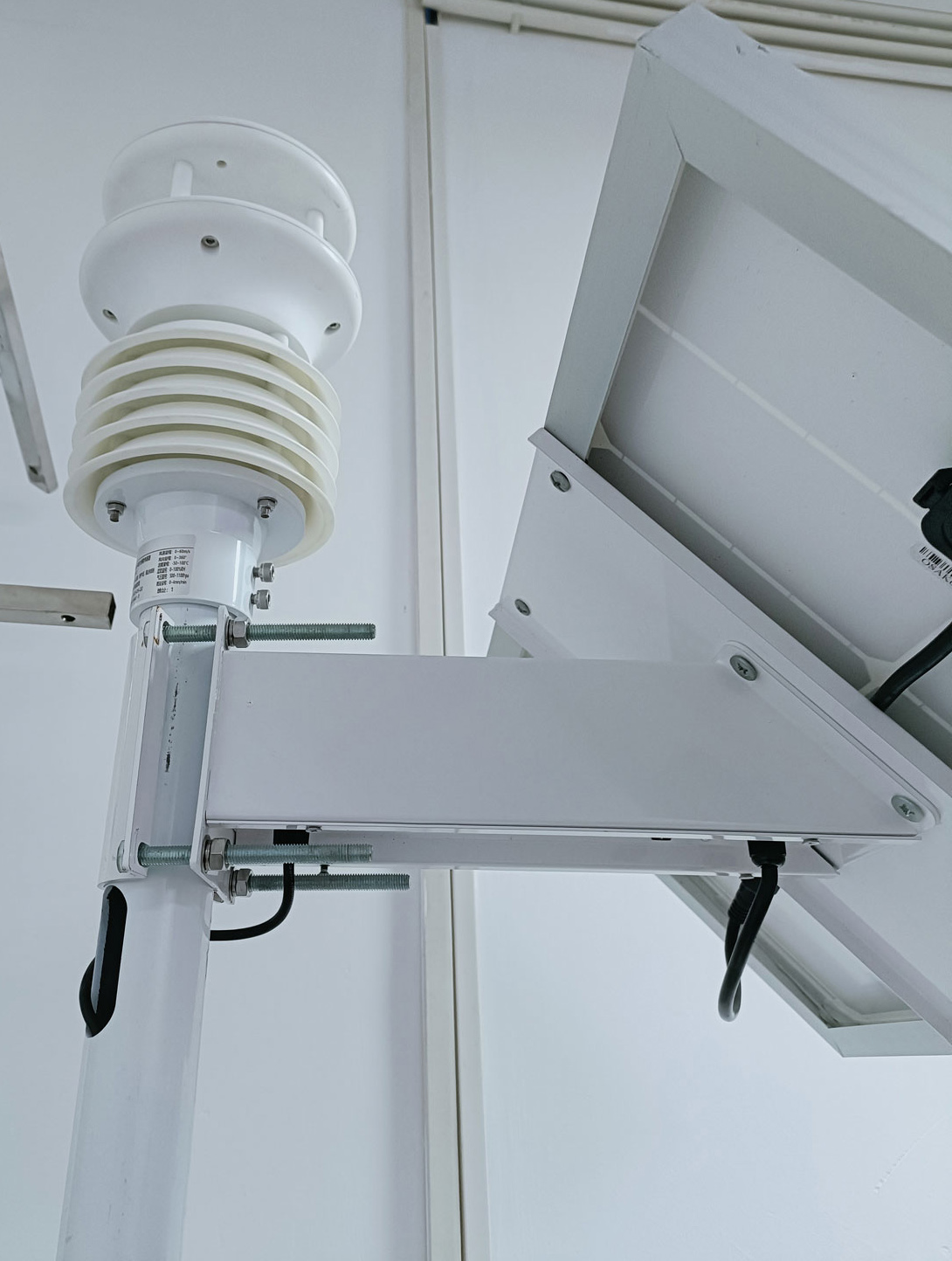
Install the device on a vertical mounting tube and keep the measurement plane level. Align the north mark with geographic north using a compass before fixing. Avoid nearby buildings that disturb airflow, and do not install close to radar or radio transmitting equipment. Provide strain relief for cables and lock the connector correctly.
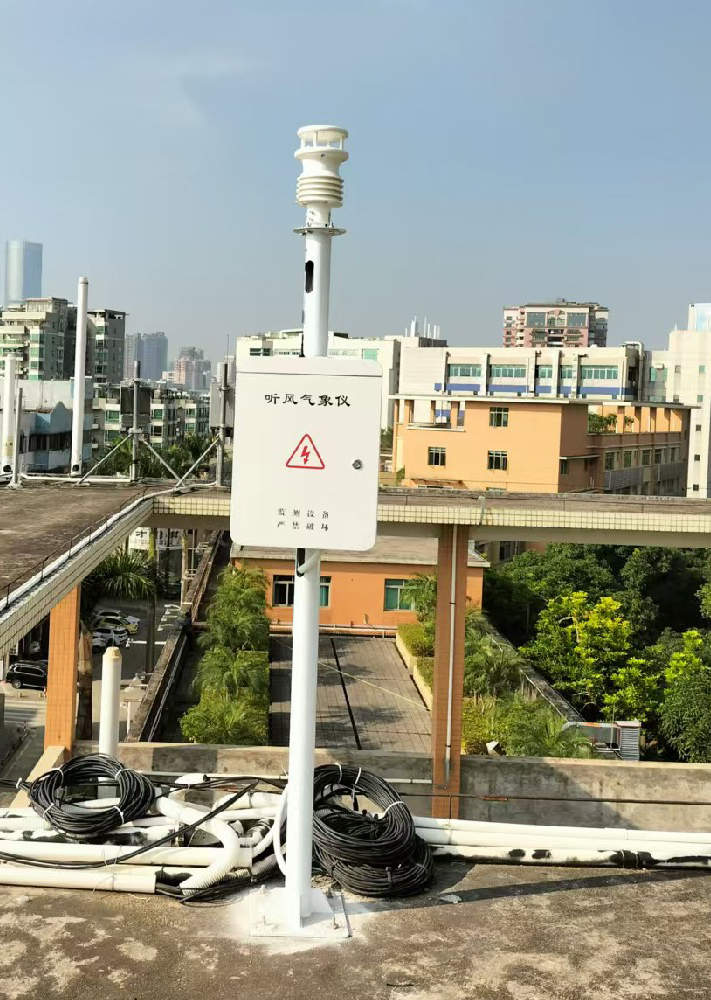
Required variables: 5-in-1, 6-in-1, 7-in-1, 10-in-1 or customized.
Mounting height, mast diameter and exposure condition.
Power source and whether solar battery operation is required.
Gateway, PLC or platform integration method.
Whether optional dust, noise, radiation or rainfall modules are required.
Select an ultrasonic integrated station when compact structure, RS485 Modbus output, reduced moving parts and fast installation are important. Select a conventional automatic station when the project needs separate sensor placement, a larger mast structure or a customized observation layout. For many projects, the integrated ultrasonic sensor is the sensing head, while the complete automatic station also includes power, mounting, collector, communication and platform.
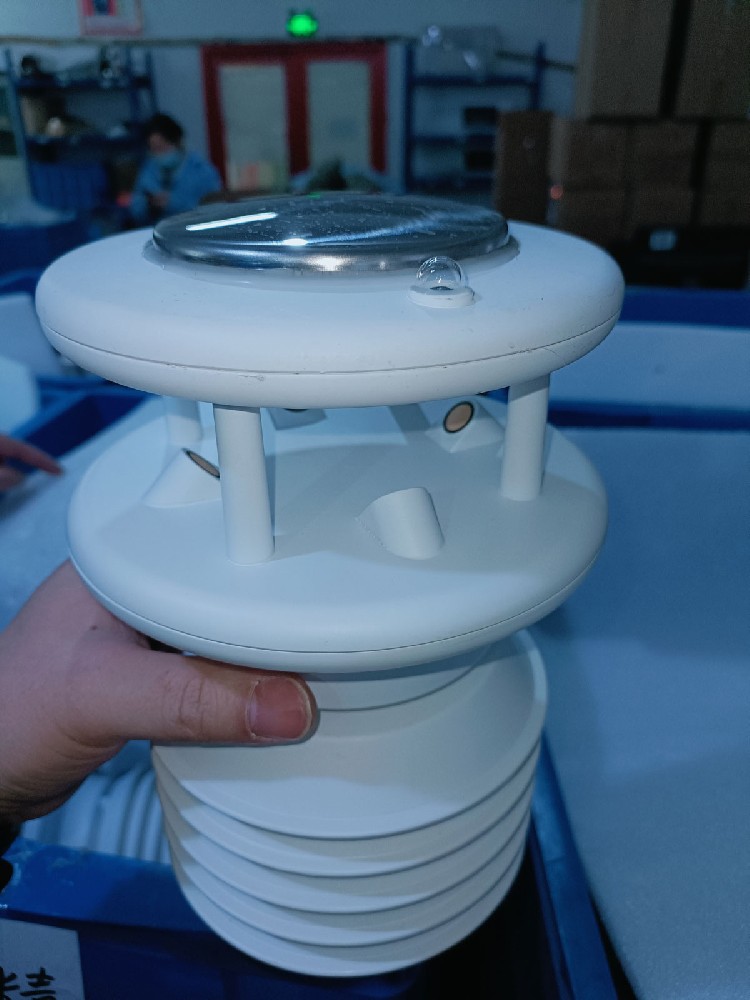
A: It can be the sensing head of an automatic station, but a complete station also includes power, mounting, collection and data transmission.
A: It measures wind without rotating cups or vanes, reducing mechanical wear in unattended sites.
A: It is suitable when compact installation, RS485 Modbus output and reduced moving-part maintenance are important.
A: Separate sensors are better when the project requires special heights, formal spacing or customized station layout.
A: It supports wind speed, wind direction, temperature, humidity, pressure and optional variables such as PM, noise, light, rainfall or radiation.
A: Confirm RS485 wiring, Modbus register table, baud rate, power supply and unit mapping before commissioning.
A: Wind direction depends on correct physical orientation, so the north mark must be aligned during installation.
A: Check mounting level, orientation, Modbus values, units, optional modules and platform display.
A: Compare installation labor, spare strategy, calibration access, service support and maintenance visits, not only purchase price.
A: Use ultrasonic integrated design for compact, low-maintenance monitoring; use conventional layouts when the observation standard requires separate sensors.
A conventional automatic station and an ultrasonic integrated station solve related but different engineering problems. NBL-W-10GUWS is suitable when buyers need a compact RS485 Modbus multi-parameter weather sensor with ultrasonic wind measurement and reduced mechanical wear.
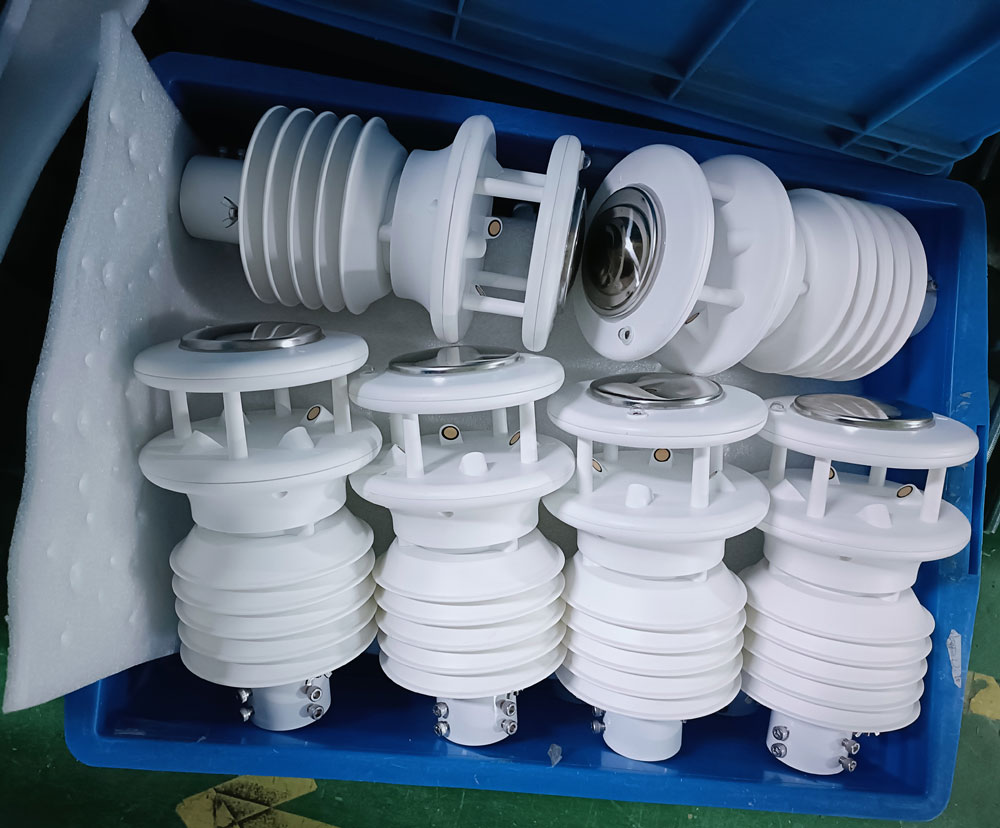
An integrated ultrasonic weather station uses ultrasonic probes to measure wind speed and direction without mechanical moving parts. Built-in temperature, humidity and pressure sensors provide local weather data. Optional modules may add PM2.5, PM10, noise, illuminance, rainfall and radiation.
The ultrasonic principle uses north-south and west-east ultrasonic transmission time. When wind blows from the north, the ultrasonic travel time from north to south differs from south to north. By calculating time differences, the sensor determines wind speed and direction.
Related recommendations
Sensors & Weather Stations Catalog
 Agriculture Sensors and Weather Stations Catalog-NiuBoL.pdf
Weather Stations Catalog-NiuBoL.pdf
Agriculture Sensors Catalog-NiuBoL.pdf
Water Quality Sensor Catalog-NiuBoL.pdf
Related products
 Combined air temperature and relative humidity sensor
 TDR Soil Moisture & Temperature Sensor for irrigation| RS485 |4-20mA| NBL-S-THR
 Soil pH sensor RS485 soil Testing instrument soil ph meter for agriculture |NBL-S-PH
 Wind Speed sensor Output Modbus/RS485/Analog/0-5V/4-20mA
 Tipping bucket rain gauge for weather monitoring auto rainfall sensor RS485/Outdoor/stainless steel
 Pyranometer Solar Radiation Sensor 4-20mA/RS485

Screenshot, WhatsApp to identify the QR code
WhatsApp number:+8615367865107
(Click on WhatsApp to copy and add friends)

