





— Blogs —
—Products—
 Consumer hotline +8618073152920
 WhatsApp:+8615367865107
Address:Room 102, District D, Houhu Industrial Park, Yuelu District, Changsha City, Hunan Province, China
Product knowledge
Time:2026-06-19 17:04:03 Popularity:240
Construction site dust and noise monitoring systems are used to collect particulate matter, noise, and weather data from active project sites. For contractors, environmental monitoring companies, and platform integrators, the system must support real-time data, alarms, public display, remote upload, and reliable outdoor operation.
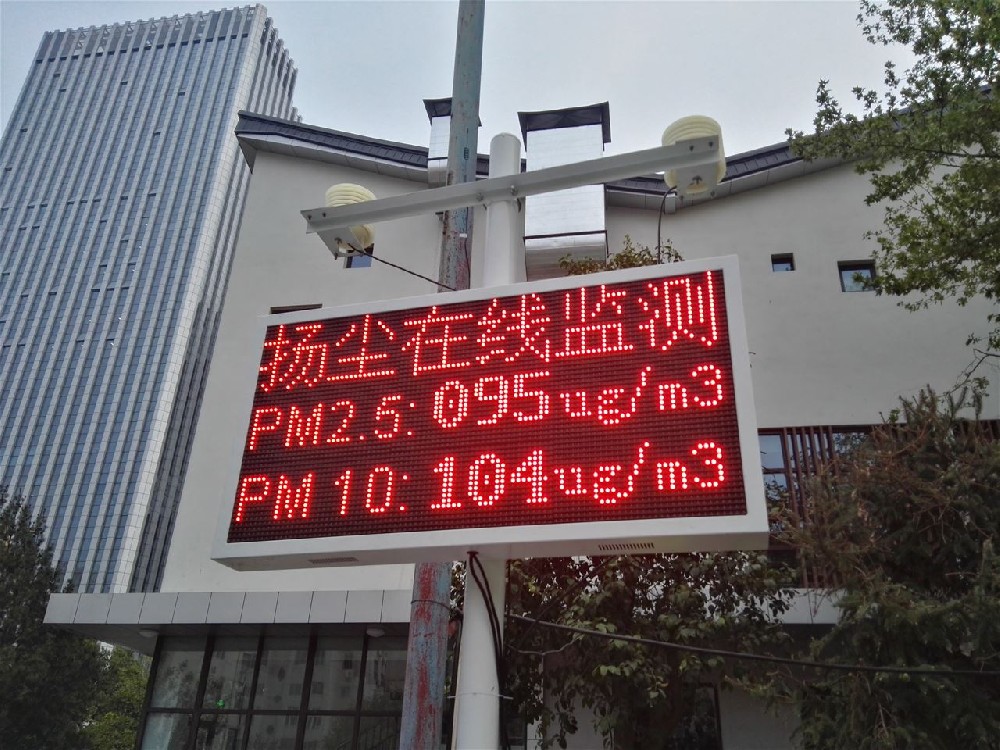
A typical system includes PM2.5 and PM10 sensors, noise sensors, weather sensors, LED display, data acquisition terminal, communication module, and cloud platform. Some projects may also add cameras or video monitoring for site supervision.
The monitoring terminal collects field data and uploads it through 4G, Ethernet, GPRS, RS485, or other project communication methods. The platform stores data, analyzes trends, and sends alarms when thresholds are exceeded.
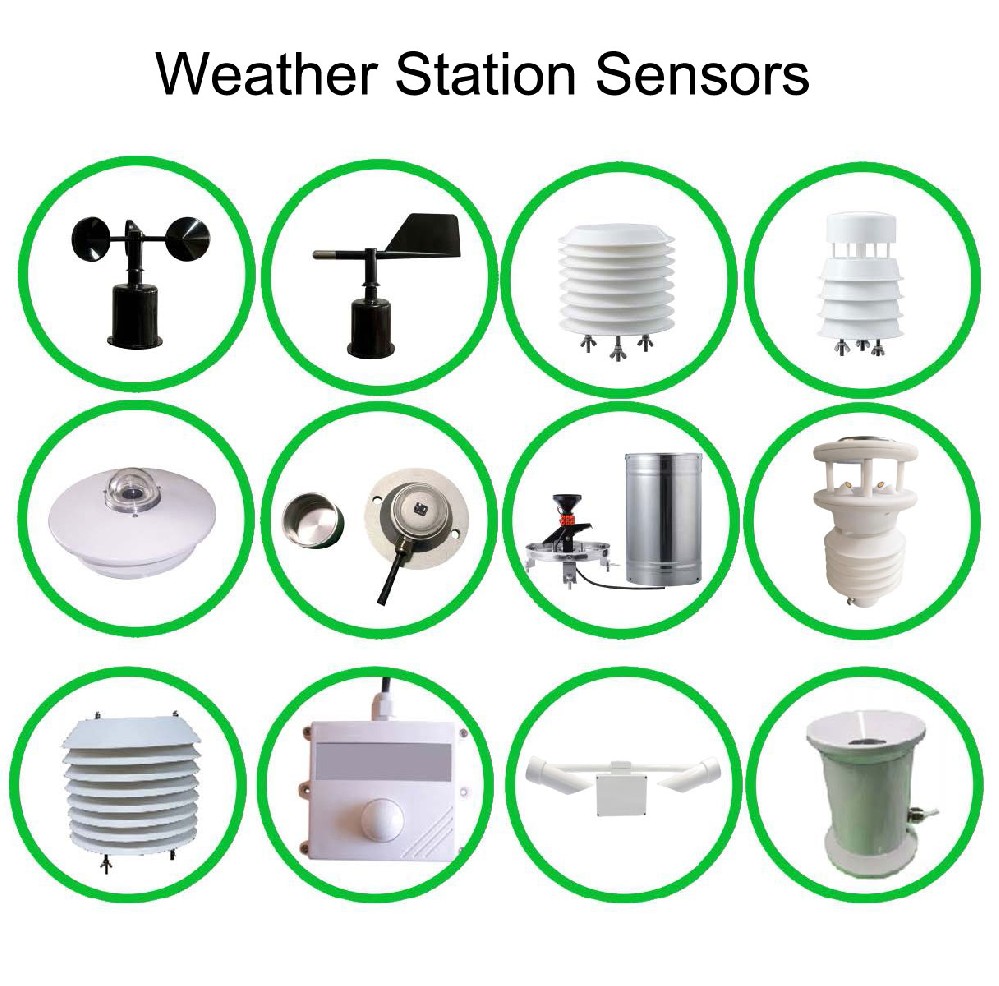
PM2.5 and PM10 sensors usually use laser scattering principles to detect particulate concentration. Noise sensors measure site sound levels, while weather sensors provide wind, rainfall, temperature, humidity, and pressure context.
Weather data is important because wind and rainfall affect dust dispersion. A dust alarm without wind context may be difficult to interpret, especially on open construction sites, roads, ports, demolition areas, or industrial parks.
| Module | Typical Specification | Project Function |
|---|---|---|
| Noise Sensor | 30-130dB | Construction noise monitoring and alarm |
| PM2.5 Sensor | 0-1000μg/m³ | Fine particle monitoring |
| PM10 Sensor | 0-2000μg/m³ | Dust concentration monitoring |
| Output | RS485 / 4-20mA options | Terminal and platform integration |
| Communication | 4G, GPRS, RS485, Ethernet | Remote data upload |
| Display | Outdoor LED screen optional | Site warning and public display |
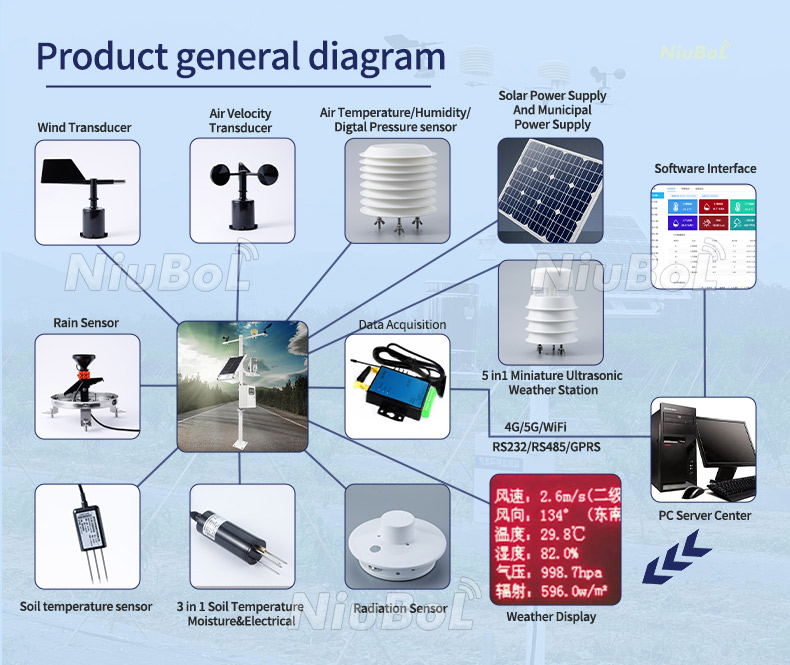
A practical platform should provide live data, historical curves, alarm records, statistics, export functions, and multi-role access. Data may need to be reported to environmental authorities, construction companies, or project owners at the same time.
LED displays allow site staff and visitors to see current conditions. Alarm logic should include threshold values, alarm duration, data upload interval, and response workflow.
NBL-W-10GUWS ultrasonic weather station can provide PM2.5, PM10, noise, wind, rainfall, temperature, humidity, pressure, radiation, and illuminance depending on configuration. This makes it suitable for compact environmental monitoring nodes where multiple parameters are required.
RS485 MODBUS output allows the station to connect with data terminals or gateways. For construction projects, the integrator should confirm which parameters are required by the reporting platform before ordering.
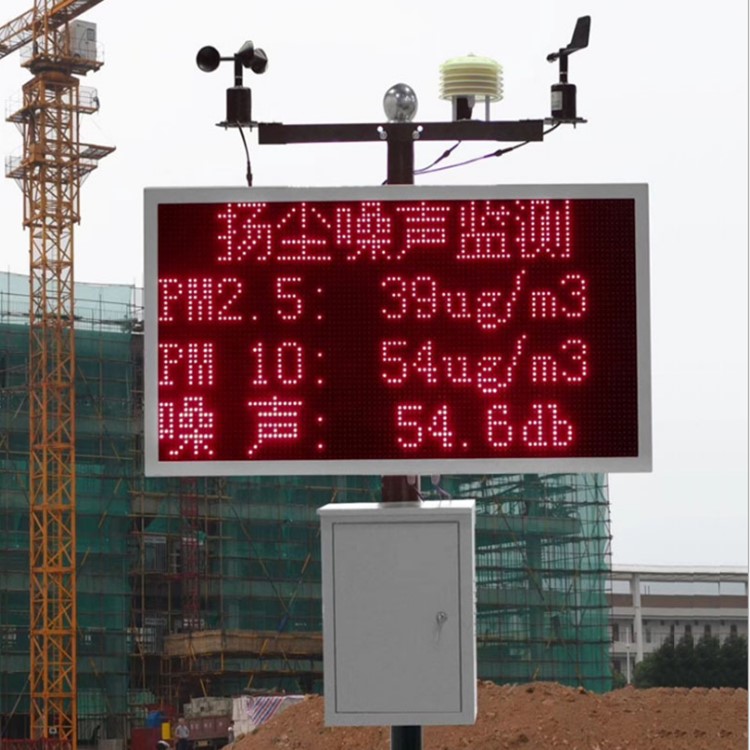
Dust monitoring equipment should be installed vertically and placed where it represents site emissions. Avoid direct blockage, artificial airflow, oil mist, sticky particles, and locations where rainwater or construction activity can damage the sensor.
Maintenance should include sensor cleaning, fan inspection where applicable, cable checks, LED display inspection, communication testing, and platform data review.
The delivery checklist should include equipment model, monitored parameters, communication method, power supply, LED display settings, platform account, alarm thresholds, installation photos, and sample data export.
If the system reports to multiple platforms, communication protocol and data format should be confirmed before acceptance.
A construction company may need to monitor PM2.5, PM10, noise, wind, rainfall, and temperature at the site boundary. The monitoring system can upload data to a platform, show live values on an LED screen, and trigger alarms when limits are exceeded.
For environmental service providers, the value is not only the sensor hardware. The complete system includes data collection, platform reporting, alarm response, communication stability, and maintenance records. These functions support site management and external reporting requirements.
Alarm rules should define threshold values, duration, data interval, and notification method. A short dust spike may require a different response from a long continuous exceedance. The platform should keep both live alarms and historical alarm records.
If data must be uploaded to more than one platform, the communication method and data format should be confirmed before installation. The system may need to report to the construction company, environmental authority, and project owner at the same time.
Construction sites are harsh environments. Dust, vibration, cable damage, water, temporary power failure, and equipment movement can affect monitoring stability. The installation should protect the sensor, terminal, power supply, and communication module.
Maintenance should include cleaning optical particle sensor paths where applicable, checking fan function, inspecting cables, verifying LED display, and comparing platform data with site conditions.
Construction dust monitoring projects often involve several stakeholders: the construction company, environmental service provider, project owner, and sometimes a supervisory platform. The system should therefore support clear data ownership, reporting intervals, and alarm records.
If multiple platforms receive data, each interface should be tested before acceptance. Data fields, units, timestamps, station names, and upload frequency should match the receiving platform requirements.
PM concentration alone does not explain the full site condition. Wind direction can show whether dust may move toward a sensitive boundary, while rainfall may reduce airborne particles. Noise data adds another compliance dimension for construction sites.
A combined station helps operators identify whether an alarm is likely related to site activity, weather change, nearby traffic, or another external factor.
The project should define what happens after a dust or noise alarm. Possible actions include checking site watering, covering materials, stopping high-dust work, inspecting equipment, or recording an explanation in the platform.
Without a response workflow, monitoring becomes only a display system. A practical dust monitoring project should connect alarm data to site management actions.
Before installation, confirm monitored parameters, reporting platform, alarm thresholds, LED display requirements, power supply, communication method, and equipment location. Construction sites change quickly, so installation protection should be planned carefully.
During commissioning, test PM2.5, PM10, noise, weather parameters, LED display, data upload, alarm response, and historical storage. If multiple platforms receive data, verify each upload path separately.
After handover, the site team should know how to read alarms, how to check whether data is uploading, and how to respond when dust or noise exceeds the threshold. Monitoring becomes more valuable when it is connected to site management actions.
Dust and noise monitoring records help construction managers understand when environmental risk is increasing. The system can support watering decisions, material covering, vehicle route adjustment, work scheduling, and communication with project stakeholders.
Historical data is also important. When the owner reviews environmental performance, exported records can show alarm time, parameter values, response measures, and later improvement. This gives the monitoring system operational value beyond real-time display.
A construction monitoring station often includes a field terminal, sensor interfaces, power protection, communication module, and optional LED display. The cabinet should be installed where it can be maintained safely but still represent the site boundary condition.
The LED display should be configured with clear parameter names and units. Site staff should be able to read PM2.5, PM10, noise, wind, and other required data without opening the platform backend.
Environmental monitoring data may be used for internal management, external reporting, or regulatory review. For this reason, timestamps, station names, parameter units, communication status, and alarm records should be stored clearly.
If a sensor is offline or maintenance is being performed, the platform should mark that status. Clear data status prevents operators from confusing missing data with normal environmental conditions.
The project should also define who receives alarm messages and who records the response. Without responsibility assignment, dust and noise alarms may be seen but not acted on by the site team.
For sites with changing construction phases, the station position may need review. Demolition, earthwork, material storage, and vehicle routes can change where the most representative monitoring point should be.
A reliable system should therefore combine hardware protection, platform records, and an operation procedure. This is what turns a dust monitoring device into a supervision tool.
If the project includes an LED display, the displayed parameters should match the platform records. The site team should not see one value on the screen and another value in the reporting system.
For long projects, calibration or comparison checks may be scheduled according to the owner’s requirements. This helps maintain confidence in dust and noise data over time.
The monitoring plan should also define how reports are exported and archived. Reliable records are important when a construction site needs to review environmental performance across different work stages.
Clear archives also simplify communication with owners and supervisors.
This makes the monitoring system part of daily site management, not only a compliance display.
Response records matter.
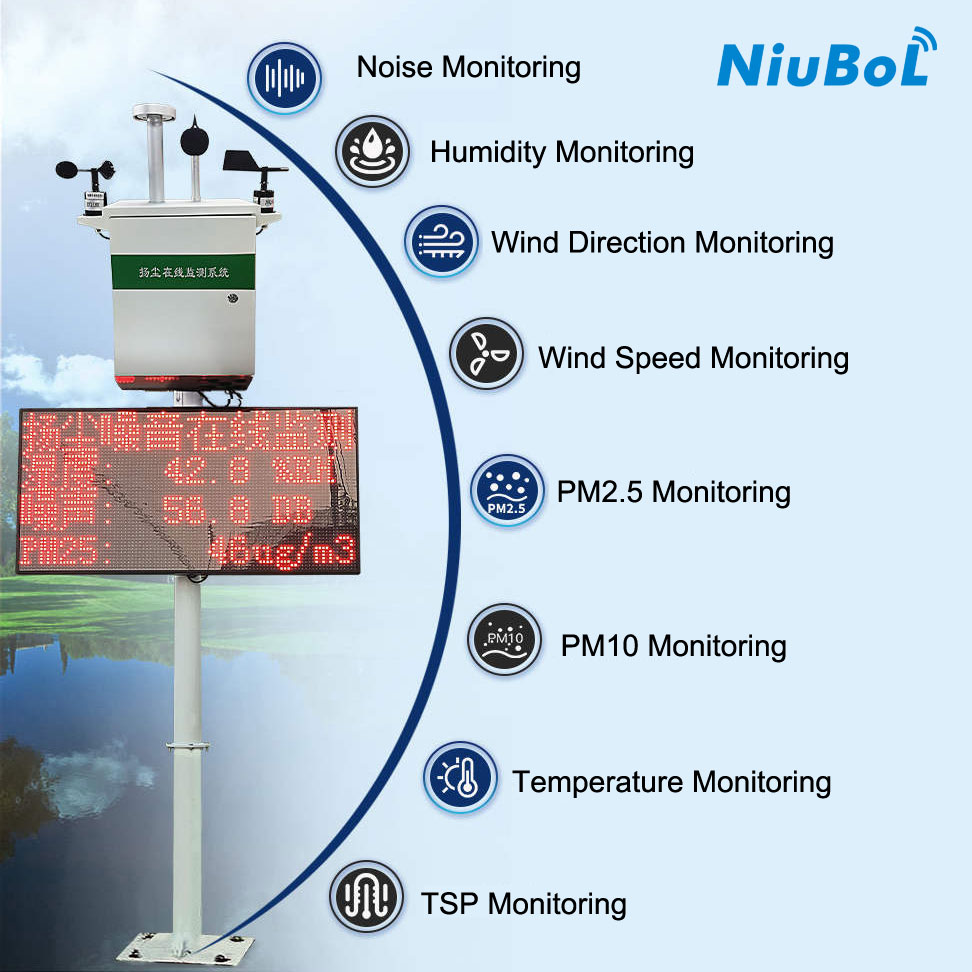
It typically measures PM2.5, PM10, noise, and weather parameters such as wind speed, wind direction, temperature, humidity, and rainfall. These data support site supervision and environmental reporting.
Wind and rainfall affect dust dispersion and concentration. Weather data helps project owners understand whether dust changes are caused by site activity, wind direction, rainfall, or external conditions.
Yes. NBL-W-10GUWS ultrasonic weather station can be configured with PM2.5, PM10, noise, and weather parameters, making it suitable for compact environmental monitoring stations.
Data can be uploaded through 4G, GPRS, Ethernet, or gateway-based communication. The platform should define upload interval, alarm thresholds, data format, and user access.
An outdoor LED display shows current dust, noise, and weather readings on site. It supports warning, transparency, and fast response by site personnel.
Install it where readings represent site conditions and avoid direct artificial airflow, blockage, sticky particles, oil mist, or locations with high damage risk.
Maintenance includes checking sensor cleanliness, fan function, cable sealing, communication status, LED display, and platform data continuity.
Acceptance should include installation photos, live data screenshot, alarm test, platform upload verification, parameter list, communication settings, and exported sample records.
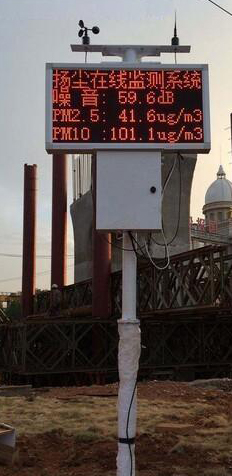
Construction dust and noise monitoring systems combine PM sensors, noise sensors, weather data, communication modules, displays, and platforms. With NiuBoL multi-parameter monitoring hardware, integrators can build site supervision systems for construction, demolition, roads, ports, and industrial areas.
Prev:Soil Temperature Moisture Sensor Main Features and Selection Guide for Agricultural Monitoring
Next:Campus Weather Station Components and System Integration for Education and Monitoring Projects
Related recommendations
Sensors & Weather Stations Catalog
 Agriculture Sensors and Weather Stations Catalog-NiuBoL.pdf
Weather Stations Catalog-NiuBoL.pdf
Agriculture Sensors Catalog-NiuBoL.pdf
Water Quality Sensor Catalog-NiuBoL.pdf
Related products
 Combined air temperature and relative humidity sensor
 TDR Soil Moisture & Temperature Sensor for irrigation| RS485 |4-20mA| NBL-S-THR
 Soil pH sensor RS485 soil Testing instrument soil ph meter for agriculture |NBL-S-PH
 Wind Speed sensor Output Modbus/RS485/Analog/0-5V/4-20mA
 Tipping bucket rain gauge for weather monitoring auto rainfall sensor RS485/Outdoor/stainless steel
 Pyranometer Solar Radiation Sensor 4-20mA/RS485

Screenshot, WhatsApp to identify the QR code
WhatsApp number:+8615367865107
(Click on WhatsApp to copy and add friends)

