





— Blogs —
—Products—
 Consumer hotline +8618073152920
WhatsApp:+8615367865107
Address:Room 102, District D, Houhu Industrial Park, Yuelu District, Changsha City, Hunan Province, China
Product knowledge
Time:2026-08-21 09:04:00 Popularity:279
A digital temperature and humidity sensor may deliver two correct channels that become an incorrect pair in a gateway. This occurs when the latest temperature is combined with an older RH value, when tags belong to different locations or when uploads conceal a failed channel. Verify the pair through acquisition, storage and export before using it for environmental decisions.
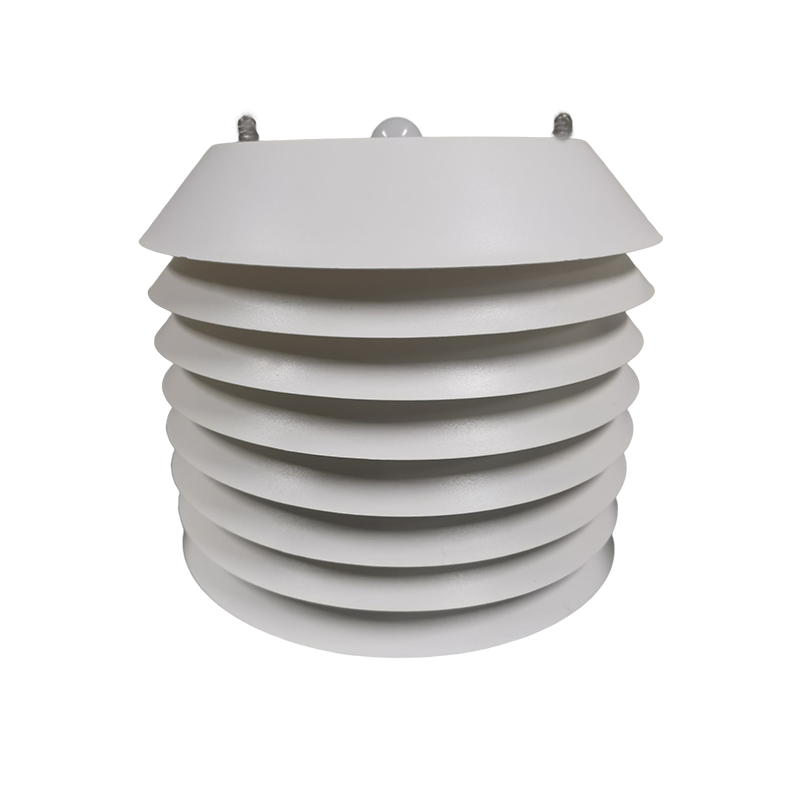
Temperature and relative humidity describe conditions at a location and time. If the application derives dew point or another combined quantity, it needs a suitable pair rather than two unrelated numbers. Even a display with fresh-looking timestamps can be misleading if those timestamps represent upload time instead of acquisition.
Define location identity, measurement units, validity and the acceptable age difference for the intended application. The age limit should follow the process dynamics and operating decision; there is no single permissible offset for a slow room record, rapidly ventilated greenhouse and outdoor weather point.
| Pairing defect | How it appears | What to preserve or verify |
|---|---|---|
| One cached channel | Both values appear current after the gateway republishes them | Acquisition time and validity of each member |
| Mixed locations | Temperature from one bay is paired with RH from another | Device, location and channel identity through every mapping layer |
| Wrong temperature unit | A derived result changes after platform migration | Degrees C versus degrees F and the calculation's expected unit |
| RH representation mismatch | A percentage is interpreted as a fraction, or vice versa | Explicit unit and scaling, applied once |
Do not create apparent synchronisation by assigning the same upload time to older observations. Where the selected sensor does not supply acquisition timestamps, distinguish the host's read time from the physical sampling time and document the available update behavior.
The NiuBoL NBL-W-51MUWS provides wind speed, wind direction, temperature, RH and pressure through RS485 Modbus RTU. Its measurement order places temperature and humidity after the two wind values. Use the correct map and a supported block read to keep related fields together where appropriate.
A common reply can simplify host-side consistency, but the interface alone does not specify every channel's physical update interval or end-to-end delay. Establish the required timing from the selected head's update information and the receiving system, rather than from the number of measurements.
When the gateway reads a different head, use that model's parameter order and scaling. In particular, decode negative temperature according to the delivered data format. A receiver that works correctly above freezing can still fail when the sign or numerical representation changes.
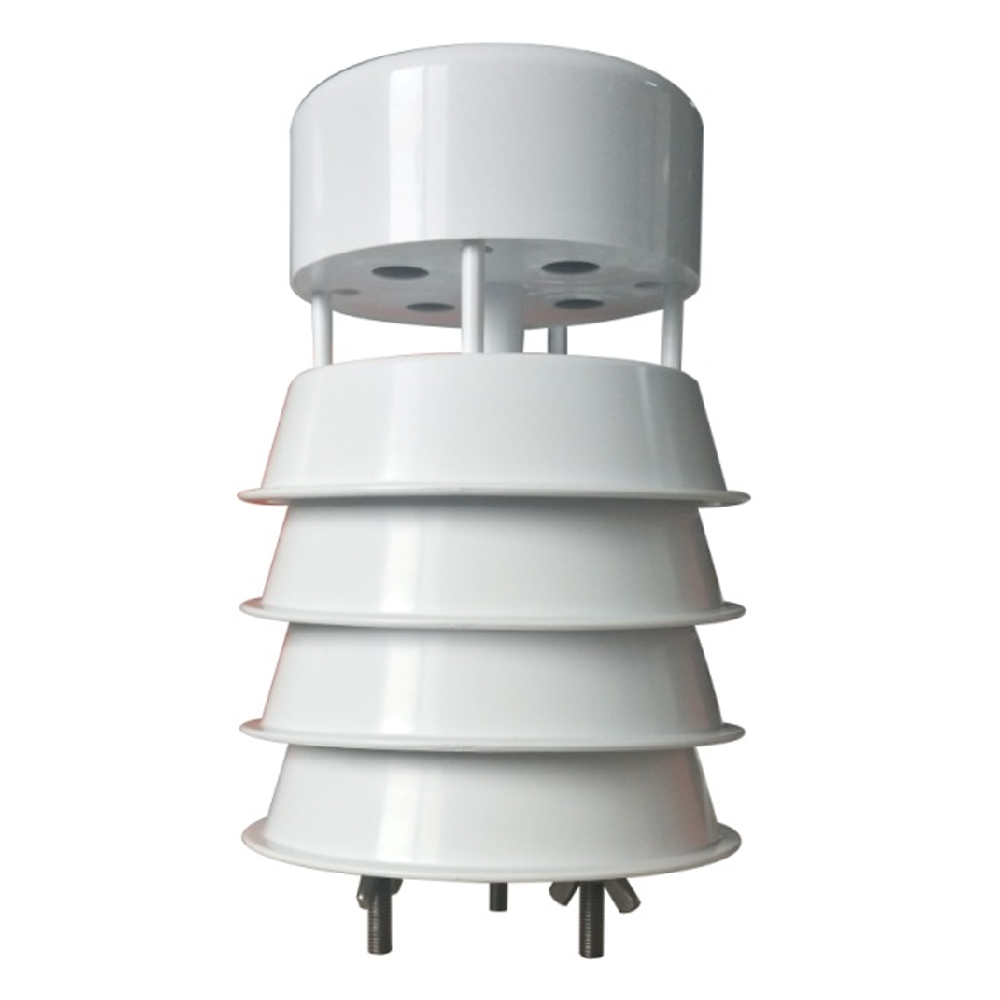
| Configuration | Temperature and RH specifications | Electrical and environmental limits |
|---|---|---|
| NBL-W-THPLC | Temperature -50 to 100 degrees C, +/-0.5 degrees C; RH 0-100% RH, +/-5% RH; resolutions 0.1 degrees C and 0.1% RH | 12 V DC or 24 V DC option; RS485; operating temperature -50 to 80 degrees C |
| NBL-W-51MUWS | Temperature -50 to 100 degrees C, +/-0.5 degrees C; RH 0-100% RH, +/-5% RH; resolutions 0.1 degrees C and 0.1% RH | 12-24 V DC; RS485 Modbus RTU; 0.3 W average; IP65; operation -40 to 80 degrees C and 0-95% RH; standard cable 2.5 m |
The THPLC combines temperature, humidity, pressure, illuminance and CO2 rather than wind measurement. Its RS485 interface description does not establish compatibility with the 51MUWS commands. Confirm the actual protocol and receiving configuration for the ordered head.
Data pairing does not improve sensor accuracy or correct a heated installation. Use representative, ventilated exposure and check wetting risk. The 51MUWS measuring span reaching 100% RH is not approval for continuous condensation; its operating humidity limit must also be considered.
A six-parameter or larger weather head needs the same channel-level review. Additional measurements are useful only when the receiver preserves the correct identity and meaning of the temperature and RH fields.
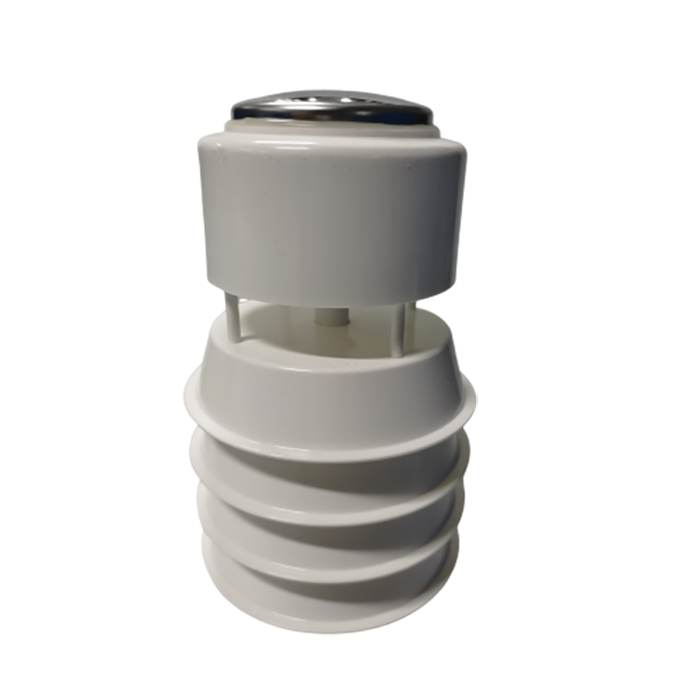
Inspect a complete exported record, not only the dashboard. It should make the source location, units, observation times and validity understandable to another engineer. If a calculation uses both values, retain which observations and calculation settings produced it.
For greenhouse ventilation, this prevents a controller or operator from acting on a mixed-age description of the air. For distributed environmental records, it makes comparisons between points more defensible. For research, it preserves the measurement context needed to interpret calculated variables.
None of these tests establishes surface condensation or crop disease by itself. Air temperature and RH can support an assessment, but leaf or structure temperature and other observations may be necessary for the actual decision.
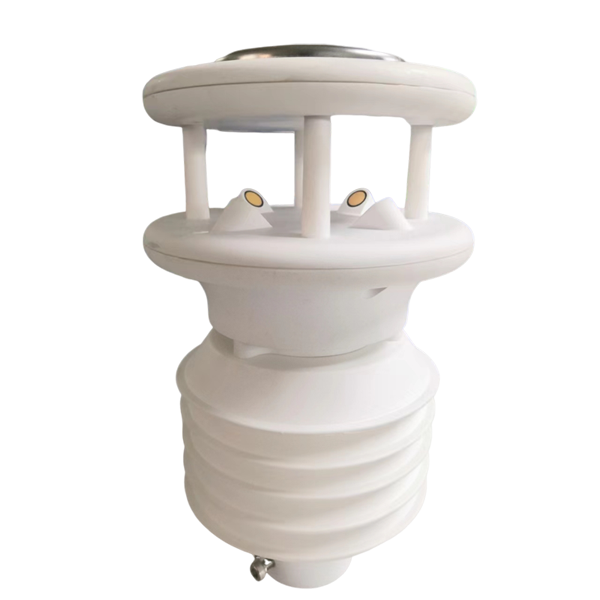
No. They may only identify when a gateway forwarded cached values. Check acquisition or read times, validity and the selected head's update behavior.
No. The receiver can still mis-map fields, reuse one cached channel or change units. Verify the pair through the final export and any downstream calculation.
Apply the application's defined validity rule and expose the missing input. Do not silently combine current temperature with an arbitrarily old RH value or fill the missing member with zero.
No. Establish it from the required decision, environmental rate of change and available update behavior. Test the actual acquisition and buffering path against that requirement.
State the location and exposure, required accuracy, receiving platform, calculation purpose, time requirements, cable route and expected outage behavior. Request the actual protocol and update information for the selected model.
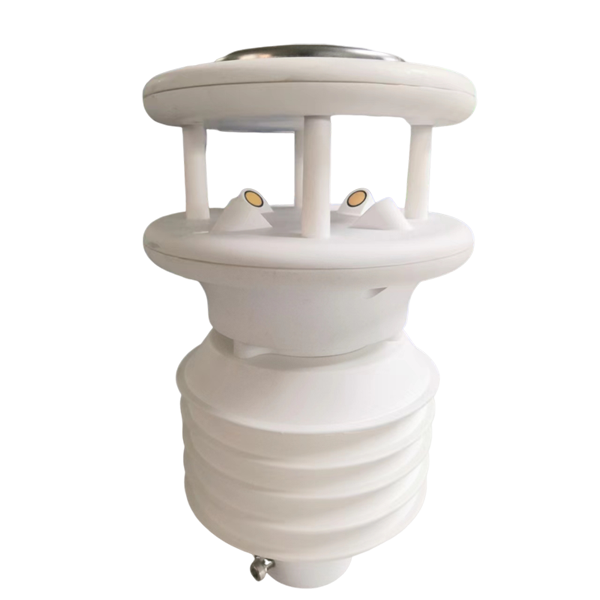
A digital temperature and humidity sensor must remain a correctly identified pair throughout the data path. Choose a suitable NiuBoL head, verify mapping and units, preserve observation age and test incomplete or delayed records. A connected dashboard is only useful when its combined values still describe the same air under acceptable timing conditions.
Prev:Smart Irrigation Controller Soil Moisture Sensor: Resolve Conflicting Inputs
Next:Turbidity Measuring Device: Cleaning Without Losing the Baseline
Related recommendations
Sensors & Weather Stations Catalog
 Agriculture Sensors and Weather Stations Catalog-NiuBoL.pdf
Weather Stations Catalog-NiuBoL.pdf
Agriculture Sensors Catalog-NiuBoL.pdf
Water Quality Sensor Catalog-NiuBoL.pdf
Related products
 Combined air temperature and relative humidity sensor
 TDR Soil Moisture & Temperature Sensor for irrigation| RS485 |4-20mA| NBL-S-THR
 Soil pH sensor RS485 soil Testing instrument soil ph meter for agriculture |NBL-S-PH
 Wind Speed sensor Output Modbus/RS485/Analog/0-5V/4-20mA
 Tipping bucket rain gauge for weather monitoring auto rainfall sensor RS485/Outdoor/stainless steel
 Pyranometer Solar Radiation Sensor 4-20mA/RS485


Screenshot, WhatsApp to identify the QR code
WhatsApp number:+8615367865107
(Click on WhatsApp to copy and add friends)

