





— Blogs —
—Products—
 Consumer hotline +8618073152920
 WhatsApp:+8615367865107
Address:Room 102, District D, Houhu Industrial Park, Yuelu District, Changsha City, Hunan Province, China
Product knowledge
Time:2026-06-11 11:24:30 Popularity:329
Quick Answer: Dissolved oxygen measurement method selection should include a supervised site comparison, not only a catalogue comparison of optical and electrochemical principles. Test the candidate in representative water near the required decision level, record temperature and salinity settings, and compare the final receiving-system value. A short successful clean-water test does not establish long-term performance in a pond or aeration basin.
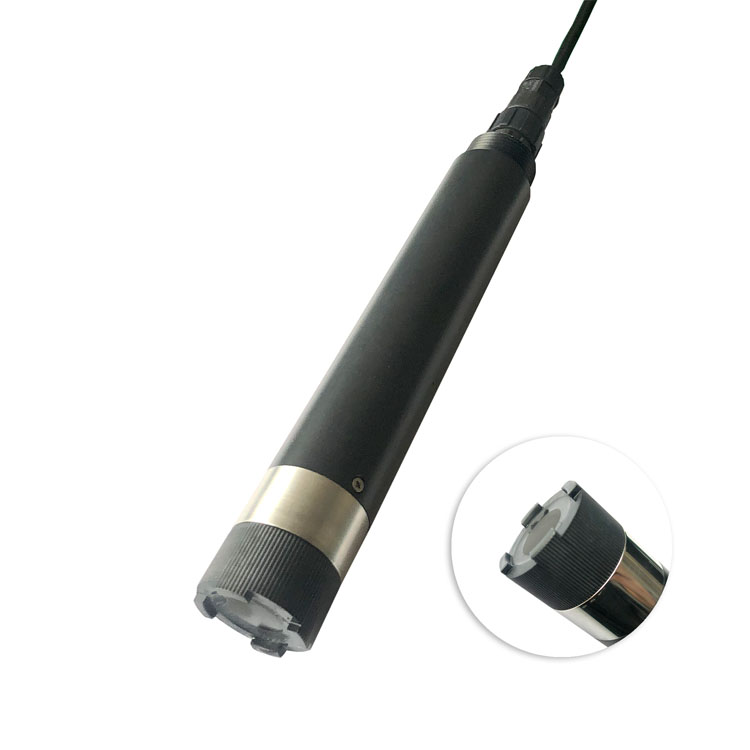
Galvanic, polarographic and fluorescence methods can report dissolved oxygen while requiring different startup and service work. Optical measurement avoids electrolyte refill associated with an electrochemical measuring reaction, but its sensing cap still needs inspection, cleaning and verification. Method choice should reflect the site's maintenance access and required measurement capability.
A useful trial answers a purchasing question. Can a probe discriminate the operating condition that requires action? Does the reading remain credible through actual mixing and fouling exposure? Can the existing controller receive and identify it correctly? A comparison of two displays in one bucket answers only a small part of those questions.
Define the acceptance method before changing the existing instrument. Specify the decision band, reference instrument or analytical method, comparison timing and process states. Keep the current control channel protected during the trial; an unqualified replacement should not become the sole automatic input simply because it communicates successfully.
The basic NBL-WQ-DO fluorescence sensor and the NBL-WQ-DO-4A are separate specifications. Neither model's values should be borrowed to complete the other's datasheet.
| Item | Basic NBL-WQ-DO | NBL-WQ-DO-4A |
|---|---|---|
| Range and resolution | 0-20.00 mg/L; 0-200% saturation at 25 degrees C; 0.01 mg/L | 0-20.00 mg/L; 0-200% saturation; 0.01 mg/L |
| Accuracy | +/-2% F.S.; temperature +/-0.3 degrees C | +/-2% of reading; temperature +/-0.3 degrees C |
| Working conditions | 0-45 degrees C; pressure <0.2 MPa | 0-50 degrees C; pressure <=0.2 MPa |
| Supply and consumption | 12-24 V DC; <0.3 W at 12 V | 12-24 V DC; 0.2 W at 12 V |
| Output | RS485 Modbus RTU | RS485 Modbus RTU; optional 4-20 mA |
| Housing | POM and 316L stainless steel | POM and ABS/PC alloy |
| Protection, mounting and cable | IP68; 3/4 NPT immersion mounting; standard 5 m cable | IP68; 3/4 NPT immersion mounting; standard 5 m cable |
On the basic model's 20 mg/L full scale, 2% F.S. is 0.4 mg/L. It is not 2% of the displayed reading. Compare this limit with the actual decision band, reference uncertainty and site comparison results. The DO-4A's different accuracy expression does not remove installation or reference errors.
Confirm the whole wetted assembly and cable-jacket compatibility for the water. A stainless-steel housing alone does not establish suitability for every saline or chemically treated stream. The different electrode assembly pictured at the end of this article is not a substitute DO sensing element.
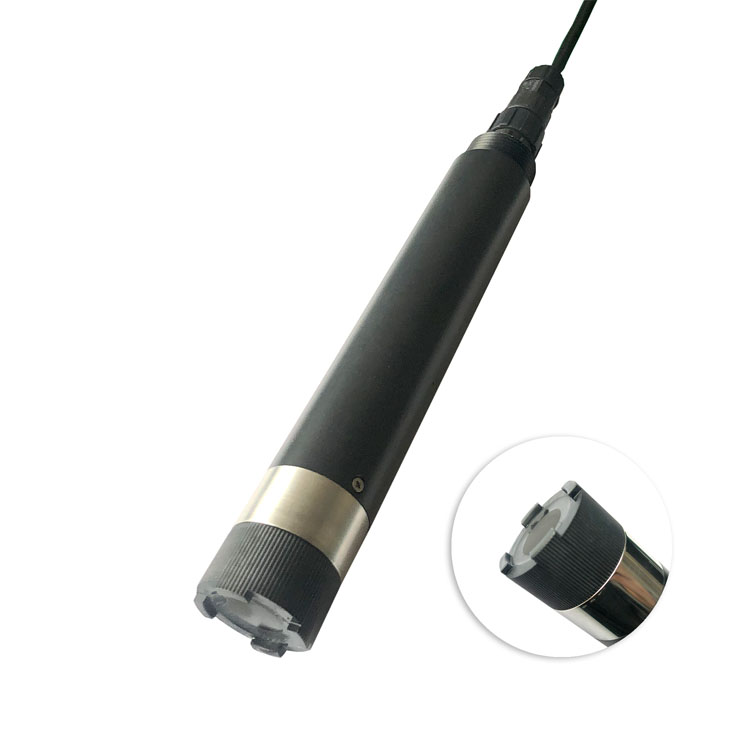
A transported sample can gain or lose oxygen through handling, gas exchange and biological activity. Measuring it later on a bench is not automatically equivalent to an in-place observation. If sampling is necessary, define its handling and timing with the reference method and keep those limitations in the result.
Where the existing method consumes oxygen at its electrode, maintain its specified water movement during comparison. An optical probe does not consume oxygen in that way, but stagnant water can still be unrepresentative. Method differences must be controlled rather than mistaken for a fault in whichever display looks less familiar.
Continue observations through representative exposure and a planned maintenance visit. Record the reading before cleaning, the condition of the cap or membrane, and the reading after appropriate service. A clean-water agreement at installation says little about deposits that develop later in pond water or mixed liquor.
For optical DO, check cap condition and the compatible replacement procedure. For a membrane electrochemical instrument, record its particular electrolyte and membrane work. Do not assign the same consumables or service interval to both methods. A missing spare component can matter more to a remote site than a small difference in bare-probe price.
Test restart after a controlled power interruption with process outputs safely managed. Confirm when each channel becomes valid and how the host identifies recovery. Avoid using one model's startup time or the DO-4A's response specification as a guaranteed recovery time for another probe.
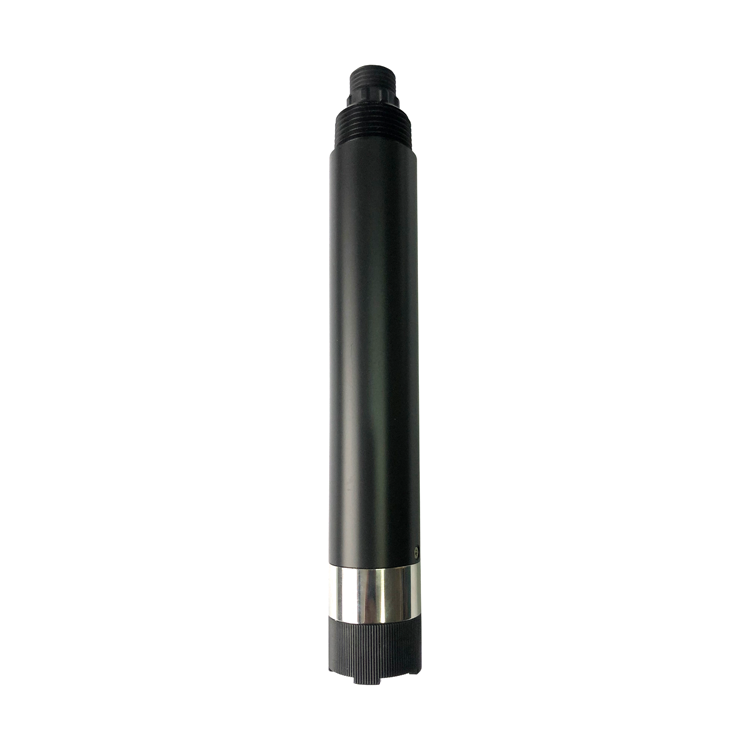
The basic digital DO probe is not an electrode-level replacement for every existing transmitter. Confirm whether the old input expects a raw electrode signal, a current loop or RS485. A matching connector shape is not sufficient evidence of compatibility.
At the PLC, RTU or data logger, compare decoded oxygen and temperature with the verified instrument values. Retain acquisition time and distinguish unavailable data from a valid low result. An optional 4-20 mA requirement must be specified against the actual model, with its range and fault behavior confirmed rather than assumed.
Use the trial record to decide between instruments, mounting changes or a different measurement duty. If spatial variation dominates the disagreement, another location may be needed. If an absolute low-level requirement is outside demonstrated capability, assess a suitable alternative rather than accepting extra decimal places.
For NiuBoL selection support, send the decision band, water chemistry, operating conditions, comparison results, existing input and observed service burden. The separate DO electrode types comparison explains the underlying technology differences; the site trial establishes which arrangement fits this installation.
No. Compare representative conditions and the required decision band, along with maintenance and installed signal behavior. One matched result cannot distinguish a reliable relationship from a coincidental agreement.
No. Consider their stated accuracy, reference uncertainty, timing and local water variation. Agree a justified acceptance criterion before testing rather than selecting whichever instrument matches an expected number.
No. It avoids oxygen consumption by the measurement reaction, but water around the sensing cap must still represent the intended pond, tank or channel. A stagnant pocket can produce a valid local result that is unsuitable for the process decision.
Include the probe, compatible receiving interface, mounting, cable, verification materials and model-specific consumables. Also account for access and service work observed during the trial without assuming a fixed lifetime or guaranteed maintenance saving.
Do not deliberately expose stock to unsafe conditions. Use a controlled off-process test where appropriate and observe normal safe operating changes. Confirm any test preparation against the chosen method and keep it separate from the farm's live control channel.
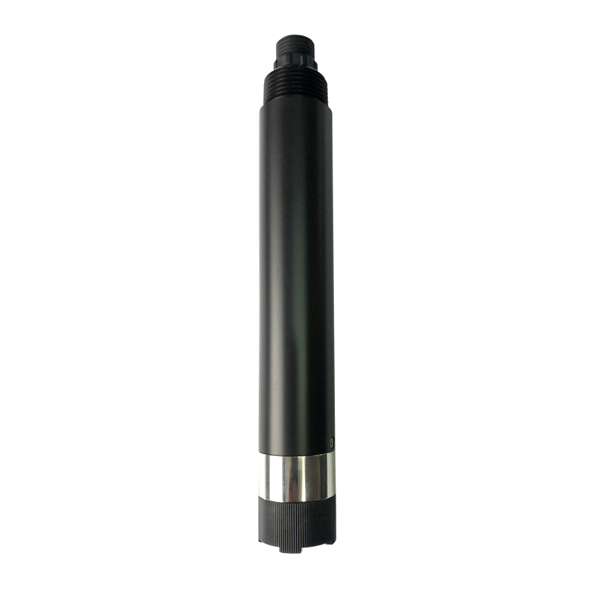
Dissolved oxygen measurement method selection improves when a defined site trial connects measurement limits, representative water and actual service work. Compare complete identified configurations and verify the receiving-system result. This supports a purchase based on demonstrated suitability rather than a generic preference for one technology.
Prev:Turbidity Monitoring for Changing Source Water: Normal Bands and Event Peaks
Next:Online Water Quality Monitoring System Design: Pilot Before Rollout
Related recommendations
Sensors & Weather Stations Catalog
 Agriculture Sensors and Weather Stations Catalog-NiuBoL.pdf
Weather Stations Catalog-NiuBoL.pdf
Agriculture Sensors Catalog-NiuBoL.pdf
Water Quality Sensor Catalog-NiuBoL.pdf
Related products
 Combined air temperature and relative humidity sensor
 TDR Soil Moisture & Temperature Sensor for irrigation| RS485 |4-20mA| NBL-S-THR
 Soil pH sensor RS485 soil Testing instrument soil ph meter for agriculture |NBL-S-PH
 Wind Speed sensor Output Modbus/RS485/Analog/0-5V/4-20mA
 Tipping bucket rain gauge for weather monitoring auto rainfall sensor RS485/Outdoor/stainless steel
 Pyranometer Solar Radiation Sensor 4-20mA/RS485

Screenshot, WhatsApp to identify the QR code
WhatsApp number:+8615367865107
(Click on WhatsApp to copy and add friends)

