





— Blogs —
—Products—
 Consumer hotline +8618073152920
 WhatsApp:+8615367865107
Address:Room 102, District D, Houhu Industrial Park, Yuelu District, Changsha City, Hunan Province, China
Product knowledge
Time:2026-06-11 11:24:30 Popularity:339
Quick Answer: Online water quality monitoring system design should qualify one complete measurement point before repeating it across small stations. Test the sensor, sample arrangement, acquisition and operating response together. A cabinet drawing that works at one location is reusable; the measuring range, water compatibility and installation suitability still need checking at every new site.
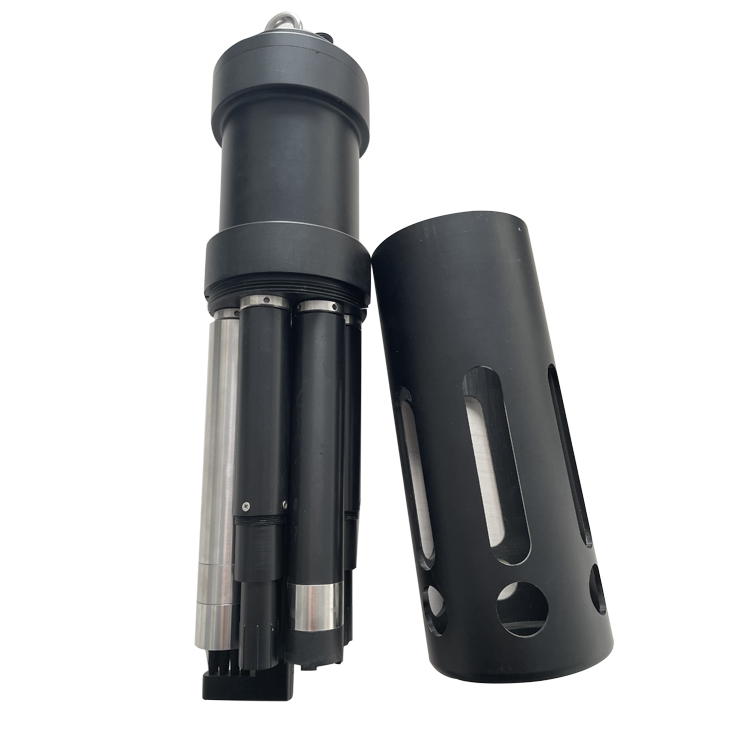
A compact station for a rural treatment outlet, a river intake and a groundwater observation point may use similar cabinet equipment while measuring very different water. Begin with the decision the first station must support. An early-warning trend, an automatic process input and a reporting measurement are not interchangeable purchase specifications.
List the required parameters and methods, the actual water point, the normal and credible peak conditions, and the response expected from the operator. Do not promise detection of fecal contamination, metals or nitrate from a package containing only pH, conductivity, DO and turbidity. Additional hazards need appropriate measurements and procedures.
For a pilot, select a site that exposes an important design uncertainty. An easy clean-water demonstration may establish communications but reveal little about the difficult wastewater point that drives the project. If several sites have materially different water, one pilot may not qualify all of them.
| Design question | Useful pilot observation | Decision before rollout |
|---|---|---|
| Is the sample representative? | Matched field checks, actual sample exchange and conditions during changing flow or level | Keep the arrangement or revise the intake, support or sampling route. |
| Can the measurement support the intended limit? | Reference agreement and response near the decision band | Accept the channel, select another range or assess another method. |
| Can local staff maintain it? | One complete retrieval, cleaning, verification and reinstatement visit | Confirm access and service items before repeating the construction. |
| Does the host preserve measurement identity? | Correct units, channel mapping, acquisition time and unavailable-data handling | Approve the receiving configuration with a recorded version. |
| Does the operating response work? | Notification or controlled process test reaching the responsible person or equipment | Assign the response and close the failed steps before replication. |
Each observation answers a different question. A successful upload cannot replace a water comparison, and a correct water comparison cannot prove that an alarm reaches the operator. Keep the test record organized by function rather than collecting screenshots without their conditions.
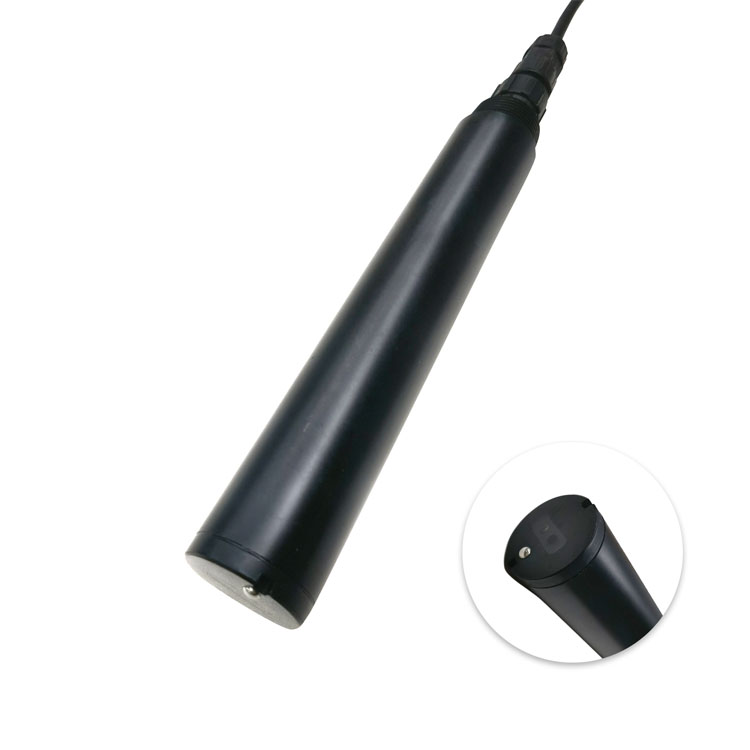
A NiuBoL multiparameter self-cleaning assembly can combine selected channels at one measuring point. Its electrical requirements differ from many standalone probes. Confirm the fitted channels; a catalogue option is not automatically present in the delivered assembly.
| Assembly item | Technical value | Pilot check |
|---|---|---|
| pH channel | 0-14 pH; +/-0.1 pH; 0.01 resolution | Use suitable reference checks and confirm the final displayed channel. |
| DO channel | 0-20 mg/L; +/-0.4 mg/L; 0.01 resolution | Assess the actual decision band rather than borrowing a standalone accuracy statement. |
| ORP channel | -1500 to +1500 mV; +/-6 mV; 1 mV resolution | Keep electrochemical potential distinct from a chemical concentration. |
| Temperature channel | 0-50 degrees C measurement range; +/-0.5 degrees C | Confirm the entire assembly's operating envelope separately. |
| Power and output | 12 V DC +/-5%; 5 W at 12 V; RS485 Modbus RTU | Check voltage at the assembly and acquisition against its actual register map. |
| Cleaning and cable | Automatic cleaning; standard 5 m cable | Confirm cleaning demand, wetted parts, cable jacket and installation limits for the ordered assembly. |
Do not connect this 12 V assembly directly to a 24 V circuit merely because another digital probe accepts 12-24 V. Do not extend the assembly's temperature-channel range into an assumed pressure or chemical-compatibility rating.
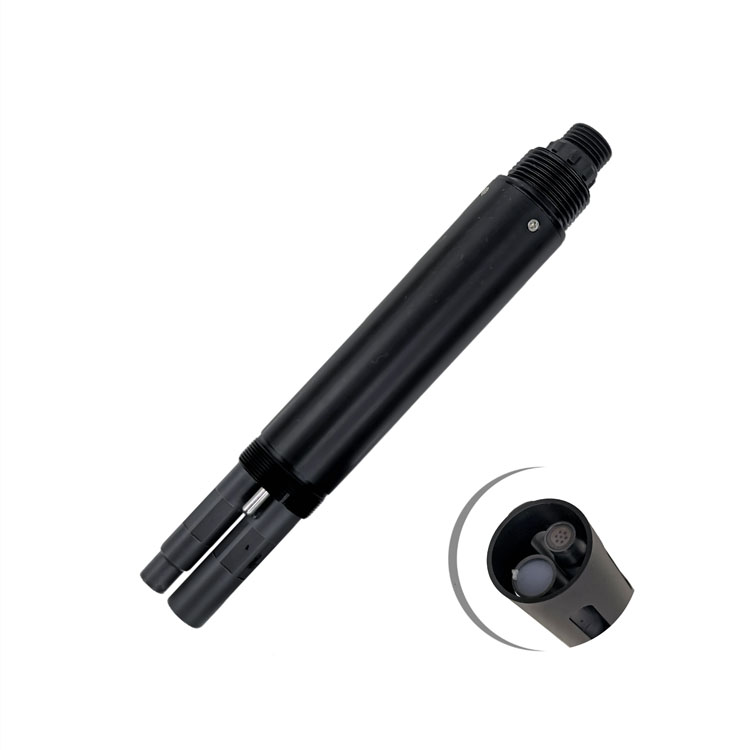
The separate turbidity probe shown here can support an independent optical channel. Its range and reference procedure belong to that instrument, not to the integrated assembly. A small station can contain both types, provided each has a defined purpose and receiving configuration.
When a result is unstable, change one suspected cause at a time where practical. Cleaning, relocating the probe and changing the software filter together may improve the display while leaving the cause unknown. Save the original observation and document the change so the next site does not inherit an unexplained workaround.
Include normal operating changes in the trial: pumping, water-level variation, cleaning and supervised power or communication interruption. Confirm that missing data are not stored as zero and that restored equipment returns with the correct channel identities. Do not assume every sensor exposes the same diagnostic registers.
Review whether the pilot's maintenance workload fits the intended service route. A site that needs frequent attention may still be appropriate, but the owner should know that before ordering identical unattended stations. Automatic cleaning cannot verify representative sampling or eliminate all inspection.
Reusable items can include cabinet conventions, tag naming, communication settings and a tested commissioning procedure. Site-specific items include water chemistry, ranges, sample-point identity, structural support, cable route and access. Freeze the accepted baseline while keeping those site checks explicit.
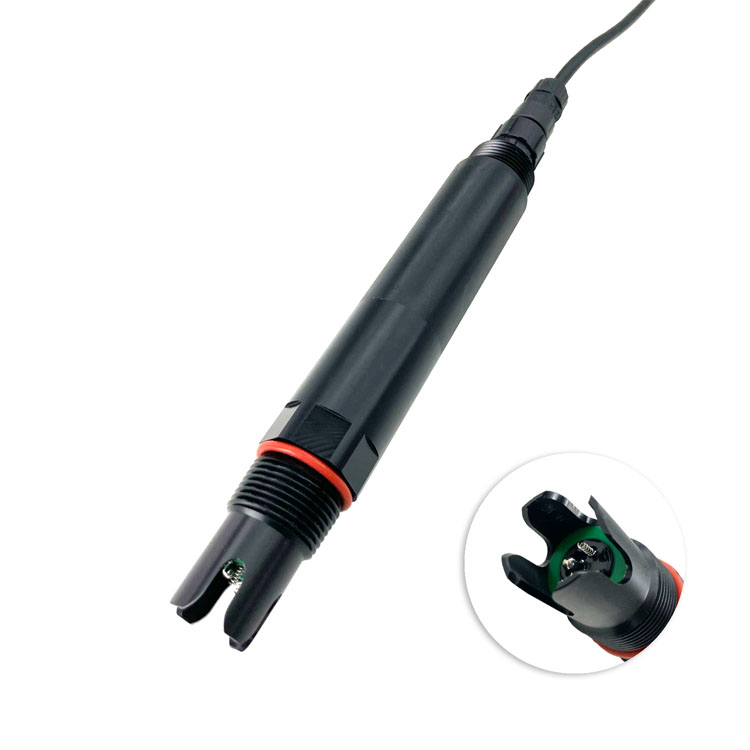
An ammonium electrode is useful only for its defined nitrogen measurement; it does not turn the station into a total nitrogen or general contamination analyzer. A residual chlorine probe similarly needs a relevant disinfection duty and its own sampling conditions. Avoid filling every station with the same optional channels for the sake of one standard list.
Before the rollout quotation, provide NiuBoL the pilot results, unresolved issues, site differences and required receiving interfaces. Separate probes, sample equipment, cabinet acquisition, telemetry and service items in the scope. For detailed outdoor power and layout considerations, use the small outdoor station design guide rather than assuming the pilot cabinet covers every environment.
Long enough to observe the operating conditions relevant to the decision, including an appropriate maintenance and recovery check. There is no universal number of hours that proves seasonal performance or long-term fouling behavior.
It can verify specified equipment functions before dispatch, but it does not reproduce the site's water, intake, installation and operator response. Retain both factory and field tests with their different purposes.
Only after checking each site's water, required methods, ranges and operating conditions. Reusing cabinet conventions is different from assuming every location needs the same measuring channels.
The agreed measurement, installation, acquisition, maintenance and response checks should pass, with unresolved limitations recorded. A live dashboard alone is insufficient evidence.
Send the accepted configuration, pilot comparison results, site-specific differences, service arrangements and interface requirements. Identify any changes from the pilot so they can be checked before purchase rather than discovered during commissioning.
Online water quality monitoring system design becomes repeatable when the first point is qualified as a complete operating installation. Use its results to separate reusable equipment and procedures from site-specific measurement needs. This gives a small-station rollout a clearer technical and commercial basis than duplicating a cabinet before its measurements have been tested.
Prev:Dissolved Oxygen Measurement Method Selection: Run a Site Comparison
Next:Water Quality Monitoring Section Layout: Reference, Impact and Depth
Related recommendations
Sensors & Weather Stations Catalog
 Agriculture Sensors and Weather Stations Catalog-NiuBoL.pdf
Weather Stations Catalog-NiuBoL.pdf
Agriculture Sensors Catalog-NiuBoL.pdf
Water Quality Sensor Catalog-NiuBoL.pdf
Related products
 Combined air temperature and relative humidity sensor
 TDR Soil Moisture & Temperature Sensor for irrigation| RS485 |4-20mA| NBL-S-THR
 Soil pH sensor RS485 soil Testing instrument soil ph meter for agriculture |NBL-S-PH
 Wind Speed sensor Output Modbus/RS485/Analog/0-5V/4-20mA
 Tipping bucket rain gauge for weather monitoring auto rainfall sensor RS485/Outdoor/stainless steel
 Pyranometer Solar Radiation Sensor 4-20mA/RS485

Screenshot, WhatsApp to identify the QR code
WhatsApp number:+8615367865107
(Click on WhatsApp to copy and add friends)

