





— Blogs —
—Products—
 Consumer hotline +8618073152920
 WhatsApp:+8615367865107
Address:Room 102, District D, Houhu Industrial Park, Yuelu District, Changsha City, Hunan Province, China
Product knowledge
Time:2026-06-11 11:24:31 Popularity:1006
Quick Answer: Water quality monitoring section layout must distinguish a local observation from a cross-section or whole-water-body conclusion. Select reference, impact and downstream comparison locations around the monitoring question, then verify how conditions vary across the river or through lake depth. One fixed probe can provide a continuous local record without representing every part of that water body.
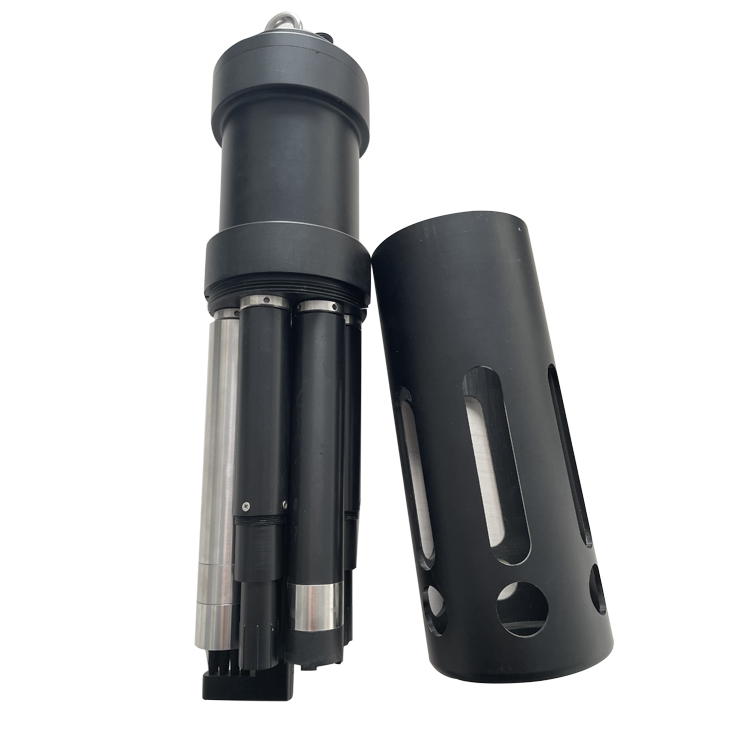
A monitoring section is a location along a river or other defined water system. The fixed sensor point is a particular position and depth within that section. Confusing the two can turn a precise local measurement into an unsupported statement about the entire river.
Write the intended comparison before selecting a convenient bank or bridge. An upstream reference asks what water arrives before the selected influence. An impact point asks what happens in or after that influence. A farther downstream point asks how conditions change over the intervening reach. None is automatically a universally clean background or a complete measure of every discharge.
| Location | Question it can support | Check before interpreting differences |
|---|---|---|
| Upstream reference | What condition arrives from the upstream catchment? | Other inputs, backwater and changing flow direction may affect the point. |
| Near a discharge or tributary | What is happening within a local plume or mixing area? | A plume observation is not necessarily the cross-section average. |
| Downstream comparison | How does the observed condition differ farther along the reach? | Consider other inflows, travel time, flow and sampling position. |
| Lake inlet, open water or outlet | Does the objective concern an incoming stream, a water layer or water leaving the lake? | Do not treat these as interchangeable locations. |
A lower downstream concentration does not by itself prove self-purification or pollutant removal. Dilution, movement of the plume, time differences and additional water can change the observation. Quantified load or removal assessments require appropriate flow and sampling evidence beyond a pair of concentration values.
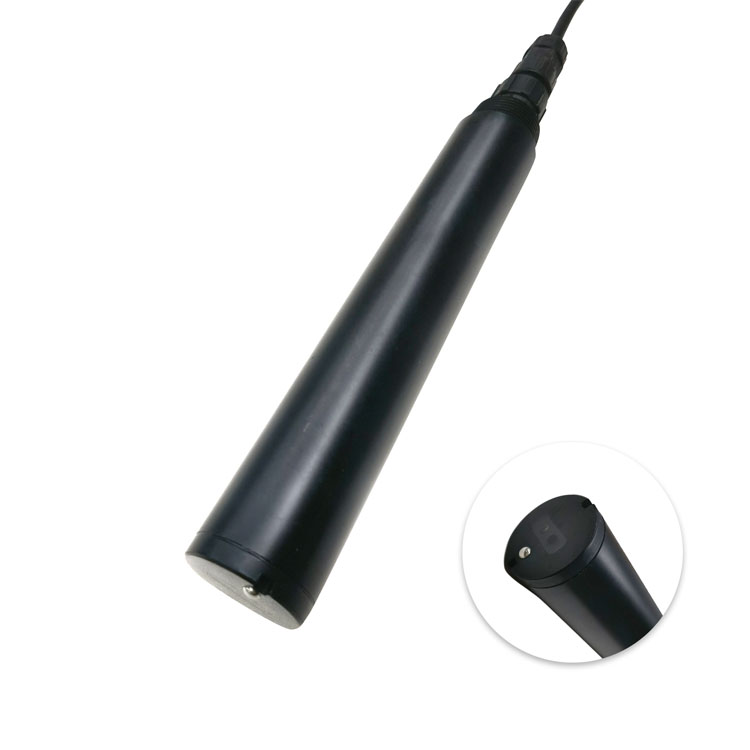
The USGS guidance on automatic surface-water sampling addresses intake design, installation and quality assurance, including whether a fixed intake represents the stream cross-section. For an online project, use an initial survey to test whether the proposed fixed point addresses the intended question.
Compare practical candidate positions under relevant flow conditions. Record bank offset, depth, water level and time alongside the readings. A near-bank pocket can be useful for a local impact study but unsuitable as a representative whole-section point. Do not move it into the main channel and retain the old interpretation without checking the change.
Keep survey work safe and appropriate to the river. High flow, debris and difficult access may require a specialist sampling method. A convenient service location can influence the mounting design, but convenience does not establish representativeness.
For lakes and reservoirs, decide whether the project concerns the outlet, an inflow or a particular water layer. Agriculture and Agri-Food Canada's sampling guidance explains that spatial and vertical variability affect sample selection and that temperature and oxygen profiles can help identify layers. A surface point should not be labelled a whole-lake measurement without supporting evidence.
Specify how the measuring depth is referenced. A probe fixed to a structure changes its distance below the surface when the water level changes; a floating mount can maintain a surface-relative depth while moving vertically against the bed. Record the chosen arrangement and check whether it continues to answer the same question.
After relocation, flooding or a major level change, review the point again. A submerged sensor can remain electrically healthy while becoming buried, isolated or exposed to a different layer. A current timestamp therefore does not prove that the sampling position remains suitable.
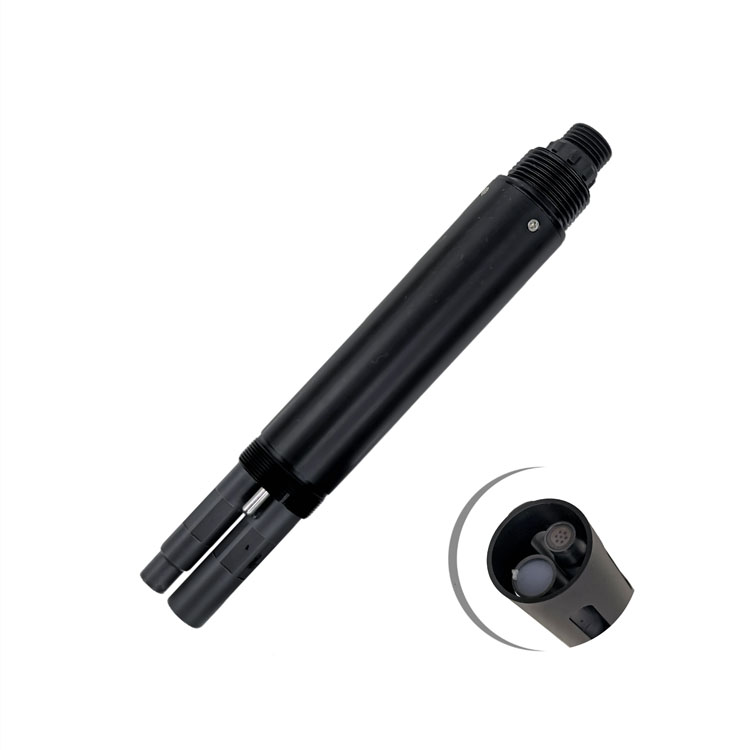
The NiuBoL multiparameter assembly can provide selected local channels. Choose those channels from the survey purpose, not from a universal river-station list. Separate chemical analyzers or reference samples may be needed for pollutants not measured by the fitted probes.
| Assembly channel or interface | Technical value | Layout relevance |
|---|---|---|
| pH | 0-14 pH; +/-0.1 pH | Keep point and sample conditions with the result. |
| DO | 0-20 mg/L; +/-0.4 mg/L | A fixed depth measures that local oxygen condition, not an entire profile. |
| Conductivity option | 0-5000 uS/cm or 0-200 mS/cm; accuracy +/-1.5% F.S. | Order the actual range; an ionic contrast does not identify every pollutant. |
| Temperature | 0-50 degrees C measurement range; +/-0.5 degrees C | Use a suitable survey procedure where a depth profile is required. |
| Electrical service | 12 V DC +/-5%; 5 W at 12 V; RS485 Modbus RTU | A logger or gateway provides acquisition and onward communications. |
| Cleaning and cable | Automatic cleaning; standard 5 m cable | Confirm assembly pressure limits, wetted materials and cable jacket for the deployment. |
The separate turbidity and ammonium probes shown here support different measurements. A turbidity change may be useful in identifying a different water condition, but it does not establish the same solids mass in every particle population. The ammonium channel does not measure total nitrogen or identify a discharge source on its own.
Store section name, coordinates, point position, depth reference and installation date with the channel configuration. Record a moved intake as a documented change. Otherwise, a step in the trend can be incorrectly attributed to pollution rather than the sensor observing different water.
For upstream-downstream comparisons, consider water travel and sample-system delay before comparing simultaneous timestamps. A fluctuation observed upstream will not necessarily appear downstream at the same clock time. Do not assign a universal time shift without hydraulic or field evidence.
A residual chlorine probe may be relevant to a specific treated-water influence, but it is not a mandatory river channel. Its own flow-cell conditions remain necessary. Ask NiuBoL to assess the surveyed locations, target parameters, expected water conditions and mounting access before repeating one station configuration across all sections.
There is no universal distance. It depends on whether the objective is to observe a plume or representative mixed water and on the actual hydraulics. Survey the proposed location rather than assuming a fixed distance proves mixing.
No. It represents the selected upstream condition, which may already include other catchment influences. Describe what it is a reference for rather than labelling it clean without evidence.
No. Evaluate dilution, additional inputs, timing, flow and sampling differences. A concentration comparison alone cannot establish a mass removal or its mechanism.
It can track its installed depth continuously but does not automatically characterize other layers. Use a suitable profile or additional points when the decision depends on vertical differences.
Provide a location map, monitoring objective, discharge and tributary positions, water-level or flow information, survey results and available access. Include intended sensor depths and any intake pumping so point suitability and equipment scope can be evaluated together.
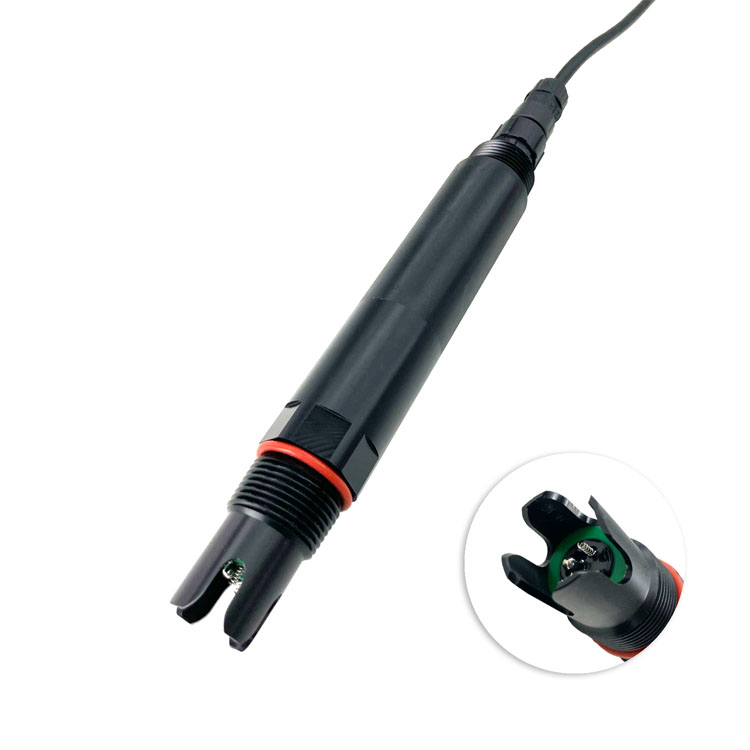
Water quality monitoring section layout determines what a continuous record can legitimately describe. Define each location's purpose, verify its fixed point and depth, and preserve changes in location and timing. NiuBoL sensor selection can then follow the surveyed measurement duty rather than assuming every river section or lake layer needs an identical station.
Prev:Online Water Quality Monitoring System Design: Pilot Before Rollout
Next:Common Water Quality Sensors: Check Shared Sampling Compatibility
Related recommendations
Sensors & Weather Stations Catalog
 Agriculture Sensors and Weather Stations Catalog-NiuBoL.pdf
Weather Stations Catalog-NiuBoL.pdf
Agriculture Sensors Catalog-NiuBoL.pdf
Water Quality Sensor Catalog-NiuBoL.pdf
Related products
 Combined air temperature and relative humidity sensor
 TDR Soil Moisture & Temperature Sensor for irrigation| RS485 |4-20mA| NBL-S-THR
 Soil pH sensor RS485 soil Testing instrument soil ph meter for agriculture |NBL-S-PH
 Wind Speed sensor Output Modbus/RS485/Analog/0-5V/4-20mA
 Tipping bucket rain gauge for weather monitoring auto rainfall sensor RS485/Outdoor/stainless steel
 Pyranometer Solar Radiation Sensor 4-20mA/RS485

Screenshot, WhatsApp to identify the QR code
WhatsApp number:+8615367865107
(Click on WhatsApp to copy and add friends)

