





— Blogs —
—Products—
 Consumer hotline +8618073152920
 WhatsApp:+8615367865107
Address:Room 102, District D, Houhu Industrial Park, Yuelu District, Changsha City, Hunan Province, China
Product knowledge
Time:2026-06-23 11:28:40 Popularity:232
Cucumber is widely grown in greenhouse and off-season vegetable production. It prefers warm conditions, but it is sensitive to sudden temperature change, high humidity, low soil temperature and persistent cloudy or rainy weather. In greenhouse cucumber projects, acute seedling death and disease pressure often appear after weather transitions, especially when the operator does not have continuous microclimate data.
An agricultural weather station helps greenhouse managers observe temperature, humidity, light, soil temperature, soil moisture, rainfall and other environmental factors in real time. The purpose is not to replace agronomic experience, but to provide field data that helps decide ventilation, heating, irrigation, drainage and disease prevention actions.
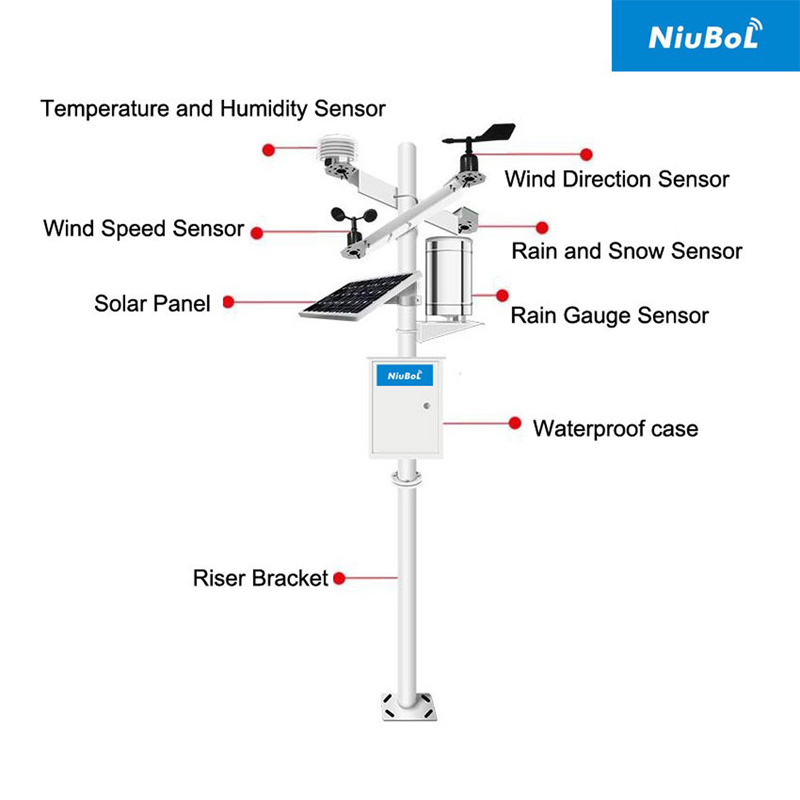
Cucumber growth is generally suitable around 10 to 32℃, with daytime conditions often managed around 25 to 32℃ and night temperature around 15 to 18℃. Soil temperature around 20 to 25℃ is commonly favorable, while low soil temperature can stress roots. High temperature above about 35℃ can reduce photosynthesis, and freezing conditions can kill plants. In a greenhouse, the operator must also manage humidity because humidity above 80% can increase the risk of downy mildew, leaf mold and other diseases.
When continuous rain, snow or sudden warming occurs after cloudy weather, the greenhouse environment may shift quickly. A station can record these changes and send data to a platform or mobile terminal so that the grower does not rely only on manual checks.
| Parameter | Reference Value | Procurement Note |
|---|---|---|
| Air temperature and humidity | Monitors greenhouse climate around crop canopy | Used for heating, ventilation and disease-risk review |
| Soil temperature | Monitors root-zone temperature | Useful for seedling health and root activity |
| Soil moisture | Monitors irrigation status | Supports irrigation scheduling and overwatering prevention |
| Illumination or radiation | Tracks available light under cloudy or winter conditions | Helps explain slow growth and ventilation strategy |
| CO2 sensor | Optional for controlled greenhouse environments | Useful when CO2 enrichment or ventilation balance is managed |
| Rainfall sensor | Outdoor station option for greenhouse site weather context | Supports roof snow/rain event review and field drainage planning |
| Communication | RS485 / Modbus sensors to collector; wireless upload by station host | Confirm protocol and platform fields before installation |
| Power supply | Mains or solar depending on site | Greenhouses often use mains power, outdoor nodes may need solar |
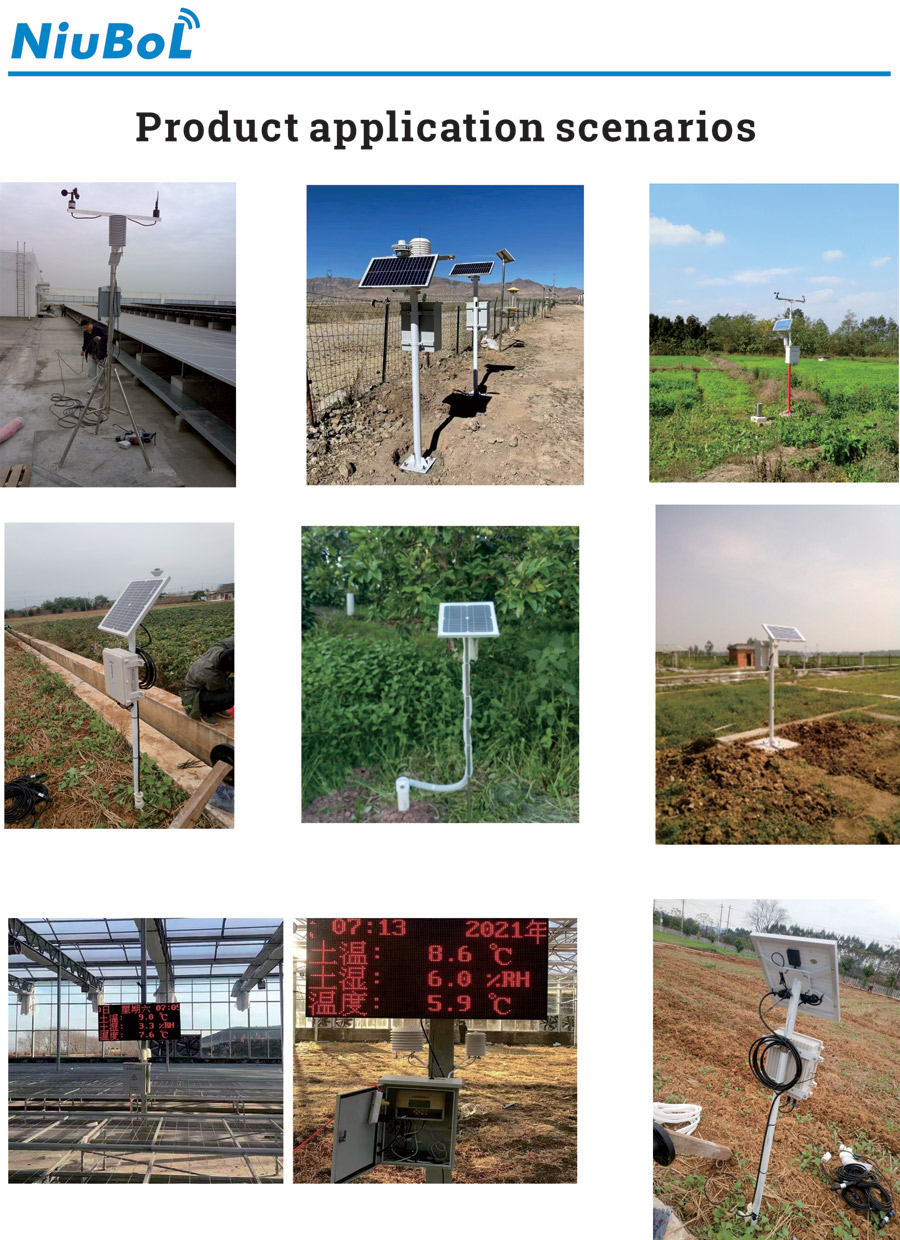
The weather station acts as the greenhouse environment data layer. Sensors collect climate and soil data. The collector stores or transmits values. The platform displays real-time readings, historical curves and alarm information. If the project includes multiple greenhouses, each greenhouse should have a clear station name, sensor position and crop stage record.
Site challenge: Low outdoor temperature, cloudy weather and roof snow can reduce greenhouse stability.
System integration scheme: Monitor indoor temperature humidity, soil temperature and light, and keep outdoor weather data for context.
User value: Growers can respond earlier to cold stress and humidity accumulation.
Site challenge: Humidity above 80% increases disease pressure in cucumber production.
System integration scheme: Use air humidity and leaf wetness data with platform alarms.
User value: Managers can adjust ventilation and spraying timing with measured evidence.
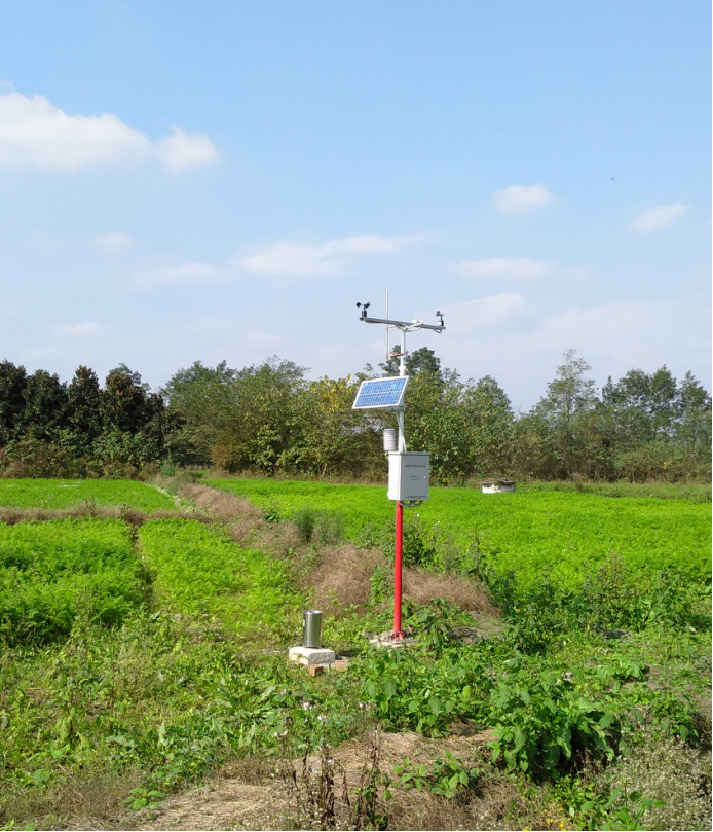
Site challenge: Cucumber roots are affected by soil moisture and soil temperature imbalance.
System integration scheme: Install soil moisture and soil temperature sensors at representative root depth.
User value: Irrigation can be reviewed by trend rather than guesswork.
Site challenge: Different greenhouses may have different heat loss, ventilation and light conditions.
System integration scheme: Deploy consistent sensor sets and compare data by greenhouse number.
User value: The operator can identify abnormal structures or management differences.
Site challenge: Visitors and staff need visible data to understand greenhouse climate control.
System integration scheme: Use station platform display, charts and optional LED display.
User value: The farm can use data for training, reporting and operational review.
Cucumber production is sensitive to day-night temperature difference, high humidity, soil temperature and irrigation conditions. A greenhouse weather station should therefore be configured around crop risk, not around a generic weather sensor list. The buyer should define which decisions the data will support: ventilation, heating, irrigation, disease warning or crop-stage review.
For off-season cucumber production, sudden weather changes outside the greenhouse can still affect the indoor environment. Continuous cloudy weather, snow, roof icing and rapid warming after rain may change temperature and humidity quickly. Indoor data should be interpreted together with outdoor weather context when possible.
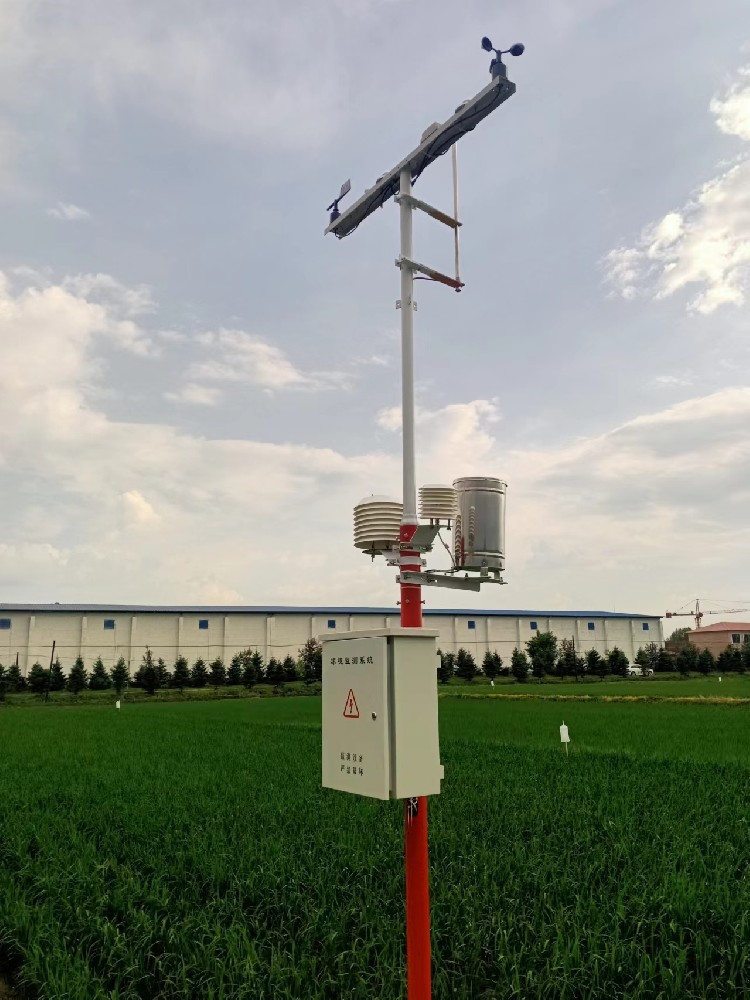
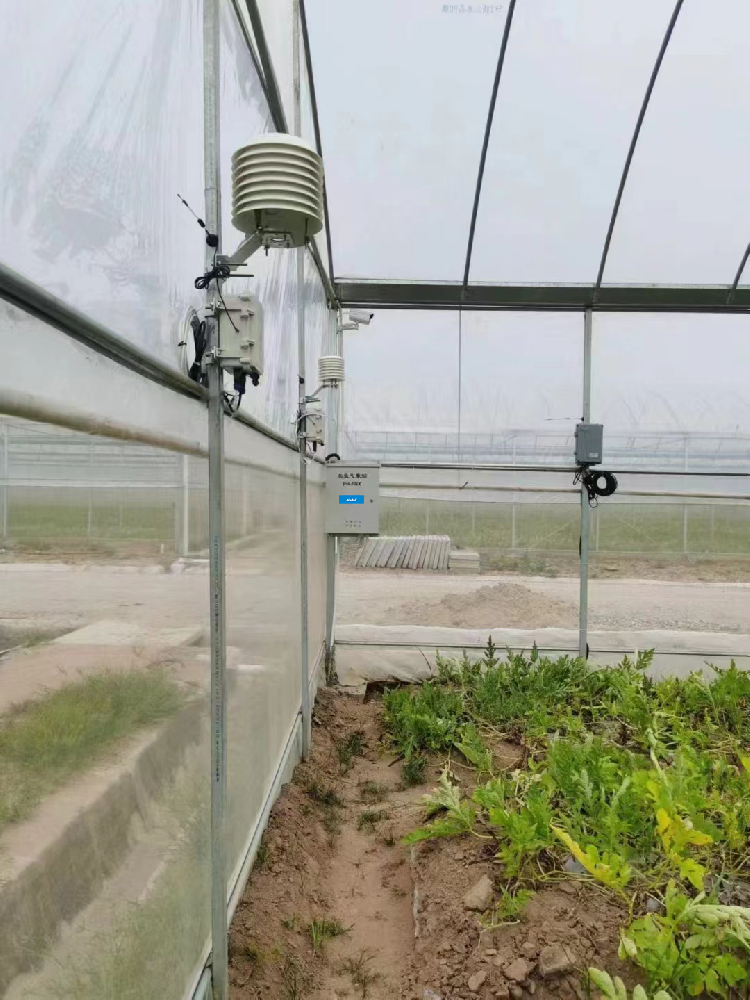
Air temperature and humidity sensors should represent the crop canopy rather than a wall or door. Soil temperature and moisture sensors should be installed at the root-zone depth. Light sensors should not be shaded by greenhouse structure unless the purpose is to measure the actual crop-level light. Sensor position should be documented because moving a sensor can change the data trend.
The value of the station appears when data becomes a routine management signal. High humidity can trigger ventilation review. Low soil temperature can trigger heating or irrigation adjustment. Light shortage can explain slow growth. Historical curves help the grower understand why seedlings died, why disease appeared or why production changed between greenhouses.
At seedling stage, low temperature, excessive moisture and poor ventilation can create rapid losses. Soil temperature and moisture should be monitored carefully because young roots are sensitive. Alarm thresholds should be stricter than in later growth stages.
During vine growth and flowering, temperature, light and humidity influence growth balance and disease pressure. The station should help the operator compare day-night temperature difference, light shortage after cloudy days and high humidity at night.
During fruiting, irrigation and ventilation affect yield and quality. Soil moisture trends and air humidity records can help explain fruit development problems or disease outbreaks.
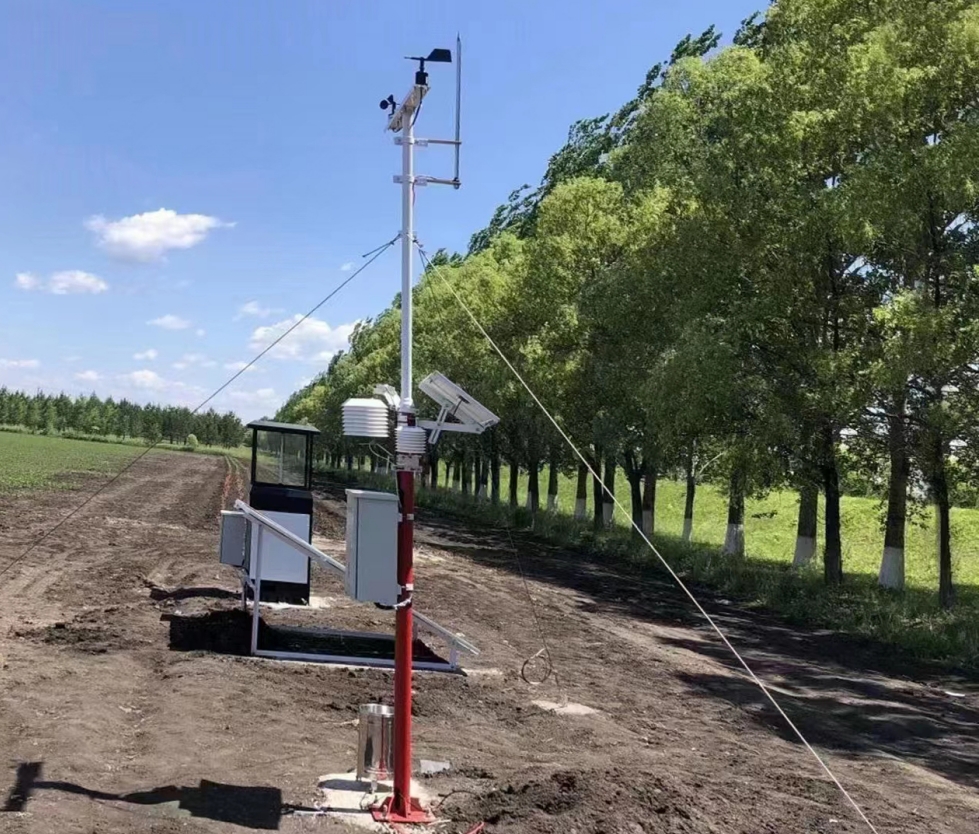
Morning review should focus on night minimum temperature, maximum humidity and leaf or air wetness trends. Midday review should focus on high temperature and light. Evening review should focus on whether humidity will rise overnight. This routine makes the station part of crop management instead of a passive display.
If several cucumber greenhouses are monitored, each station should use the same sensor height, soil depth and naming structure. Otherwise, differences in data may come from installation differences rather than real greenhouse performance. A simple installation standard improves long-term comparison.
When cucumber seedlings die or disease appears suddenly, historical curves are often more useful than current readings. The grower should review the previous several days of night temperature, maximum humidity, soil temperature, irrigation timing and light condition. This helps separate weather-related stress from seedling, substrate or management problems.
The station should therefore store data at a useful interval. If the reporting interval is too long, short night humidity peaks may be missed. If it is too short, power and data volume may increase unnecessarily. Greenhouse projects should select an interval that matches management response time.
For multi-greenhouse farms, comparing curves between normal and abnormal houses is especially valuable. If one greenhouse has higher night humidity or lower soil temperature, the cause may be ventilation, heating, irrigation distribution or structural difference.
Alarm rules should be practical rather than excessive. Too many alarms cause operators to ignore the platform, while too few alarms miss real crop stress. A useful configuration may include low night temperature, high night humidity, high midday temperature, abnormal soil moisture and low soil temperature during seedling stage.
The alarm recipient should also be defined. A farm owner may need summary alerts, while a greenhouse technician may need immediate operational alerts. The platform should support different thresholds or notification levels when the project scale grows.
After one crop cycle, alarm records should be reviewed with production results. This helps the grower adjust thresholds based on local greenhouse behavior instead of using fixed values forever.
For project owners, the station should also support seasonal comparison. Comparing one cucumber cycle with the next helps identify whether yield changes are linked to climate control, irrigation, light shortage or structural greenhouse differences.
For project owners, the station should also support seasonal comparison. Comparing one cucumber cycle with the next helps identify whether yield changes are linked to climate control, irrigation, light shortage or structural greenhouse differences. This turns the station into a production review tool, not only a real-time display.
A: Cucumber growth is strongly affected by temperature, humidity, light and root-zone condition. Continuous data helps growers respond before stress or disease becomes severe.
A: Air temperature humidity, soil temperature, soil moisture and light are usually the first sensors. CO2, leaf wetness and outdoor rainfall or wind can be added according to management needs.
A: Cucumber generally grows well in warm conditions. Daytime around 25 to 32℃ and night around 15 to 18℃ are commonly referenced, while low temperature or extreme heat can create stress.

A: High humidity, especially above about 80%, can increase the risk of cucumber diseases such as downy mildew and leaf mold. Humidity data helps guide ventilation and protection measures.
A: They should be installed in representative root-zone positions, not near drip emitters or greenhouse edges unless those locations are the specific monitoring target.
A: Yes. RS485 is suitable for wired greenhouse monitoring when cable routing, waterproofing and grounding are handled properly.
A: Thresholds should match crop stage, local agronomic practice and greenhouse structure. Low temperature, high humidity, high temperature and abnormal soil moisture are common alarm points.
A: Include sensor list, collector, communication method, power supply, platform access, cable length, mounting accessories, installation service and acceptance checklist.
A: Historical curves can show whether rapid temperature change, excessive humidity, low soil temperature or irrigation problems occurred before symptoms appeared.
A: Check sensor readings, platform curves, alarm settings, upload interval, power stability, sensor position photos and data export from at least one complete monitoring cycle.
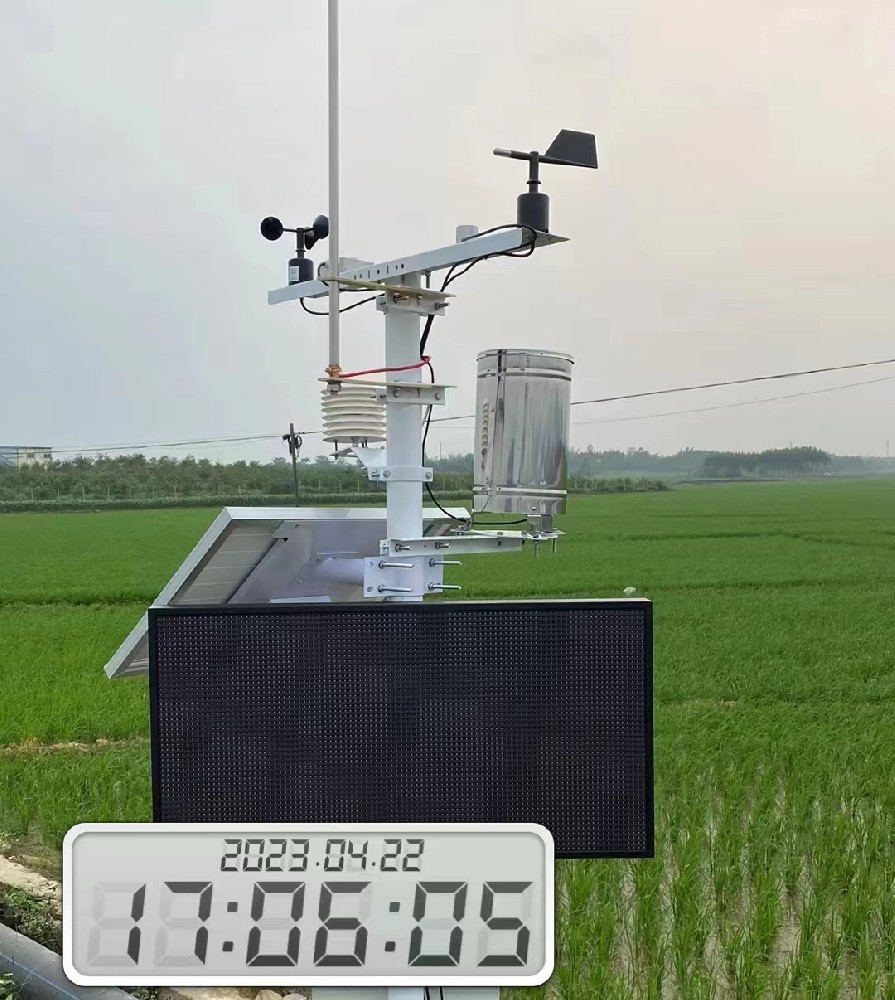
Greenhouse cucumber production needs stable temperature, humidity, light and root-zone conditions. An agricultural weather station provides continuous data for climate control, irrigation review and disease-risk management. When sensor positions, RS485 communication, alarm thresholds and platform records are planned clearly, the station becomes a practical tool for greenhouse operation and project acceptance.
Next:Leaf Temperature and Humidity Sensor: Plant Disease Risk Monitoring and RS485 Integration Guide
Related recommendations
Sensors & Weather Stations Catalog
 Agriculture Sensors and Weather Stations Catalog-NiuBoL.pdf
Weather Stations Catalog-NiuBoL.pdf
Agriculture Sensors Catalog-NiuBoL.pdf
Water Quality Sensor Catalog-NiuBoL.pdf
Related products
 Combined air temperature and relative humidity sensor TDR Soil Moisture & Temperature Sensor for irrigation| RS485 |4-20mA| NBL-S-THR
 Soil pH sensor RS485 soil Testing instrument soil ph meter for agriculture |NBL-S-PH
 Wind Speed sensor Output Modbus/RS485/Analog/0-5V/4-20mA
 Tipping bucket rain gauge for weather monitoring auto rainfall sensor RS485/Outdoor/stainless steel
 Pyranometer Solar Radiation Sensor 4-20mA/RS485

Screenshot, WhatsApp to identify the QR code
WhatsApp number:+8615367865107
(Click on WhatsApp to copy and add friends)

