





— Blogs —
—Products—
 Consumer hotline +8618073152920
WhatsApp:+8615367865107
Address:Room 102, District D, Houhu Industrial Park, Yuelu District, Changsha City, Hunan Province, China
Product knowledge
Time:2026-08-19 09:08:00 Popularity:329
An in-line dissolved oxygen meter is specified for continuous process information; a BOD test is a separate laboratory procedure. Both use dissolved oxygen (DO) readings, but the same instrument location and acceptance criteria do not serve both jobs. A wastewater contractor replacing a pipe or bypass DO point should define hydraulic conditions and controller integration. A laboratory ordering equipment for BOD testing should define its sample handling and test method instead. Confusing these scopes leads to a sensor that is installed but cannot answer the intended question.
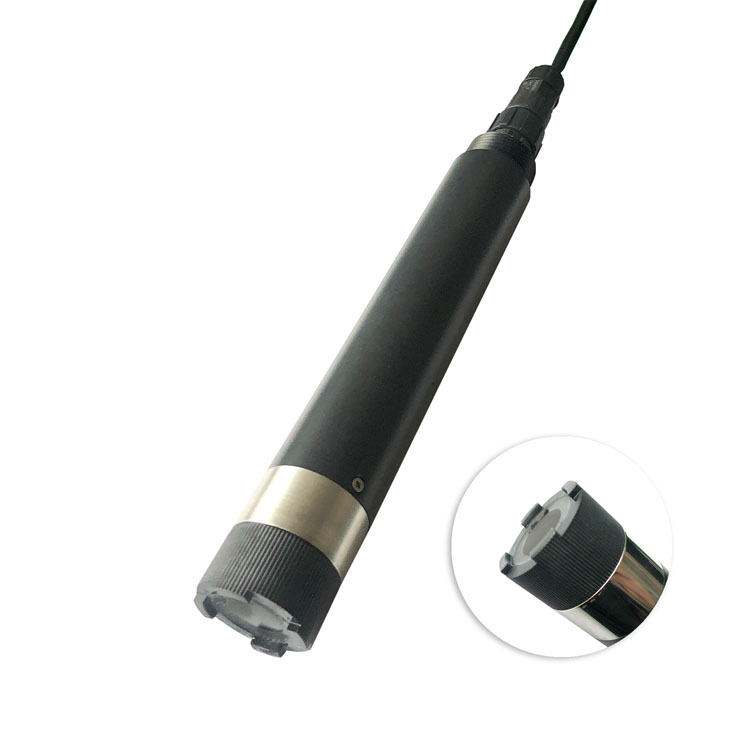
Online DO is the oxygen concentration at a measurement point at a particular time, commonly expressed in mg/L. It can indicate changes in aeration, deoxygenation or process water condition. Biochemical oxygen demand (BOD) is derived from oxygen depletion during a controlled incubation of a prepared sample under a specified method. A continuous DO value from a pipe is not a BOD result. It may help a plant observe conditions around sampling, but it does not replace bottles, blanks, incubation controls and the required laboratory procedure.
If a project asks for both an online DO trend and BOD reports, write two deliverables. The process team should own the installed DO point, alarm or PLC data. The laboratory should own method selection, sample collection, measurement at the start and end of incubation, quality controls and reporting. Specify the interface between those teams only where a time-matched process record has analytical value. Do not label an online display 'BOD' because the same probe technology can measure DO in a laboratory bottle.
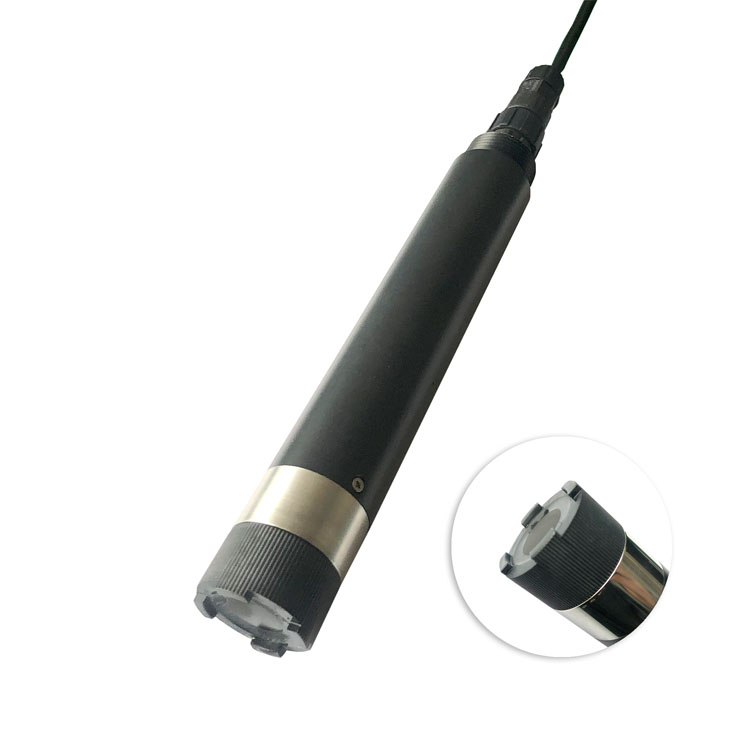
The linked NiuBoL NBL-WQ-DO is an optical fluorescence-quenching DO sensor. Its product information describes an immersion installation, a 3/4-inch NPT thread and an operating pressure below 0.2 MPa. IP68 describes ingress protection of the specified probe; it does not authorize mounting it directly into a high-pressure process pipe. For an in-line application, the engineer must design an appropriate low-pressure flow cell or bypass that keeps the sensing cap wetted, avoids trapped air, and allows safe isolation for service.
Where the pipe pressure, temperature or cleaning chemicals exceed the sensor's stated limits, select another measurement arrangement or instrument. Do not rely on a threaded connection alone as proof of process compatibility. Confirm wetted materials, seal, flow-cell pressure rating and the consequences of isolation before issuing a purchase order.
| NBL-WQ-DO published item | Specification | Project implication |
|---|---|---|
| DO measurement | 0-20.00 mg/L; accuracy ±2% of full scale | Check the required decision band; 0.01 mg/L resolution is not 0.01 mg/L accuracy. |
| Output | RS485, Modbus RTU | Obtain the current register map and confirm host scaling and units. |
| Supply | 12-24 VDC | Size the complete panel or station supply, not just the probe. |
| Installation and enclosure | Immersion, 3/4-inch NPT; IP68 probe | A pressurized line still needs a separately rated fitting or bypass cell. |
| Operating conditions | 0-45 °C; pressure below 0.2 MPa | Check the actual sample at the sensor, including cleaning and start-up conditions. |
These figures describe the linked NBL-WQ-DO product, not every NiuBoL DO model or an assembled flow-cell package. Ask the supplier to identify the exact ordered variant, cable length, cap and mounting accessories on the quotation. Where the design changes between submerged basin and bypass pipe, the mounting scope changes even if the optical probe remains the same.
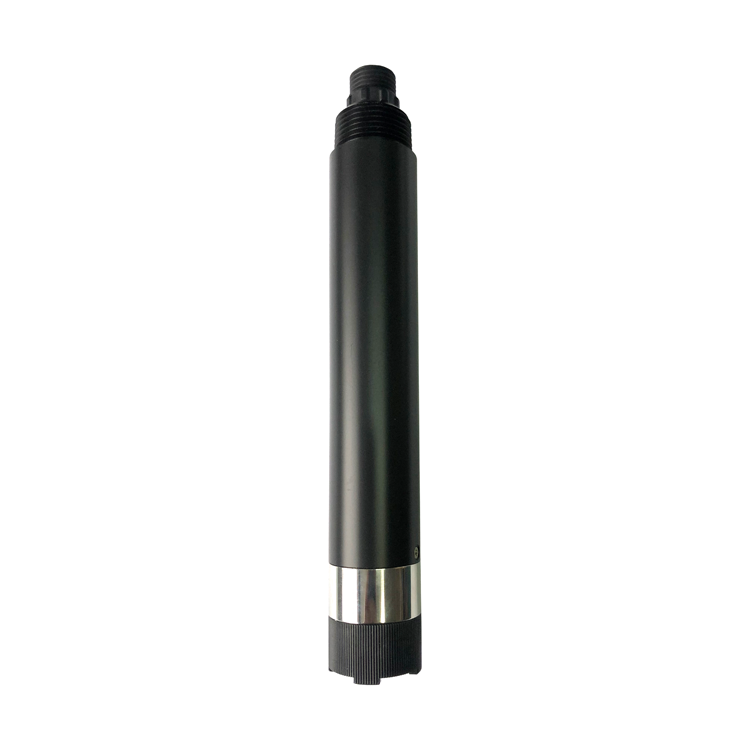
Draw the sample path before choosing a fitting. Identify the tap point, expected pressure, line size, suspended solids, gas bubbles, temperature, available drain and maintenance access. A bypass may let the optical probe operate in a serviceable low-pressure cell, but it introduces transport delay and fouling risk. Place the tap where it represents the process condition and where air entrainment is controlled. A dead leg or intermittently dry chamber can display a stale or false low value while the controller still sees a valid number.
The flow cell needs a safe way to isolate, depressurize, clean and return to service. If flow is stopped for maintenance, suppress or mark process alarms from that point; do not let a dry probe drive aeration controls. If the process contains aggressive cleaning solutions, isolate the measurement path during cleaning unless the probe and seals have been confirmed compatible. State whether a flow switch or sample-line pressure indication is supplied; DO alone cannot prove the sample is moving.
For an aeration basin, direct immersion may be simpler than piping a sample. Mount below the lowest normal water level, away from direct bubbles and settled sludge, with a retrieval method that does not require an unsafe reach over the basin. For a treated-water line, a bypass can provide controlled access; the response delay must be included in the alarm design. These are different uses of a DO sensor, not interchangeable installation details.
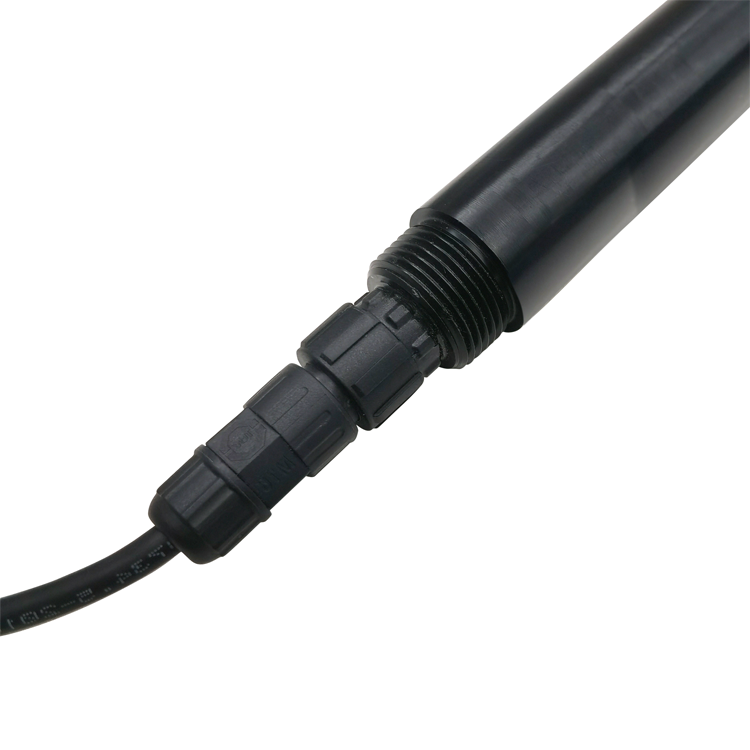
An NBL-WQ-DO with RS485 Modbus RTU can feed a PLC, RTU, data logger or compatible gateway. Record supply polarity, bus wiring, device address, baud rate, parity, register type, scaling and engineering units. Test the value read by the host against a local instrument or maintained reference at the same sample point. A decimal-place error can produce a plausible DO trend with a wrong absolute value, so confirm both the displayed number and the raw register interpretation.
Timestamp the record at the acquisition point or establish a consistent time source. A logger receiving stale values after a network outage should flag their age. If the number is used for aeration or alarm decisions, test loss of probe communication, loss of bypass flow and power recovery separately. Decide in advance who is notified, whether control reverts to a safe default or manual operation, and how the fault is cleared. The correct response depends on the process and cannot be derived from the DO sensor specification alone.
Optical DO sensing does not consume oxygen during measurement and does not require electrolyte replenishment. That reduces some maintenance compared with a membrane electrode, but the optical cap can foul or age. Inspect it for film, scale and damage; clean using the manufacturer's method; compare with a maintained reference after service; and retain an as-found and as-left record. If the process water has heavy solids, the cleaning interval may need to be much shorter than in clean water.
Ask for the complete measuring point: probe model and output variant, optical cap and spare, cable length, flow cell or immersion mount, process isolation components, sample drain, power, junction enclosure, controller or gateway input, register map and field commissioning. For a bypass, add the design pressure and temperature of the complete assembly, expected flow condition, fitting material and safe access. For a laboratory BOD task, prepare a separate specification tied to the approved analytical procedure and required sample throughput. A sensor-only quote cannot be compared with an installed in-line measurement point.
Acceptance should include a wet-sensor inspection, stable DO reading at normal sample flow, comparison with a reference at the same point, host-value and timestamp check, alarm test, simulated sample-flow loss and documented restart. Record the location of the sample tap and any transport delay. Those details let operators later distinguish process change from fouling, bubble accumulation or a stopped bypass.
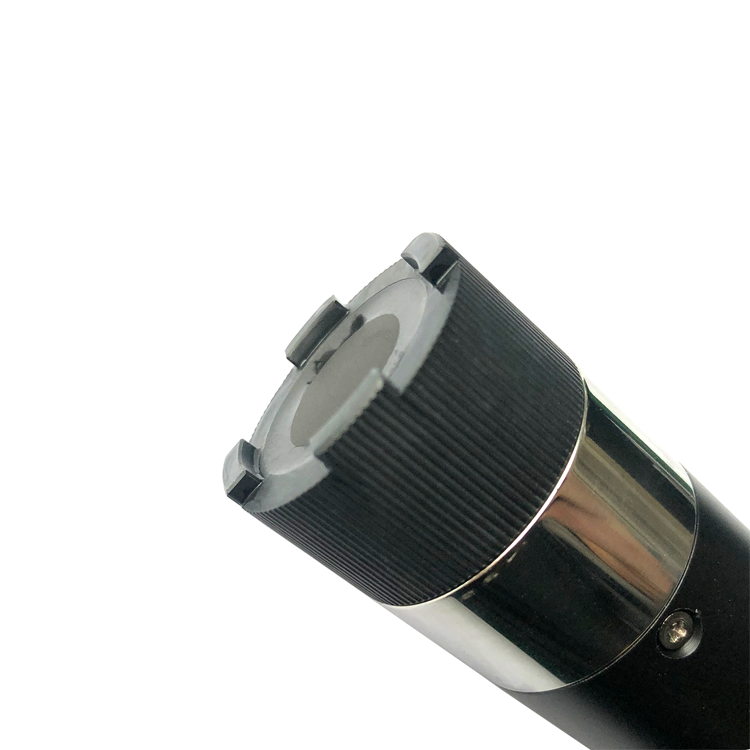
No. It measures oxygen concentration at its process point. BOD is determined from oxygen depletion in a controlled sample incubation under the chosen method. An online DO trace can support process context but is not a substitute for the laboratory result.
No. The linked product is described for immersion and operating pressure below 0.2 MPa. A thread and IP68 rating do not establish the pressure rating or chemical compatibility of a complete pipe connection. Design and rate the flow cell or bypass separately.
Direct immersion often avoids sample transport delay and additional tubing at an open basin, provided mounting is representative and safe to service. A bypass is useful where a controlled sampling point and safe isolation are available, but it requires flow assurance, cleaning and delay assessment.
No. It avoids electrolyte replenishment, but the cap still needs cleaning, condition checks and reference comparison. Use the site's fouling rate and required accuracy to set the service interval.
Verify physical RS485 wiring, address, communications settings, register interpretation, unit, scaling and timestamp in the actual PLC or logger. Compare the host reading with the probe/reference at the same moment and test a disconnected-probe fault.
The chamber may retain old or unrepresentative water, expose the probe to air or develop bubbles. Provide a flow or sample-state indication where the decision is critical, and mark the DO record invalid or alarm on loss of sample flow.
Separate the optical probe and cap from the flow cell, isolation valves, tubing, mount, cable, power, controller integration, commissioning and spare parts. A laboratory BOD instrument or service should be a separate line item with its own method requirements.
An in-line dissolved oxygen meter is valuable when the sample point and hydraulic arrangement make its DO reading representative, and when the control system handles invalid data explicitly. The NiuBoL NBL-WQ-DO can supply continuous optical DO data within its published operating limits. It does not turn a pressurized pipe into an immersion location, and it does not turn online DO into a BOD test.
Prev:Quality pH Meter: Evaluate Drift, Response and Junction Condition
Next:Weather and Pest Monitoring Integration: Match Time and Field Blocks
Related recommendations
Sensors & Weather Stations Catalog
 Agriculture Sensors and Weather Stations Catalog-NiuBoL.pdf
Weather Stations Catalog-NiuBoL.pdf
Agriculture Sensors Catalog-NiuBoL.pdf
Water Quality Sensor Catalog-NiuBoL.pdf
Related products
 Combined air temperature and relative humidity sensor
 TDR Soil Moisture & Temperature Sensor for irrigation| RS485 |4-20mA| NBL-S-THR
 Soil pH sensor RS485 soil Testing instrument soil ph meter for agriculture |NBL-S-PH
 Wind Speed sensor Output Modbus/RS485/Analog/0-5V/4-20mA
 Tipping bucket rain gauge for weather monitoring auto rainfall sensor RS485/Outdoor/stainless steel
 Pyranometer Solar Radiation Sensor 4-20mA/RS485


Screenshot, WhatsApp to identify the QR code
WhatsApp number:+8615367865107
(Click on WhatsApp to copy and add friends)

