





— Blogs —
—Products—
 Consumer hotline +8618073152920
WhatsApp:+8615367865107
Address:Room 102, District D, Houhu Industrial Park, Yuelu District, Changsha City, Hunan Province, China
Product knowledge
Time:2026-08-19 09:07:00 Popularity:285
Quick Answer: A quality pH meter must hold a useful calibration, respond to a real change and recover after routine cleaning. Check the glass membrane, reference junction and temperature measurement before judging the electronics. A stable number can be wrong, while a changing number can reflect real water chemistry. Evaluate both in buffers and at the intended process point.
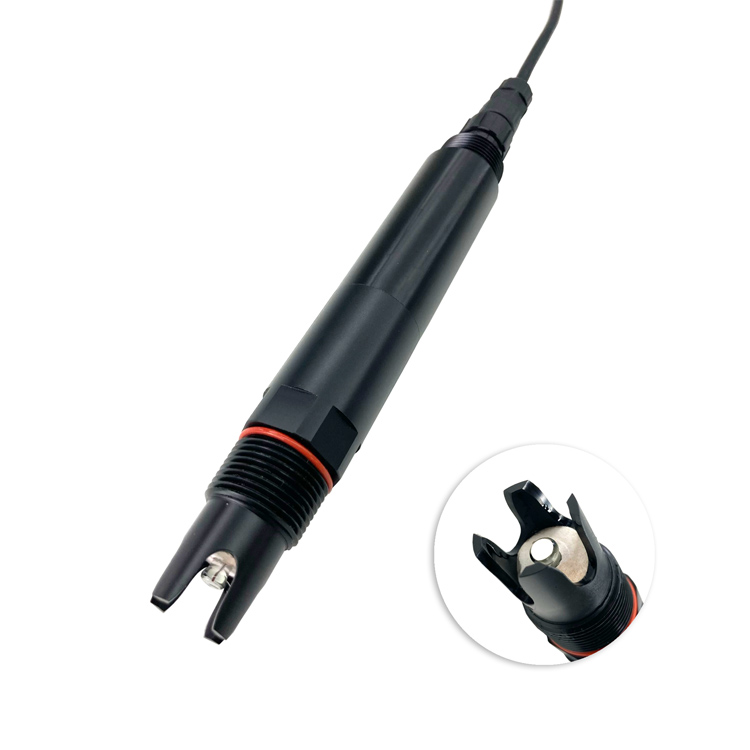
For long-term pH data, reference-junction condition, cleaning access, temperature compensation and comparison records matter before installation. An instrument may show 0.01 pH increments without achieving 0.01 pH accuracy. It may also pass one buffer check while responding too slowly to a changing stream. These are different shortcomings and need different tests.
Start with the operating decision. A neutralisation tank needs a measurement that follows the water at the selected location; a remote river point needs reliable observations between visits. Neither task is solved simply by requesting a quality pH meter. Define the acceptable deviation, required response and interval between accessible service visits, then assess the electrode and installation against those needs.
In a multiparameter station, dissolved oxygen measures oxygen conditions, not acidity. Its trend may help interpret a biological process, but it is not an independent pH reference. Each water-quality channel needs its own verification method, even when the probes share a cabinet and a communications bus.
| Observed behaviour | Useful first check | Premature action to avoid |
|---|---|---|
| Gradual departure from a comparison result | Check fresh buffers, temperature and the as-found condition before cleaning | Repeatedly changing an offset without identifying contamination or reference drift |
| Long delay after moving between buffers | Inspect the membrane and junction; repeat under a consistent comparison procedure | Accepting the final value while ignoring unacceptable response time |
| Fluctuation only at the process point | Inspect mixing, wetting, bubbles, electrical conditions and dosing proximity | Calling every fluctuation an electrode failure |
| Stable but implausible controller value | Compare the actual sensor output with the decoded host value | Assuming an unchanged number proves a healthy measurement |
The reference junction provides ionic contact between the reference system and the sample. Deposits or an unsuitable medium can disturb that contact. The glass membrane must also remain in the condition required for measurement. A transmitter cannot correct a blocked junction merely by calculating a new calibration coefficient.
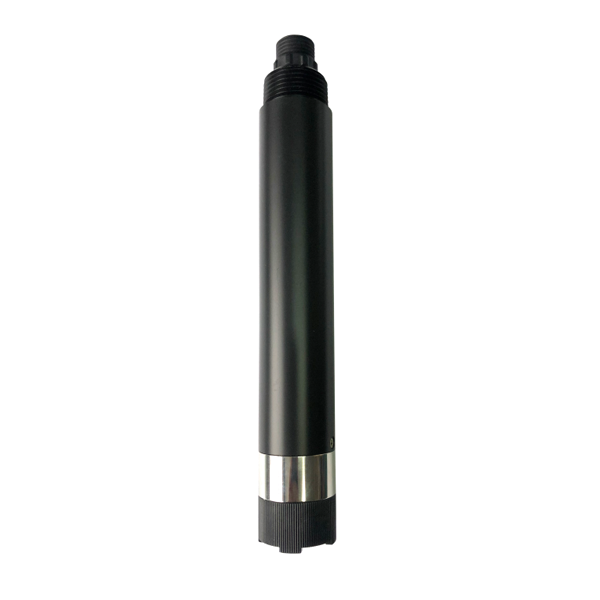
The NiuBoL NBL-WQ-PH online pH sensor combines the electrode assembly with an RS485 Modbus RTU output. Its selected specifications are below. They describe this model, not every pH instrument or every possible chemical environment. Confirm compatibility with the complete wetted assembly before exposing it to a process or cleaning solution.
| Item | NBL-WQ-PH specification | Meaning for evaluation |
|---|---|---|
| Measuring range | 0-14 pH | Check the actual process band and its excursions |
| Resolution and stated accuracy | 0.01 pH; +/-0.1 pH | Do not substitute the displayed increment for the accuracy limit |
| Temperature measurement | Stated accuracy +/-0.3 degrees C; automatic compensation with NTC | Verify temperature as well as pH during comparison |
| Operating limits | 0-65 degrees C; pressure below 0.2 MPa | Check both measurement and cleaning conditions |
| Supply and consumption | 12-24 V DC; 0.2 W at 12 V | Budget acquisition and communications equipment separately |
| Output | RS485 / Modbus RTU | Use the applicable address, register format and scaling |
| Construction and installation | POM wetted housing; immersion mounting; 3/4 NPT thread | Review the holder and medium rather than assuming unrestricted pipeline duty |
| Protection and standard cable | IP68; 5 m cable | Keep connection points protected and accessible |
For this assembly, keep the measuring end pointing downward and its axis at least 15 degrees from horizontal, rather than installing it horizontally or upside down. Keep the membrane and junction wetted by representative water. A holder that allows trapped gas, intermittent exposure or heavy deposits can defeat an otherwise suitable instrument.
Record the as-found pH and temperature first. If the installation permits safe removal, inspect the probe and check it in suitable fresh buffers before making an adjustment. Record the result, clean with the approved procedure if needed, and repeat the check. This distinguishes a removable coating from a persistent calibration problem instead of hiding both behind one final pass result.
NBL-WQ-PH uses a two-point procedure. The described buffer sequence uses a near-neutral 6.86 pH point with an acidic 4.00 pH or alkaline 9.18 pH point as appropriate. Those nominal values apply at their stated temperature. Use the buffer's temperature information and the instrument's supported calibration convention; do not relabel a different buffer family as the same standard.
Allow the value and temperature to stabilise, rinse between solutions and avoid contaminating the working buffer. Verify using a separate suitable aliquot after adjustment. A check with the same contaminated liquid used for calibration is not an independent demonstration that the instrument is fit for service.

Compare the response before and after cleaning using a consistent move between suitable buffers or controlled comparison conditions. Record the elapsed time and the rule used to judge stability. Do not invent a universal response-time limit: the required value depends on the process, installation and the delivered electrode specification.
In a mixed tank, sensor response is only one source of delay. Water must reach the probe, and any sample line, transmitter filtering and host polling add time. If the probe sits next to a dosing inlet, it may see a concentrated local condition before the bulk tank changes. Improving mixing or the measuring position can be more appropriate than asking for a faster pH transmitter.
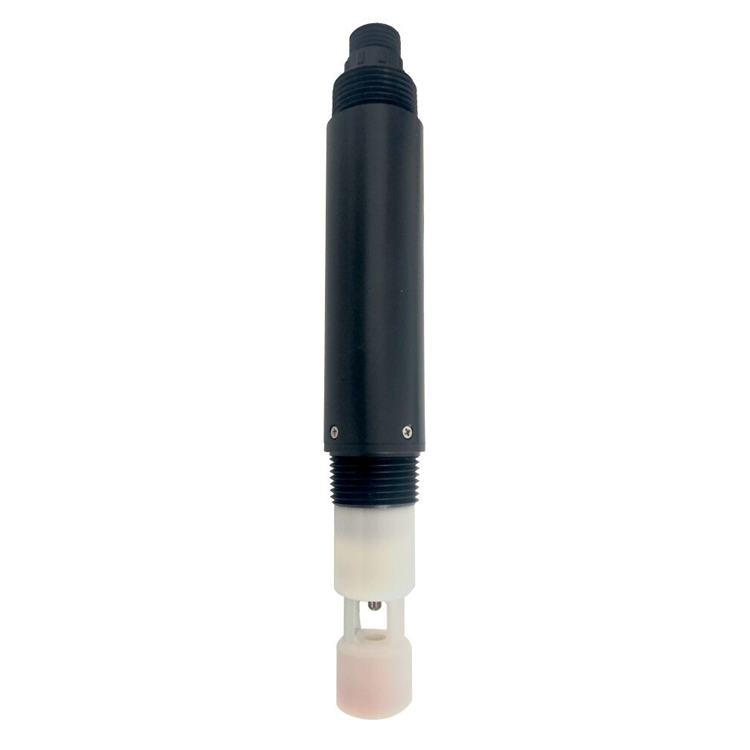
An optical BOD-related probe, pictured above, has a different response basis and does not verify acidity. Avoid interpreting simultaneous movements in multiple channels as proof of instrument accuracy. Use those observations to guide a process investigation, while retaining the pH-specific buffer and response checks.
Automatic temperature compensation addresses the electrode's temperature-dependent response. It does not make the chemistry of every sample equivalent to that sample at 25 degrees C. Buffer values also vary with temperature. Record the actual temperature when comparing an online sensor with a sample measured elsewhere.
A sample may change while it is removed, transported or exposed to air. A difference between a field reading and a later bench reading therefore needs an investigation of sampling conditions as well as the instruments. Compare promptly using a suitable procedure, particularly where gas exchange or poor mixing is plausible. Do not force agreement by recalibrating a working online sensor against an altered sample.
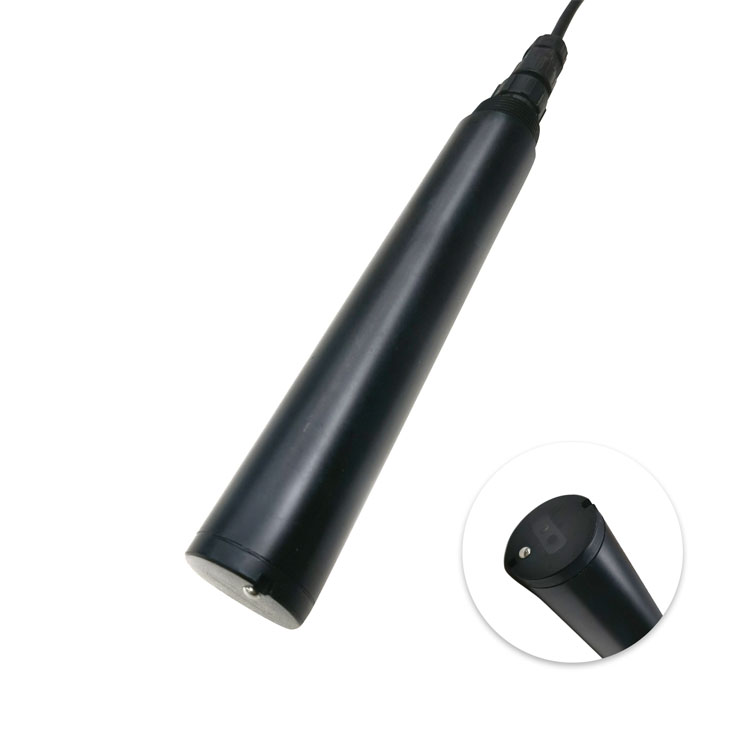
The turbidity probe below can indicate a particle-related change or a fouling environment, but a clear-water reading is not proof that a pH electrode's junction is clean. Inspect the actual pH assembly. Different surfaces and measuring principles can develop different service problems in the same stream.
At commissioning, compare the pH and temperature decoded by the PLC, RTU or data logger with a direct communication check of the sensor. Confirm decimals and units. A functioning RS485 link proves data exchange, not a valid calibration. Keep the last successful acquisition time so an old value cannot appear to be a newly stable reading.
Test an interrupted connection and a controlled restart. A missing result should be flagged as unavailable, not converted to pH zero or silently retained as current. Where the value enters a dosing system, the control engineer must define the response to unavailable or questionable data separately from the ordinary pH setpoint.
Assess replacement when the instrument cannot meet the agreed check after correct conditioning, cleaning and calibration, or when its response remains unsuitable. First rule out buffers, temperature, mounting and the receiving-system conversion. Retain the previous observations so a replacement can be assessed under the same conditions rather than against a new undocumented procedure.
During storage, use the correct electrode storage solution and keep the intended surfaces conditioned. A brief rinse with deionised water is not the same as long-term storage in it. Request the solution and procedure appropriate to the delivered assembly; do not apply a generic storage concentration copied from another electrode.
A separate ammonium channel may require pH information for an application-specific interpretation, but it does not replace pH measurement. If another calculation depends on this channel, review what happens during pH maintenance or replacement so a stale pH input does not remain hidden in a derived result.
Useful quality includes stated accuracy, repeatable checks, adequate response and maintainable installation. NBL-WQ-PH reports 0.01 pH increments with a stated accuracy of +/-0.1 pH. More displayed digits do not remove that distinction or guarantee performance after fouling.
No. Inspect the sampling conditions, probe condition, temperature and comparison instrument first. Record the as-found result before cleaning or adjustment. Repeated calibration against changing or contaminated references can conceal the cause of disagreement.
Yes. Its response may be too slow for the process, its holder may create an unrepresentative sample, or the medium may be incompatible. Buffer agreement is necessary for a useful check, but it does not validate every installed condition.
It compensates the electrode response; it does not universally convert sample chemistry to a reference-temperature pH. Compare readings with their measured temperature and buffer convention recorded.
Provide the model, medium, mounting orientation, temperature and pressure, plus recent as-found, post-cleaning and buffer-check results. Include the required output and cable arrangement. NiuBoL can then distinguish electrode suitability from a mounting, service or data-decoding problem.
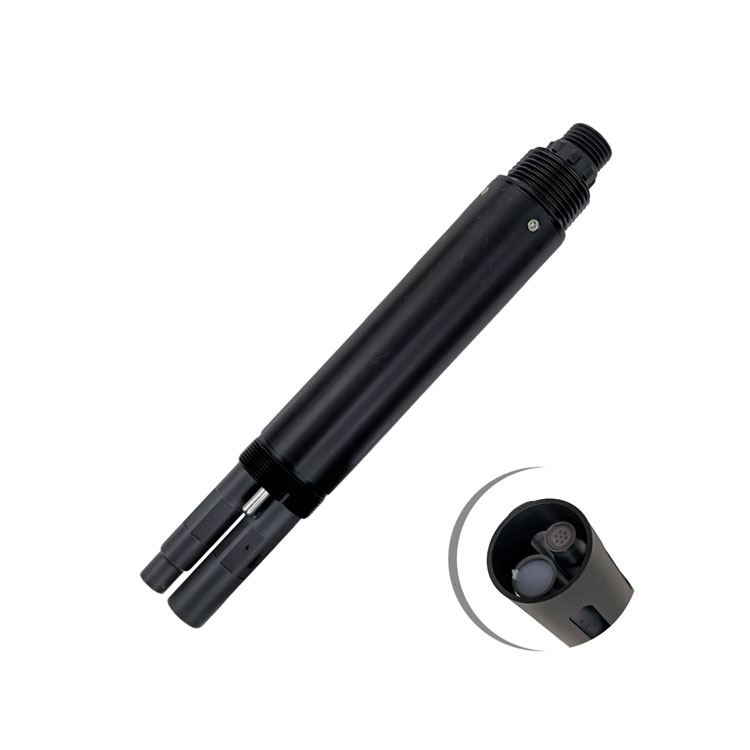
A quality pH meter must remain verifiable in the intended process. For NBL-WQ-PH, use the published limits, correct mounting and a consistent buffer-and-response check rather than relying on display stability alone. Define the acceptable deviation and service access before selecting the probe, and keep temperature and data validity visible throughout operation.
Prev:Arduino TDS Sensor Price: Compare Multi-Point Installed Costs
Next:In-Line Dissolved Oxygen Meter: Process Monitoring vs BOD Testing
Related recommendations
Sensors & Weather Stations Catalog
 Agriculture Sensors and Weather Stations Catalog-NiuBoL.pdf
Weather Stations Catalog-NiuBoL.pdf
Agriculture Sensors Catalog-NiuBoL.pdf
Water Quality Sensor Catalog-NiuBoL.pdf
Related products
 Combined air temperature and relative humidity sensor
 TDR Soil Moisture & Temperature Sensor for irrigation| RS485 |4-20mA| NBL-S-THR
 Soil pH sensor RS485 soil Testing instrument soil ph meter for agriculture |NBL-S-PH
 Wind Speed sensor Output Modbus/RS485/Analog/0-5V/4-20mA
 Tipping bucket rain gauge for weather monitoring auto rainfall sensor RS485/Outdoor/stainless steel
 Pyranometer Solar Radiation Sensor 4-20mA/RS485


Screenshot, WhatsApp to identify the QR code
WhatsApp number:+8615367865107
(Click on WhatsApp to copy and add friends)

