





— Blogs —
—Products—
 Consumer hotline +8618073152920
WhatsApp:+8615367865107
Address:Room 102, District D, Houhu Industrial Park, Yuelu District, Changsha City, Hunan Province, China
Product knowledge
Time:2026-08-19 09:06:00 Popularity:286
An Arduino TDS sensor price comparison becomes misleading when a bare bench board is compared with several installed water-monitoring points. Define the required conductivity ranges, temperature handling and receiving equipment before requesting prices. For a multi-point project, separate costs repeated at every probe from equipment that can genuinely be shared.
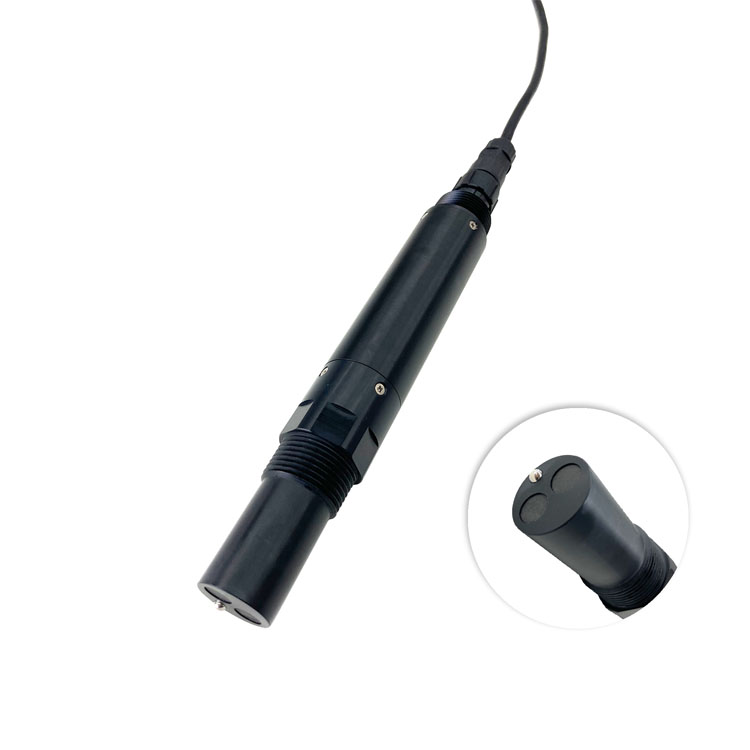
The NiuBoL NBL-WQ-EC measures conductivity and temperature, with estimated TDS supported according to the selected range. TDS conversion does not identify individual dissolved substances or establish water safety. State the required EC range and TDS conversion basis instead of requesting an unspecified ppm sensor.
For this family, the TDS coefficient is configurable and the default is 0.64. A controller must not apply the conversion again to a value already reported as TDS. Keep the original EC, water temperature and coefficient identity where they are needed to interpret or compare records.
| EC probe item | NBL-WQ-EC specification | Effect on a multi-point quotation |
|---|---|---|
| Available EC spans | 0-20.00 uS/cm; 0-200.0 uS/cm; 0-5000 uS/cm; 0-200.0 mS/cm | Select the range for each water point. These are configuration choices, not one universal performance span. |
| Accuracy | Conductivity +/-1% FS; temperature +/-0.3 degrees C | Compare the error at the selected span and operating region, not just probe quantity. |
| Supply and load | 12-24 V DC, +/-10%; 0.2 W at 12 V | Allow for all probes and the receiving electronics in the power design. |
| Output | RS485 Modbus RTU; default 9600, N, 8, 1 | Include a compatible field interface and register integration, not just a controller board. |
| Water conditions | 0-50 degrees C; pressure below 0.6 MPa; IP68 | Check each installation point and obtain approval for any proposed chamber or process connection. |
| Mounting and cable | Immersion / 3/4 NPT; standard 5 m cable, customizable | Price the actual cable route, mounting and accessible waterproof terminations per point. |
One point measuring RO permeate and another measuring a concentrated process stream may require different spans even if both records are displayed as TDS. For example, +/-1% FS equals +/-0.2 uS/cm on a 20 uS/cm span but +/-50 uS/cm on a 5000 uS/cm span. A wider range is not automatically a better purchase for low-conductivity water.
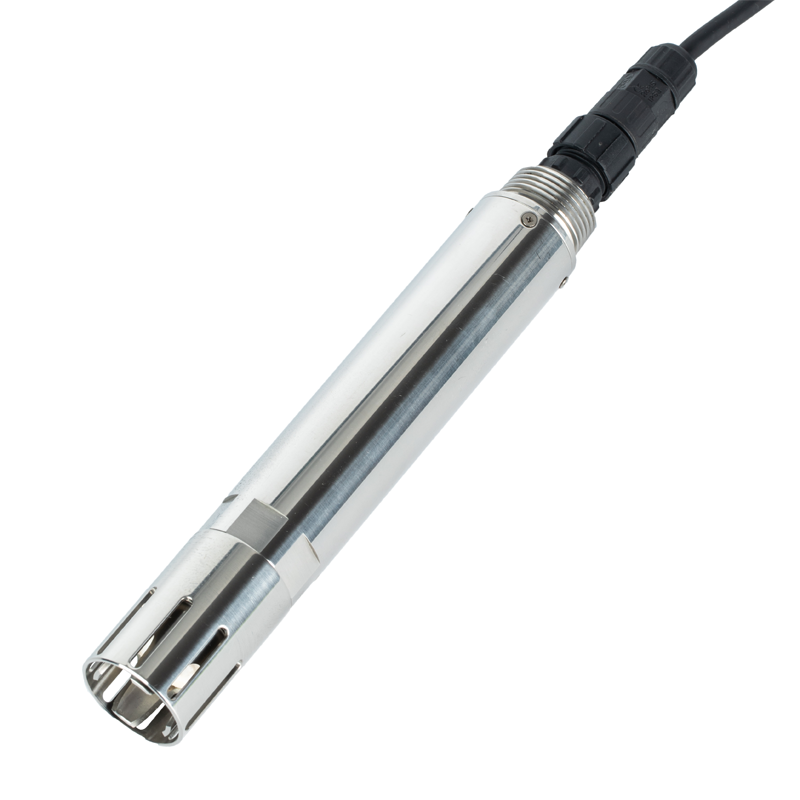
Add pH only where acid-base condition informs a separate operating decision. The PH-4S probe below is a separate instrument with its own service requirements; it is not part of the EC probe's base scope. Making that distinction prevents a multi-parameter quotation from being compared with an EC-only price.
Per-point items normally include the selected probe, required cable, holder or approved process fitting, local connection protection and installation work. Shared items may include a receiving controller, enclosure, supply and gateway, but only when channel capacity, cable routes and electrical design permit sharing.
A useful costing model is: total project price = sum of the installed point items + shared acquisition and power equipment + integration and verification + optional services. Keep that structure visible in the quotation rather than multiplying one advertised board price by the number of water points.
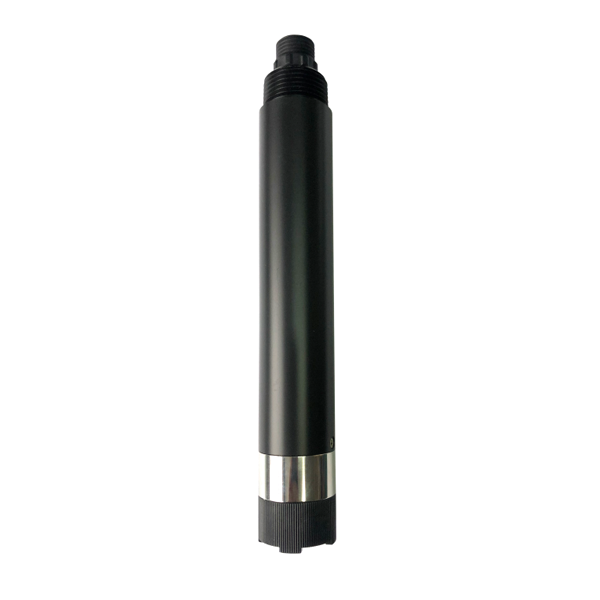
An oxygen probe, such as the DO-4A pictured below, should have its own line only when the project needs oxygen data. Additional sensors do not make a TDS estimate more accurate, and they introduce their own installation and verification work.
Review the actual controller, RS485 interface, power, enclosure and software. A UART is not an RS485 electrical port. Reusing a board can reduce one hardware item without eliminating the need for a compatible transceiver, protected field wiring or validated measurement decoding.
Read each EC probe using its delivered register map, unique address and range-specific scale. Keep point identity independent of a replaceable device address. Check how missing replies and stale values are handled before relying on the records. A successful bench connection does not establish behavior on the installed cable route.
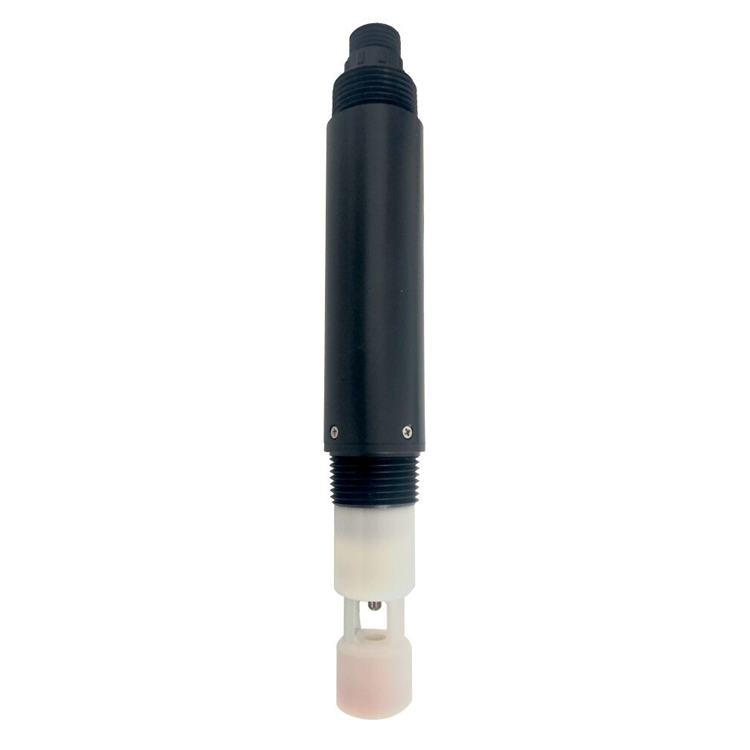
The separate salinity probe below reports a different water indicator and must be specified in its own units. Do not accept a salinity instrument as an undocumented substitute for an EC/TDS point merely because both are related to dissolved salts.
Send a point schedule with water type, EC region, temperature, mounting, cable length and required data destination. Identify which existing items have been checked for reuse. Request the probe model and range, supplied accessories, integration work and exclusions on separate lines.
There is no single installed price for every Arduino TDS project. Obtain a current NiuBoL quotation for the defined configuration, destination and quantity. Do not treat a historical component listing as a current price for a field-ready monitoring point.
If an offer includes BOD or other optical indicators, require a separate reason for including them and a separate verification method. The BOD instrument pictured below does not supply TDS. Removing unused channels can reduce unnecessary equipment and service scope without weakening the defined EC task.

Compare the delivered measurement and installation scope: probe, temperature measurement, interface, power, housing, cable and verification. A bare board price does not cover every item needed for a continuous wet-site installation.
Potentially, if the controller supports the required bus, device count, polling and records. Check cable routes and electrical conditions as well. State what is shared in the quotation rather than assuming one controller works for any number of points.
No. Select each span from the water conditions and required decision margin. Full-scale error increases in absolute units on a wider span; one uniform order can sacrifice useful low-conductivity performance.
No. Those are different measurements. Include them only when they support additional process decisions. Their presence does not replace selection of the correct EC range or conversion basis.
Retain the approved model, EC span, cable, material, output and conversion settings for each point. Identify substitutions explicitly and repeat the relevant receiving-system and measurement checks rather than accepting the same product label as proof of equivalence.
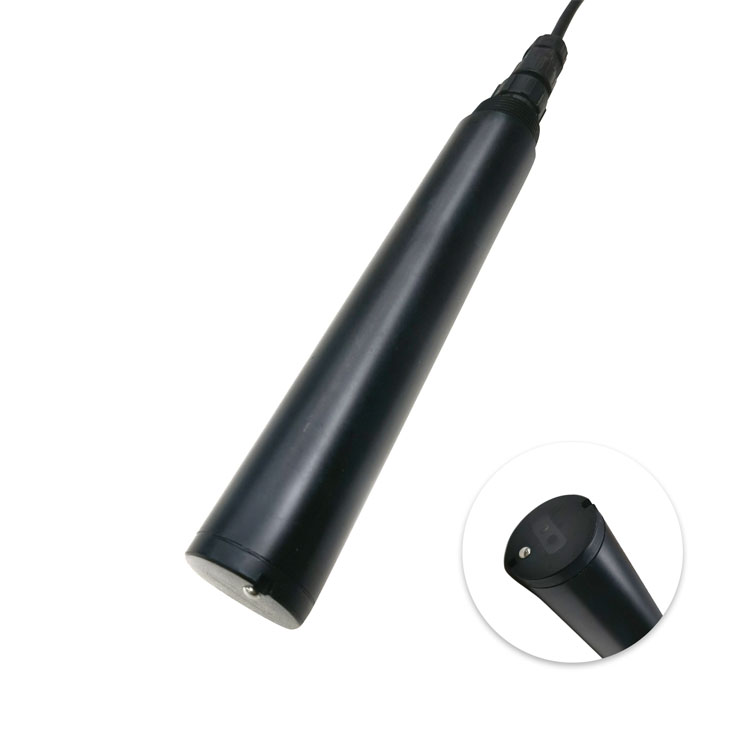
Evaluate Arduino TDS sensor price at the installed-point and shared-system levels. Select the EC span for each water condition, keep optional parameters separate and quote only verified reuse. Send NiuBoL the point schedule for a configuration-specific offer instead of comparing an incomplete component price with a complete monitoring project.
Prev:Turbidity Sensor for Water Quality: Set an Achievable Alarm
Next:Quality pH Meter: Evaluate Drift, Response and Junction Condition
Related recommendations
Sensors & Weather Stations Catalog
 Agriculture Sensors and Weather Stations Catalog-NiuBoL.pdf
Weather Stations Catalog-NiuBoL.pdf
Agriculture Sensors Catalog-NiuBoL.pdf
Water Quality Sensor Catalog-NiuBoL.pdf
Related products
 Combined air temperature and relative humidity sensor
 TDR Soil Moisture & Temperature Sensor for irrigation| RS485 |4-20mA| NBL-S-THR
 Soil pH sensor RS485 soil Testing instrument soil ph meter for agriculture |NBL-S-PH
 Wind Speed sensor Output Modbus/RS485/Analog/0-5V/4-20mA
 Tipping bucket rain gauge for weather monitoring auto rainfall sensor RS485/Outdoor/stainless steel
 Pyranometer Solar Radiation Sensor 4-20mA/RS485


Screenshot, WhatsApp to identify the QR code
WhatsApp number:+8615367865107
(Click on WhatsApp to copy and add friends)

