





— Blogs —
—Products—
 Consumer hotline +8618073152920
 WhatsApp:+8615367865107
Address:Room 102, District D, Houhu Industrial Park, Yuelu District, Changsha City, Hunan Province, China
Product knowledge
Time:2026-07-08 16:11:19 Popularity:222
Choosing a negative oxygen ion sensor manufacturer should start with the measurement principle and project environment. Many low-cost devices are designed for handheld or household demonstration. Industrial monitoring projects need stable structure, RS485 communication, lightning protection, temperature compensation and continuous operation.
NiuBoL negative oxygen ion sensors use a more mature double cylindrical axis principle for medium and higher-end air ion monitoring. The sensor can be used in scenic area monitoring, ecological parks, environmental stations, smart tourism, research sites and industrial environmental monitoring.
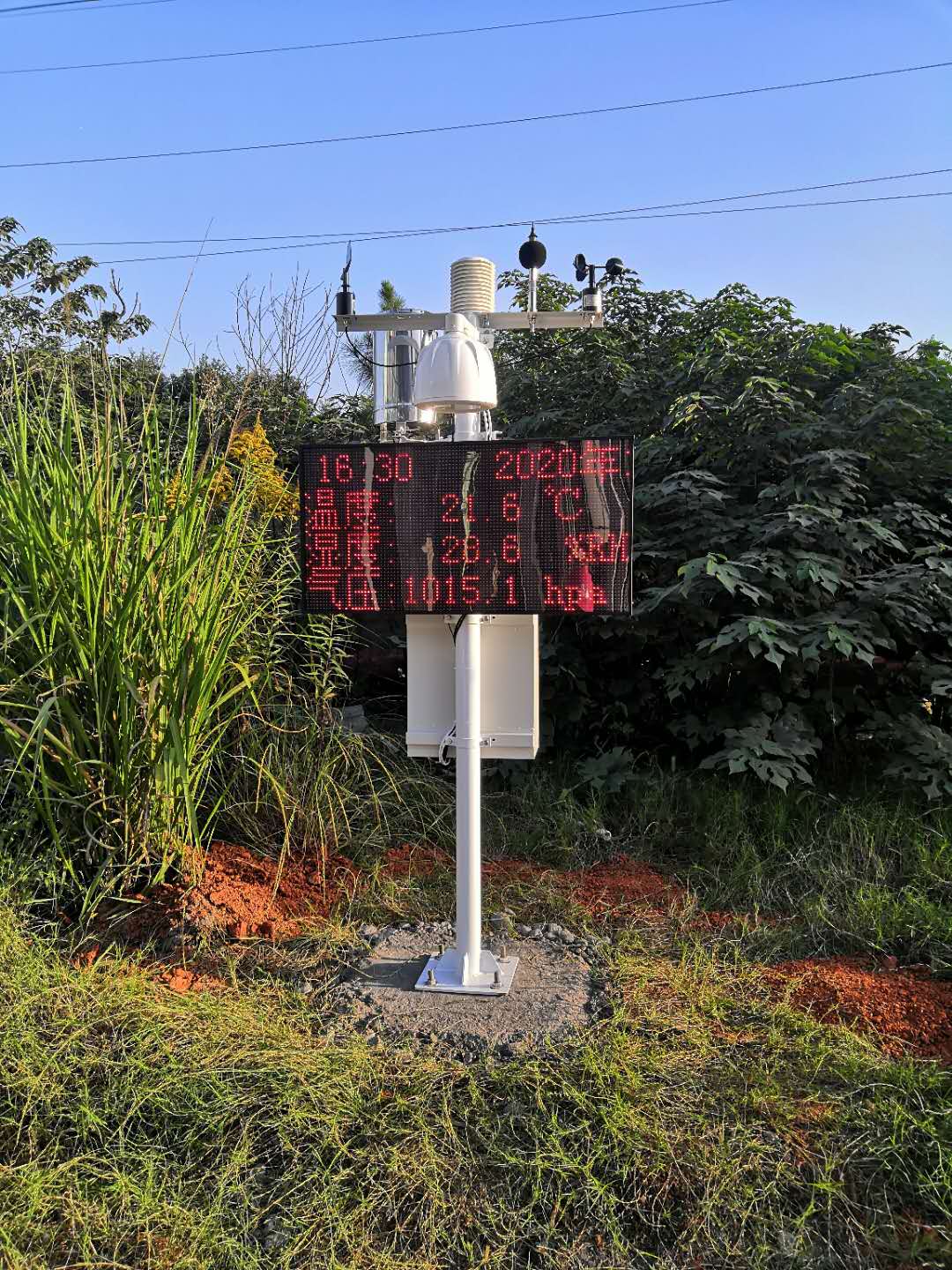
| Item | Parallel Plate Type | Double Cylindrical Axis Type |
|---|---|---|
| Typical cost | Lower | Higher |
| Common use | Low-end air ion meters | Medium and higher-end monitoring instruments |
| Airflow stability | More affected by turbulence and edge effect | More stable airflow through cylindrical structure |
| Measurement stability | More affected by environment | Better stability under proper design |
| Project suitability | Basic demonstration or low-cost checks | Online monitoring, scenic area and industrial use |
For industrial projects, several design choices deserve attention: a high-conductivity alloy intermediate electrode selected after material screening, full-range temperature compensation, adaptive range switching, RS485 Modbus RTU communication, 2000V isolation, surge protection and wiring protection. These details matter because outdoor and industrial sites create interference, lightning risk and wiring mistakes.
| Parameter / Feature | Reference Information | Buyer Meaning |
|---|---|---|
| Range | 10 to 500,000 pcs/cm3 | Covers low and higher concentration monitoring |
| Low-range stability | Optimized for low-range stability | Useful for real environmental comparison |
| Display operation | LCD display designed for industrial use | More suitable than household display devices |
| Temperature use | Display works from -20 to 60 C; screen not damaged at -40 C | Useful for outdoor winter deployment |
| Communication | RS485, standard Modbus RTU, settable address and baud rate | Supports industrial integration |
| Isolation | 485 communication uses 2000V isolation | Reduces interference from communication line |
| Surge protection | Designed for harsh outdoor weather | Reduces lightning-related risk |
| Wiring protection | Wrong wiring for long time will not easily damage equipment | Reduces installation error cost |
System integrators, scenic area project contractors, environmental monitoring companies and IoT platform builders should buy from a manufacturer that can provide protocol documents, wiring support, sensor customization and long-term supply. A handheld meter seller may be enough for temporary demonstration, but not for a multi-point online monitoring network.
Which measurement principle is used?
What is the range, resolution and temperature compensation method?
Does the sensor support RS485 Modbus RTU?
Is the communication circuit isolated from power?
What protection is included for surge, lightning and wrong wiring?
Can the manufacturer provide protocol documents and integration support?
Can the sensor be customized for station, cabinet or OEM projects?
A common mistake is buying a low-cost handheld-style sensor for an online monitoring project. The buyer then discovers that communication, installation, protection and data stability do not meet the project requirement. For outdoor projects, the sensor should be selected as part of a station, not as a loose component without support.
Ask the manufacturer whether the sensor has been used in scenic area, park or environmental station projects. More important than a claim is whether the supplier can provide wiring guidance, Modbus documents and replacement advice.
Measurement principle and range.
Output signal and Modbus protocol.
Power requirement and housing.
Temperature compensation method.
Surge protection and wiring protection.
Quantity, destination country and integration target.
Buyers should ask for datasheets, communication protocol, wiring diagram, range, accuracy, protection design and application examples. For industrial projects, ask whether the sensor has wrong-wiring protection and isolated communication. These details reduce installation and maintenance risk.
If the supplier cannot explain the measurement structure or communication interface, the buyer should be cautious. A sensor used in an online station must be maintainable by engineers, not only readable by a salesperson.
Negative oxygen ion measurement is sensitive to airflow, electric field design, electrode structure and environmental compensation. A simple structure may show readings, but stability can be weak when humidity, wind or temperature changes. This is why the measurement principle should be discussed before price. The double cylindrical axis structure is more complex, but it helps maintain smoother airflow and reduce edge effects compared with simple parallel plate designs.
For online monitoring, stability matters more than one impressive high reading. Scenic areas and environmental projects need trend data that can be compared across days and seasons. A sensor that drifts strongly with temperature or airflow will create misleading data and increase maintenance work.
System integrators should confirm RS485 Modbus RTU support, address setting, baud rate setting, power requirement, isolation design and wiring protection. The supplier should provide a register map and explain how the sensor should be installed in a station or cabinet. If the project includes multiple stations, consistent addressing and naming are necessary for later maintenance.
Outdoor sites also need protection against surge, lightning and wrong wiring. These details are not marketing extras. They reduce failures caused by installers, weather and long cable runs.
Ask which collection principle is used and why.
Check whether range and accuracy match the target application.
Confirm temperature compensation and low-range stability.
Request Modbus documents and wiring diagrams.
Ask about replacement cycle, calibration support and warranty.
Check whether the manufacturer can supply station-level integration, not only sensor modules.
Project buyers need more than a product page. They need stable supply, clear technical documents, consistent production, pre-shipment testing and support for integration. A manufacturer should be able to explain how the sensor connects to a collector, how the Modbus registers are read, how the sensor should be mounted and how failures are diagnosed.
For overseas buyers, documentation is especially important. English datasheets, wiring diagrams, packing lists and communication protocols reduce installation time. If the sensor will be built into a larger station, ask whether OEM or cabinet integration support is available.
Choose a sensor module if the buyer already has a collector, cabinet, platform and integration team. Choose a complete station if the buyer needs pole, cabinet, power, communication and cloud platform together. Many project delays happen because buyers order modules but later discover they still need housing, power conditioning, data acquisition and software.
For project procurement, the buyer should ask how sensors are packed, how long production takes, and what the warranty covers. If the sensor is installed outdoors, replacement should be possible without rebuilding the whole station. Modular design reduces downtime because the faulty part can be changed independently.
For distributors, spare units and protocol consistency are important. A later batch should use the same communication rules unless the supplier clearly announces a version change.
If the sensor will be used by a distributor or system integrator, request stable model naming and version control. Changing communication registers or wiring definitions without notice can create after-sales problems across projects.
For sensor-level procurement, choose a manufacturer that can support both technical integration and later replacement. A sensor without stable documentation may work in a sample test but create trouble in batch projects. For online monitoring stations, integration support is part of the product, not an optional service.
A: Double cylindrical axis structure is generally more suitable for stable industrial and online monitoring than simple parallel plate designs.
A: It allows the sensor to connect to data collectors, gateways, PLCs and environmental platforms.
A: For outdoor ecological monitoring, choose a range that covers low daily values and higher scenic area values. The referenced NiuBoL range is 10 to 500,000 pcs/cm3.
A: It is enough for spot checks, but online projects need a sensor or station that supports continuous communication and data records.
A: Measurement principle, range, protection design, display, communication, housing, calibration and customization affect price.
A: Yes. Interface, housing, range, station integration and platform connection can be discussed by project.
A: Datasheet, wiring diagram, Modbus protocol, installation notes and after-sales support should be provided.
A: Outdoor scenic and environmental stations face surge risk, so protection reduces failure and service cost.
A: It suits scenic area monitoring, ecological parks, environmental stations, smart tourism and industrial IoT projects.
A: Send application, measurement range, installation environment, communication method, quantity and integration target.
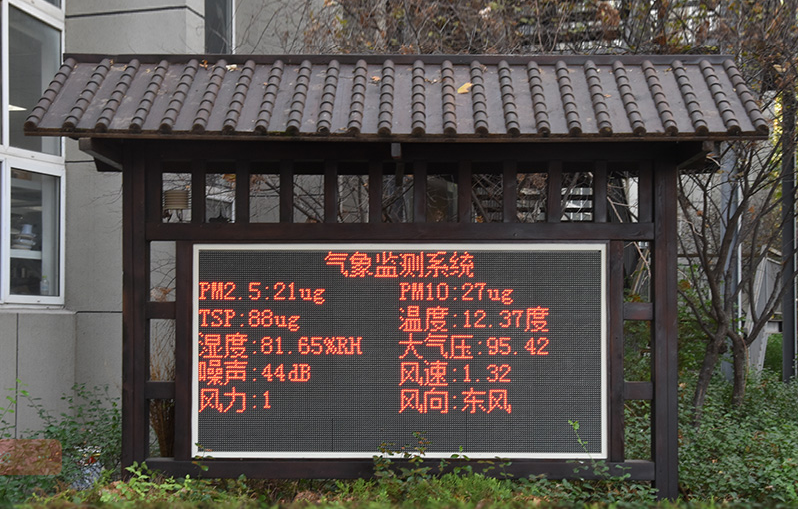
A negative oxygen ion sensor manufacturer should be evaluated by principle, stability, communication, protection and integration support. For online monitoring projects, NiuBoL's cylindrical structure, RS485 Modbus output and industrial protection features are more relevant than appearance alone.
Prev:Scenic Area Negative Oxygen Ion Monitoring System Solution for Parks and Eco-Tourism
Next:Negative Oxygen Ion Detector Manufacturer Guide: Online Monitoring Station or Handheld Meter?
Related recommendations
Sensors & Weather Stations Catalog
 Agriculture Sensors and Weather Stations Catalog-NiuBoL.pdf
Weather Stations Catalog-NiuBoL.pdf
Agriculture Sensors Catalog-NiuBoL.pdf
Water Quality Sensor Catalog-NiuBoL.pdf
Related products
 Combined air temperature and relative humidity sensor
 TDR Soil Moisture & Temperature Sensor for irrigation| RS485 |4-20mA| NBL-S-THR
 Soil pH sensor RS485 soil Testing instrument soil ph meter for agriculture |NBL-S-PH
 Wind Speed sensor Output Modbus/RS485/Analog/0-5V/4-20mA
 Tipping bucket rain gauge for weather monitoring auto rainfall sensor RS485/Outdoor/stainless steel
 Pyranometer Solar Radiation Sensor 4-20mA/RS485

Screenshot, WhatsApp to identify the QR code
WhatsApp number:+8615367865107
(Click on WhatsApp to copy and add friends)

