





— Blogs —
—Products—
 Consumer hotline +8618073152920
 WhatsApp:+8615367865107
Address:Room 102, District D, Houhu Industrial Park, Yuelu District, Changsha City, Hunan Province, China
Product knowledge
Time:2026-07-21 13:44:51 Popularity:225
An online pH meter should be specified when a project needs continuous pH data, alarm records or dosing feedback. A handheld meter can confirm a sample, but it cannot show what happens between inspections. For water treatment plants, aquaculture facilities, industrial discharge points and chemical dosing skids, that missing time is usually where the process risk sits.
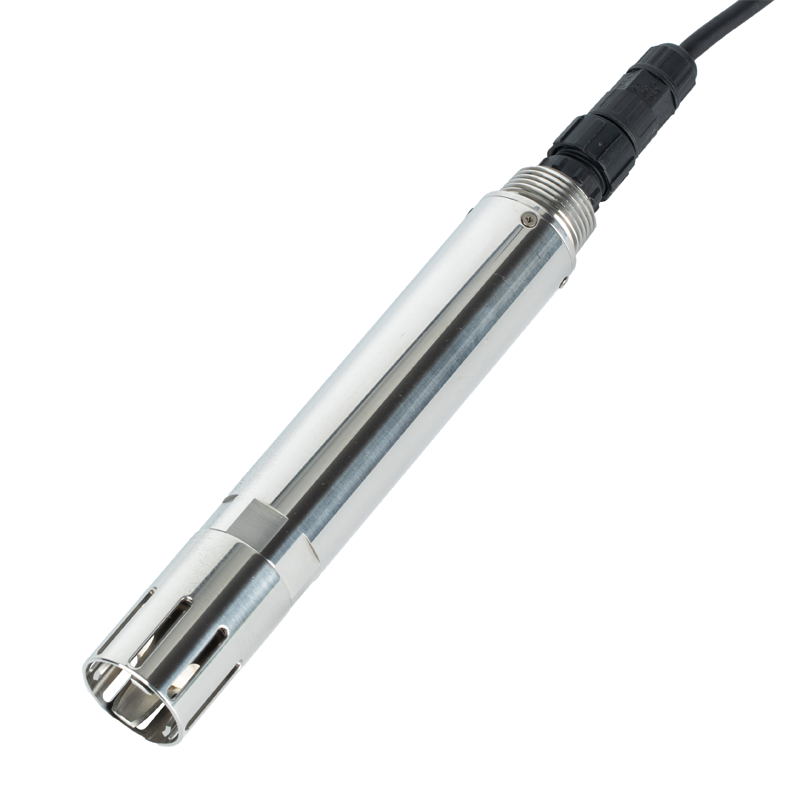
The first buying decision is not the pH range. It is the job of the measurement. A pH value used for chemical dosing needs faster response, a stable installation point and clear alarm logic. A pH value used only for reporting needs reliable records and easier maintenance. A remote monitoring point needs RS485 or gateway integration, waterproof cabling and access for periodic calibration.
| Parameter | Verified value or procurement note |
|---|---|
| Model | NBL-WQ-PH / NBL-WQ-PH-4A / NBL-WQ-PH-4S |
| Range and resolution | 0 to 14 pH, 0.01 pH |
| Accuracy | ±0.1 pH; temperature ±0.3°C |
| Temperature compensation | Automatic, NTC |
| Power and output | 12 to 24 VDC; RS485 Modbus RTU; optional 4-20 mA on 4-series models |
| Installation | 3/4 NPT immersion mounting; 5 m cable can be customized |
| Power consumption | 0.2 W at 12 V |
| Protection and material | IP68; POM, with 316L option on selected 4-series model |
The verified NiuBoL pH sensor range is 0 to 14 pH with 0.01 pH resolution. This is enough for most water projects, but pH accuracy on site also depends on electrode condition, temperature, calibration solution and whether the probe is installed in representative water. The manual-supported two-point calibration should be planned into the maintenance schedule, not treated as optional paperwork.
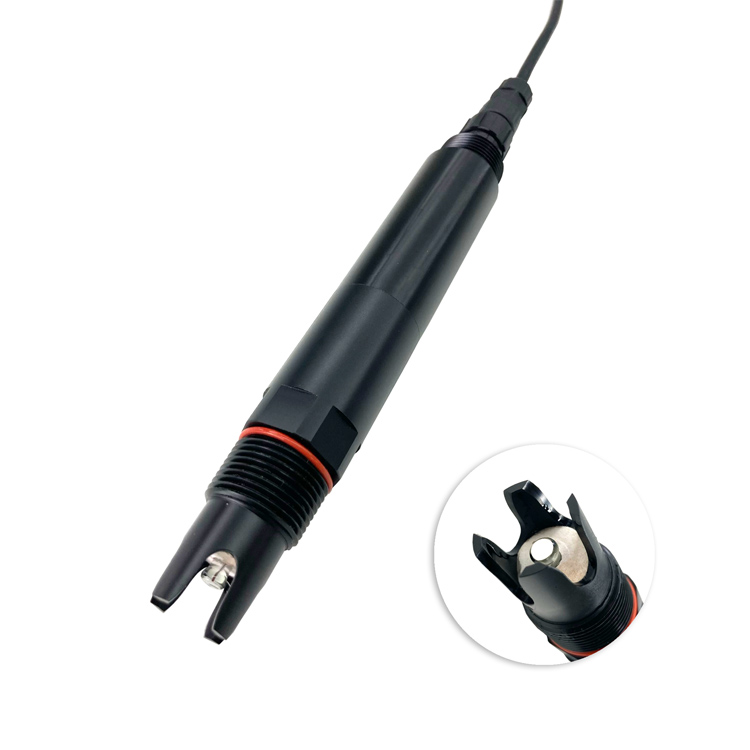
| Component | What it does | Buyer check |
|---|---|---|
| pH probe | Contacts the water and generates the measurement signal | Confirm range, material, cable length and mounting thread. |
| Controller or PLC | Displays, scales or controls the pH value | Confirm RS485 register map or 4-20 mA scaling. |
| Cabinet and power | Protects terminals and powers the instrument | Confirm 12 to 24 VDC supply and surge protection. |
| Platform or SCADA | Stores data, alarms and trend records | Confirm tag names, units and alarm responsibility. |
RS485 Modbus RTU is the better choice when multiple water quality sensors share a data logger, RTU or IoT gateway. It carries digital values and allows device addressing. The optional 4-20 mA output on NiuBoL 4-series models is practical for a legacy PLC analog input. The RFQ should say which host system will read the signal; otherwise the supplier cannot select the most efficient interface.
Most failures are not caused by the pH range. They come from installation at a dead corner, air exposure, sediment on the glass membrane, no calibration access, wrong Modbus address, or a dosing point placed too close to the probe. A good drawing should show the tank, pipe or channel, water movement, cable route and maintenance access.
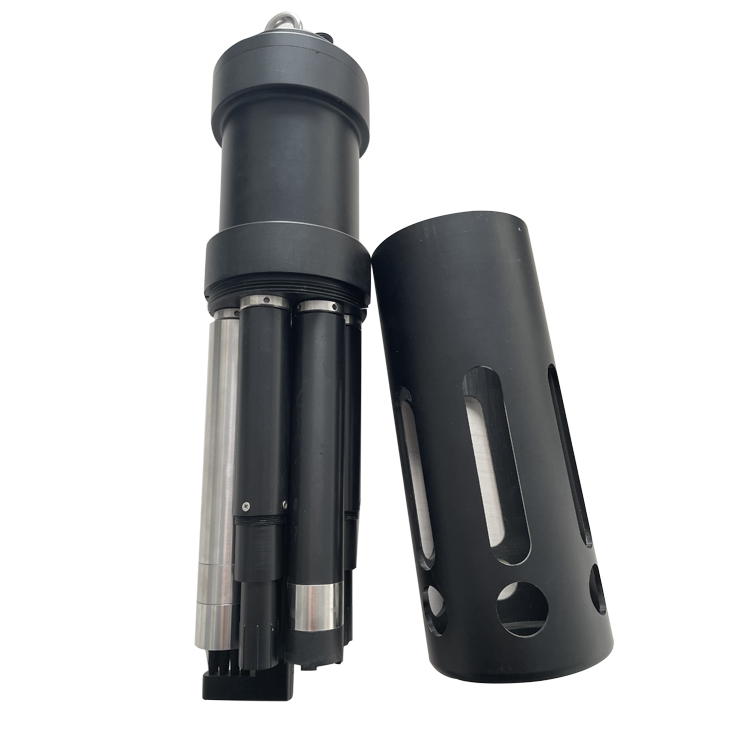
For an online pH meter, send the water type, expected range, temperature, pressure, installation photos, cable length, output requirement, controller or gateway model, quantity and destination country. State whether pH is used for control, warning, regulatory records or trend analysis.
For contractors, also state who supplies the cabinet, bracket, sampling line, power supply, surge protection, SIM card or platform account. Missing scope items usually appear during commissioning, when they are more expensive to solve.
If the operator only checks water once a week and no alarm or data record is needed, a portable pH meter may be enough. If the site risk is oxygen depletion, high ammonia or salinity drift, an online pH meter alone is not enough. In those projects, pH should be ordered with DO, ammonia nitrogen, conductivity or a multiparameter probe.
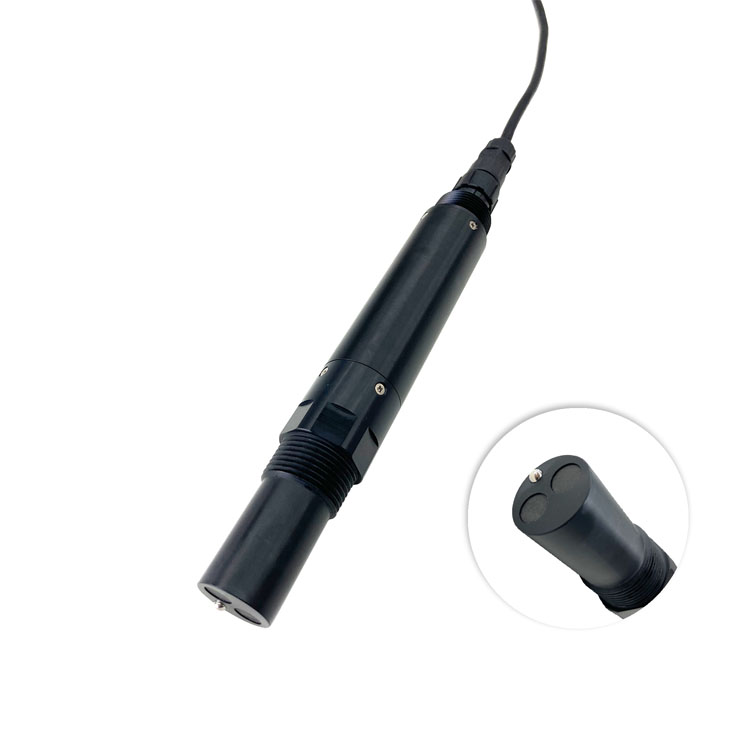
A practical commissioning sequence starts on the bench, not at the tank. Power the sensor, confirm Modbus communication, record the default address, then check response in buffer solution. After the probe is installed, compare the online value with a freshly calibrated portable meter or buffer check. Only after this baseline is recorded should the PLC or platform alarm be enabled.
For dosing control, the commissioning team should also check process delay. If acid or alkali is injected upstream, the pH sensor must be far enough from the injection point to measure mixed water, but not so far that the control loop reacts too late. Many unstable dosing systems are caused by sensor position, not sensor accuracy.
For distributors, the simplest explanation is that an online pH meter is chosen when the customer needs a permanent measurement point. If the customer only wants occasional testing, a portable meter is enough. If the customer asks for alarms, SCADA, PLC control, historical records or unattended operation, the online sensor package becomes the correct discussion.
| Buyer question | Practical answer | Why it matters |
|---|---|---|
| Do I need a display? | Use a local controller when operators need site reading. | Remote-only data may not help field staff. |
| Can I use the existing PLC? | Yes if input type and register map match. | Avoids buying duplicate controllers. |
| How many points? | One control point needs one representative measurement. | One probe cannot represent unmixed tanks. |
| What should be stocked? | Buffer solution, cleaning tools and spare electrode plan. | Maintenance determines data stability. |
The final project file should include sensor model, address, communication setting, pH buffer response, installation photos, cable route, alarm setpoints and calibration date. This documentation is useful for the owner and for future replacement. Without it, a simple sensor replacement can become a field debugging job.
A good online pH meter purchase therefore includes both hardware and operating assumptions. The more clearly those assumptions are written, the easier it is for NiuBoL to recommend a sensor, output and accessory scope that fits the project.
An online pH meter is suitable for continuous water treatment control, neutralization tanks, aquaculture systems, wastewater outlets, remote stations and dosing skids where pH changes must be seen between manual inspections. It is not the right first purchase when the operator only needs occasional laboratory confirmation or when the project has no plan for calibration, cleaning or data review.
For aggressive wastewater, sticky sludge or strong chemical shock, the buyer should describe the water honestly. A standard pH probe may still work, but the installation and maintenance plan must be stricter. If the expected cleaning workload is high, the purchase should include easier removal, spare electrode planning and a realistic service interval.
The purchase order should not only say online pH meter. It should state model, range, output, cable length, mounting thread, power supply, controller or gateway requirement, calibration supplies, packing, documents and delivery term. For projects with multiple points, include a point list so every sensor can be matched with location, tag name and signal type.
This level of detail protects both sides. The buyer can compare quotations correctly, and NiuBoL can avoid supplying a sensor that fits the keyword but not the field system.
A typical upgrade is a wastewater neutralization tank where the owner already has a PLC but no reliable online pH record. In this case, the buyer should not only order a probe. The package should include probe, mounting, cable, PLC communication settings, alarm values and a calibration routine. If the dosing pump reacts faster than the mixed water reaches the probe, the control loop will swing even when the sensor is correct.
For this type of project, NiuBoL can help confirm whether RS485 Modbus RTU or optional 4-20 mA is more practical. The decision depends on the PLC input card, number of sensors and whether historical records are stored locally or in a platform.
Before releasing the purchase order, the buyer should confirm five items in writing: measured parameter, expected range, installation point, output signal and maintenance owner. These five items prevent most misunderstandings between purchasing, engineering, site operators and the supplier. If any item is unknown, the RFQ should say so clearly instead of hiding the uncertainty.
The quotation should also separate sensor body, cable, controller or data logger, mounting accessory, calibration or verification materials, communication gateway, packing and documents. This makes it possible to compare suppliers by actual scope. A lower price is not useful if the buyer later discovers that the controller, flow cell, bracket or register map was not included.
Keep the user manual, wiring definition, Modbus register map, calibration record, installation photos, alarm settings, packing list and spare-part suggestion in one folder. For distributors and contractors, this file is also after-sales protection. When the end user asks for help months later, the service team can see what was supplied, how it was installed and what assumptions were used during commissioning.
A: Choose online measurement when the process needs continuous records, alarm output, remote monitoring or dosing feedback. Keep a portable meter for verification and field checks.
A: Yes. The verified pH sensors support RS485 Modbus RTU, and selected 4-series models can provide 4-20 mA output for analog PLC input.
A: The verified range is 0 to 14 pH with 0.01 pH resolution and ±0.1 pH accuracy under proper calibration and installation conditions.
A: Show the tank, pipe or channel, water movement, probe position, cable route, cabinet position, power supply and cleaning access.
A: pH electrode response changes with temperature. NiuBoL pH sensors use automatic temperature compensation, but the temperature channel should still be checked during commissioning.
A: Neither is always better. Use 4-20 mA for simple analog PLC input and RS485 Modbus RTU for digital systems, multiple sensors or IoT gateway projects.
A: Dirty electrodes, air exposure, poor grounding, chemical dosing turbulence, wrong calibration and non-representative mounting points are common causes.
A: Probe model, output type, cable length, controller, cabinet, mounting accessories, calibration supplies, quantity and documentation affect price.
A: Send water type, expected pH range, temperature, pressure, installation method, output preference, controller model and point quantity.
An online pH meter is a project instrument, not only a probe. It should be selected by measurement purpose, signal interface, mounting condition, calibration access and maintenance responsibility. NiuBoL pH sensors give buyers verified RS485 Modbus RTU, optional 4-20 mA on 4-series models and IP68 protection for continuous water monitoring projects.
Prev:Water Quality Monitoring Sensor Integration with PLC, SCADA and IoT Gateways
Next:pH Meter for Aquaculture: Pond, Tank and RAS Monitoring Setup
Related recommendations
Sensors & Weather Stations Catalog
 Agriculture Sensors and Weather Stations Catalog-NiuBoL.pdf
Weather Stations Catalog-NiuBoL.pdf
Agriculture Sensors Catalog-NiuBoL.pdf
Water Quality Sensor Catalog-NiuBoL.pdf
Related products
 Combined air temperature and relative humidity sensor
 TDR Soil Moisture & Temperature Sensor for irrigation| RS485 |4-20mA| NBL-S-THR
 Soil pH sensor RS485 soil Testing instrument soil ph meter for agriculture |NBL-S-PH
 Wind Speed sensor Output Modbus/RS485/Analog/0-5V/4-20mA
 Tipping bucket rain gauge for weather monitoring auto rainfall sensor RS485/Outdoor/stainless steel
 Pyranometer Solar Radiation Sensor 4-20mA/RS485

Screenshot, WhatsApp to identify the QR code
WhatsApp number:+8615367865107
(Click on WhatsApp to copy and add friends)

