





— Blogs —
—Products—
 Consumer hotline +8618073152920
 WhatsApp:+8615367865107
Address:Room 102, District D, Houhu Industrial Park, Yuelu District, Changsha City, Hunan Province, China
Product knowledge
Time:2026-07-21 13:44:53 Popularity:239
A pH meter for aquaculture is useful only when the reading leads to a farm decision. In a pond, tank or recirculating aquaculture system, pH affects fish stress, ammonia toxicity and the interpretation of other water quality data. A single manual reading can be useful, but it rarely explains what happens during feeding, algae activity, aeration changes or overnight oxygen drops.
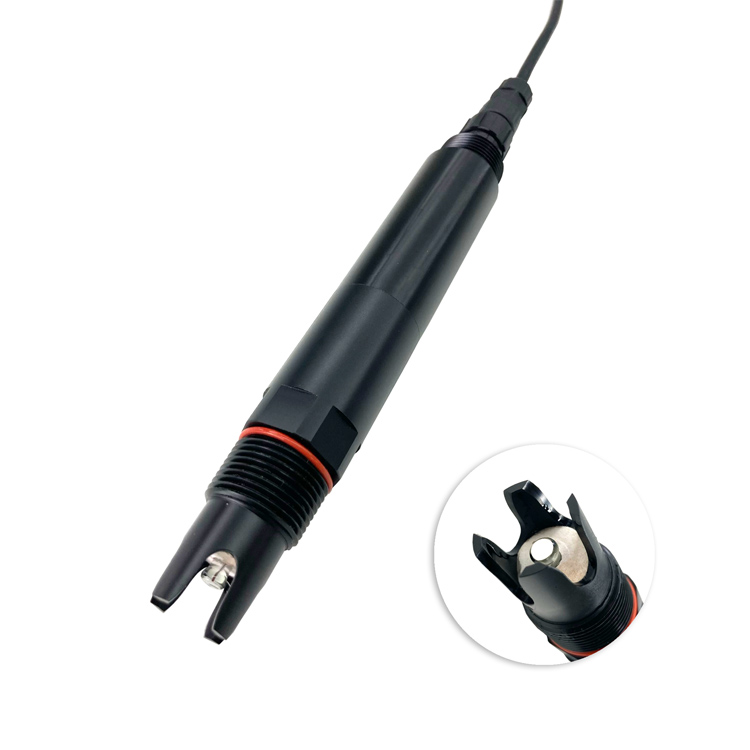
Earthen ponds, indoor tanks and RAS units do not need the same monitoring setup. A pond may need fewer points but stronger weather protection and longer cable runs. A RAS project may need tighter alarms because water volume is smaller and failures move quickly. Before selecting a pH sensor, map the ponds or tanks, water exchange, aeration and feeding points.
For aquaculture, pH is rarely a standalone decision. DO shows oxygen risk. Temperature changes fish metabolism and sensor behavior. Ammonia nitrogen becomes more dangerous as pH and temperature rise. A farm that buys only a smart pH meter may miss the parameter that explains the actual fish stress event.
| Farm condition | Recommended pH approach | Related parameter |
|---|---|---|
| Large pond | Online pH at representative point plus portable verification | DO and temperature |
| High-density tank | Continuous pH monitoring with alarm | DO, temperature and ammonia |
| RAS system | Online pH integrated with data logger or PLC | DO, ORP, ammonia and conductivity |
| Low-risk inspection | Portable pH level tester for water | Periodic DO or ammonia test |
| Parameter | Verified value or procurement note |
|---|---|
| Model | NBL-WQ-PH / NBL-WQ-PH-4A / NBL-WQ-PH-4S |
| Range and resolution | 0 to 14 pH, 0.01 pH |
| Accuracy | ±0.1 pH; temperature ±0.3°C |
| Temperature compensation | Automatic, NTC |
| Power and output | 12 to 24 VDC; RS485 Modbus RTU; optional 4-20 mA on 4-series models |
| Installation | 3/4 NPT immersion mounting; 5 m cable can be customized |
| Power consumption | 0.2 W at 12 V |
| Protection and material | IP68; POM, with 316L option on selected 4-series model |
The 0 to 14 pH range covers aquaculture water, but the practical questions are cable length, waterproof joints, cleaning access and data integration. The IP68 protection is useful for immersion work, while RS485 Modbus RTU supports data logger and IoT gateway projects. If an existing panel expects analog input, the 4-series model with optional 4-20 mA should be considered.
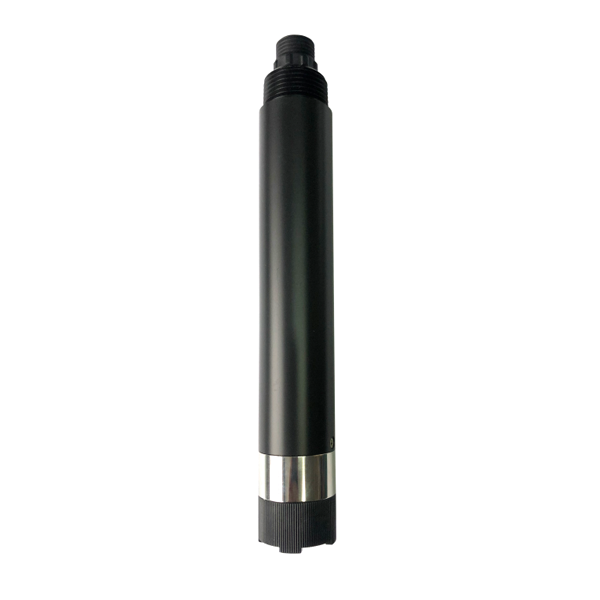
Do not copy alarm values without farm context. Species, stocking density, alkalinity, water exchange and feeding plan all affect acceptable pH behavior. A useful alarm matrix should state warning value, emergency value, responsible operator and first action. Without that matrix, the system only produces numbers.
Cables should be routed away from bite damage, carts, pumps and floating debris. The sensor should be installed where water is mixed but not where bubbles or feed residues collect heavily. Operators must be able to remove the probe for cleaning and buffer calibration without draining a tank or dismantling the system.
For a pH meter for aquaculture, send the water type, expected range, temperature, pressure, installation photos, cable length, output requirement, controller or gateway model, quantity and destination country. Include pond count, tank volume, stocking density, aeration method and whether data must be uploaded to a platform.
For contractors, also state who supplies the cabinet, bracket, sampling line, power supply, surge protection, SIM card or platform account. Missing scope items usually appear during commissioning, when they are more expensive to solve.
A small farm with manual checks may not need a full station on every pond. Start with the highest-risk pond, nursery tank or RAS loop, then expand after seeing maintenance workload. For distributors, this phased approach is easier to support than selling many points that the farm cannot maintain.
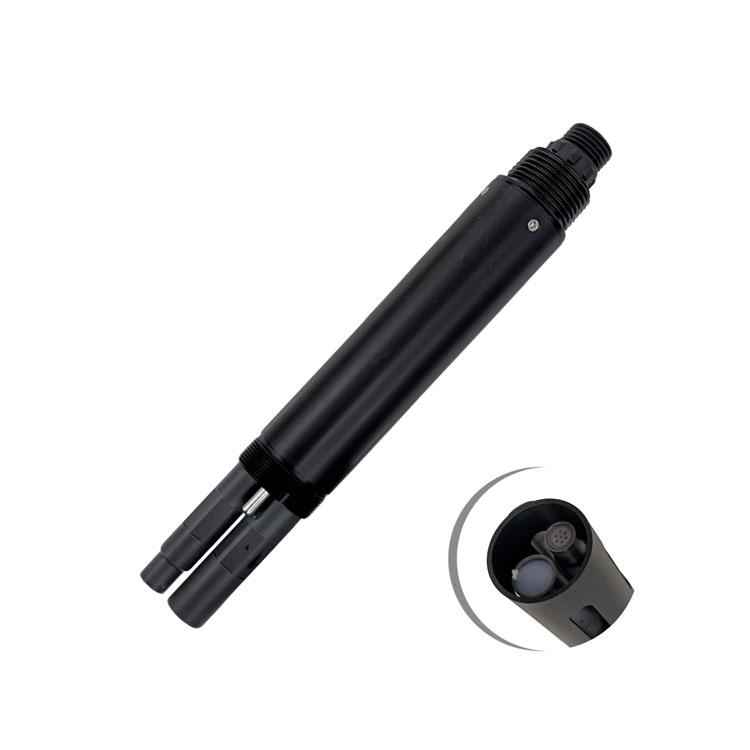
Farm staff do not need another screen that no one reads. They need a short rule for what action follows a pH change. For example, a morning low pH trend may be reviewed together with DO and alkalinity, while an afternoon high pH trend may trigger inspection of algae activity and ammonia risk. The article or quotation should help the buyer build those rules.
In RAS projects, pH also affects biofilter performance and ammonia interpretation. A small delay in responding to pH drift can affect a high-value tank faster than in a large pond. That is why RAS buyers often need continuous pH data even when pond buyers can begin with fewer points.
| Configuration | Monitoring approach | Procurement comment |
|---|---|---|
| One or two low-density ponds | Portable pH plus one online reference point | Start with a manageable maintenance load. |
| Multiple commercial ponds | Online pH at representative high-risk ponds | Expand after seasonal trend review. |
| Indoor tanks | Online pH with DO and temperature at critical loops | Alarm response must be defined. |
| RAS | Continuous pH, DO, temperature and ammonia context | Data should connect to platform or PLC. |
Aquaculture water usually contains biofilm, feed particles, algae and suspended solids. The pH probe should be placed where it can be removed and cleaned without stressing stock or stopping the system. If the sensor is installed at a difficult location, staff will delay maintenance and the data will gradually lose value.
Buyers should also decide who owns calibration work. In some farms, the integrator performs scheduled service. In others, farm staff must handle cleaning and buffer checks. A quotation that includes only the sensor but ignores the maintenance role will create complaints later.
The most useful details are water depth, pond or tank volume, species, stocking density, aeration method, power condition, whether mobile signal is available and whether the farm already uses a data platform. These details let NiuBoL decide whether to suggest one pH point, a combined pH and DO setup, or a multiparameter package.
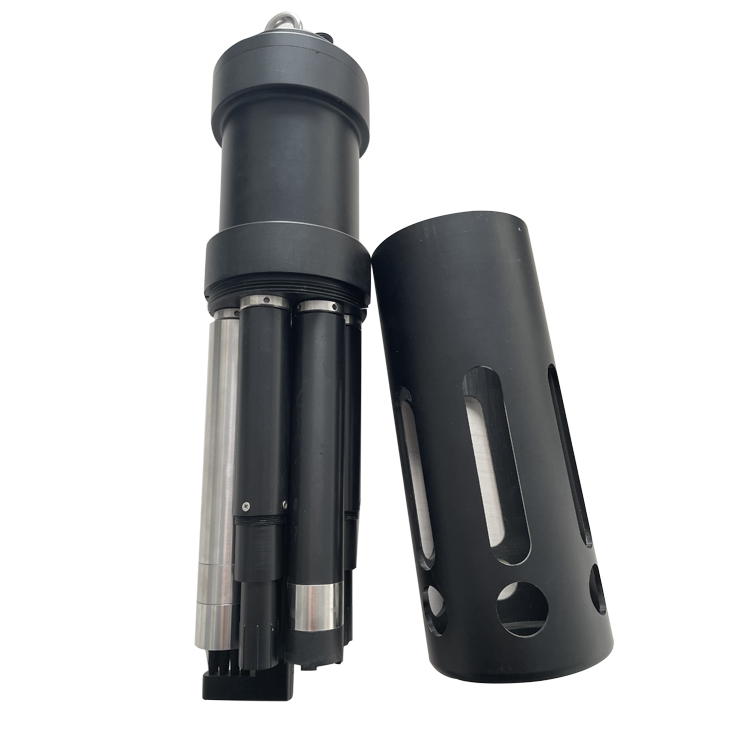
A farm does not need to instrument every point on day one. A practical first stage is to select the highest-risk pond, nursery tank, inlet or RAS loop and monitor it through one operating cycle. After the farm sees cleaning workload, alarm usefulness and data variation, the second stage can expand to more ponds or add ammonia nitrogen and conductivity.
This staged method also improves purchasing accuracy. Instead of buying the same package for every pond, the buyer can separate high-risk, medium-risk and reference locations. NiuBoL can then recommend different cable lengths, mounting methods or sensor combinations without forcing one configuration onto the whole farm.
The handover package should include sensor location, normal pH band, warning threshold, emergency threshold, cleaning method, calibration record, platform login and spare-part suggestion. The operator should know what to do when pH changes, not only how to read the number.
If the farm has staff turnover, this handover file becomes more important than the first training session. It lets the next operator understand why the sensor was placed there and how the alarm values were chosen.
A farm with several grow-out ponds and one nursery tank should not copy the same point design everywhere. The nursery tank usually has higher risk because fish density is higher and water volume is smaller. A practical configuration may put continuous pH and DO in the nursery tank, then use fewer online points and portable verification across large ponds.
This kind of staged design is easier for farm staff to maintain. It also gives the owner evidence before expanding to every pond. NiuBoL selection support should therefore start with pond count, tank volume, species and available staff, not only sensor price.
Before releasing the purchase order, the buyer should confirm five items in writing: measured parameter, expected range, installation point, output signal and maintenance owner. These five items prevent most misunderstandings between purchasing, engineering, site operators and the supplier. If any item is unknown, the RFQ should say so clearly instead of hiding the uncertainty.
The quotation should also separate sensor body, cable, controller or data logger, mounting accessory, calibration or verification materials, communication gateway, packing and documents. This makes it possible to compare suppliers by actual scope. A lower price is not useful if the buyer later discovers that the controller, flow cell, bracket or register map was not included.
Keep the user manual, wiring definition, Modbus register map, calibration record, installation photos, alarm settings, packing list and spare-part suggestion in one folder. For distributors and contractors, this file is also after-sales protection. When the end user asks for help months later, the service team can see what was supplied, how it was installed and what assumptions were used during commissioning.
A: Often DO is the first safety parameter. pH is important because it affects ammonia risk and process interpretation, so many farms monitor pH together with DO and temperature.
A: Only if the ponds share water and the sampling point is representative. Separate ponds normally need separate measurement or a clear sampling routine.
A: The verified NiuBoL pH range is 0 to 14 pH with 0.01 pH resolution and ±0.1 pH accuracy under correct calibration.
A: RS485 Modbus RTU is useful when pH data must be logged, uploaded or combined with DO, ammonia and temperature in one platform.
A: Set the interval by algae, biofilm and feed residue. High-density systems usually need more frequent inspection than clean water points.
A: Yes, but only after the sampling point, dosing location, delay time and alarm limits are tested. Poor placement can cause over-correction.
A: Sensor model, cable length, mounting method, controller or gateway, power supply, communication method, calibration supplies and spare parts should be listed.
A: Use it when pH, DO, temperature, conductivity or ammonia are needed at the same point and fewer cables are preferred.
A: Send pond or tank count, water depth, aeration layout, power condition, platform requirement, expected pH range and maintenance access photos.
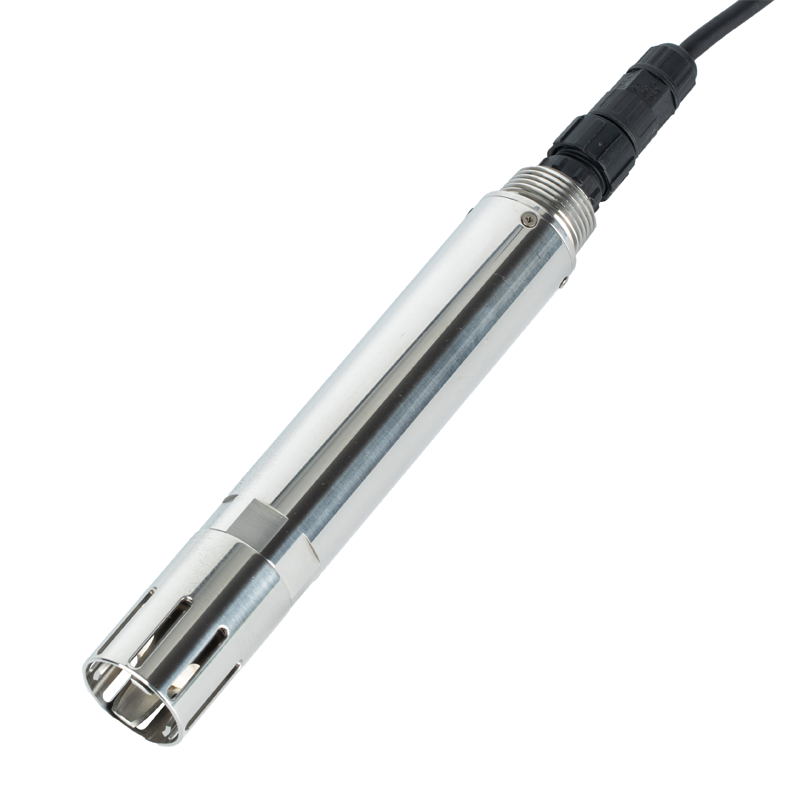
A pH meter for aquaculture should be chosen by farm risk, not by display style. Ponds, tanks and RAS systems need different monitoring density, alarm rules and maintenance access. NiuBoL online pH sensors can support farm data logging through RS485 Modbus RTU and can be combined with DO, ammonia nitrogen and multiparameter packages when pH alone is not enough.
Prev:Online pH Meter Buying Guide for Continuous Water Monitoring
Next:Dissolved Oxygen Probe Maintenance: Cleaning, Calibration and Troubleshooting
Related recommendations
Sensors & Weather Stations Catalog
 Agriculture Sensors and Weather Stations Catalog-NiuBoL.pdf
Weather Stations Catalog-NiuBoL.pdf
Agriculture Sensors Catalog-NiuBoL.pdf
Water Quality Sensor Catalog-NiuBoL.pdf
Related products
 Combined air temperature and relative humidity sensor
 TDR Soil Moisture & Temperature Sensor for irrigation| RS485 |4-20mA| NBL-S-THR
 Soil pH sensor RS485 soil Testing instrument soil ph meter for agriculture |NBL-S-PH
 Wind Speed sensor Output Modbus/RS485/Analog/0-5V/4-20mA
 Tipping bucket rain gauge for weather monitoring auto rainfall sensor RS485/Outdoor/stainless steel
 Pyranometer Solar Radiation Sensor 4-20mA/RS485

Screenshot, WhatsApp to identify the QR code
WhatsApp number:+8615367865107
(Click on WhatsApp to copy and add friends)

