





— Blogs —
—Products—
 Consumer hotline +8618073152920
WhatsApp:+8615367865107
Address:Room 102, District D, Houhu Industrial Park, Yuelu District, Changsha City, Hunan Province, China
Product knowledge
Time:2026-08-11 09:00:00 Popularity:248
Quick Answer: A professional weather station should be evaluated by the specified variables, accuracy definitions and complete installed measurement chain. A larger parameter count, finer display resolution or IP65 housing does not establish better measurement accuracy. Read each model's specification literally, including whether an error term is based on full scale or the measured value.
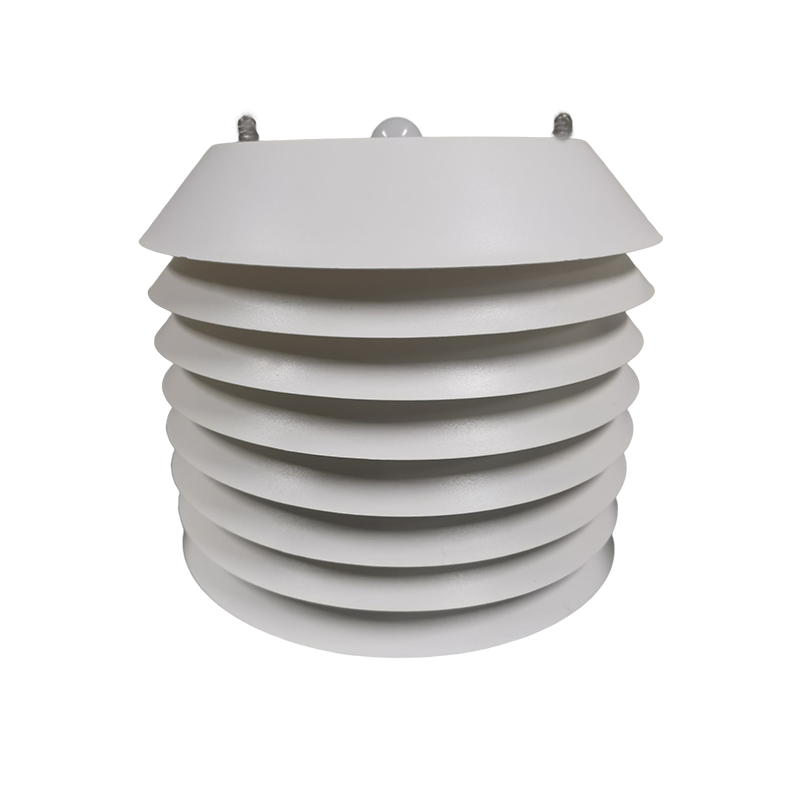
A buyer comparing weather station offers can receive two five-in-one heads with different purposes. The NiuBoL NBL-W-THPLC measures temperature, humidity, pressure, illuminance and CO2. It does not include wind. The NBL-W-51MUWS measures wind speed, wind direction, temperature, humidity and pressure instead.
Write the required variables by name before comparing specifications. A CO2 environmental head may be appropriate for a greenhouse climate point, while an ultrasonic wind head serves a different outdoor observation. Neither becomes the other instrument because both have five channels.
The same principle applies to higher channel counts. Rainfall, particulate matter, noise, solar irradiance and illuminance answer different questions. Extra channels should not obscure whether the wind or temperature measurement meets the actual requirement.
The NBL-W-51MUWS five-in-one ultrasonic head lists wind speed accuracy as +/-0.5 m/s plus 2% FS over a 0-40 m/s range. The NBL-W-81GUWS eight-in-one head lists +/-0.3 m/s plus 3% FS over 0-60 m/s. Full scale is not the current wind speed.
| Model | Published wind specification | Literal full-scale calculation |
|---|---|---|
| NBL-W-51MUWS | 0-40 m/s; +/-(0.5 m/s + 2% FS) | 0.5 + 0.02 x 40 = 1.3 m/s |
| NBL-W-81GUWS | 0-60 m/s; +/-(0.3 m/s + 3% FS) | 0.3 + 0.03 x 60 = 2.1 m/s |
These calculations interpret the listed expressions; they are not results from a calibration test or a description of the error observed at every moment. If a project requires a tighter uncertainty at a particular wind band, request the applicable performance evidence and a suitable configuration. Do not silently change FS to percent of reading to make an offer appear to qualify.
Both models list 0.01 m/s wind-speed resolution. That output increment does not replace the accuracy statement. A display can change by one hundredth of a meter per second without proving that such a small difference is physically meaningful.
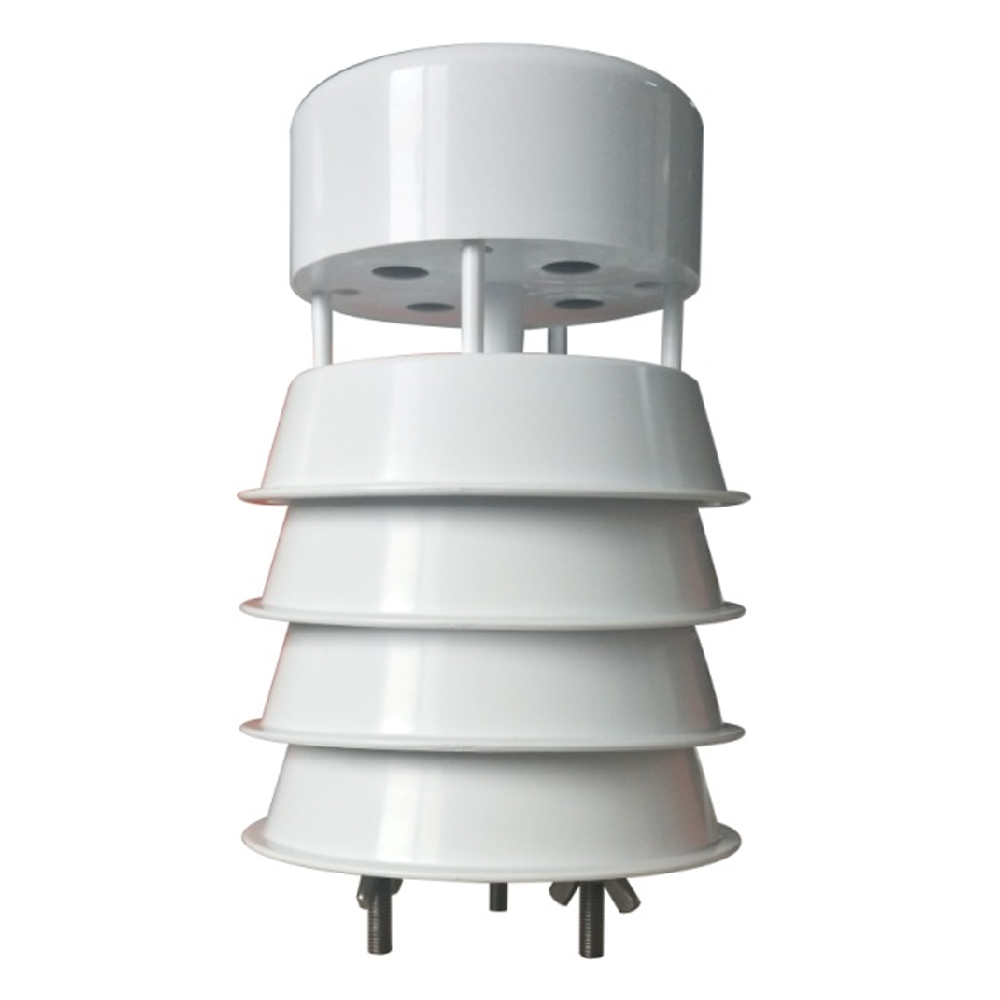
| Head | Measurements relevant to selection | Supply, consumption and protection |
|---|---|---|
| NBL-W-51MUWS | Five core weather variables; no integrated rain channel | 12-24 VDC; 0.3 W; IP65; standard 2.5 m cable |
| NBL-W-61MUWS | Five core variables plus piezoelectric rainfall; wind 0-40 m/s | 12-24 VDC; about 0.35 W; IP65; standard 2.5 m cable |
| NBL-W-81GUWS | Five core variables plus PM2.5, PM10 and environmental noise; wind 0-60 m/s | 9-24 VDC; about 1 W with particulate sensor; IP65 |
All three provide RS485 Modbus RTU. The 51MUWS operating temperature is -40 to 80 C; the 61MUWS lists -20 to 50 C. Do not use the 61MUWS temperature-channel range as the operating limit for its entire assembly. Confirm the delivered connector, cable jacket and length for the proposed route.
A low sensor-head wattage does not size the complete station supply. A data logger, communications terminal, heated equipment or other instruments add loads. Likewise, IP65 addresses ingress protection; it is not proof of calibration, measurement-method approval or suitability for every icing and condensation condition.
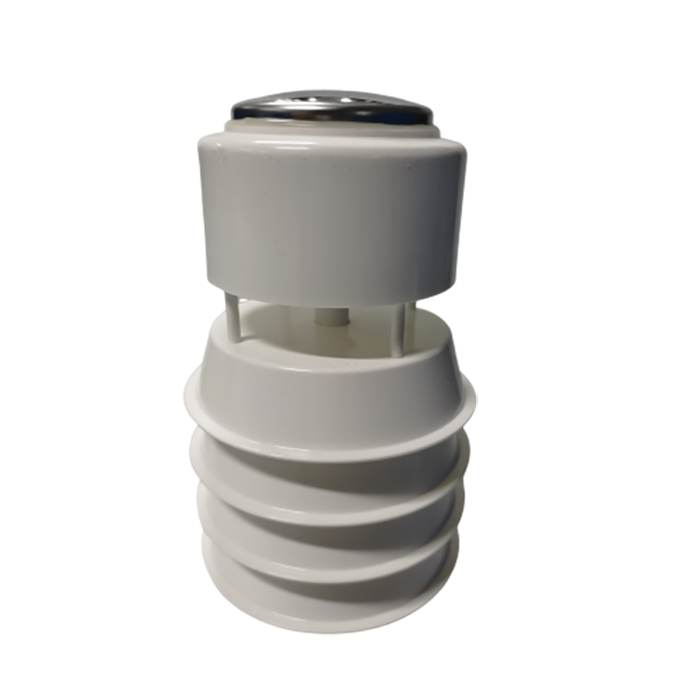
The NBL-W-71GUWS combines six weather measurements with either solar irradiance or illuminance. Irradiance in W/m2 and illuminance in Lux are alternative configurations, not interchangeable units. If crop research requires PAR or PPFD, do not accept a Lux channel under a renamed dashboard field.
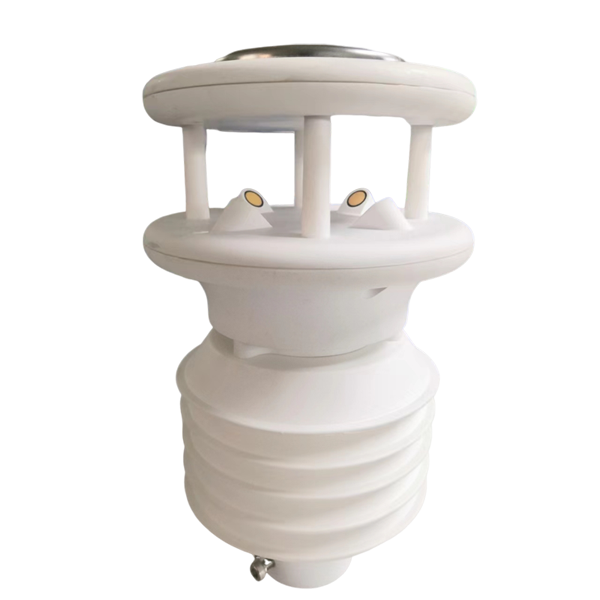
For an environmental station, particulate and noise channels can add observations, but a count of eight parameters does not establish regulatory particulate equivalence or a particular acoustic weighting. State any required approval, calibration or acoustic indicator explicitly and obtain evidence for the proposed configuration.
Wind measurement needs representative airflow; a nearby roof edge, wall or tree can change the observation. Temperature and humidity need appropriate exposure rather than heat from a convenient mounting surface. A sensor meeting its bench specification cannot correct a poorly chosen site through Modbus settings.
Include the intended mounting position and height in the comparison. Then identify what the receiver stores: instantaneous observations, averages and maxima are different records. The weather station interval guide separates sensor update, acquisition, recording and upload so a frequently refreshed screen is not mistaken for a complete history.
For acceptance, verify the delivered model and channel list, inspect exposure, compare values with an appropriate reference under comparable conditions, and check the final stored units and timestamps. Where wind information feeds an operational alarm, verify the complete approved alarm arrangement separately. A weather head alone is not a certified safety system.
Not necessarily. Compare the actual range and complete accuracy expression. More channels describe additional functions, not a universal improvement in each measurement.
No. Resolution is the output increment. Use the accuracy statement and applicable test conditions to assess the requirement, then consider installation and acquisition effects.
It is an ingress-protection rating for the stated assembly. It does not establish measurement accuracy, calibration traceability, regulatory acceptance or unlimited environmental suitability.
No. They describe different quantities. Select the required channel and keep its actual unit in the logger and platform. A display conversion does not create a different physical sensor.
Provide the required variables, operating bands, accuracy definitions, exposure and receiver interface. Separate any calibration evidence, special environmental requirements and installed-system work from a standard sensing-head supply.
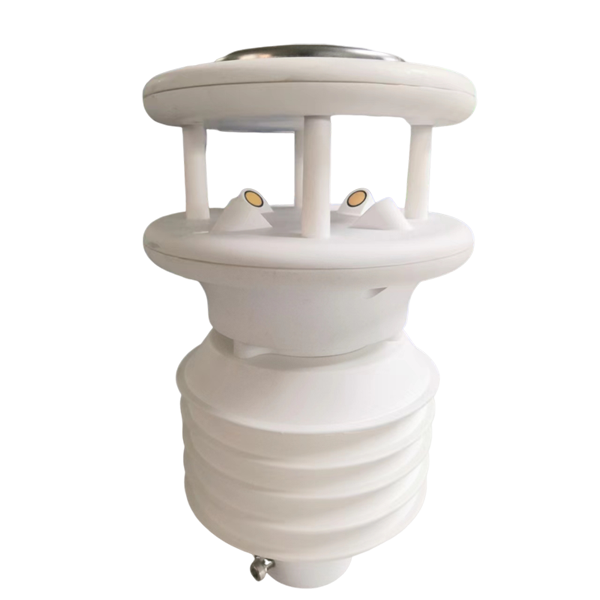
A professional weather station comparison is more useful when channel names, full-scale error terms and operating limits are explicit. NiuBoL can review the required measurement duty against the proposed head. Request a model-specific offer and the evidence relevant to the project's acceptance criteria, rather than relying on a professional label or parameter count.
Prev:Ammonia Nitrogen Sensor After Storage: Check Readiness Before Reuse
Next:Multiparameter Water Quality Meter: Verify Each Channel Independently
Related recommendations
Sensors & Weather Stations Catalog
 Agriculture Sensors and Weather Stations Catalog-NiuBoL.pdf
Weather Stations Catalog-NiuBoL.pdf
Agriculture Sensors Catalog-NiuBoL.pdf
Water Quality Sensor Catalog-NiuBoL.pdf
Related products
 Combined air temperature and relative humidity sensor
 TDR Soil Moisture & Temperature Sensor for irrigation| RS485 |4-20mA| NBL-S-THR
 Soil pH sensor RS485 soil Testing instrument soil ph meter for agriculture |NBL-S-PH
 Wind Speed sensor Output Modbus/RS485/Analog/0-5V/4-20mA
 Tipping bucket rain gauge for weather monitoring auto rainfall sensor RS485/Outdoor/stainless steel
 Pyranometer Solar Radiation Sensor 4-20mA/RS485


Screenshot, WhatsApp to identify the QR code
WhatsApp number:+8615367865107
(Click on WhatsApp to copy and add friends)

