





— Blogs —
—Products—
 Consumer hotline +8618073152920
WhatsApp:+8615367865107
Address:Room 102, District D, Houhu Industrial Park, Yuelu District, Changsha City, Hunan Province, China
Product knowledge
Time:2026-08-12 09:02:00 Popularity:259
Quick Answer: A professional smart weather station can support a local PLC without relying on an internet connection when the selected sensor, power supply and local communication path are designed for that purpose. Cloud display, local recording and control outputs are separate functions. Specify and test which functions must remain available during a network outage.
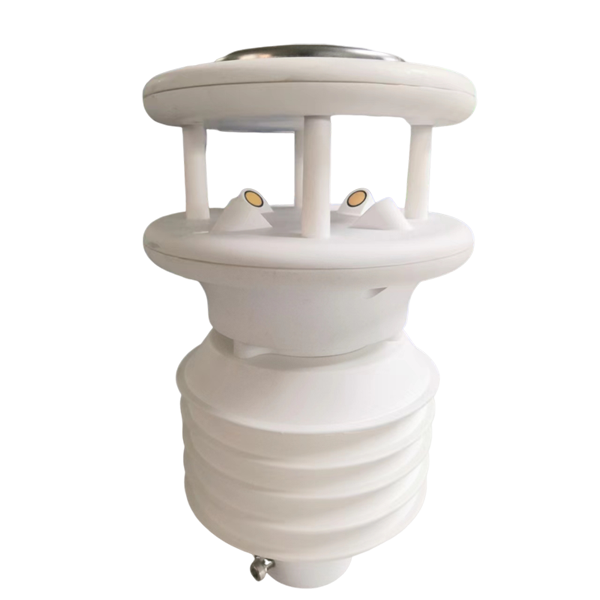
A professional smart weather station may supply weather records to a remote office while also providing data to an on-site controller. Those two uses should not be treated as the same service. Losing internet access can interrupt remote viewing without stopping a wired local measurement; a failed field supply can stop both.
Define the required local behavior first. For example, a site may need current wind data available to a PLC while an operator loses the remote dashboard. Another site may need only observations stored for later review. These requirements lead to different equipment and tests. A weather sensor's RS485 output alone does not provide a complete alarm or control system.
| Path or function | Equipment to identify | Question during an internet-only interruption |
|---|---|---|
| Sensor acquisition | Selected sensing head, supply and compatible RS485 receiver | Does the receiver still obtain fresh values? |
| Local decision | PLC or controller with configured validity and operating logic | Does it use a valid current observation rather than a retained value? |
| Local recording | Logger or controller with specified storage | Are required observations retained with acquisition timestamps? |
| Remote display and notification | Gateway, network and selected service | Which remote functions stop, and how is that interruption shown? |
If the PLC already polls the weather sensor, agree how the gateway receives its copy of the data. Do not place two unsynchronized Modbus RTU masters on one bus and assume both can poll freely. A PLC data handoff, a supported gateway architecture or properly separated interfaces must be selected for the actual equipment.
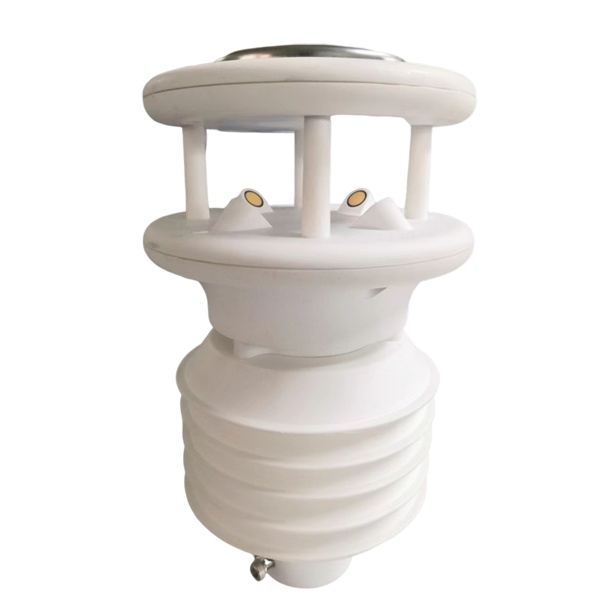
The NBL-W-81GUWS supplies weather, particulate and noise measurements but not rainfall. The 10-in-1 head adds rainfall and a selected solar-radiation or illuminance channel. Its light options are alternatives, not two simultaneously included parameters. Extra channels do not establish whether a controller can operate locally.
| Head-level specification | NBL-W-81GUWS | NBL-W-10GUWS |
|---|---|---|
| Wind speed range | 0-60 m/s | 0-60 m/s |
| Wind accuracy expression | +/-(0.3 m/s + 3% FS) | +/-(0.3 m/s + 3% FS) |
| Air temperature / RH | -40 to 80 C; +/-0.5 C / 0-100% RH; +/-5% RH | -40 to 80 C; +/-0.5 C / 0-100% RH; +/-5% RH |
| Supply / communication | 9-24 VDC / RS485 Modbus RTU | 9-24 VDC / RS485 Modbus RTU |
| Average head consumption | Approximately 1 W with particulate sensor | 0.4 W without PM sensor; approximately 1 W with PM sensor |
| Protection / operating humidity | IP65 / 0-95% RH | IP65 / 0-95% RH |
These are sensing-head specifications, not station autonomy or control-performance guarantees. Include actual PLC, logger, gateway and modem loads in the supply design. Specify cable length and jacket for the delivered assembly; do not infer a universal station cable from the head's protocol.
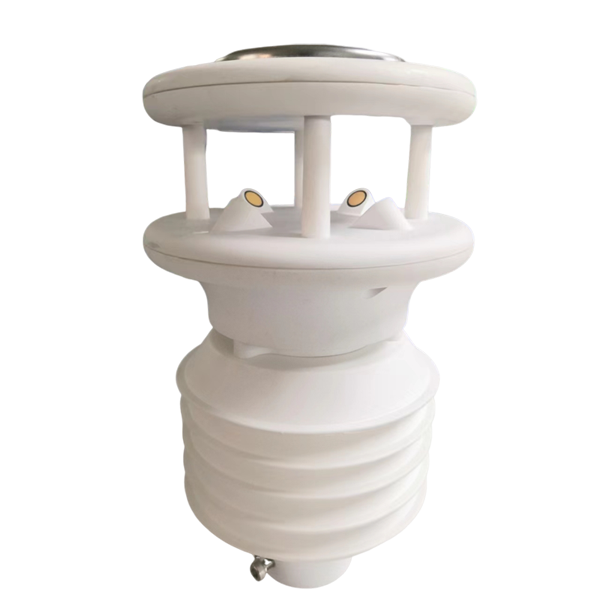
The integrated head family below also includes different channel combinations. Use the exact model and delivered register map. A family photograph does not establish that every illustrated function is installed in the ordered head.
A communication reply can be current while the application is still showing an older stored observation. Check how the receiver establishes freshness: successful polls, acquisition timestamps and any supported device status. Do not invent a sensor health register when the delivered device does not provide one.
Define maximum acceptable data age for the intended decision and the behavior when that age is exceeded. The appropriate operating response depends on the equipment and risk assessment; there is no universal relay state supplied by a weather head. Any safety-related function needs its own engineered design and approval.
The separate cup wind-speed sensor below is an alternative measurement component, not a network backup by itself. Its output version must match the receiver, and its wind-sensor protection rating is IP65. A second sensor only adds resilience when the design addresses shared power, acquisition and installation failures.

With site authorization, interrupt only the internet path while retaining field power and the local sensor connection. Confirm that fresh values still reach the intended local receiver and that remote displays identify the interruption. Restore the network and check the behavior of delayed records separately from current control data.
Then test loss of the sensor connection through an approved method. The receiver should enter the defined invalid-data state rather than displaying the last value indefinitely as current. Treat a full power outage as a different test. For logging recovery, see weather station offline record retention.
Keep the original quotation discipline: list the sensor head, mast, enclosure, supply, receiver, gateway and remote service separately. Include local integration work and any recurring network or service charges. Do not buy a second logger if the existing controller already supplies the required acquisition and storage.
RS485 provides a local interface. Continued operation also requires powered compatible receiving equipment and correctly configured acquisition. It does not establish autonomous storage, remote notification or control logic.
Do not assume that two independent masters can share it. Select an architecture explicitly supported by the devices, such as a defined PLC-to-gateway data handoff or separate supported interfaces.
Only if the project's availability and response requirements are met. A cloud-only route depends on the external connection; specify local logic separately when the decision must remain available during an outage.
No. Channel count describes measurement scope. Review bus architecture, power, receiver behavior and network service independently.
Provide required variables, existing PLC or logger, local interface, network conditions and the functions needed during an outage. Add mounting, supply and site-exposure information so hardware and integration can be priced separately.
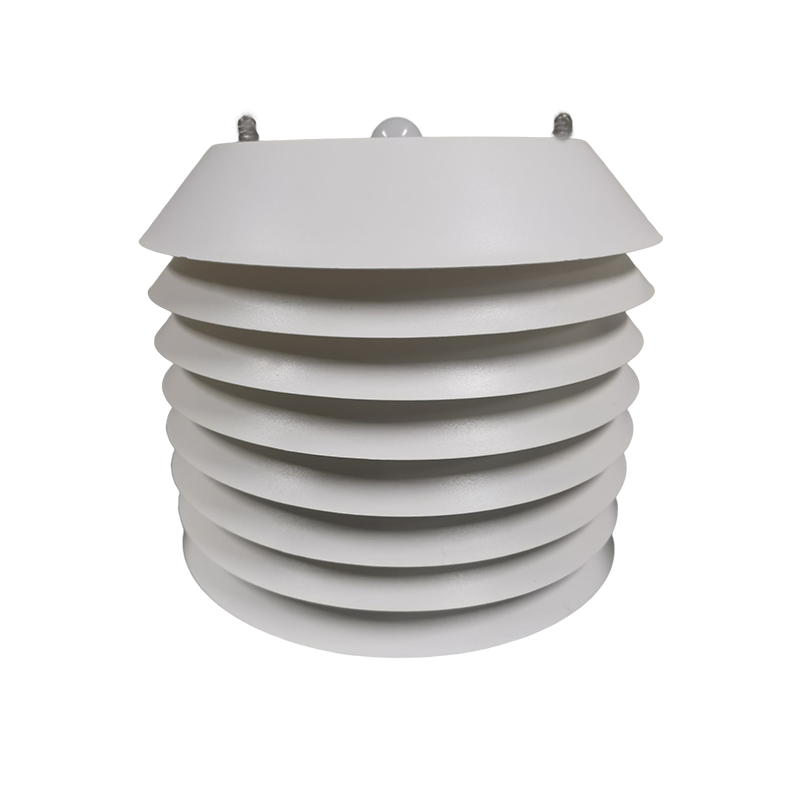
No. The THPLC head below measures temperature, humidity, pressure, illuminance and CO2; it does not supply wind speed or direction. Match its channels and installation limits to the intended environment.
Specify a professional smart weather station by its local and remote duties, not by a dashboard demonstration. Select the right NiuBoL sensing head, resolve bus ownership and data freshness, then demonstrate the intended behavior during a network-only interruption. Keep storage recovery and safe equipment control as separately defined requirements.
Related recommendations
Sensors & Weather Stations Catalog
 Agriculture Sensors and Weather Stations Catalog-NiuBoL.pdf
Weather Stations Catalog-NiuBoL.pdf
Agriculture Sensors Catalog-NiuBoL.pdf
Water Quality Sensor Catalog-NiuBoL.pdf
Related products
 Combined air temperature and relative humidity sensor
 TDR Soil Moisture & Temperature Sensor for irrigation| RS485 |4-20mA| NBL-S-THR
 Soil pH sensor RS485 soil Testing instrument soil ph meter for agriculture |NBL-S-PH Wind Speed sensor Output Modbus/RS485/Analog/0-5V/4-20mA
 Tipping bucket rain gauge for weather monitoring auto rainfall sensor RS485/Outdoor/stainless steel
 Pyranometer Solar Radiation Sensor 4-20mA/RS485


Screenshot, WhatsApp to identify the QR code
WhatsApp number:+8615367865107
(Click on WhatsApp to copy and add friends)

