





— Blogs —
—Products—
 Consumer hotline +8618073152920
WhatsApp:+8615367865107
Address:Room 102, District D, Houhu Industrial Park, Yuelu District, Changsha City, Hunan Province, China
Product knowledge
Time:2026-08-13 09:04:00 Popularity:254
Quick Answer: A professional weather station on a farm represents its sensing location, not automatically every management block. Link each intended decision to the relevant observation and check whether the station's exposure matches that block. Add targeted measurements where a real difference matters rather than applying one weather record to every field without review.
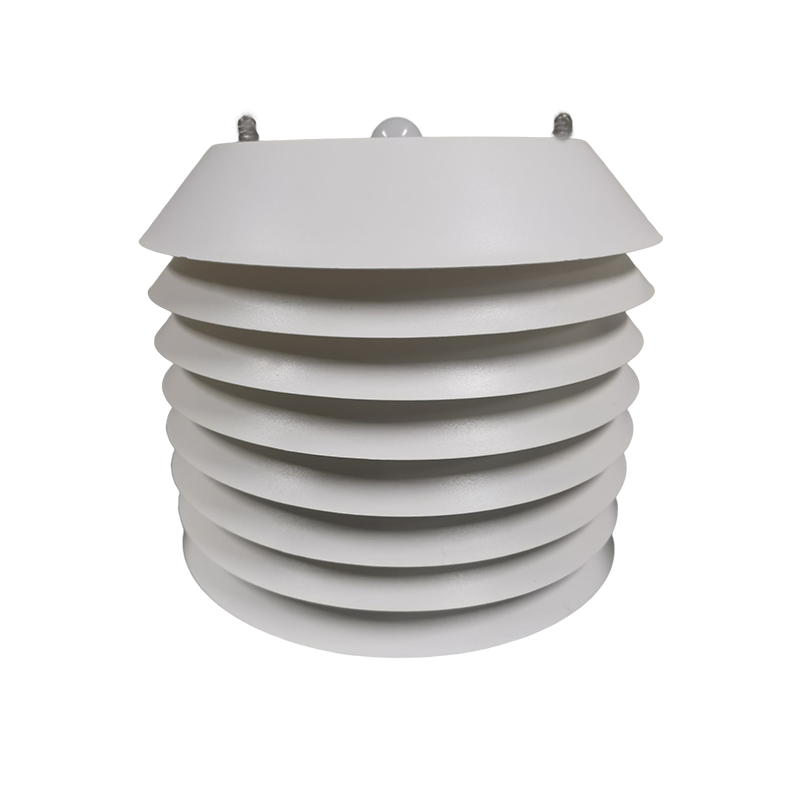
An agricultural weather station is useful when observations help staff decide what to inspect or schedule. Irrigation blocks, sheltered orchards, exposed fields and protected growing areas can share a farm address while experiencing different conditions. A convenient station beside the office may not represent the crop area that needs attention.
List the blocks, crops and relevant tasks before ordering sensors. Identify which observations can be shared and which need local checks. This is not a fixed station-per-hectare rule: the requirement depends on the difference the farm needs to detect and the consequence of acting on the wrong location.
The THPLC head above provides temperature, humidity, pressure, illuminance and CO2. It does not provide wind or rainfall. It may answer a protected-environment question, but its channel count alone does not make it a complete open-field professional weather station.
| Farm task | Useful observation | What must still be checked locally |
|---|---|---|
| Irrigation review | Rainfall and relevant weather history | Soil/root-zone condition, applied water and block-specific demand |
| Weather-sensitive field work | Current wind and other required weather variables | Conditions at the work location and applicable operating instructions |
| Cold-condition inspection | Air temperature trends at representative points | Crop-zone and terrain differences; station air is not every plant surface |
| Greenhouse management | Indoor temperature, humidity and any required CO2 or light measurement | Ventilation zones, crop height and heater or wet-pad influence |
Weather observations are inputs, not universal instructions to irrigate, spray or start frost protection. Crop stage, operating rules and local inspection remain part of the decision. Station hardware alone cannot guarantee crop protection or a fixed reduction in water use.
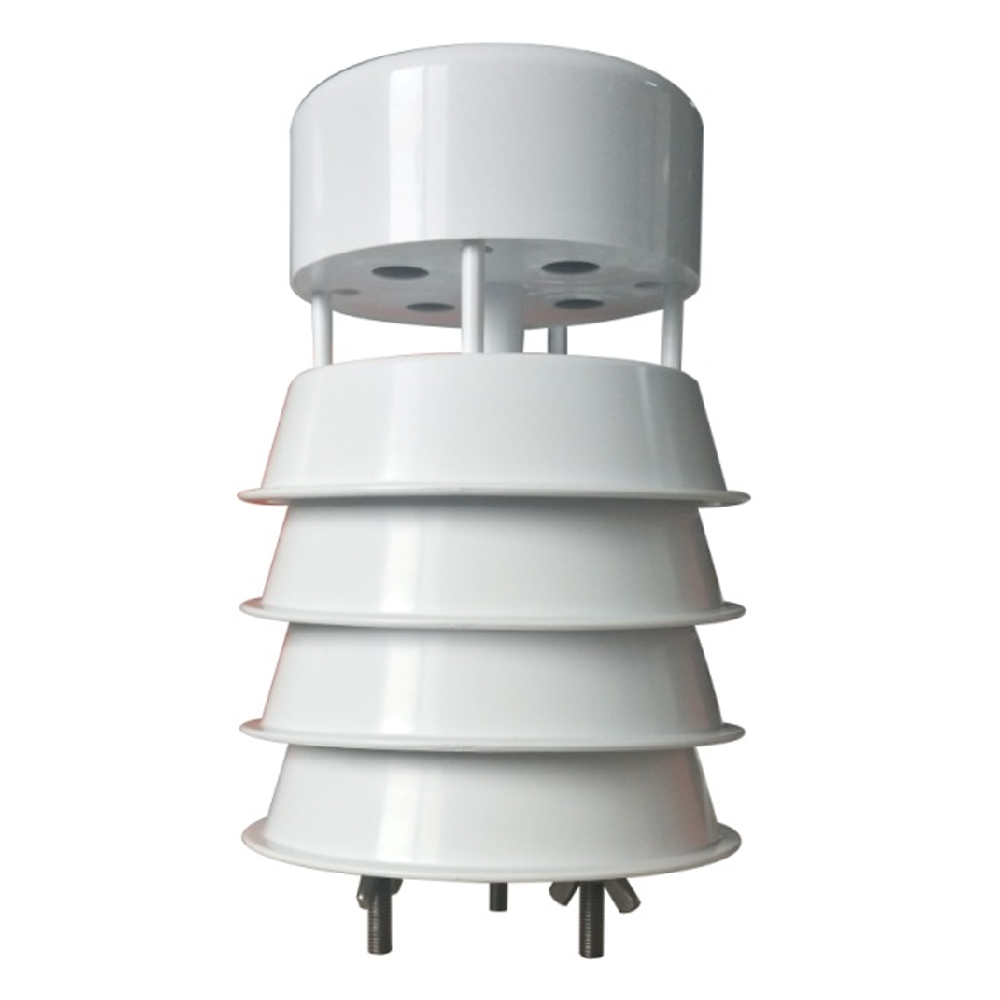
The integrated assembly above and the heads below offer different measurement combinations. A block that needs rainfall cannot use particulate channels as a substitute. Likewise, light in Lux is not automatically solar radiation in W/m2 or a crop-light measurement.
| Model | Relevant measurement set | Electrical and operating specifications |
|---|---|---|
| NBL-W-61MUWS | Wind, temperature, humidity, pressure and piezoelectric rainfall; temperature accuracy +/-0.5 C, rainfall accuracy +/-10% | 12-24 VDC; approximately 0.35 W; RS485 Modbus RTU; operating -20 to 50 C; IP65 |
| NBL-W-81GUWS | Wind, temperature, humidity, pressure, PM2.5, PM10 and noise; no rainfall | 9-24 VDC; approximately 1 W with particulate sensor; RS485 Modbus RTU; operating -40 to 80 C; IP65 |
| NBL-W-THPLC | Temperature, humidity, pressure, illuminance and CO2; no wind or rainfall | 12 VDC or ordered 24 VDC version; RS485; operating -50 to 80 C |
The 61MUWS rainfall intensity range is 0-8 mm/min with 0.01 mm resolution; that resolution is not an accuracy guarantee. Its standard cable is 2.5 m. Confirm cable length, jacket and mounting for the chosen head, and size the logger and communications supply separately. Do not assign one model's power or protection specification to every farm package.
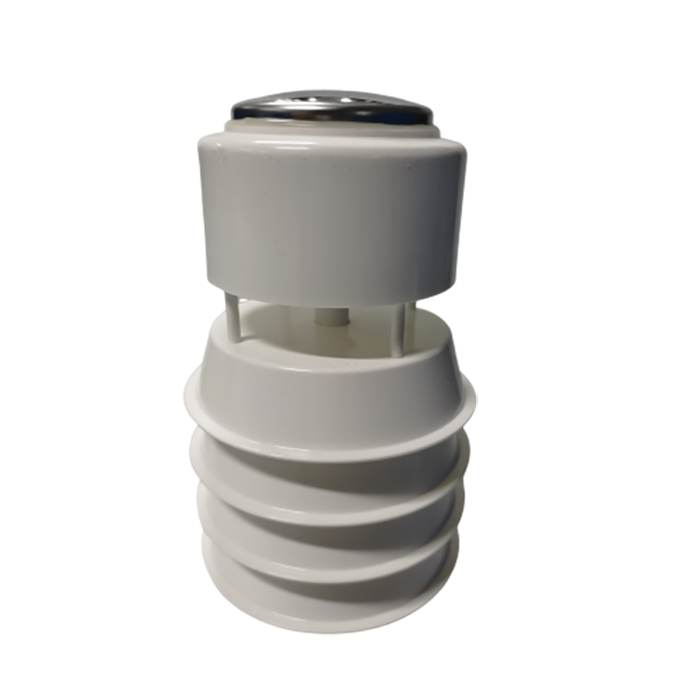
Use temporary, suitable comparison measurements where representativeness is uncertain. Compare the conditions relevant to the decision, with compatible exposure and timestamps. A calm daytime comparison does not establish that two locations remain equivalent during cold nights, changing wind or localized rain.
If a difference matters operationally, consider a targeted sensor rather than duplicating every station channel. A local temperature point may answer a cold-pocket question, while a soil measurement answers a different irrigation question. Keep the measurement location and interpretation visible to the staff receiving the report.
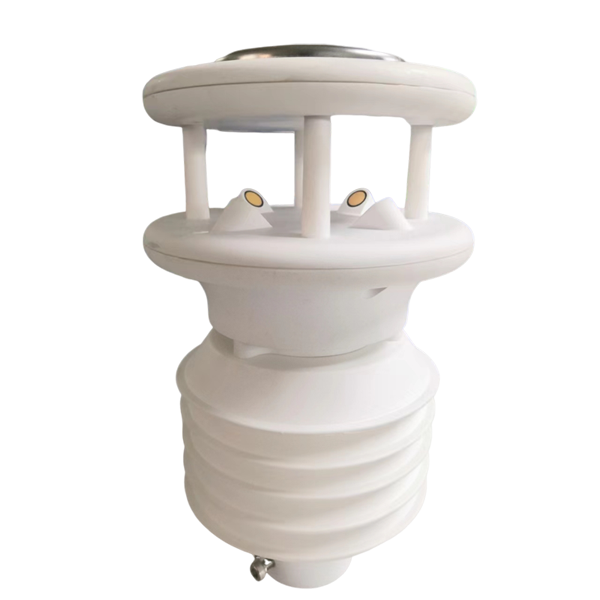
The seven-in-one head below is another configuration option, not proof that seven measurements are required in each block. State the actual selected variables in the quotation. Maintenance access matters as well: a representative point that cannot be serviced safely needs a better installation arrangement.
Sometimes, for defined shared observations. Check whether its location represents the blocks and events relevant to the intended decisions; there is no universal coverage distance.
No. Rainfall is a point observation, and root-zone water also depends on soil, irrigation and losses. Use block-specific information before changing irrigation.
No. Identify the important unresolved difference first. A targeted additional measurement may be more useful than repeating unrelated channels.
Not when its selected channels omit wind or its position represents indoor air. Match both the measurement set and the exposure to the task.
Link station ID, block relevance, units and acquisition time. Verify delivered RS485 Modbus RTU maps where applicable, and distinguish missing observations from valid calm, dry or unchanged conditions.
Provide a block map, crops, operating tasks, existing sensors, power/network conditions and suspected local differences. This supports an itemized choice of shared station and targeted points without assuming uniform farm conditions.
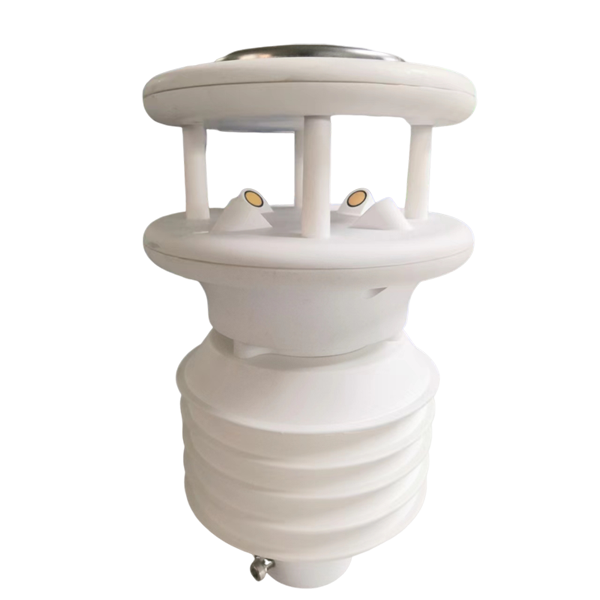
A professional weather station supports farm decisions when staff know which blocks its observations represent. Define the decisions, select actual channels and compare uncertain locations before expanding. Keep weather observations connected to crop and field context rather than treating one dashboard as a complete management instruction.
Prev:Online Water Quality Sensor Mapping: Separate Probe Identity from Bus Address
Next:Portable Water Quality Meter Handover: When Can Routine Rounds Be Reduced?
Related recommendations
Sensors & Weather Stations Catalog
 Agriculture Sensors and Weather Stations Catalog-NiuBoL.pdf
Weather Stations Catalog-NiuBoL.pdf
Agriculture Sensors Catalog-NiuBoL.pdf
Water Quality Sensor Catalog-NiuBoL.pdf
Related products
 Combined air temperature and relative humidity sensor
 TDR Soil Moisture & Temperature Sensor for irrigation| RS485 |4-20mA| NBL-S-THR
 Soil pH sensor RS485 soil Testing instrument soil ph meter for agriculture |NBL-S-PH
 Wind Speed sensor Output Modbus/RS485/Analog/0-5V/4-20mA
 Tipping bucket rain gauge for weather monitoring auto rainfall sensor RS485/Outdoor/stainless steel
 Pyranometer Solar Radiation Sensor 4-20mA/RS485


Screenshot, WhatsApp to identify the QR code
WhatsApp number:+8615367865107
(Click on WhatsApp to copy and add friends)

