





— Blogs —
—Products—
 Consumer hotline +8618073152920
 WhatsApp:+8615367865107
Address:Room 102, District D, Houhu Industrial Park, Yuelu District, Changsha City, Hunan Province, China
Product knowledge
Time:2026-09-04 16:00:00 Popularity:215
Water parameters measured on site should include the quantities that change during collection or transport, or describe conditions that a bottle cannot retain. Temperature, pH, dissolved oxygen and conductivity commonly belong in a field programme; residual disinfectant, turbidity, depth and flow may also be required. Choose the location and measurement procedure before choosing a multi-parameter instrument. A stable reading in a disturbed sample is not necessarily representative of the water body.
A field visit often has two outputs: measurements made at the water and samples sent for analysis. They should share a location identifier and sampling time, but they are not interchangeable. Transport can change temperature, gas exchange can alter dissolved oxygen, and handling can disturb particles. Preserving a laboratory sample does not reconstruct the original field condition.
Make the distinction explicit in the work order. A request for a water analysis panel should identify which results come from an in-situ probe, a controlled flow-through arrangement or a collected sample. Otherwise the laboratory and field team may both assume that the other party measured a time-sensitive quantity.
| Quantity | Field concern | Record with the result |
|---|---|---|
| Temperature | Exposure to air, sun or a warm container changes the sample | Depth, location and time of measurement |
| pH | Gas exchange and temperature changes can affect interpretation | Calibration check, temperature and measurement arrangement |
| Dissolved oxygen | Splashing, bubbles and air contact can change the measured water | Concentration unit, compensation settings and immersion depth |
| Conductivity | Raw conductivity and temperature-referenced conductivity are different records | Unit, reference temperature and compensation mode |
| Turbidity | Settling, disturbed sediment and bubbles affect optical response | Optical method, unit and handling conditions |
| Water level and flow | These describe the site rather than the contents of a bottle | Datum or flow method and the relevant observation time |
The USGS dissolved oxygen field guidance treats calibration, equipment maintenance and measurement procedure as parts of the measurement. A sensor specification alone cannot establish field data quality.
Direct immersion is useful where the probe can reach the required water safely without disturbing the bed. Record the position relative to an inlet, outlet, bank or aerator. Lower the instrument without dragging its protective cover through sediment, then allow the channels to respond at the selected depth.
A flow-through arrangement can provide access to pumped groundwater or a closed water circuit. Check whether the pump, tubing and cell introduce air, heat, pressure changes or excessive residence time. An open bucket at the end of a splashing hose is not an equivalent arrangement for dissolved oxygen.
Collected samples remain necessary for analyses outside the fitted sensor channels. Use the required bottles, preservation and holding-time procedure for those analyses. Do not place an immersed probe in a preserved laboratory bottle merely to obtain an additional field value; that changes both the sample and the measurement conditions.
A useful field form has room for exceptions. Record an unstable value as unstable, an inaccessible depth as inaccessible and a failed channel as failed. Replacing these conditions with a plausible-looking number makes later interpretation harder than leaving a clearly identified gap.
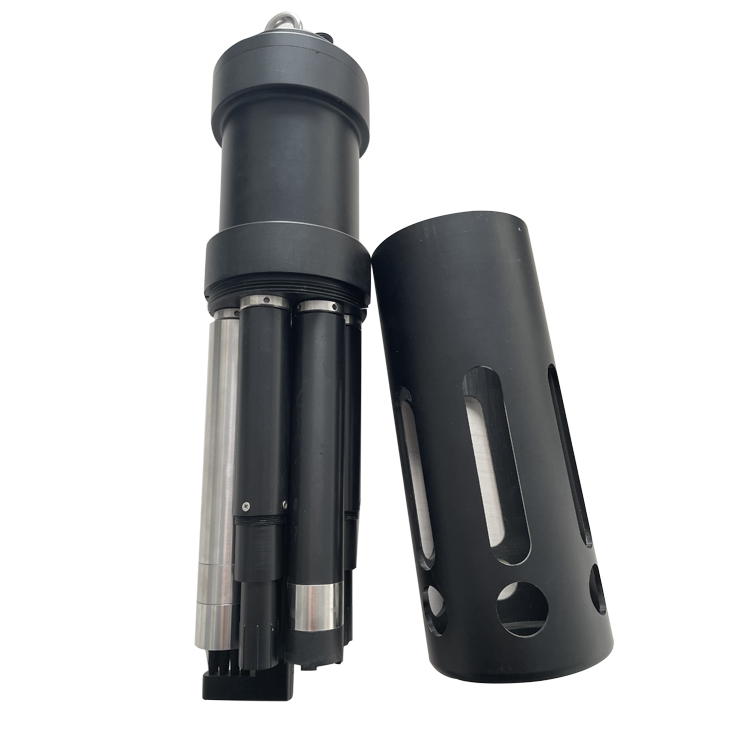
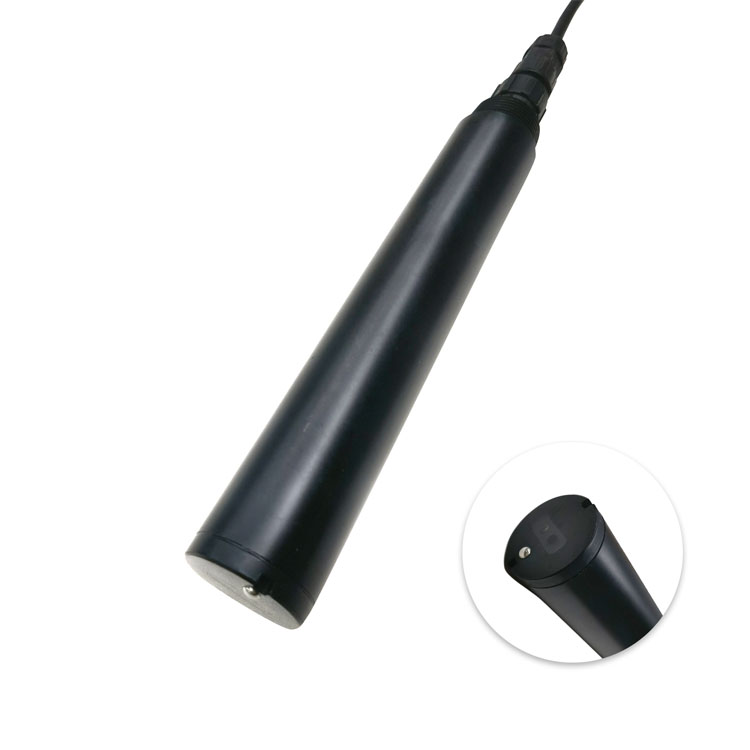
The NiuBoL NBL-WQ-MPS-5A is a configurable online assembly, not a guarantee that every listed parameter is installed. Its automatic brush and digital interface suit repeated or continuous observation, provided the mounting, power and service access are practical. A short walking survey may favour a portable arrangement instead; confirm the recorder and carrying requirements before specifying an online probe.
| Item | NBL-WQ-MPS-5A configuration | Field implication |
|---|---|---|
| Channel capacity | Up to 8 parameters including temperature | List the fitted channels on the order and field form |
| Available sensing options | DO, COD, pH, ORP, conductivity/salinity, ammonia nitrogen and turbidity | Not every option is required at every point |
| pH channel | 0-14 pH; +/-0.1 pH; 0.01 pH resolution | Check suitability at the intended decision level |
| Temperature channel | 0-50 deg C; +/-0.3 deg C; 0.1 deg C resolution | This channel range is not a blanket rating for every assembly condition |
| Output | RS485, Modbus RTU | Requires compatible acquisition hardware and the correct register map |
| Supply and consumption | 12 VDC +/-5%; 5 W at 12 V | Include the recorder and communications loads in the power calculation |
| Cleaning | Configurable automatic interval and cleaning cycles | Inspect brush operation and mark cleaning-affected data |
| Cable and support | 5 m standard cable; lifting ring or 4 NPT support arrangement | Support the assembly mechanically rather than suspending it by the cable |

A field result loses value when its depth or point identifier disappears during export. For fixed stations, use separate records for installation depth and changing water level. For surveys, enter the actual point and depth for each observation rather than copying the previous site's metadata.
With RS485 Modbus RTU, verify each fitted channel against the local display or commissioning tool. Check register address, data type, decimal scaling and unit. A conductivity value in mS/cm must not appear under a microSiemens label, and a missing channel must not become a valid zero in the spreadsheet.
Keep observations and corrections distinguishable. If a fouled optical surface is cleaned, retain the time and the readings before and after cleaning. If a result is rejected, identify the reason instead of silently deleting it. This allows an engineer to distinguish a water change from an instrument intervention.
A single convenient measurement location may miss a vertical gradient, a bank-side discharge or a short operating event. Where the decision concerns the whole pond or reservoir, compare relevant depths and positions before assigning one fixed point to that duty. Where the decision concerns a pipe outlet, measure that outlet rather than averaging unrelated water.
For instrument selection, send NiuBoL the planned locations, depth range, expected water conditions and required channels. Include whether the equipment will stay installed or move between sites. These details determine support hardware, cable handling, acquisition equipment and service needs more directly than a request for the largest possible parameter list.

No. Laboratory analysis answers the question defined by its method and sample handling. It does not recreate the temperature, gas condition, water depth or flow at collection. Specify complementary field and laboratory work where both are needed.
No. Channels respond differently and the water itself may vary. Use parameter-specific criteria from the approved procedure, observe the trend and document unstable conditions rather than waiting an arbitrary fixed interval.
It can help control surface deposits, but it does not verify calibration, remove every obstruction or inspect cable damage. Establish inspection intervals from actual fouling and comparison results.
They are not among the sensing options specified here. An ammonium channel is not total nitrogen, and ORP is not chlorine concentration. Specify separate methods when those quantities are required.
Identify fitted sensors, mounting, cable length, power source, logger, display or export method, calibration supplies and transport or permanent-installation requirements. Ask for each included item to be identified so the package can actually perform the planned visit or station duty.
Start water parameters measured on site with a sampling decision: which quantities must represent the water before handling changes it? Then select a measurement arrangement, document location and stability, and preserve units and sample identity through export. NiuBoL can review a field or fixed-station configuration when the required channels, water conditions and working procedure are defined.
Prev:Turbidity TSS Correlation: Validate a Site-Specific Model
Next:Water Turbidity Measurement Errors: Diagnosis Before Recalibration
Related recommendations
Sensors & Weather Stations Catalog
 Agriculture Sensors and Weather Stations Catalog-NiuBoL.pdf
Weather Stations Catalog-NiuBoL.pdf
Agriculture Sensors Catalog-NiuBoL.pdf
Water Quality Sensor Catalog-NiuBoL.pdf
Related products
 Combined air temperature and relative humidity sensor
 TDR Soil Moisture & Temperature Sensor for irrigation| RS485 |4-20mA| NBL-S-THR
 Soil pH sensor RS485 soil Testing instrument soil ph meter for agriculture |NBL-S-PH
 Wind Speed sensor Output Modbus/RS485/Analog/0-5V/4-20mA
 Tipping bucket rain gauge for weather monitoring auto rainfall sensor RS485/Outdoor/stainless steel
 Pyranometer Solar Radiation Sensor 4-20mA/RS485

Screenshot, WhatsApp to identify the QR code
WhatsApp number:+8615367865107
(Click on WhatsApp to copy and add friends)

