





— Blogs —
—Products—
 Consumer hotline +8618073152920
WhatsApp:+8615367865107
Address:Room 102, District D, Houhu Industrial Park, Yuelu District, Changsha City, Hunan Province, China
Product knowledge
Time:2026-09-15 15:00:00 Popularity:220
Quick Answer: Water quality monitoring system maintenance must keep the complete measuring point usable: water exposure, sensors, power, local records, communications and alarms. Assign an owner and a return-to-service check to each function. Cleaning a probe closes only one task; it does not prove that sample delivery, stored history or the operator's alarm route has been restored.
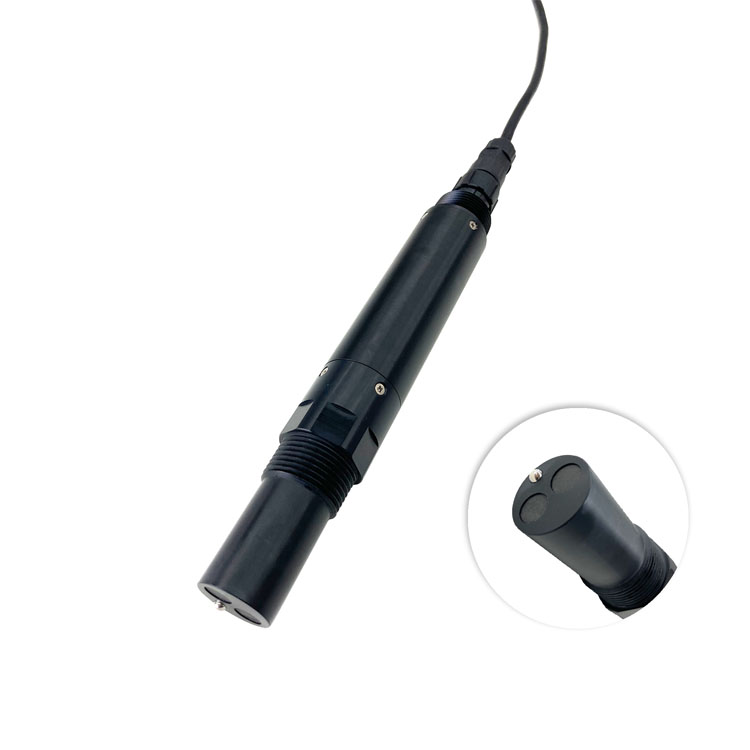
A research station may tolerate a documented gap during a service visit. A process point used by an operator may need an approved alternative observation while equipment is unavailable. Define that distinction for each location before scheduling maintenance. A single calendar applied to every station does not reflect the consequence of losing its measurements.
List which channels stop when an assembly is removed, which functions can continue locally during a network fault and how long the site can wait for a technician. These are different interruptions. A spare probe helps with a damaged sensing assembly but does not restore a failed power supply or a blocked sample intake.
For a conductivity point, preserve the selected range, unit and compensation settings in the asset record. If a replacement changes these settings, an apparent step can enter the historical series without a change in water. Maintenance planning should therefore include configuration control as well as the physical replacement.
| Function | Responsible role to assign | Condition that closes the task |
|---|---|---|
| Water exposure or sample delivery | Site operations or the sampling-system maintainer | Current representative water reaches the sensing point under the intended conditions |
| Sensing elements and cleaner | Trained instrument technician | Inspection and appropriate reference checks are satisfactory |
| Power and enclosure | Qualified electrical maintenance personnel | Supply is suitable at the load and the connection arrangement is restored |
| Acquisition and local storage | Control-system or logger maintainer | Fresh observations carry the correct identity, unit, validity and time |
| Network and platform access | Communications or platform administrator | Transfer, owner access and any backlog recovery work as intended |
| Alarm response and data review | The owner's operating team | Alarm routing is tested and any affected data period is classified |
Small sites may assign several roles to one person, but the tasks still need to be distinguished. Otherwise, an instrument visit can be reported complete while the platform administrator assumes the missing history is an instrument fault and the technician assumes it is a server problem.
For an optical BOD channel, include the site-specific interpretation and comparison procedure in that responsibility list. Restoring the electronics does not re-establish a surrogate relationship after a major change in wastewater composition. The owner needs to know who decides whether additional samples or a revised evaluation are required.

Initial visits should establish how fouling, sample-flow loss and component wear develop at the actual point. Use those observations to set the next interval. A clean-water installation with easy access and a debris-exposed river station should not inherit the same schedule merely because both use RS485.
Define event-driven inspections too. Flood debris, a long power interruption, a changed production stream or a new persistent disagreement can justify a check before the next planned date. The trigger should identify the suspected station function and the evidence required, rather than automatically instructing the technician to recalibrate every channel.
Keep instrument cleaning separate from sample-system service. A brush at a probe cannot clear a long intake pipe or verify a sample pump. At immersion points, inspect mounts and protective structures for trapped material or sediment accumulation. The protective arrangement can itself alter water exchange around the sensors.
A suspended-solids trend needs this physical context. A deposit on the optical surface, disturbed bed material and a genuine change in suspended particles are different possibilities. Review the location and comparison samples before changing a stored calibration relationship. Repeated adjustment without diagnosis can make later records harder to interpret.

The asset list should identify the exact model, installed modules, serial information, firmware where relevant and the acquisition configuration. Link those records to the physical station tag. A spare described only as a multi-parameter water sensor may have different modules, supply requirements or connectors from the installed assembly.
Decide whether the site will replace a sensing element, exchange a complete probe or send the assembly for service. Check compatible parts and any conditioning or verification required before return. Do not assume that a visually similar electrode or optical cap is an approved substitute. Stock levels should reflect actual demand, storage conditions and replenishment information.
Keep a known configuration copy that the owner can access. It should be sufficient to restore station identity, channel settings, acquisition schedule and alarm destinations using the supported equipment procedure. Do not rely on the only copy being held on a commissioning contractor's laptop.
The NiuBoL NBL-WQ-MPS-5A is a configurable shared assembly. Its physical service can interrupt several installed channels together. The following requirements help define power checks, lifting arrangements and replacement preparation; they are not universal specifications for every water-quality instrument.
| MPS-5A requirement | Specification | Maintenance consequence |
|---|---|---|
| Power supply | 12 V DC +/-5% | Check 11.4-12.6 V at the assembly; a functioning modem does not verify sensor voltage |
| Reference consumption | 5 W at 12 V | Check the actual supply and cleaner operation; obtain peak-demand information for final sizing |
| Communication | RS485 Modbus RTU; default 9600 baud, 8N1 | Record the installed settings and verify replacement communication before field removal |
| Cable | 5 m standard shielded cable | Inspect strain relief and connections; confirm jacket construction for the exposure |
| Support | Lifting ring or 4 NPT mounting arrangement | Retrieve and support the body without using the signal cable as a lifting rope |
| Cleaning | Automatic brush with adjustable intervals and cycles | Check freedom of operation and condition; do not assume brushing replaces all manual service |
| Example pH module | 0-14 pH; +/-0.1 pH; 0.01 pH resolution | Use the applicable verification tolerance, not the last display digit |
Confirm the assembled unit's immersion, pressure and environmental limits for the chosen configuration. The temperature measuring range of one module is not an assembly-wide environmental rating. Individual electrode maintenance and storage procedures also remain specific to those elements, even when several are fitted to one body.
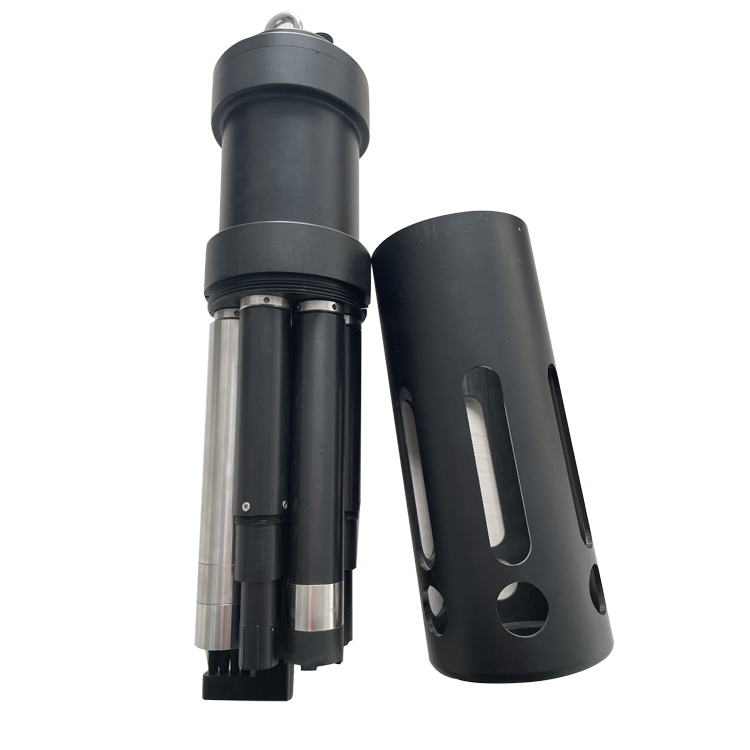
Before intervention, mark the affected period and place any dependent process function in the site's approved maintenance state. Record the as-found reading and relevant conditions. Physical cleaning and reference-check procedures are described separately in the water quality meter maintenance guide; the station plan must also cover the remaining equipment.
After reinstallation, confirm current water exposure and appropriate stabilization. Compare the sensor or local readout with the acquired value, then inspect a newly stored record. Check the timestamp and validity, not only the number. A logger holding the previous value can make an incomplete repair appear successful.
Test the affected alarm route through the agreed test procedure without deliberately creating an unsafe water or process condition. Restore automatic functions only after the owner accepts the required checks. If a fault remains open, identify the unavailable channels and the approved alternative arrangement instead of closing the job as routine cleaning.
Track why valid observations were lost: planned removal, failed sample delivery, sensor fault, power loss or communication-only delay. A network outage with successful local recording is different from a permanent measurement gap. Grouping both as station downtime can direct maintenance spending toward the wrong component.
Review the time between fault recognition and restoration separately from the active repair time. Travel, access authorization or unavailable spares may dominate the interruption. For example, a one-hour repair requiring two days to reach the site is an access and response issue as well as an equipment issue. This is a planning illustration, not a promised service response.
When requesting NiuBoL support, provide the affected station and models, installed configuration, symptom, recent service work and comparison results. Identify whether local acquisition, remote transfer or only one measurement failed. A defined fault and asset record are more useful than a request to replace a station that appears offline.
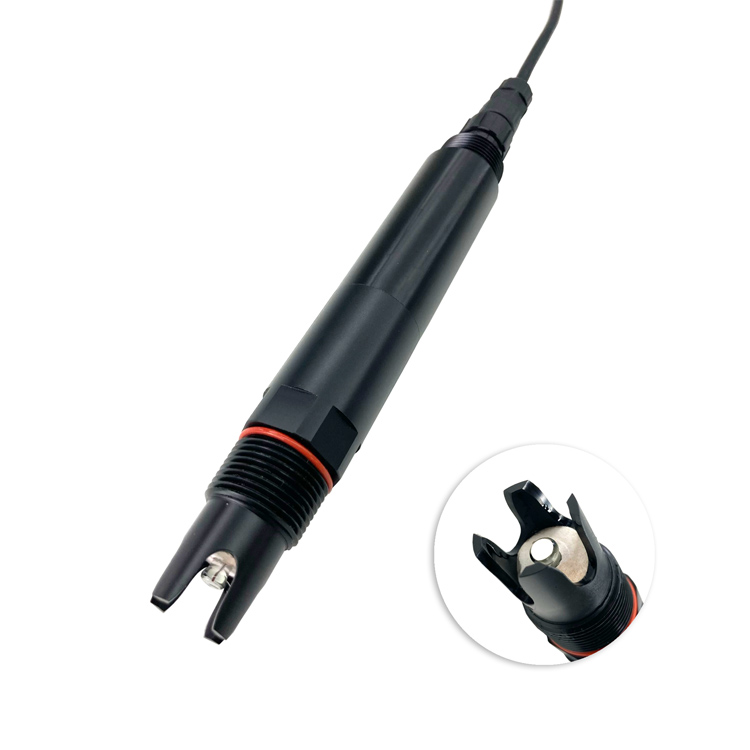
Probe work addresses sensing elements and their immediate connections. Station work also covers representative water, power, acquisition, storage, communications and operator response. A station is not restored until the functions needed for its monitoring duty have passed the agreed checks.
No universal interval fits all water and access conditions. Establish intervals from observed fouling, verification results and failure consequences, then review seasonal changes. Also define inspections triggered by events that occur between scheduled visits.
Only if it is compatible, ready for the required verification and available where needed. It cannot correct a failed supply, blocked intake or inaccessible mounting arrangement. Match spare provision to the actual causes and consequences of downtime.
The owner should designate the responsible operating role and required evidence before service begins. The decision should cover valid measurement, correct host acquisition and the tested control or alarm route. Completion of physical cleaning alone is insufficient.
List station locations, installed equipment, access conditions and required tasks. Separate planned visits, corrective work, consumables, travel and remote support, with the applicable response commitments stated. A sensor replacement price does not describe a complete station service arrangement.
Retain original observations with identifiable service, invalid or held-value periods according to the owner's data policy. Record configuration changes and reference results. Do not silently replace disputed history with newly calibrated values or treat recovered old records as current measurements.
A water quality monitoring system maintenance plan should explain who restores each station function and how restoration is verified. Use model-specific NiuBoL service requirements within that wider plan. Coordinating access, compatible spares, configuration records and data review keeps the work focused on usable observations rather than completed visits alone.
Prev:Online Water Quality Monitoring: Benefits, Coverage and Blind Spots
Next:BOD Water Quality Monitoring: What It Means for Online Procurement
Related recommendations
Sensors & Weather Stations Catalog
 Agriculture Sensors and Weather Stations Catalog-NiuBoL.pdf
Weather Stations Catalog-NiuBoL.pdf
Agriculture Sensors Catalog-NiuBoL.pdf
Water Quality Sensor Catalog-NiuBoL.pdf
Related products
 Combined air temperature and relative humidity sensor
 TDR Soil Moisture & Temperature Sensor for irrigation| RS485 |4-20mA| NBL-S-THR
 Soil pH sensor RS485 soil Testing instrument soil ph meter for agriculture |NBL-S-PH
 Wind Speed sensor Output Modbus/RS485/Analog/0-5V/4-20mA
 Tipping bucket rain gauge for weather monitoring auto rainfall sensor RS485/Outdoor/stainless steel
 Pyranometer Solar Radiation Sensor 4-20mA/RS485


Screenshot, WhatsApp to identify the QR code
WhatsApp number:+8615367865107
(Click on WhatsApp to copy and add friends)

