





— Blogs —
—Products—
 Consumer hotline +8618073152920
WhatsApp:+8615367865107
Address:Room 102, District D, Houhu Industrial Park, Yuelu District, Changsha City, Hunan Province, China
Product knowledge
Time:2026-08-29 09:04:00 Popularity:298
A campus weather station upgrade should begin with an inventory of what still works, what data users actually need and where the station can be maintained safely. Replacing an old logger with a new integrated sensor may reduce wiring, but it can also break a decade of tag names or remove a measurement that a class uses. The project is successful when the new records remain interpretable across that change, not when the sensor housing looks newer.
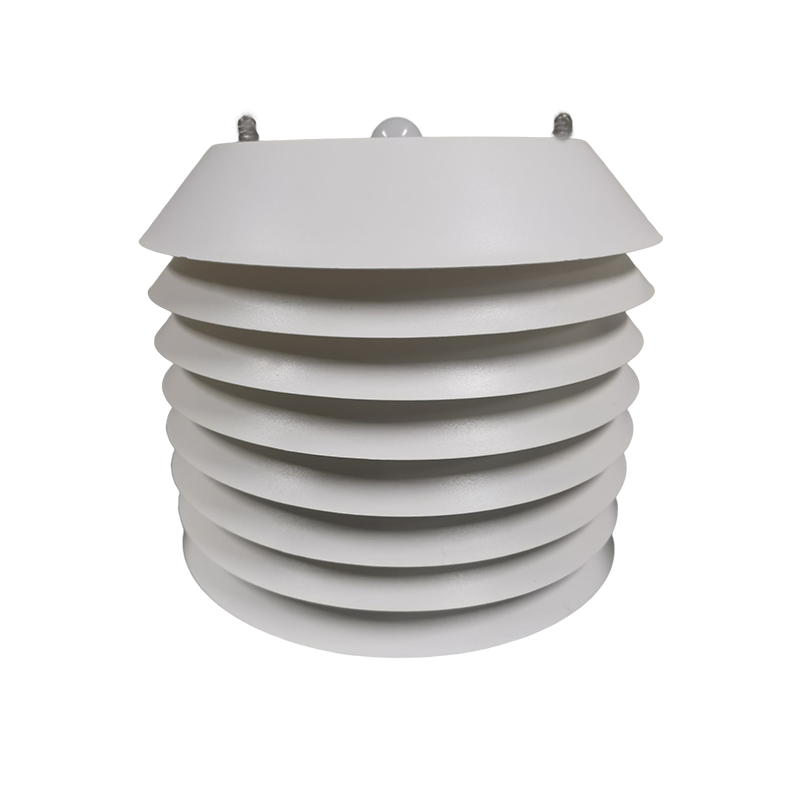
List each existing wind, rain, temperature, humidity, pressure, radiation or air-quality channel with its model, output, power, cable condition, mounting position and last service record. Next to it, name the user: facilities staff, teaching laboratory, research group or public display. A channel with no current owner may not justify replacement; a channel used in a long-running exercise needs a continuity plan even if its old sensor is still functioning.
Inspect the mast and enclosure before ordering electronics. Corroded anchors, roof leakage, poor cable glands and inaccessible cleaning points are project defects that a new probe cannot solve. On a school site, evaluate roof access, fall protection, electrical isolation and student proximity with the facilities team. A roof may be convenient for wireless coverage but poor for a rain gauge if nearby parapets and trees distort catch.
| Existing element | Retain when | Upgrade trigger |
|---|---|---|
| Mast and mounting | Structure, exposure and service access are acceptable | Corrosion, unsafe access or obstruction bias |
| Individual sensors | They remain supported and meet the teaching or operations duty | Failed checks, unavailable parts or missing required parameter |
| Logger and enclosure | Inputs, clock, storage and export still meet user needs | Unsupported protocol, lost records or inadequate power protection |
| Dashboard and archive | Tags, units and ownership are clear | Inaccessible history or no route for the new data |
Save an export from the old system and photograph its configuration before work begins. Record sensor heights, azimuth references and measurement intervals. The archive may contain years of useful observations; changing a station can create an apparent climate trend if the new air-temperature head is moved from a shaded mast to a sun-heated wall.
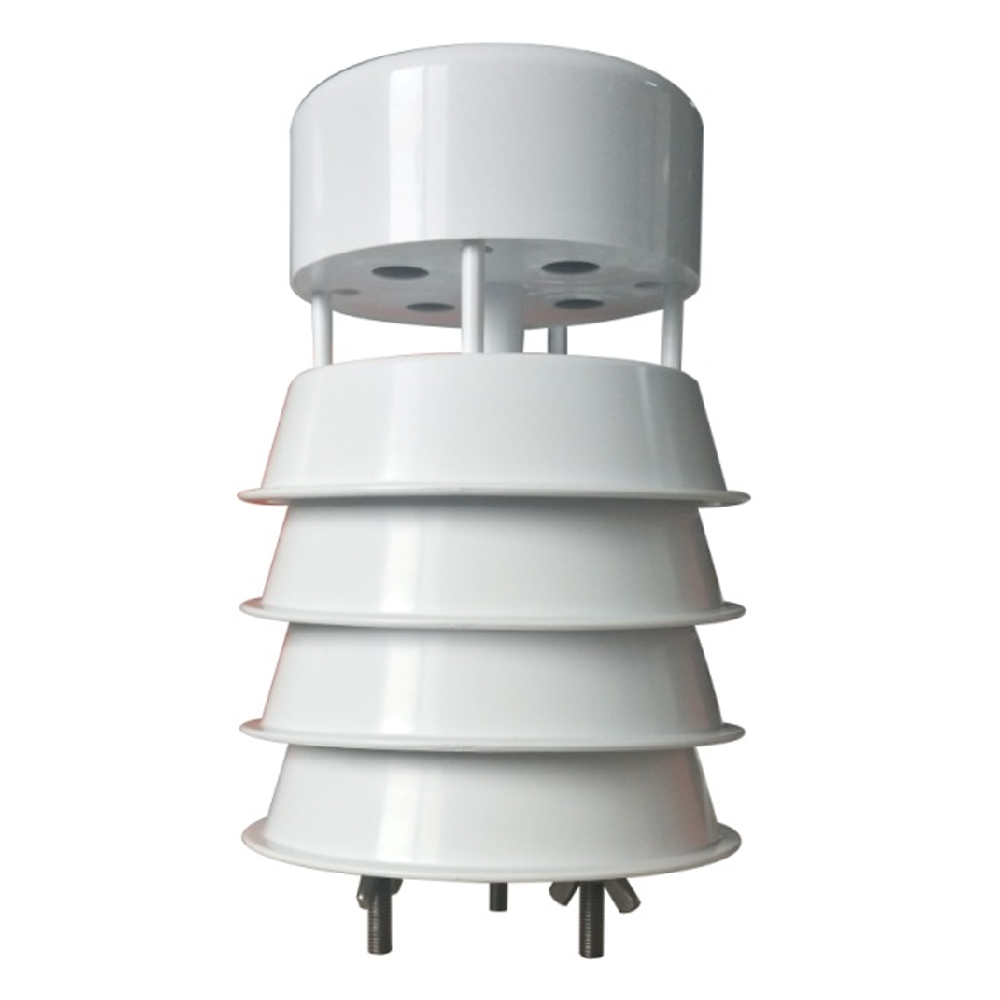
NiuBoL's NBL-W-THPLC combines air temperature, relative humidity, barometric pressure, illuminance and CO2. That package may fit an environmental or greenhouse teaching point, but it does not measure wind or rainfall. CO2 at one outdoor location should not be promoted as a campus-wide exposure value. Confirm which variables an assignment or facilities alarm actually uses before counting sensor heads.
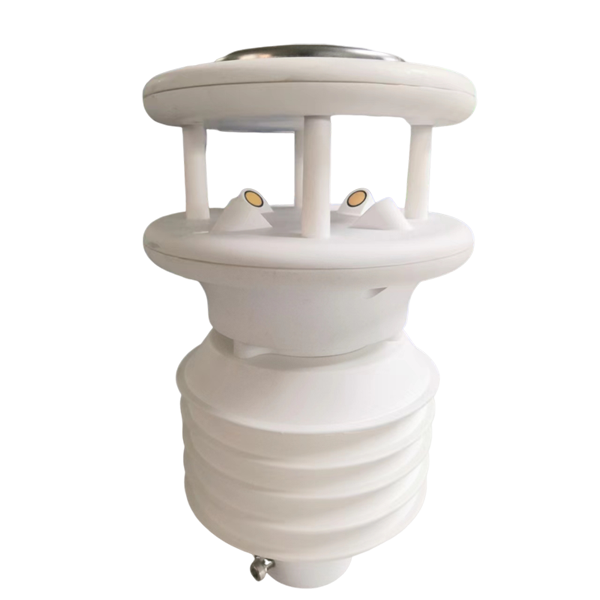
Ultrasonic integrated weather heads can combine wind with several atmospheric channels. Some versions add rain by a non-tipping principle; other versions have a different channel set. A six-in-one or eight-in-one label does not state the exact variables, accuracy or protocol for a particular order. Read the product schedule and map every desired channel to a named model. Keep a separate tipping-bucket gauge where continuity with historical bucket rainfall, local calibration practice or a project standard requires that method.
Integrated heads reduce exposed connectors and can simplify a small teaching station. Modular heads give a school more freedom to replace a single failed sensor or relocate one parameter for better exposure. The tradeoff is not a universal winner: it depends on who will service the unit, whether past data must remain comparable and how often the sensor list changes.
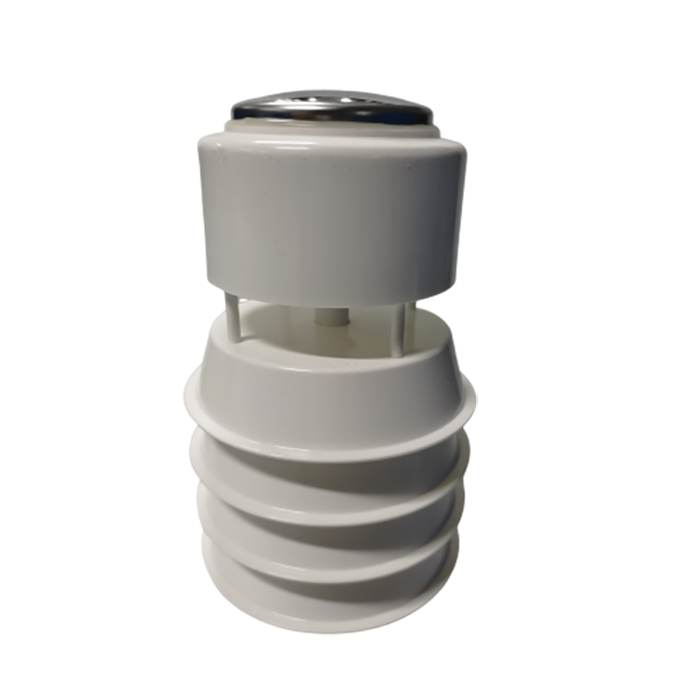
Do a short parallel run wherever possible. Keep the old and new sensors observing at comparable positions and intervals while technicians verify units, time stamps and typical diurnal behavior. Investigate a persistent offset before declaring the new sensor defective: mounting height, radiation shielding, roof heat and ventilation may differ. Log the exact changeover time and maintain old and new tags separately in the database until the users agree how the series will be reported.
For wind, document true-north orientation and the zero-direction convention. Check whether an old station stored speed as an average, a gust or an instantaneous value; the new logger must not silently relabel one as another. For rain, check event total versus cumulative total and the reset boundary. For air temperature and RH, compare exposure and shielding as well as numerical output. These definitions belong in the handover file because students may later use the data without knowing that a hardware upgrade occurred.
If the station supplies a public display, use a separate presentation layer from the source archive. The display may update every few minutes, while an experiment needs the raw observation interval and quality flags. If the campus has a private research network, agree on data access and retention with the IT team before placing a cloud gateway on a roof.
RS485 Modbus RTU is useful for connecting selected NiuBoL sensors to a compatible logger, PLC or gateway, but each model needs its own address, baud rate, register map and scaling. Older campus sensors may instead use pulse or analog outputs. A new logger quote should list every retained input, not only the new integrated head. Verify cable runs, terminations and whether a shared bus has address conflicts before powering the finished cabinet.
Choose mains or solar power from a measured load and required uptime. Include the logger, modem or Ethernet device, any display and winter conditions; a sensor's nominal wattage alone cannot size the battery. Decide what happens during a network outage: local storage, backfill, stale-data flags and clock synchronization. A classroom graph should not convert an upload gap into a line of zero rainfall or calm wind.
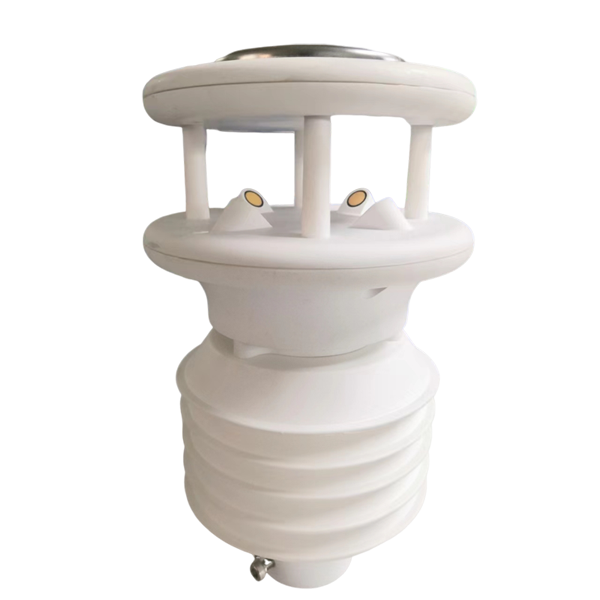
Schedule roof or mast work with the campus safety team, keep student access controlled and document lightning and grounding arrangements through the site's electrical design. Secure cables against abrasion and label both ends. Locate outdoor heads away from exhaust outlets, roof edges and large nearby obstacles as far as the campus allows. When perfect meteorological exposure is impossible, document the limitation instead of calling the point an official reference station.
Acceptance should include a photographed as-built layout, a channel-by-channel live reading and a downloaded data file. Check that a deliberate unplugged-sensor test creates a fault rather than an apparently valid zero. Compare one day's curves with a portable or neighboring reference where appropriate, recognizing that different exposure may explain a difference. Prove that authorized teachers and maintenance staff can retrieve data, while configuration privileges stay with designated operators.
For a procurement package, ask for a retained-equipment list, new model list, mounting and electrical scope, integration responsibility, historical-data handling, training and spare-parts plan. Include the format of the final export and the person who signs off the tag map. A quote for only a sensor head is not an upgrade quote if the actual work includes old data and site safety.
Q1. Should a campus replace every old sensor?
A1. No. Test condition, supportability, exposure and user need. Retain a working channel when the new logger can read it and continuity is valuable; replace it when it fails the agreed duty.
Q2. Is an all-in-one head preferable to separate sensors?
A2. It reduces connections and can suit a compact site. Separate heads are easier to replace or position independently. Compare service access, required variables and historic-data continuity.
Q3. Can a five-in-one temperature and CO2 sensor replace a full weather station?
A3. Not when wind or rainfall is needed. Check the actual channels of NBL-W-THPLC and the intended teaching task rather than relying on a product count.
Q4. How is a new wind channel matched to the old archive?
A4. Record mounting and north orientation, averaging period, gust definition and units. Run the two systems in parallel where feasible and mark the changeover in the data.
Q5. Does RS485 guarantee the old logger can read a new sensor?
A5. No. The logger must support the exact Modbus settings and registers; older inputs may be analog or pulse. Check compatibility channel by channel.
Q6. What data should be handed over?
A6. Supply raw and displayed values, units, point IDs, time convention, quality flags, old-to-new tag map, changeover date and an accessible export method.
Q7. Can the station be called an official meteorological reference?
A7. Only if its siting, instruments, calibration and operating program meet the relevant authority's requirements. A constrained campus roof can still be useful for education when its exposure limits are disclosed.
Q8. What is needed for a realistic price?
A8. Provide the old-equipment inventory, site and access photos, new channels, power and network availability, data migration scope and acceptance criteria. Ask for separate hardware and site-work line items.
A campus weather station upgrade should preserve the meaning of the existing record while making the installed system easier to use and maintain. NiuBoL can supply integrated or modular weather sensors, but the selection should follow the campus point schedule, legacy interfaces and exposure survey. Accept the new station only after the physical installation, tag map, archive and user access have been tested together.
Prev:Arduino Dissolved Oxygen Sensor: RS485 Wiring and Data Checks
Next:Water Monitoring Equipment: Restore a Prototype from Its Handover Files
Related recommendations
Sensors & Weather Stations Catalog
 Agriculture Sensors and Weather Stations Catalog-NiuBoL.pdf
Weather Stations Catalog-NiuBoL.pdf
Agriculture Sensors Catalog-NiuBoL.pdf
Water Quality Sensor Catalog-NiuBoL.pdf
Related products
 Combined air temperature and relative humidity sensor
 TDR Soil Moisture & Temperature Sensor for irrigation| RS485 |4-20mA| NBL-S-THR
 Soil pH sensor RS485 soil Testing instrument soil ph meter for agriculture |NBL-S-PH
 Wind Speed sensor Output Modbus/RS485/Analog/0-5V/4-20mA
 0.2mm Tipping Bucket Rain Gauge for Weather & Hydrology | NiuBoL
 Pyranometer Solar Radiation Sensor 4-20mA/RS485


Screenshot, WhatsApp to identify the QR code
WhatsApp number:+8615367865107
(Click on WhatsApp to copy and add friends)

