





— Blogs —
—Products—
 Consumer hotline +8618073152920
 WhatsApp:+8615367865107
Address:Room 102, District D, Houhu Industrial Park, Yuelu District, Changsha City, Hunan Province, China
Product knowledge
Time:2026-09-07 16:27:29 Popularity:327
A soil moisture sensor is a sensor for continuous or fixed-point measurement of soil moisture status. It converts the electrical or electromagnetic properties associated with moisture in the soil surrounding the probe into readable values for use in irrigation management, greenhouses, orchards, cropland, water conservancy, scientific research, and long-term soil profile monitoring. The most common output indicator in agricultural monitoring is the volumetric moisture content VWC, not the relative humidity of the air RH.
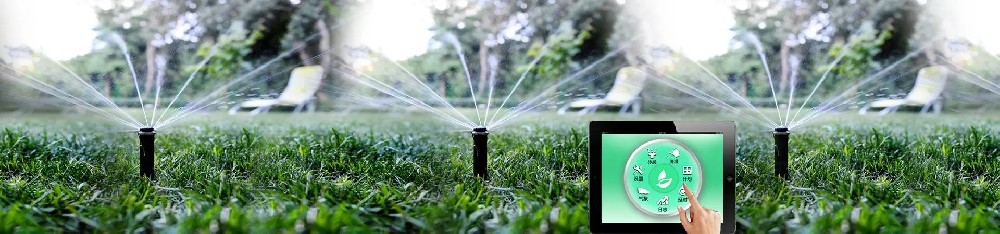
Soil moisture sensors typically consist of inductive probes, signal processing circuits, and communication interfaces. After the probe is inserted or buried in the soil, it senses the soil within a certain range, and then the internal circuit converts the measurement results into digital or analog signals. In the automatic monitoring system, the RS485/Modbus type sensor can be directly connected to the data collector, RTU or PLC, forming continuous recording and remote monitoring. On a soil moisture sensor project, verify this point during commissioning and retain the result in the acceptance file.
The core problem it solves is not simply to judge whether the soil is dry or wet, but to quantify the moisture change in the root zone. In irrigation applications, when water needs to be irrigated, whether it reaches the root zone, and whether water is lost too quickly after irrigation can be judged by changes in moisture at different depths or at different locations. For soil moisture sensor, define the responsible party and supporting evidence before equipment approval.
VWC (Volumetric Water Content) is the ratio of water volume to total soil volume. For example, 25% VWC means that approximately 25 volumetric units of water per 100 volumetric units of soil. It is two completely different physical quantities from the relative humidity of the air RH and cannot be directly converted. For soil moisture sensor, record this requirement in the model-selection sheet before quotation.
The dielectric properties of water are very different from soil minerals and air, so changes in soil moisture content change the electromagnetic properties of the medium around the probe. FDR estimates the dielectric change through the frequency domain response, and TDR estimates the dielectric constant through the time domain pulse propagation characteristics. Both methods are indirect measurements, so soil texture, density, and salinity may affect the results. The soil moisture sensorspecification should connect this decision to the actual installation and controller scope.
Sandy soil has large pores and weak water retention; the specific surface area of the clay is large and the proportion of bound water is high. The dielectric response and volumetric moisture content may be different even if the “mass moisture content” of the two samples is the same. High-precision applications are better suited to establishing reference relationships with local soil samples rather than covering all soils with a common percentage.
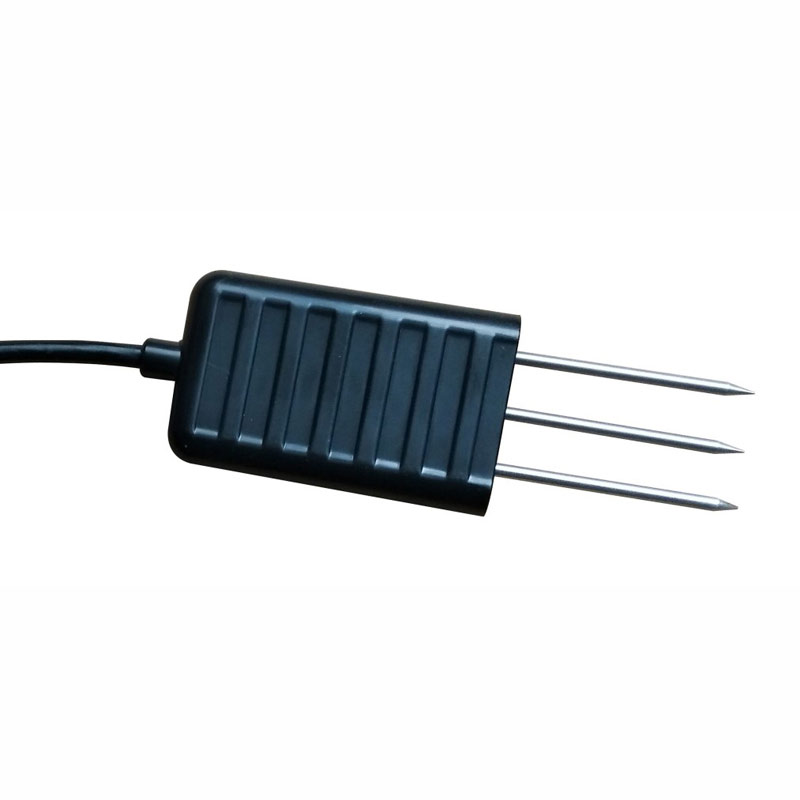
NiuBoL's soil moisture monitoring products cover single-probe, multi-depth profile monitoring, and mobile inspection schemes. The NBL-S-TM soil temperature and humidity sensor can measure soil moisture and soil temperature at the same time. The sensor uses the FDR measurement principle. The typical version supports DC 5-24V power supply and NBL-S-TM0/ Modbus communication, which is suitable for farmland irrigation, greenhouse, orchard, scientific research experiments and long-term monitoring of fixed monitoring points.
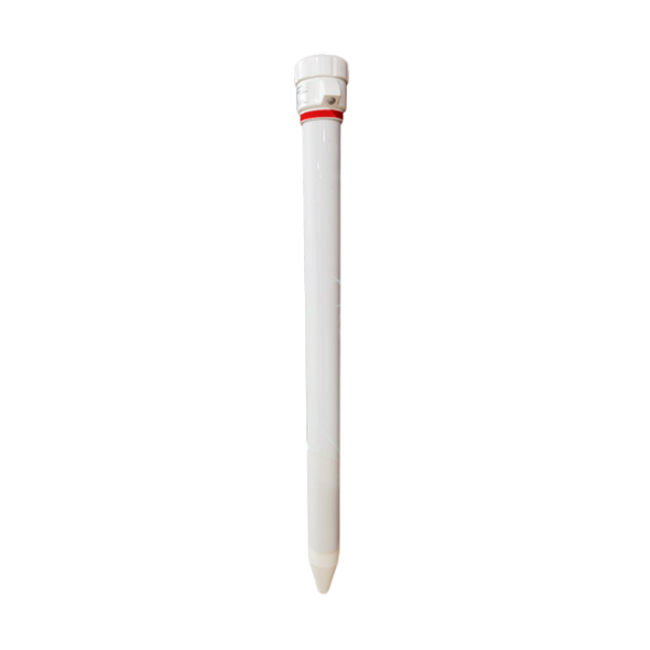
If you need to observe water infiltration in different soil layers, water storage in the root area, and deep leakage, you can choose the NBL-S-TMS multi-layer soil moisture monitoring program; if you need a rapid on-site inspection, you can choose USB/Type-C or handheld soil detection program. The product structure should be determined according to the monitoring depth, the number of distribution points, the power supply conditions and the data access method.
For soil moisture sensor, the combined probe is valuable when parameters are interpreted together, but salinity trends still depend on moisture and temperature conditions. The soil moisture sensor equipment list, drawings and test record should reflect that decision. That soil moisture sensor decision changes the field-survey observations, the accessory scope in the quotation and the evidence required at handover. Without this soil moisture sensor check, a plausible reading may not represent the intended location or be reproducible by another commissioning crew.
In the system, the probe is installed in a representative root-zone profile and sends data to a field logger, irrigation controller, RTU or agricultural IoT gateway. Before ordering soil moisture sensor, the integrator should draw the measurement point, protected cable route, logger channel, network, database field and alarm destination. For soil temperature moisture salinity sensor, a live number on a display by itself is only the first check. Commission the full soil moisture sensorsignal route by checking engineering unit, timestamp, Modbus address and device status at the receiving system.
| Decision field | Engineering requirement | Evidence for acceptance |
|---|---|---|
| Measurement purpose for soil moisture sensor | State what action soil temperature moisture salinity sensor should support | Approved monitoring objective |
| Location for soil moisture sensor | Coordinates, depth or height, orientation and exposure | Drawing and installation photos |
| Data path for soil moisture sensor | Sensor to logger, controller, gateway and platform | Current measurement with correct unit and timestamp |
| Maintenance for soil moisture sensor | Safe access and responsible person | Inspection and service record |
For soil moisture sensor, the starting point for soil moisture sensor is the decision the record must support, the location it represents and the field conditions under which it is collected. The combined probe is valuable when parameters are interpreted together, but salinity trends still depend on moisture and temperature conditions. For soil moisture sensor, that definition determines the sensing principle, mounting arrangement, acquisition interval and acceptance method. It also prevents the selected soil moisture sensor field device from being compared commercially with a complete station that carries different power, logging and communication responsibilities.
| Parameter | Reference requirement | Why it matters |
|---|---|---|
| Measurement range for soil moisture sensor | Model-dependent; state normal, peak and required resolution | Do not select by parameter name alone |
| Measurement accuracy for soil moisture sensor | Use the proposed model datasheet and define field acceptance separately | Catalogue accuracy is not the whole system uncertainty |
| Supply voltage for soil moisture sensor | Confirm sensor, logger and remote power configuration | Check cable voltage drop and battery autonomy |
| Output signal for soil moisture sensor | RS485 Modbus RTU supports multi-point digital networks; portable USB or handheld arrangements are better suited to surveys than unattended control | Request wiring and protocol documents before panel work |
| Power consumption for soil moisture sensor | Use maximum current for power budgeting, not only typical draw | Include modem and heater duty where applicable |
| Protection and temperature for soil moisture sensor | Match enclosure, probe and connector ratings to the site | The lowest-rated exposed part controls field suitability |
| Cable and wetted material for soil moisture sensor | Specify length, sheath, connector and exposed material by medium | Confirm chemical, UV and mechanical compatibility |
Before purchase approval, describe soil temperature moisture salinity sensor as a measuring point with an operating purpose. The soil moisture sensor responsibility matrix should identify the supplier of the field device, logger, power system, mounting parts and communication service, plus ownership of platform configuration and commissioning. NiuBoL can confirm the soil moisture sensor interface and documents after receiving the site conditions, expected range, cable distance and data destination. A defined soil moisture sensorsupply boundary is more useful than a general claim that the equipment is easy to install.
| Application | Field challenge | System integration approach | User value |
|---|---|---|---|
| Irrigation Scheduling for soil moisture sensor | Spatial variation and limited maintenance access | Deploy soil temperature moisture salinity sensor at a representative point and document the location | Produces data that can support an operating decision |
| Saline-Soil Management for soil moisture sensor | Existing PLC or RTU must accept the signal | Confirm output, register map, cable route and grounding before wiring | Reduces commissioning rework |
| Crop Research for soil moisture sensor | Seasonal exposure changes the measurement condition | Use inspection records and seasonal comparison checks | Protects continuity and makes drift visible |
| Greenhouse And Orchard Monitoring for soil moisture sensor | Procurement scope is split between supplier and contractor | Issue a bill of materials with explicit inclusions and exclusions | Makes quotations comparable and limits site additions |
For soil moisture sensor, the important limitation is that Interpret soil moisture sensor readings against soil texture, bulk density, stones, air gaps, salinity, installation disturbance and spatial variability. A practical soil moisture sensor acceptance plan should separate instrument verification from site representativeness. Log the mounting geometry, first readings, comparison method, configuration and environmental condition. If the measured value later changes, the retained files let the owner distinguish a real field event from installation movement, fouling, configuration changes or communication loss.
| RFQ item | Information to provide | Cost or risk controlled |
|---|---|---|
| Application for soil moisture sensor | Purpose and site for soil temperature moisture salinity sensor | Prevents wrong product family |
| Measurement for soil moisture sensor | Normal, alarm and peak range; required interval | Avoids under-range or needless overspecification |
| Integration for soil moisture sensor | PLC/RTU/logger model, signal and protocol | Reduces panel rework |
| Mechanical for soil moisture sensor | Mounting, depth or height, cable route and material exposure | Defines accessories and serviceability |
| Supply scope for soil moisture sensor | Sensor only or complete station; documents and spares | Makes prices comparable |
| Commercial for soil moisture sensor | Quantity, destination, delivery target and packing | Supports a realistic quotation |
Do not specify soil temperature moisture salinity sensor solely because a similar device appeared in a tender or an earlier project. It is a poor fit when the measuring point cannot represent the process, the site has no safe way to install or service it, or the owner cannot say what action follows the measured value. Interpret soil moisture sensor readings against soil texture, bulk density, stones, air gaps, salinity, installation disturbance and spatial variability. If the proposed soil moisture sensor point is not representative or serviceable, relocate it, revise the method, add justified conditioning or complete a portable survey before permanent installation.
For soil moisture sensor, choosing the output interface after the control cabinet is built creates avoidable converter, rewiring and programming work. The soil temperature moisture salinity sensor model, power demand and output must be frozen early enough for the integrator to allocate terminals, protection, addresses and data fields. Where the soil moisture sensor host has only analog inputs, confirm the exact 4-20 mA scaling for the selected model. Where soil moisture sensor uses RS485 Modbus RTU, obtain the register addresses, data types, scaling and engineering units before controller programming. For soil moisture sensor, a protocol label alone does not establish plug-and-play interoperability.
Before shipment, bench-test the selected soil temperature moisture salinity sensor with the intended power supply and host interface where practical. At the soil moisture sensor location, verify mounting, cable protection, grounding or bonding, device address, logger clock, upload interval and alarm destination. Acceptance of soil moisture sensorshould include a stable live value, a parameter-appropriate response or reference check, a stored historical record and verified communication recovery after a controlled power cycle.
For soil temperature moisture salinity sensor, do not close acceptance with a screenshot alone. The soil moisture sensor handover record should capture serial and configuration details, field position, cable and terminal information, Modbus settings, the first comparison result, platform tag and the routine-inspection owner. Recording these soil moisture sensor details during commissioning avoids reconstructing device identity, wiring and configuration after a fault.
A1: No. Soil moisture is usually expressed as a percentage of soil moisture defined by VWC or equipment, and air moisture is used only for %RH.
A2: The pure water test is mainly used to verify the upper limit of response and does not mean that the field soil should be close to 100% VWC. The saturated VWC of most forming soils is also well below 100%.
A3: It is not possible to judge based on the principle name alone. Accuracy also depends on probe structure, calibration, soil type, mounting contact and signal processing.
A4: Use several depths when the project must distinguish surface wetting from root-zone storage or drainage below the crop root zone. Define each depth from the agronomic objective and install probes in comparable, representative soil.
A5: Confirm supply voltage, polarity, address, baud rate, register map, data type, decimal scaling and engineering unit. Verify one live reading at the sensor and host system before assigning addresses to the remaining probes.
A6: Air gaps, stones beside the rods, disturbed soil and poor contact can shift the apparent VWC. Install the probe in undisturbed representative soil where possible, document orientation and depth, and allow the soil to settle before accepting the baseline.
A7: Compare the same measurement method, parameter set, accuracy statement, output, cable, enclosure, logger scope, accessories and calibration basis. A single probe price should not be compared with a package that includes communications and field hardware.
A8: Provide soil texture, crop and root depth, irrigation method, expected moisture range, number of depths, installation period, power, communication interface, cable distance, logger or platform scope and the required acceptance check.
Soil moisture values are meaningful only when the measurement method, reported unit, soil texture, installation contact and root-zone position are documented together. Use VWC for volumetric water content decisions, treat FDR and TDR as measurement approaches rather than interchangeable specifications, and verify the installed baseline under representative wetting and drying conditions.
Prev:RS485, 4-20mA or 0-5V: How to Choose a Sensor Output Signal
Next:Why Soil Moisture Readings Differ in Sandy and Clay Soil
Related recommendations
Sensors & Weather Stations Catalog
 Agriculture Sensors and Weather Stations Catalog-NiuBoL.pdf
Weather Stations Catalog-NiuBoL.pdf
Agriculture Sensors Catalog-NiuBoL.pdf
Water Quality Sensor Catalog-NiuBoL.pdf
Related products
 Combined air temperature and relative humidity sensor
 TDR Soil Moisture & Temperature Sensor for irrigation| RS485 |4-20mA| NBL-S-THR
 Soil pH sensor RS485 soil Testing instrument soil ph meter for agriculture |NBL-S-PH
 Wind Speed sensor Output Modbus/RS485/Analog/0-5V/4-20mA
 Tipping bucket rain gauge for weather monitoring auto rainfall sensor RS485/Outdoor/stainless steel
 Pyranometer Solar Radiation Sensor 4-20mA/RS485

Screenshot, WhatsApp to identify the QR code
WhatsApp number:+8615367865107
(Click on WhatsApp to copy and add friends)

