





— Blogs —
—Products—
 Consumer hotline +8618073152920
WhatsApp:+8615367865107
Address:Room 102, District D, Houhu Industrial Park, Yuelu District, Changsha City, Hunan Province, China
Product knowledge
Time:2026-09-20 12:00:00 Popularity:201
An online ammonia nitrogen sensor model can be considered for several sites, but its range, reporting basis and field acceptance must match each duty. A configuration tested in wastewater is not automatically approved for a low-concentration river or a pond alarm. Standardize the hardware only where the evidence supports it; keep site-specific measurement and operating settings identifiable.
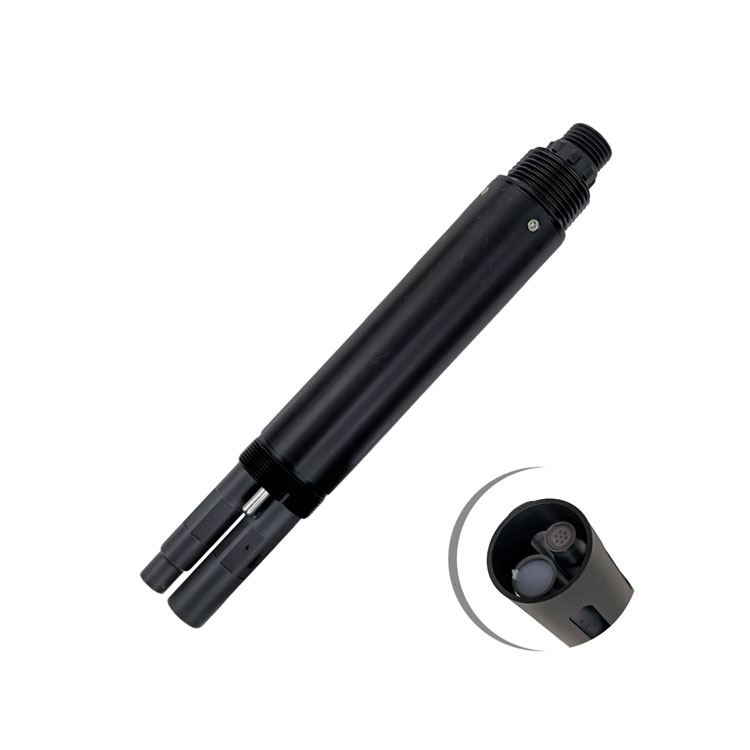
A distributor or integrator may want one spare-parts family for several installations. That can simplify supply, but it does not make the waters or decisions equivalent. Build the common equipment list around an identified model and version, then approve the measurement at each site type.
Record what the result represents before copying a channel. An ammonium ion-selective electrode is not a total-nitrogen analyzer, and an ammonia-labelled value must retain its reporting basis. The ammonia-versus-ammonium guide explains that distinction; the project settings should preserve it rather than reducing every channel to a generic nitrogen label.
| Duty | Site-specific decision | What must not be copied without review |
|---|---|---|
| Aquaculture pond or tank | Interpret the nitrogen result with the relevant water conditions and operating plan | Another farm's threshold, assumed pH relationship or intervention rule |
| River observation point | Recognize a meaningful concentration change at a representative location | A wastewater range or detection claim that cannot resolve the required low band |
| Wastewater process point | Observe the identified inlet, reactor or outlet duty | An alarm or response rule from a different treatment stage |
A conductivity probe can document a change in ionic water composition when a source changes. It cannot establish ammonium concentration or identify every interfering ion. An existing EC station therefore does not become an ammonia station by changing its tag name.
When one sensor family is proposed for fresh water and a saltier stream, record the different water backgrounds in the site files. A standard check in a simple solution verifies a different condition from a field comparison in each water. Approval at one location does not settle the other location's matrix response.
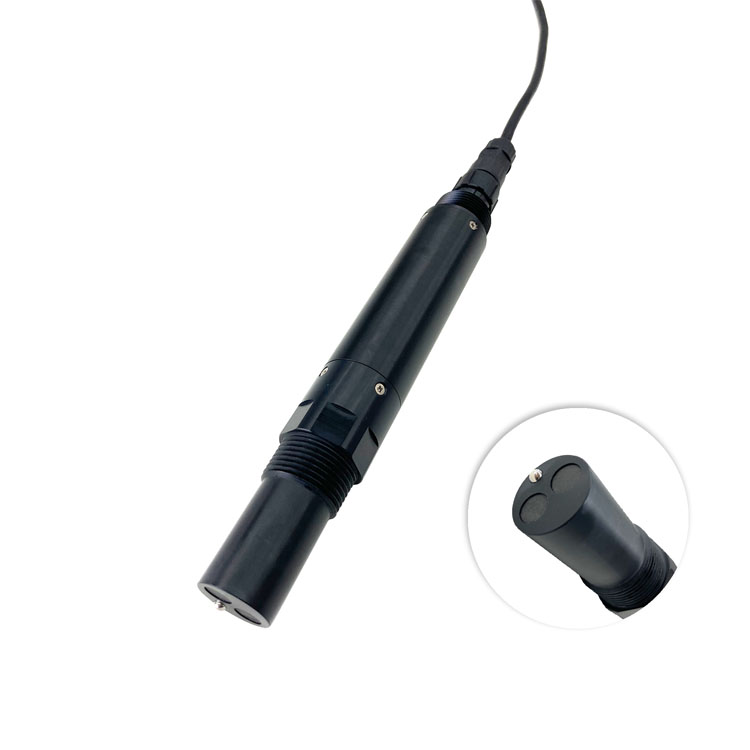
The NiuBoL NBL-WQ-NHN-4S uses a PVC-membrane ammonium ion-selective electrode. Its listed 0–100 and 0–1000 mg/L configurations are not interchangeable merely because their housings and communications are similar.
| NHN-4S item | Specification | Multi-site purchasing implication |
|---|---|---|
| Ranges and resolution | 0–100 mg/L with 0.01 mg/L resolution; 0–1000 mg/L with 0.1 mg/L resolution | Identify the selected version for every station and spare. |
| Accuracy | ±10% or ±1 mg/L, whichever is greater; confirm the percentage and reporting basis for the offered version | Check adequate performance at each action level; display resolution is not low-level accuracy. |
| Medium | 0–40 °C; pressure <0.1 MPa; pH 4–10 | Approve actual exposure and sample conditions separately at each point. |
| Compensation | Pt1000 temperature compensation | Do not treat it as an automatic correction for every ion interference or ammonia fraction. |
| Supply and consumption | 12–24 VDC; 0.2 W at 12 V | Size complete stations for their logger, communications and other loads. |
| Output | RS485 Modbus RTU; optional 4–20 mA | Keep range-dependent scaling and the ordered output with the station configuration. |
| Construction | POM/316L; IP68; 3/4 NPT immersion mounting; standard 5 m cable | Specify compatible holders, cable jacket and service access for each site. |
A low-concentration river decision may need another demonstrated measurement arrangement if these specifications do not resolve its required band. Ordering the lower of two available ranges is not itself evidence that the sensor is suitable for every low-level environmental task.
A multiparameter assembly can group required observations, but the project must identify which modules are actually fitted. A spare assembly should not arrive with a different parameter set, range or cable arrangement simply because the family name matches.
For repeated installations, preserve a station schedule showing probe version, measurement basis, approved range, reference method and sample location. Keep site alarm rules in a separate identified configuration. This lets purchasing reuse common components without accidentally copying a river threshold to a wastewater reactor or a tank response to a remote station.
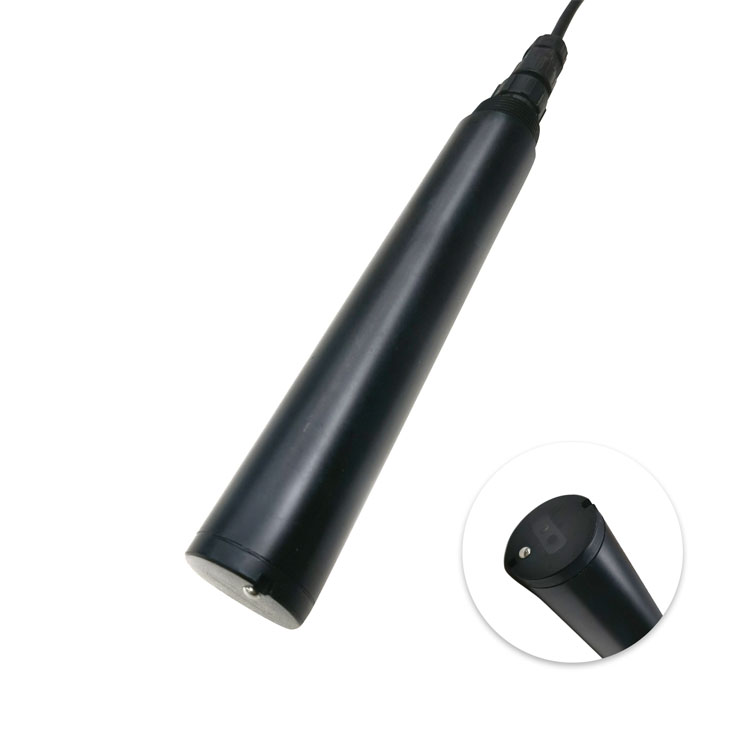
Before moving a spare between sites, check its range, output and readiness for use under the supplied electrode procedure. Confirm the receiving host's unit and scale against a known valid observation. An instrument that communicates correctly can still be the wrong version for that station.
Use a representative comparison for the destination water where required. Retain the previous site's configuration separately rather than assuming an old adjustment transfers unchanged. If the membrane or relevant components are replaced, identify that change in the service history so a new response is not compared as though nothing changed.
At the PLC, RTU or data logger, preserve a distinct channel name and reporting basis for each physical point. Verify any decimal field or analog mapping against the ordered version. A higher-range replacement must not inherit the lower-range conversion silently.
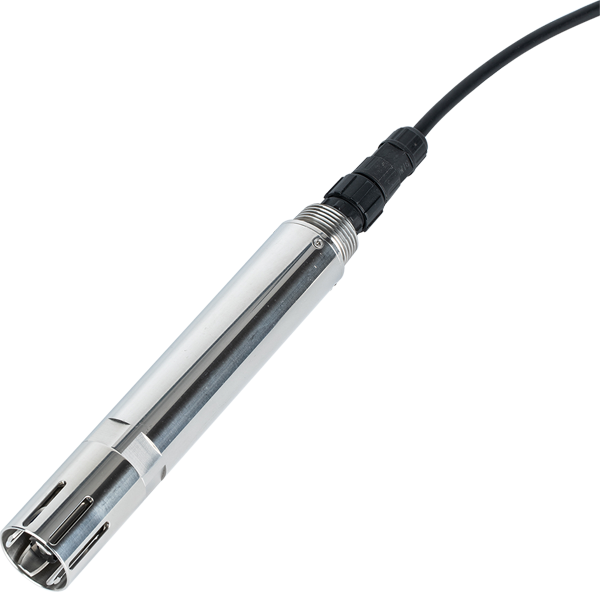
Only where the selected version and measurement evidence suit each duty. A common purchasing specification should not erase differences in action band, water matrix or required reference method.
No. Check the range, resolution, reporting basis and actual host interpretation. Protocol compatibility does not establish analytical equivalence.
No. EC responds to combined ionic conductivity and does not selectively measure ammonium. It may provide context, but it is not a substitute nitrogen result.
Record exact model and version, range, output, connector and cable arrangement, electrode condition and any configuration needed at the destination. A generic ammonia sensor label is insufficient.
Provide a site-by-site schedule of water type, operating and action bands, required reporting basis, reference method, temperature and pH, known salts, mounting and host interface. Mark which components must be interchangeable.
Standardize an ammonia-sensor family where it genuinely fits, while keeping site approvals, ranges and operating settings separate. This supports repeat purchasing without turning hardware similarity into an unsupported claim of measurement suitability.
Prev:Why Effluent COD Suddenly Increases and What Online Sensors Can Confirm
Next:Ammonia vs Ammonium in Water Monitoring: Procurement Notes for NH4-N Sensors
Related recommendations
Sensors & Weather Stations Catalog
 Agriculture Sensors and Weather Stations Catalog-NiuBoL.pdf
Weather Stations Catalog-NiuBoL.pdf
Agriculture Sensors Catalog-NiuBoL.pdf
Water Quality Sensor Catalog-NiuBoL.pdf
Related products
 Combined air temperature and relative humidity sensor
 TDR Soil Moisture & Temperature Sensor for irrigation| RS485 |4-20mA| NBL-S-THR
 Soil pH sensor RS485 soil Testing instrument soil ph meter for agriculture |NBL-S-PH
 Wind Speed sensor Output Modbus/RS485/Analog/0-5V/4-20mA
 Tipping bucket rain gauge for weather monitoring auto rainfall sensor RS485/Outdoor/stainless steel
 Pyranometer Solar Radiation Sensor 4-20mA/RS485


Screenshot, WhatsApp to identify the QR code
WhatsApp number:+8615367865107
(Click on WhatsApp to copy and add friends)

