





— Blogs —
—Products—
 Consumer hotline +8618073152920
 WhatsApp:+8615367865107
Address:Room 102, District D, Houhu Industrial Park, Yuelu District, Changsha City, Hunan Province, China
Product knowledge
Time:2026-03-29 15:49:43 Popularity:531
The agricultural weather station provides precise meteorological guarantee for stable grain production and supply by real-time monitoring of meteorological elements such as wind speed, wind direction, rainfall, air temperature, humidity and light. NiuBoL agricultural weather station and soil moisture monitoring station integrate professional sensors and data acquisition systems to help system integrators, IoT solution providers and engineering companies build meteorological disaster prevention and control systems, improve the level of refined agricultural production management, and contribute to national food security.
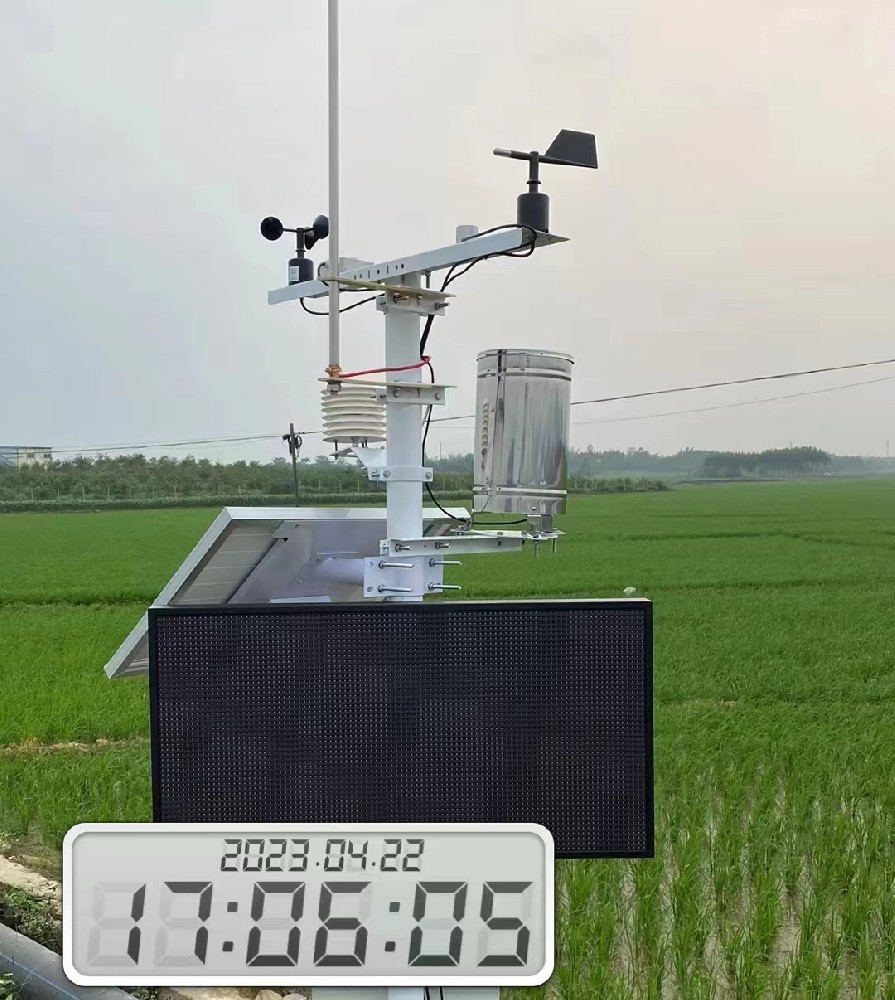
Under the national strategy of “food is the first necessity of the people”, food security is an important cornerstone of national security. Facing the dual challenges of global supply chain fluctuations and climate change, the agricultural weather station has become an indispensable intelligent monitoring infrastructure in modern agricultural production. NiuBoL agricultural weather station realizes 24-hour continuous monitoring of key meteorological elements and soil environment through high-precision sensor networks and unattended data acquisition systems, providing reliable meteorological guarantee services for grain production bases.
This article systematically explains the definition of agricultural weather stations, core sensor composition, key role in ensuring stable grain supply in China, as well as the technical features and application scenarios of NiuBoL products. For system integrators, IoT solution providers, project contractors and engineering companies, this article provides directly implementable technical references and solution frameworks.
The agricultural weather station is an automated meteorological observation system specially designed for agricultural production environments. It integrates meteorological sensors, data collectors, power supply systems, protective boxes, meteorological observation brackets and communication modules, and can perform real-time and continuous monitoring of multiple meteorological elements that affect crop growth.
Compared with traditional manual observation, agricultural weather stations have unattended, automatic data collection and remote transmission capabilities. On-site data can be uploaded to cloud platforms or local monitoring centers through various communication protocols such as 4G/5G, LoRa, RS485 or Ethernet, realizing data visualization, trend analysis and early warning push.
Its core value lies in transforming meteorological information into actionable agricultural decision-making basis, helping managers identify risks of meteorological disasters such as low temperature frost damage, drought, flood and strong wind in advance, thereby optimizing field management measures and reducing yield fluctuation risks.
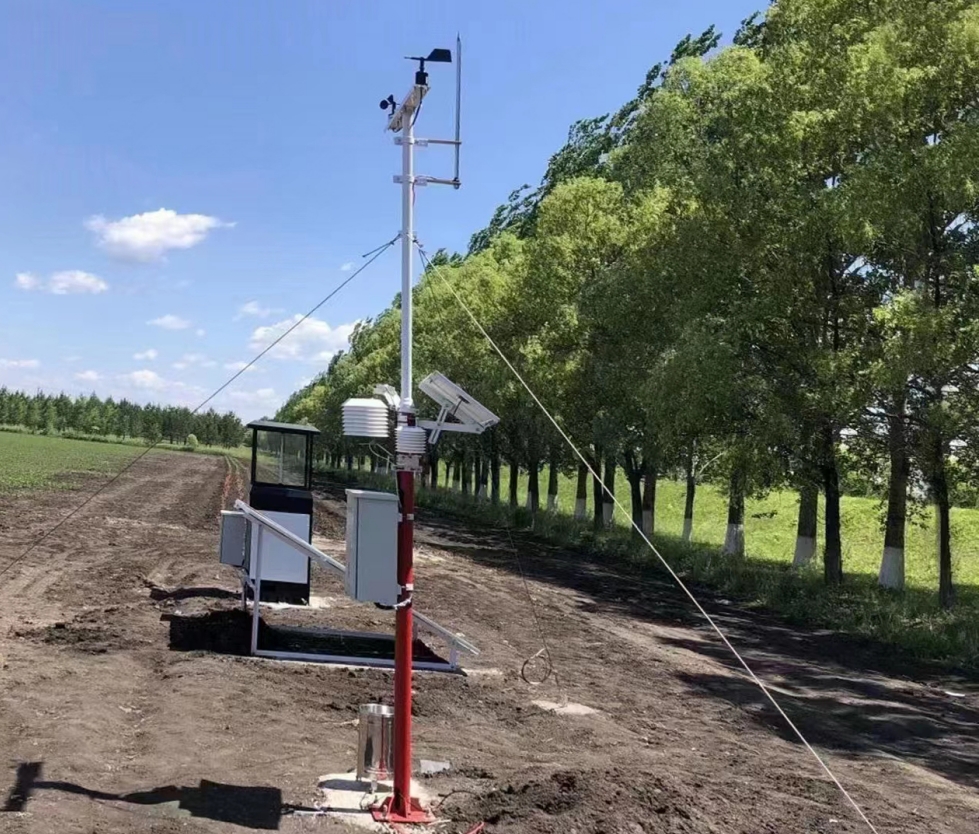
NiuBoL agricultural weather station adopts modular sensor design and can be flexibly configured according to project requirements. The standard configuration focuses on the following meteorological elements:
| Sensor Type | Monitoring Element | Main Function Description | Typical Application Scenarios |
|---|---|---|---|
| Wind Speed Sensor | Wind Speed | Real-time measurement of instantaneous and average wind speed | Strong wind warning, sprinkler irrigation operation safety assessment |
| Wind Direction Sensor | Wind Direction | Accurate indication of wind direction angle | Pest and disease spread trend analysis |
| Rainfall Sensor | Rainfall | Cumulative rainfall and rainfall intensity monitoring | Flood risk assessment, drainage decision-making |
| Air Temperature Sensor | Air Temperature | High-precision temperature and humidity integrated measurement | Low temperature frost damage and heat damage warning |
| Air Humidity Sensor | Air Humidity | Relative humidity monitoring | Crop transpiration and disease occurrence condition judgment |
| Light Intensity Sensor | Light Intensity / Radiation | Solar radiation and photosynthetically active radiation measurement | Light condition assessment, growth cycle prediction |
All the above sensors adopt industrial-grade protection design and support wide temperature operation from -40℃ to +70℃, meeting the needs of long-term stable operation in the field. The data collector can complete multi-channel synchronous sampling every minute and output through standard Modbus-RTU protocol, which is convenient for seamless integration with third-party PLC, SCADA or agricultural IoT platforms.
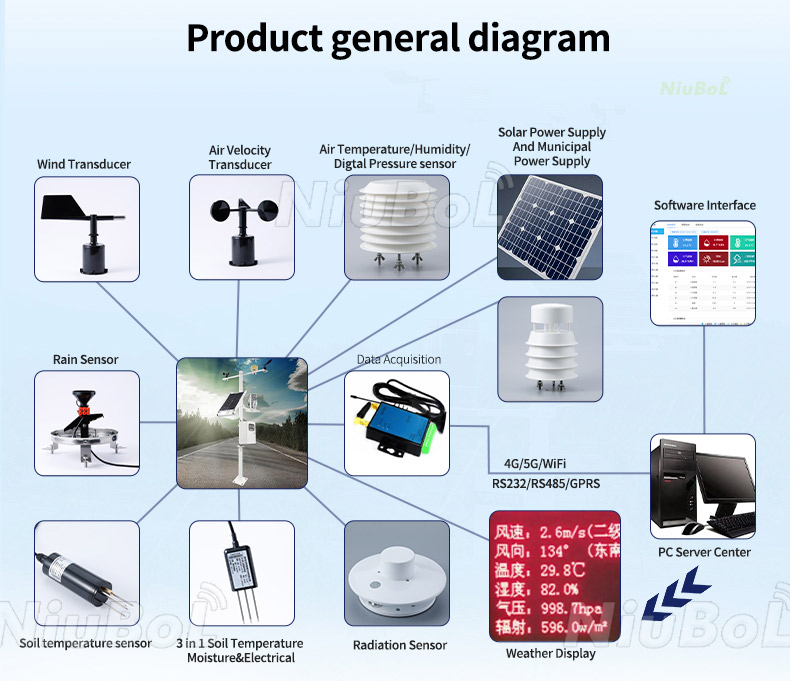
As a major country with a large population, China's stable grain production and supply is directly related to national fortune and people's livelihood. Since 2022, the Russia-Ukraine conflict has caused tension in the international wheat, barley and corn supply chains, and the export of Ukraine, Europe's "granary", has been blocked, further highlighting the importance of independent guarantee capabilities. Although China is a major grain producer, its per capita arable land is limited, so it still needs to improve yield stability through scientific and technological means.
The government work report clearly proposes "vigorously grasp agricultural production", "improve agricultural meteorological disaster prevention and control and animal and plant disease prevention and control capabilities", and "strengthen stable production and supply of grain and other important agricultural products". Agricultural weather stations are the core technical grasp for implementing this strategy.
By real-time monitoring of the microclimate environment of production bases, agricultural weather stations can provide data support for the following key links:
Fine management during winter wheat greening and spring management period: Temperature, soil moisture and light in the greening stage of northern winter wheat directly affect tillering and ear number. Meteorological station data can guide irrigation, fertilization and insulation measures to avoid yield reduction caused by low temperature or drought.
Early warning of meteorological disasters: Uncontrollable disasters such as cold frost, drought, flood and typhoon account for more than 70% of grain losses. Agricultural weather stations can generate 24-72 hour warning information based on historical data and real-time trends to help farmers take measures such as covering, drainage and reinforcement in advance.
Transformation to scientific production mode: The traditional "head-down hard work" farming method is shifting to data-driven precision agriculture. Joint deployment of meteorological stations and soil moisture monitoring stations realizes closed-loop monitoring of environment-soil-crop full elements and improves resource utilization efficiency.
Practice has shown that building agricultural weather stations in major grain producing areas can reduce yield losses caused by meteorological disasters by 15%-30%, providing a solid technical guarantee for national food security.
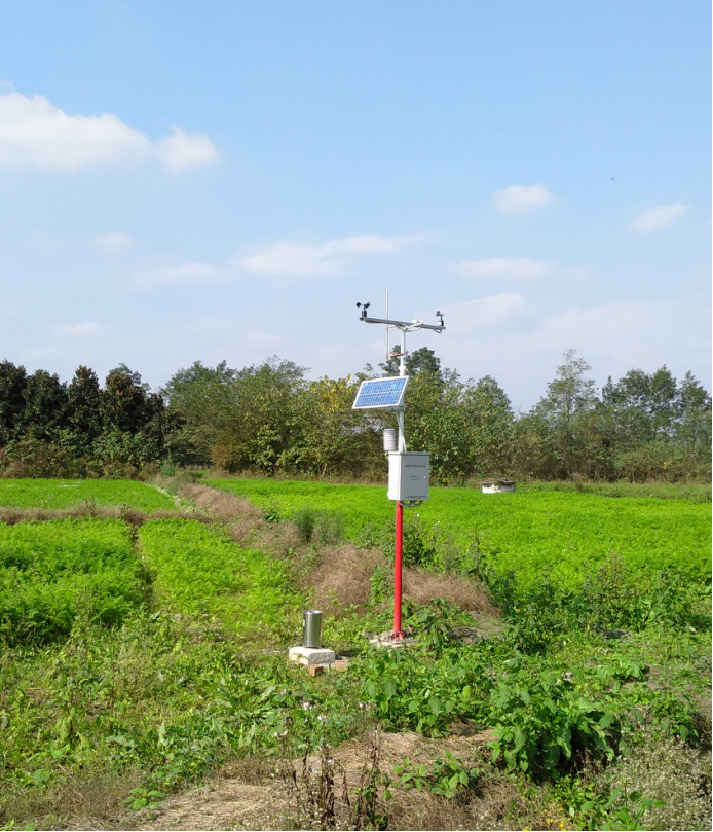
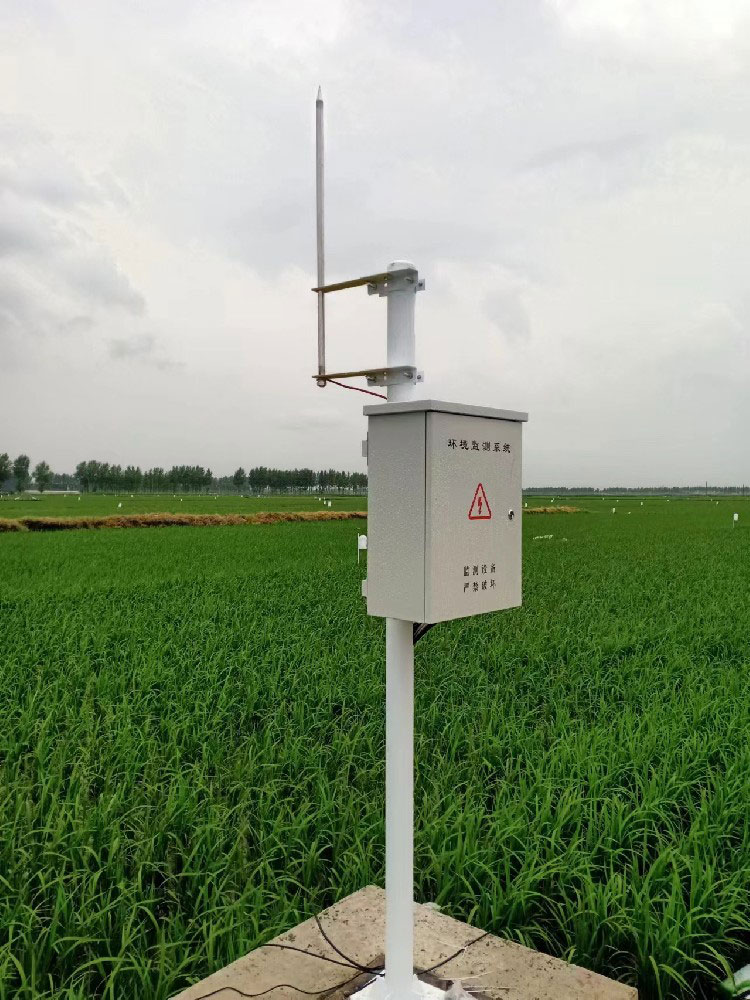
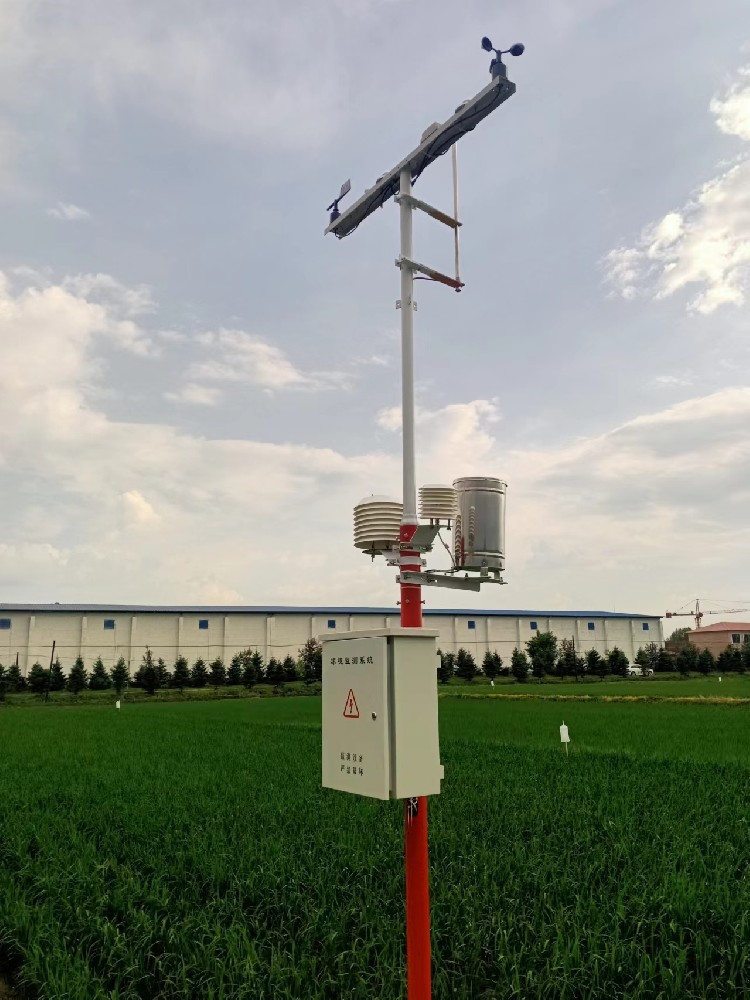
NiuBoL agricultural weather station consists of the following core modules:
Meteorological sensor group (wind speed, wind direction, rainfall, air temperature, humidity, light, etc.)
High-precision data collector (supports multiple analog/digital inputs, built-in watchdog to prevent crashes)
Solar + battery hybrid power supply system (ensures continuous operation in rainy days)
IP65 stainless steel protective box and 3-10 meter meteorological observation bracket
Communication module (supports 4G/5G, LoRaWAN, Ethernet and other transmission methods)
The system adopts unattended design. Data collection interval can be set from 1 to 60 minutes, and data is uploaded to NiuBoL cloud platform or user-owned server in real time. The platform supports automatic report generation, threshold alarm, historical data query and GIS map overlay display, greatly facilitating secondary development and project delivery by system integrators.
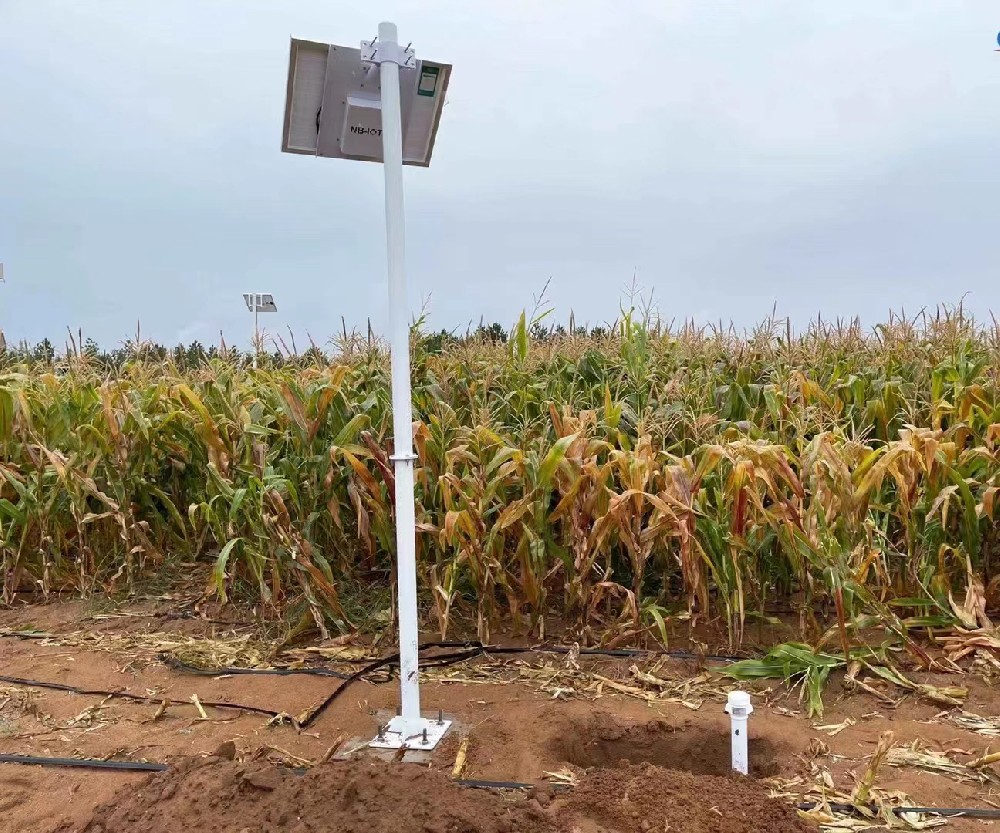
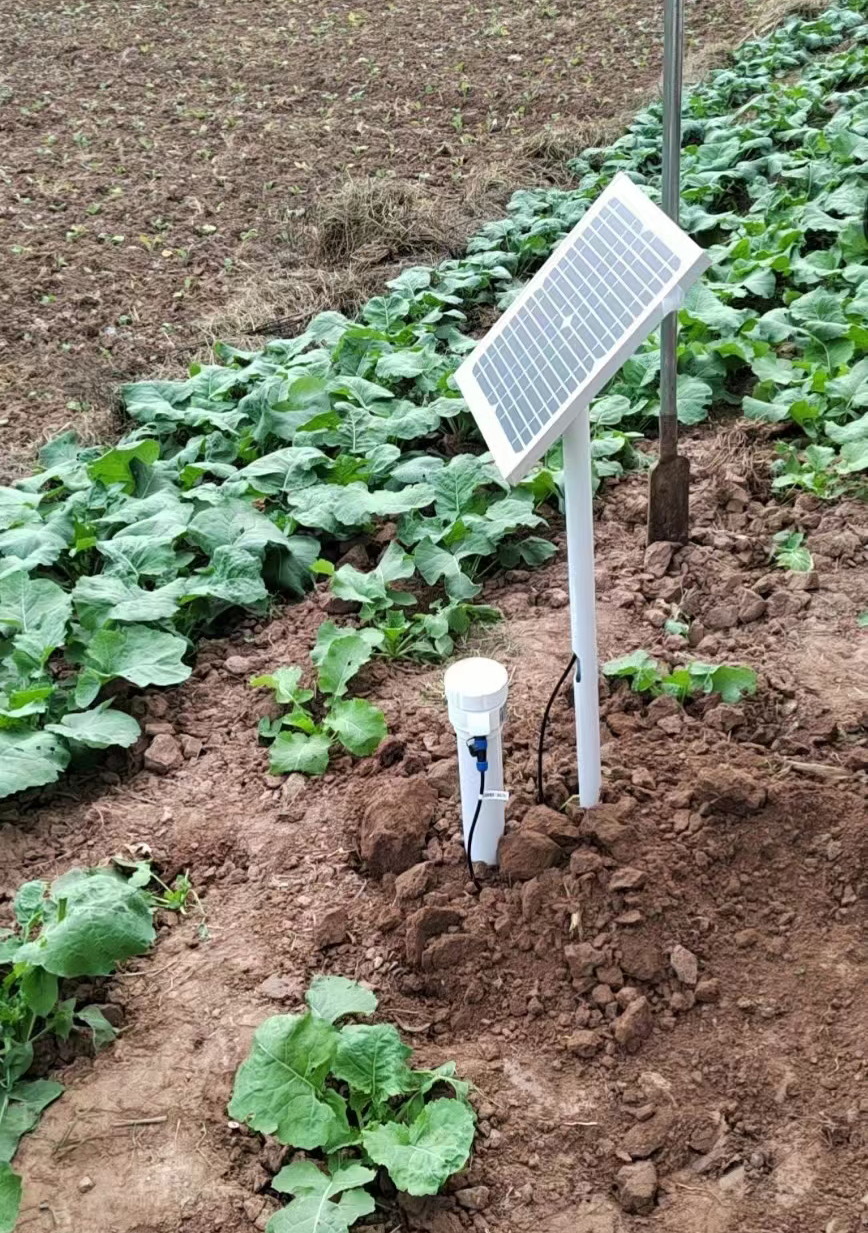
The soil moisture monitoring station, which complements the weather station, focuses on underground environment monitoring. Core parameters include:
| Monitoring Element | Function Description | Typical Value |
|---|---|---|
| Soil Temperature | Multi-layer measurement at 10cm/20cm/30cm | Root activity and sowing timing judgment |
| Soil Moisture | Real-time monitoring of volumetric water content | Precise irrigation decision-making to avoid over-drought or over-waterlogging |
| Soil Salinity | Electrical conductivity (EC) monitoring | Evaluation of saline-alkali land improvement effect |
The equipment supports 24-hour continuous online monitoring. Data is transmitted to the monitoring center through various wireless methods to realize unattended automatic collection and report generation. In national key projects such as comprehensive utilization of saline-alkali land and black soil protection, the soil moisture station can provide direct data basis for scientific fertilization and water-saving irrigation.
It is currently the critical greening period for northern winter wheat. The joint deployment of NiuBoL agricultural weather station and soil moisture monitoring station can grasp in real time:
Temperature rise trend and low temperature risk
Soil moisture changes and irrigation needs
Impact of light conditions on photosynthesis
Managers can analyze platform data and adjust field management measures in a timely manner: timely watering for greening, topdressing, and prevention of pests and diseases, thereby increasing ear number and improving 1000-grain weight, laying a foundation for summer grain harvest. This solution has been verified in multiple grain production bases and can significantly improve yield stability.
Meteorological disasters have the characteristics of suddenness and regionality. NiuBoL system achieves efficient defense through the following closed-loop process:
On-site multi-element monitoring → 2. Data collection and edge computing → 3. Cloud platform trend analysis and model early warning → 4. Mobile terminal / SMS / voice push → 5. Rapid response by farmers / bases
Typical cases include: 48-hour warning before cold wave arrival to guide covering and insulation; pre-digging of drainage ditches before heavy rainfall; water-saving irrigation scheduling during continuous drought periods.
This defense system not only reduces economic losses but also provides objective data support for agricultural insurance and credit assessment.
NiuBoL products adopt an open architecture, support standard communication protocols and secondary development interfaces, which is convenient for integrators to quickly dock with existing agricultural IoT platforms or smart agriculture command centers. The equipment is stable and reliable with low maintenance costs, and has achieved large-scale deployment in multiple large grain base projects.
By deploying NiuBoL agricultural weather stations and soil moisture monitoring stations, project contractors can provide owners with an integrated "monitoring-analysis-decision" solution, improving project technical content and delivery value.
1. What is the essential difference between agricultural weather stations and ordinary weather stations?
Agricultural weather stations are optimized for crop growth environments, focusing on microclimate elements directly related to agricultural production, and support linkage with soil moisture and crop models, while ordinary weather stations focus more on macro weather forecasting.
2. What communication methods does NiuBoL agricultural weather station support?
Supports multiple protocols such as 4G/5G, LoRa, RS485 and Ethernet, which can be flexibly selected according to on-site network conditions to ensure stable data upload.
3. Can the soil moisture monitoring station be linked with the agricultural weather station?
Yes. Data from the two systems can be uniformly accessed to the same platform to realize joint analysis of meteorological and soil environments, providing complete basis for precise irrigation and disaster prevention and control.
4. Does the system support unattended long-term operation?
Yes. It adopts solar + battery power supply and industrial-grade protection design. The average time between failures exceeds 3 years, which is suitable for deployment in field grain bases.
5. How does the agricultural weather station help reduce meteorological disaster losses?
Through real-time data trend analysis and threshold alarms, early warnings are issued 24-72 hours in advance, giving growers sufficient time to take measures such as insulation, drainage and reinforcement, significantly reducing yield reduction caused by frost damage, flood and drought.
6. Can system data be used for government supervision or insurance claims?
Data has timestamp, location information and anti-tampering mechanism, and can export standard reports to meet the supervision needs of agricultural authorities and policy-based agricultural insurance claims.
7. What infrastructure is needed to install agricultural weather stations?
Only 3-10 meter bracket foundation, power access point (or solar configuration) and communication signal coverage are needed. NiuBoL provides complete installation guidance and debugging services.
8. What is the biggest advantage of NiuBoL products for system integrators?
Open protocols, modular design, stable and reliable hardware and professional cloud platform support can greatly shorten project integration cycles and reduce subsequent maintenance costs.
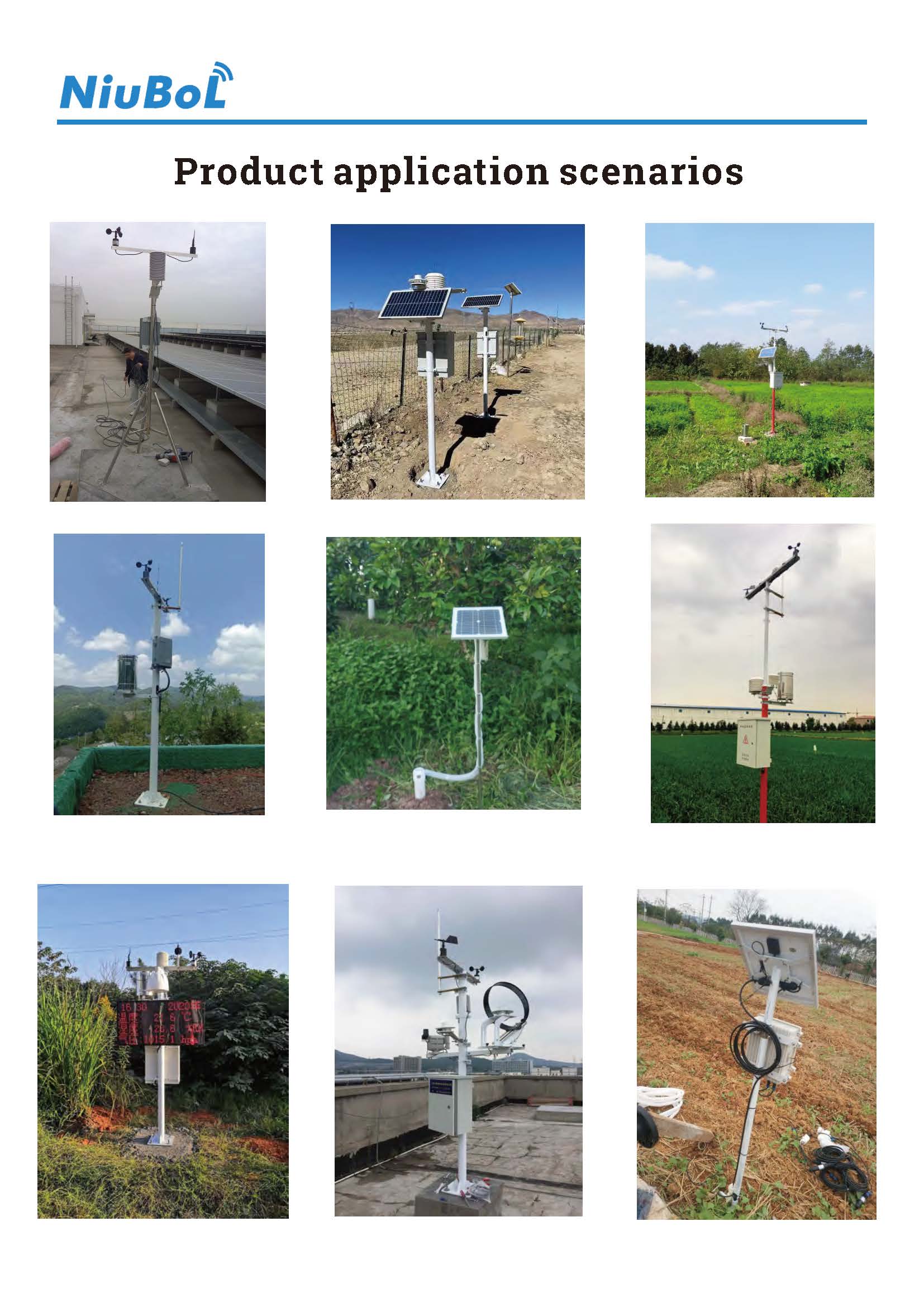
Food security is the ballast stone of national security, and agricultural weather stations and soil moisture monitoring stations are the key technical infrastructure to achieve stable production and supply. NiuBoL provides mature and scalable monitoring solutions for system integrators, IoT solution providers and engineering companies with its professional sensor arrays, reliable data acquisition systems and open integration capabilities.
Under the dual drive of policy and market demand, deploying agricultural weather stations has become an inevitable choice for grain production bases to improve refined management levels and strengthen meteorological disaster prevention and control. NiuBoL is willing to work hand in hand with industry partners to empower agriculture with data and contribute technical strength to national food security and high-quality agricultural development.
Prev:Key Role of Radar Hydrological Monitoring Station in Flood and Waterlogging Disaster Prevention
Related recommendations
Sensors & Weather Stations Catalog
 Agriculture Sensors and Weather Stations Catalog-NiuBoL.pdf
Weather Stations Catalog-NiuBoL.pdf
Agriculture Sensors Catalog-NiuBoL.pdf
Water Quality Sensor Catalog-NiuBoL.pdf
Related products
 Combined air temperature and relative humidity sensor
 TDR Soil Moisture & Temperature Sensor for irrigation| RS485 |4-20mA| NBL-S-THR
 Soil pH sensor RS485 soil Testing instrument soil ph meter for agriculture |NBL-S-PH
 Wind Speed sensor Output Modbus/RS485/Analog/0-5V/4-20mA
 Tipping bucket rain gauge for weather monitoring auto rainfall sensor RS485/Outdoor/stainless steel
 Pyranometer Solar Radiation Sensor 4-20mA/RS485

Screenshot, WhatsApp to identify the QR code
WhatsApp number:+8615367865107
(Click on WhatsApp to copy and add friends)

