





— Blogs —
—Products—
 Consumer hotline +8618073152920
WhatsApp:+8615367865107
Address:Room 102, District D, Houhu Industrial Park, Yuelu District, Changsha City, Hunan Province, China
Product knowledge
Time:2025-03-18 10:48:57 Popularity:1319
Agricultural weather station data validation means checking whether the observations support the farm decision being made. A rain total should agree with the gauge's counting rules; a soil-moisture response should be interpreted at its actual depth and irrigation position. Pair station records with field inspections and management logs before using them to change irrigation, crop protection or greenhouse operation.

An agricultural meteorological station can collect useful observations without proving that a particular crop action is correct. For an irrigated field, the question may be whether recent rainfall reached the monitored root zone. In a greenhouse, it may be whether a temperature rise occurred before or after vents opened. Neither question can be answered reliably by a dashboard number without its location and time context.
Choose one decision to evaluate first. Record the action normally taken, the observations used and what staff will inspect afterward. This gives the integrator a practical way to demonstrate value without promising a universal yield increase or a fixed percentage of water savings. It also reveals missing channels before the monitoring system is connected to automatic control.
| Farm question | Records to compare | Reason to investigate further |
|---|---|---|
| Did rain wet the monitored soil? | Rainfall event, soil readings by depth and local field inspection | The gauge recorded rain but only a shallow probe responded. |
| Did irrigation reach the selected root-zone point? | Irrigation start/stop, probe position and subsequent moisture trend | A probe near an emitter rose quickly while a representative location remained dry. |
| Did ventilation change greenhouse conditions? | Inside air observations, outside conditions and vent-operation times | Inside temperature changed before the vent action or the sensor received direct sun. |
| Are two fields experiencing different conditions? | Matched observation periods, sensor heights and site descriptions | A difference coincides with different mounting exposure or service work. |
A disagreement is not automatically a faulty sensor. Runoff, interception, uneven irrigation, changing shade and different soil layers can produce real differences. The check should distinguish a plausible field process from a wiring, unit, timing or installation problem before anyone adjusts the operating rule.
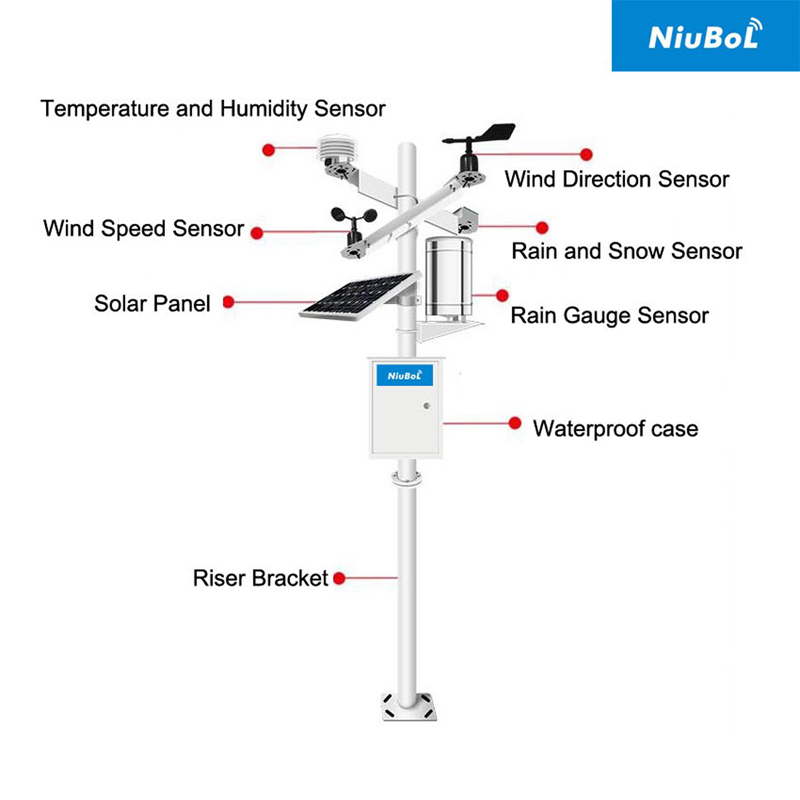
The NiuBoL NBL-W-RS has a 0.2 mm resolution and a 0-4 mm/min precipitation-intensity range. For a pulse configuration, 32 correctly counted tips represent 6.4 mm of gauge rainfall. This is a counting example, not an assumed field event. Confirm the actual output version, counter behavior and daily reset time.
That 6.4 mm is not automatically 6.4 mm of effective root-zone water. Some water may be intercepted, run off or remain above the probe. Inspect the funnel for debris and compare the event with field conditions. A repeated zero during known rain warrants a gauge and input check; a soil reading that stays flat may instead reflect depth, local wetting or poor probe contact.
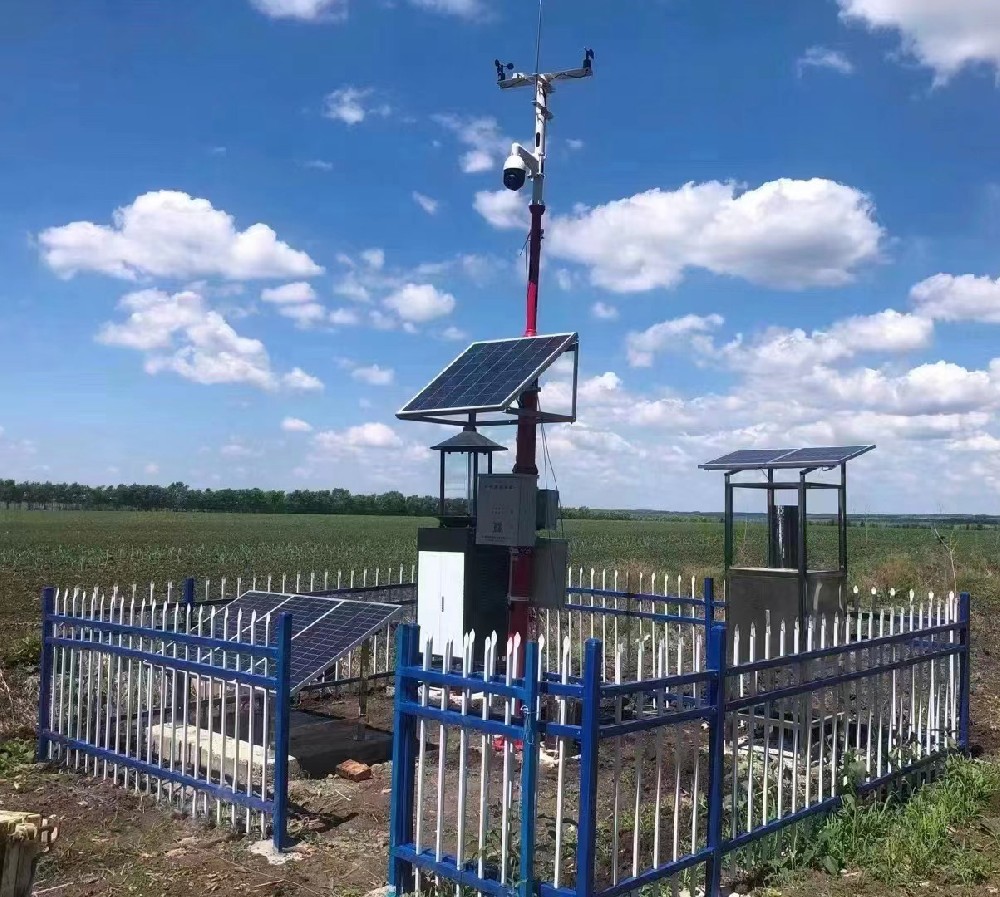
The NBL-S-TM soil temperature and moisture sensor measures temperature and volumetric soil moisture using FDR for the moisture channel. It provides RS485 Modbus RTU output and has an IP68 sealed probe. One probe describes one installed sensing location; it does not resolve an entire soil profile or measure nutrients and salinity.
Record depth, soil type, distance from an emitter and whether the location represents the intended management zone. Maintain close electrode-to-soil contact. A probe installed in loose backfill or an air gap may not track the surrounding root zone consistently. Compare several irrigation or rain events before selecting a threshold, and use local agronomic interpretation rather than copying one percentage to every crop and soil.
| Observation component | Relevant specification | Validation consequence |
|---|---|---|
| NBL-S-TM | Soil temperature -40 to 80 C, +/-0.5 C; volumetric moisture 0-100%; RS485 Modbus RTU | Do not label soil water content as air relative humidity. |
| NBL-W-LBTH | Air temperature -40 to 80 C, +/-0.5 C; RH 0-100%, +/-5% RH; DC 12-24 V | Use ventilated atmospheric exposure and keep air and soil measurements separate. |
| NBL-W-RS | 0.2 mm resolution; operating temperature 0-50 C | Check liquid-rain limits and the recorded accumulation period. |
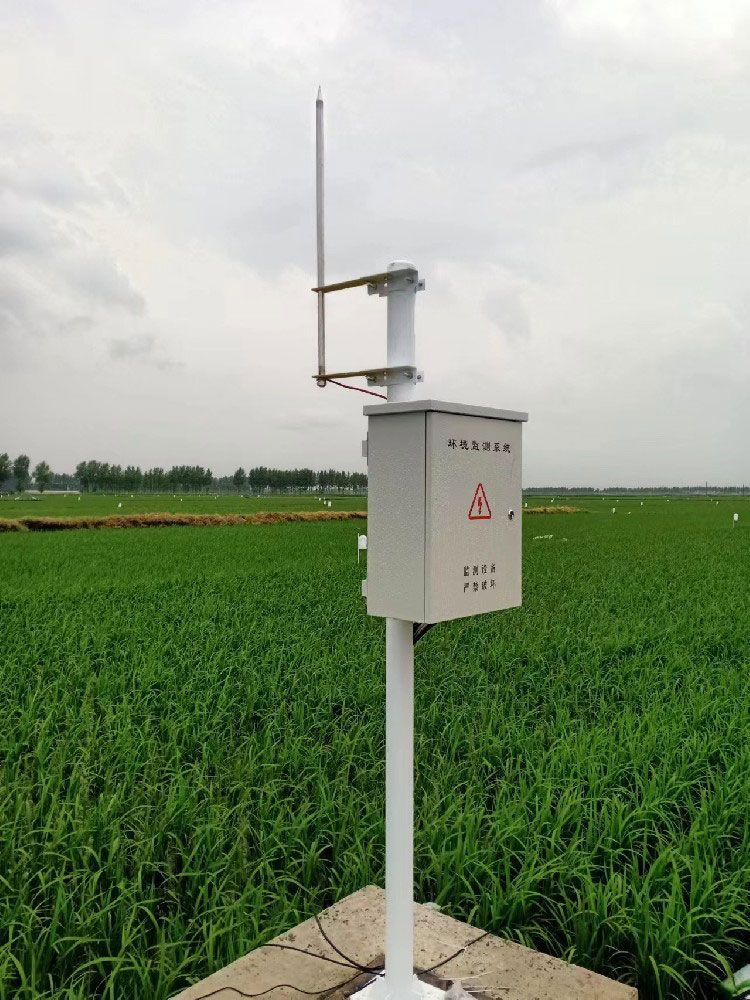
Agricultural weather station data validation also needs a consistent clock. The sensor observation time, logger record and platform arrival time can differ. A delayed upload should not appear to be a new rain event. If a greenhouse actuator log uses another time zone, an apparently ineffective response may simply be plotted against the wrong interval.
Keep raw observations and record the rule used to produce hourly or daily summaries. Compare like periods: a daily rain total with a daily total, not with a single intensity reading. A calculated irrigation recommendation needs its own method, inputs and crop assumptions; the presence of temperature, wind and radiation sensors does not establish a working decision model.
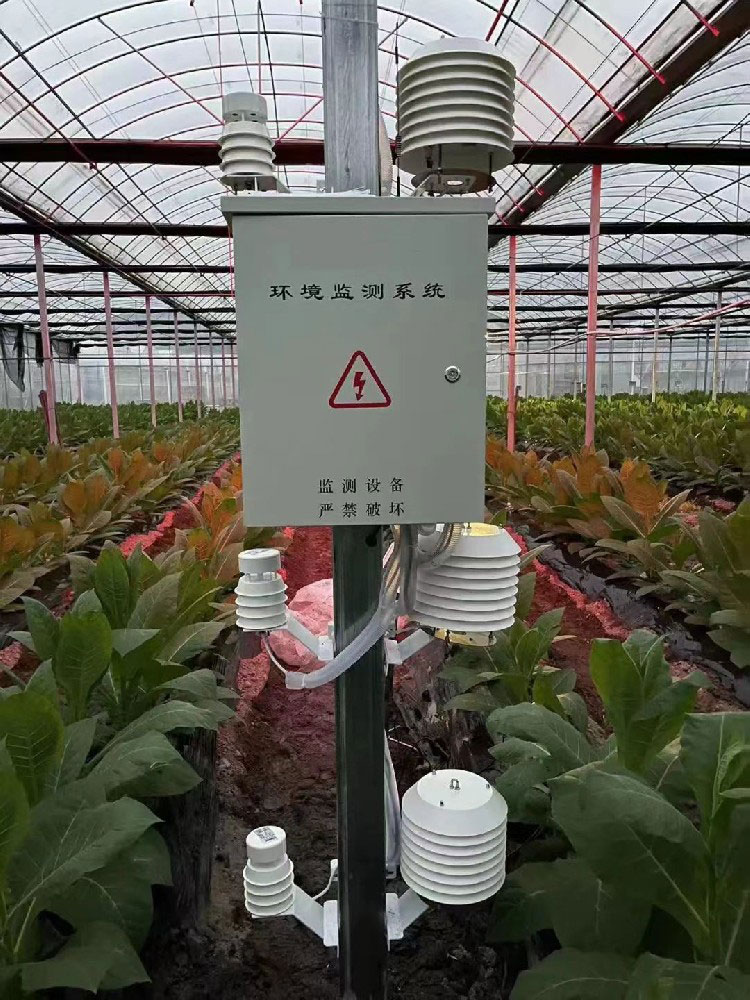
Start with a monitored period in which staff can review proposed actions. Log irrigation, ventilation, sensor cleaning and any changed settings. When the recommendation and the field assessment disagree, investigate the measurement and agronomic assumptions separately. Keep the original readings so a later software change does not erase the basis of that review.
For system integration, map each RS485 address to a named field, parameter and depth. Confirm scale factors and units at the logger and receiving application. A stale or disconnected probe must not be treated as an unchanged valid value. Define what the controller will do without a usable observation before relying on it for unattended operation.
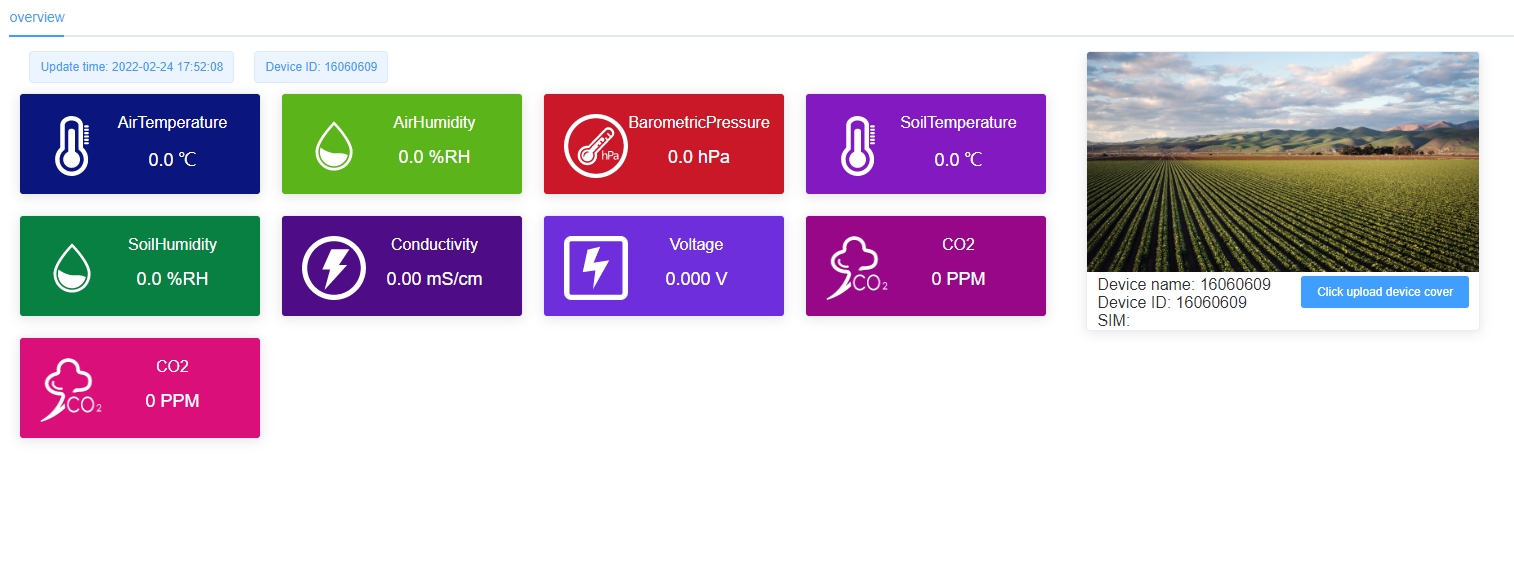
No. A savings assessment needs measured water use, comparable management periods and relevant crop and weather context. Station records can help explain a change, but they do not establish the amount saved or prove that yield and quality were maintained.
Check irrigation, local wetting and the time alignment first. Also inspect the probe and its cable if the step is implausible. The rain gauge and soil probe observe different locations and processes; neither reading should be rejected solely because the other did not change.
Only where the soil, crop, depth and management objective justify it. Different textures and root zones can require different interpretation. Verify representative wetting and drying responses before assigning thresholds to a management zone.
Weather sensing provides inputs, not a complete control system. The project also needs compatible actuator interfaces, locally appropriate operating rules and tests of data loss and manual intervention. Define those functions separately and review proposed actions before enabling unattended operation.
Send the crop and soil description, field layout, intended decision, irrigation method, required sensor depths and available management records. NiuBoL can then help identify measurement channels and a compatible logger or gateway, with any control or modelling scope stated separately.

Agricultural weather station data validation turns observations into evidence that staff can assess against real field conditions. Begin with one management question, preserve the measurements and compare the result with what happened in the soil or greenhouse. Add automation only after the measurement and decision rules have been checked.
Prev:Forest Fire Hazard Meteorological Monitoring Station: Site Selection, Configuration
Next:Tourist Attraction Weather Station: Design Useful Visitor Displays
Related recommendations
Sensors & Weather Stations Catalog
 Agriculture Sensors and Weather Stations Catalog-NiuBoL.pdf
Weather Stations Catalog-NiuBoL.pdf
Agriculture Sensors Catalog-NiuBoL.pdf
Water Quality Sensor Catalog-NiuBoL.pdf
Related products
 Combined air temperature and relative humidity sensor
 TDR Soil Moisture & Temperature Sensor for irrigation| RS485 |4-20mA| NBL-S-THR
 Soil pH sensor RS485 soil Testing instrument soil ph meter for agriculture |NBL-S-PH
 Wind Speed sensor Output Modbus/RS485/Analog/0-5V/4-20mA
 Tipping bucket rain gauge for weather monitoring auto rainfall sensor RS485/Outdoor/stainless steel
 Pyranometer Solar Radiation Sensor 4-20mA/RS485


Screenshot, WhatsApp to identify the QR code
WhatsApp number:+8615367865107
(Click on WhatsApp to copy and add friends)

