





— Blogs —
—Products—
 Consumer hotline +8618073152920
 WhatsApp:+8615367865107
Address:Room 102, District D, Houhu Industrial Park, Yuelu District, Changsha City, Hunan Province, China
Product knowledge
Time:2026-04-25 17:47:54 Popularity:406
Facing increasingly stringent environmental regulations and the endogenous demand for sustainable operations, industrial wastewater zero discharge has become an inevitable choice for high water-consuming and high-pollution industries. For system integrators, engineering companies, and solution providers, a successful ZLD project is not a simple stacking of equipment, but a sophisticated system engineering that runs through the entire process of “pretreatment – reduction – solidification”. Its core lies in the precise grasp of water quality characteristics, optimized matching of process routes, and data-based intelligent process control. This article focuses on the technical core of ZLD, analyzes key measures, and clarifies the decisive role of water quality analysis instruments as the “process nerve” in achieving system reliability and economy.
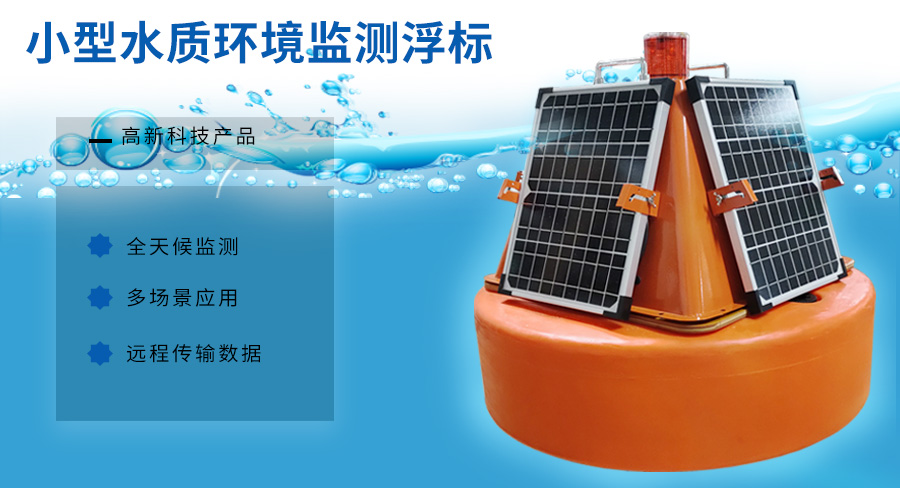
A complete and reliable industrial wastewater zero discharge (ZLD) system follows the principle of stepwise concentration and graded treatment, aiming to maximize water resource recovery and convert dissolved solids into stable solid state.
ZLD system design must begin with a detailed full water quality analysis, which determines the selection of pretreatment processes and subsequent core units. Key analysis parameters include:
Scaling and fouling factors: calcium, magnesium, silicon, sulfate, and organic matter (COD) concentrations, which are the main causes of membrane fouling and evaporator scaling.
Salt composition: TDS and the proportion of various ions (Na⁺, K⁺, Cl⁻, SO₄²⁻, etc.), which are related to the membrane system recovery rate limit and the quality of crystallized salt.
Special components: boron, fluoride, heavy metals, etc., which require targeted removal.
Based on the analysis results, pretreatment aims to “clear obstacles” for the target process:
Chemical softening + precipitation: removal of hardness ions such as calcium, magnesium, and silicon.
Advanced oxidation/biological treatment: degradation of refractory organic matter and reduction of membrane fouling load.
Precision filtration: providing produced water that meets reverse osmosis (RO) inlet requirements through ultrafiltration (UF), etc.
Integrated control of water quality analyzers: At this stage, online analysis instruments are the core for achieving precise dosing and process stability. For example, online hardness analyzers control softening chemical dosing in real time to prevent scaling or chemical waste; online silicon meters monitor silicon content to avoid silicon scale formation. These real-time data form the basis for automatic control of pretreatment units.
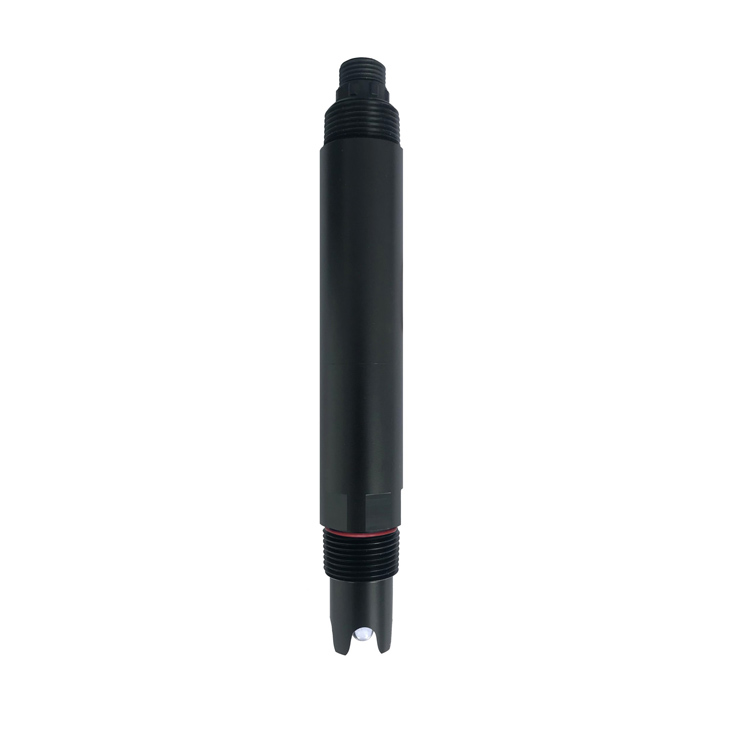
After pretreatment, the core goal is to reduce the water volume entering the evaporator with as low energy consumption as possible. Membrane technology is the main force at this stage:
Reverse osmosis: as primary concentration, recovers 60-80% of fresh water, raising concentrated water TDS to tens of thousands mg/L.
High-efficiency reverse osmosis / disc-tube reverse osmosis: for RO concentrated water, further concentration using special membranes, TDS can reach 80,000-150,000 mg/L, significantly reducing subsequent evaporation load.
System monitoring points: The stable operation of the membrane system heavily relies on water quality monitoring. Integrating online SDI meters, turbidity meters, and residual chlorine analyzers can effectively warn of pollution; online conductivity meters monitor desalination rate and recovery rate. NiuBoL’s series of instruments can be seamlessly integrated into the control system to achieve early warning and automatic flushing.
High-concentration brine finally enters the thermal unit to achieve solid-liquid separation:
Mechanical vapor recompression evaporation: MVR has the highest energy efficiency, utilizing compressors to recycle steam latent heat.
Forced circulation crystallization: FC causes supersaturated brine to crystallize, and solid salt is obtained through centrifugal separation.
Process optimization control: This unit has the highest energy consumption and requires precise control. Online density meters and conductivity meters are used to monitor boiling point elevation and supersaturation, which are key to optimizing salt quality and energy efficiency. Online pH/ORP meters are used to control corrosion.
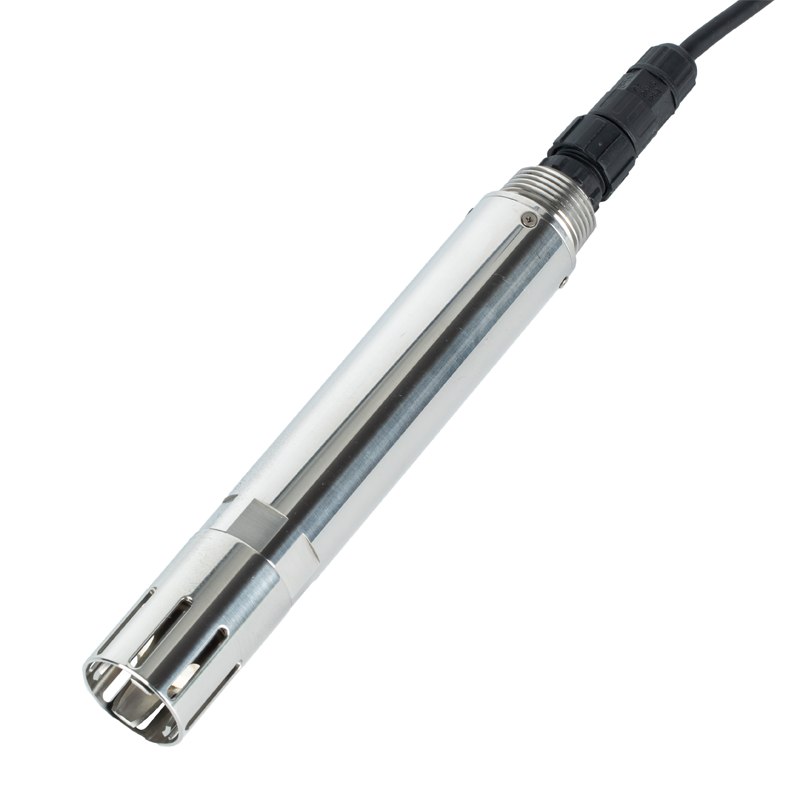
In ZLD systems, water quality analysis instruments have been upgraded from “monitoring tools” to the “core of control and optimization”.
1. Ensuring process stability: Real-time monitoring of key parameters (such as hardness, silicon, SDI) can initiate regulation before scaling and fouling occur, avoiding unplanned downtime and protecting core equipment.
2. Optimizing operating costs: Precise control of chemical dosing (such as scale inhibitors, acid and alkali) avoids waste. By optimizing membrane system recovery rate and evaporator feed concentration, system energy efficiency is maximized.
3. Supporting data-driven decision-making: All data is uploaded through protocols such as Modbus and Profibus to form visual reports, providing a solid basis for process optimization, fault diagnosis, and performance evaluation, and serving as the foundation for building intelligent ZLD factories.
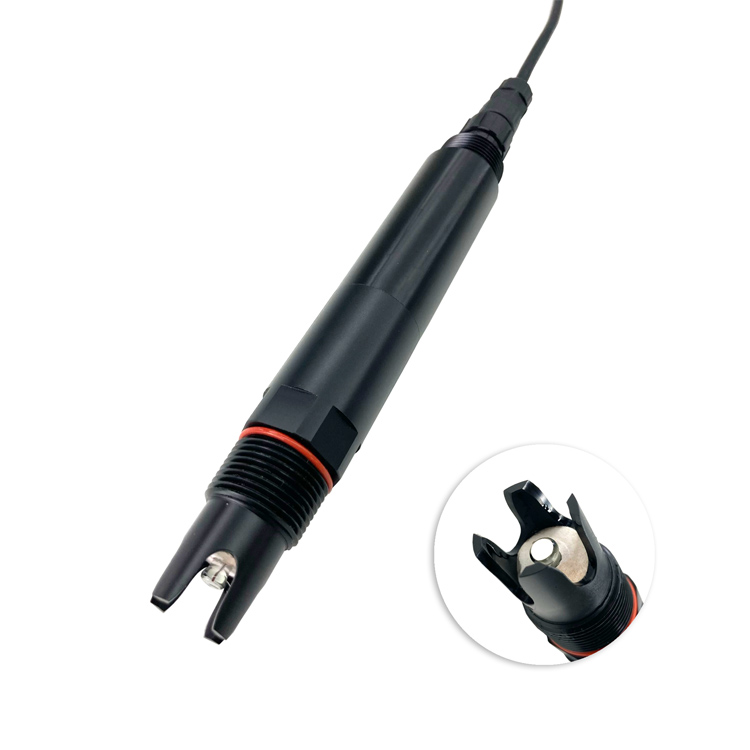
| Process Section | Key Monitoring Parameters | Main Functions and Selection Points |
|---|---|---|
| Pretreatment Unit | Hardness, silicon, pH, turbidity | Control softening and precipitation, protect subsequent units. Sensors with anti-fouling and automatic cleaning functions are required. |
| Membrane Concentration Unit | SDI, turbidity, residual chlorine, conductivity | Prevent membrane fouling and optimize cleaning cycles. SDI meters and residual chlorine meters require good sampling representativeness. |
| Evaporation Crystallization Unit | Density, conductivity, pH | Control crystallization process and optimize energy efficiency. Density meters and conductivity sensors need to be high-temperature and high-salt resistant. |
| Produced Water Reuse Point | Conductivity, TOC, specific ions (such as silicon, sodium) | Ensure reuse water quality meets standards. Select instruments with corresponding accuracy according to reuse standards (such as boiler makeup water). |
Our instruments are designed to meet long-term operation in industrial environments, with good anti-interference and communication integration capabilities, supporting closed-loop management from monitoring to control.
Q1: How to reduce the high operating costs of ZLD systems (mainly power/steam consumption)?
A1: The key to optimizing energy efficiency lies in minimizing the evaporation volume to the greatest extent. This requires strengthening pretreatment and optimizing membrane systems (such as using DTRO) to maximize the overall system water recovery rate as much as possible. At the same time, select efficient MVR instead of multi-effect evaporation (unless cheap steam is available), and use online water quality analysis data to optimize evaporator feed concentration and crystallization supersaturation in real time, achieving refined energy consumption management.
Q2: Is the salt produced by crystallization hazardous waste? Can it be resource-utilized? What impact does it have on system design?
A2: It depends on the inlet water quality and crystallization process. If the composition is complex and fluctuates greatly, the mixed salt produced is usually disposed of as hazardous waste, with high costs. If the water quality is stable and the composition is relatively simple (such as mainly NaCl), it can be purified through fractional crystallization processes to produce industrial-grade salt and create revenue. This places higher requirements on the depth of pretreatment, crystallizer selection (such as whether salt-nitrate separation is needed), and process control (such as online ion concentration monitoring).
Q3: When integrating ZLD equipment (membranes, evaporators, instruments) from different manufacturers, how to ensure communication and control coordination?
A3: It is necessary to clearly require all major equipment to support standard industrial communication protocols, such as Modbus RTU/TCP, Profinet, or OPC UA in the technical agreement. The general contractor or integrator shall lead, formulate a unified communication architecture and data point table, and develop upper-level SCADA/DCS control programs to achieve data integration and interlock control (such as water quality exceedance linkage with equipment start/stop).
Q4: ZLD system water quality is complex and prone to scaling. How to ensure the reliability of online water quality analyzers and reduce maintenance?
A4: It needs to be addressed from three aspects: selection, installation, and maintenance: select instruments designed for harsh water quality, with automatic cleaning functions (such as ultrasonic or mechanical brushing) and anti-clogging sampling designs. During installation, design a reasonable sampling pretreatment system (such as fast loops and self-cleaning filters). Work with suppliers to develop preventive maintenance plans, including regular calibration and spare parts management.
Q5: How to treat evaporation condensate and crystallization mother liquor?
A5: Evaporation condensate usually has good water quality and can be directly reused in production after being monitored by online conductivity meters, silicon meters, etc., and confirmed qualified. Crystallization mother liquor is extremely high-concentration residual liquid that is difficult to crystallize and is usually returned to front-end treatment or disposed of as hazardous waste. TDS and specific ions in the mother liquor loop need to be monitored to prevent accumulation of harmful substances.
Q6: How can ZLD systems achieve stable operation in scenarios with fluctuating inlet water quality and quantity?
A6: Buffer capacity (such as adding equalization tanks) needs to be considered in the design. More importantly, real-time load signals are provided through online water quality analyzers and flow meters to form closed-loop control with dosing pumps, regulating valves, evaporator feed pumps, etc., automatically adjusting operating parameters to achieve system self-adaptation.
Q7: As an integrator, what non-price core elements should be focused on when evaluating ZLD technology suppliers?
A7: Focus on: 1) Technical maturity and performance: successful cases of similar water quality projects; 2) System energy efficiency indicators: especially the specific energy consumption of MVR (kWh/ton of water evaporated); 3) Automation level: advancement and openness of the control system; 4) Localized service capability: local technical support and spare parts response speed for key equipment (such as compressors and instruments).
Q8: How can owners, design institutes, integrators, and equipment suppliers collaborate efficiently in ZLD projects?
A8: Owners need to provide accurate and long-term inlet water quality data and reuse standards. Design institutes complete reliable process package design based on this. Integrators are responsible for equipment integration, programming, and debugging. Equipment suppliers (such as NiuBoL) provide reliable products that meet specifications and in-depth technical support. All parties should maintain communication from the early design stage, especially confirmation of instrument measurement points and control logic.
Industrial wastewater zero discharge is a systematic engineering that reflects technical depth. Its success depends on precise control of the entire “water-salt” separation process. From personalized pretreatment based on in-depth water quality analysis, to efficient reduction with membrane technology as the core, and finally to thermal solidification, every link is tightly coupled and highly dependent on real-time and accurate process data.
 NBL-RDO-206 Online Fluorescence Dissolved Oxygen Sensor.pdf
NBL-COD-208 Online COD Water Quality Sensor.pdf
NBL-CL-206 Water Quality Sensor Online Residual Chlorine Sensor.pdf
NBL-DDM-206 Online Water Quality Conductivity Sensor.pdf
Prev:Rural Drinking Water Quality Online Monitoring System Engineering Integration Guide
Next:Petroleum Depot Wastewater Pollution Sources and Systematic Treatment Solutions
Related recommendations
Sensors & Weather Stations Catalog
Agriculture Sensors and Weather Stations Catalog-NiuBoL.pdf
Weather Stations Catalog-NiuBoL.pdf
Agriculture Sensors Catalog-NiuBoL.pdf
Water Quality Sensor Catalog-NiuBoL.pdf
Related products
 Combined air temperature and relative humidity sensor
 Soil Moisture Temperature sensor for irrigation|NBL-S-THR
 Soil pH sensor RS485 soil Testing instrument soil ph meter for agriculture |NBL-S-PH
 Wind Speed sensor Output Modbus/RS485/Analog/0-5V/4-20mA
 Tipping bucket rain gauge for weather monitoring auto rainfall sensor RS485/Outdoor/stainless steel
 Pyranometer Solar Radiation Sensor 4-20mA/RS485

Screenshot, WhatsApp to identify the QR code
WhatsApp number:+8615367865107
(Click on WhatsApp to copy and add friends)

