





— Blogs —
—Products—
 Consumer hotline +8618073152920
 WhatsApp:+8615367865107
Address:Room 102, District D, Houhu Industrial Park, Yuelu District, Changsha City, Hunan Province, China
Product knowledge
Time:2025-12-08 17:37:27 Popularity:1059
Principles, Structures and Application Information of Five Common Level Sensors (Capacitive, Float Ball, Ultrasonic, Radar, Hydrostatic/Submersible)
Core of Automation Upgrade: In-depth Analysis of the Working Principles and Applications of Five Major Level Sensors
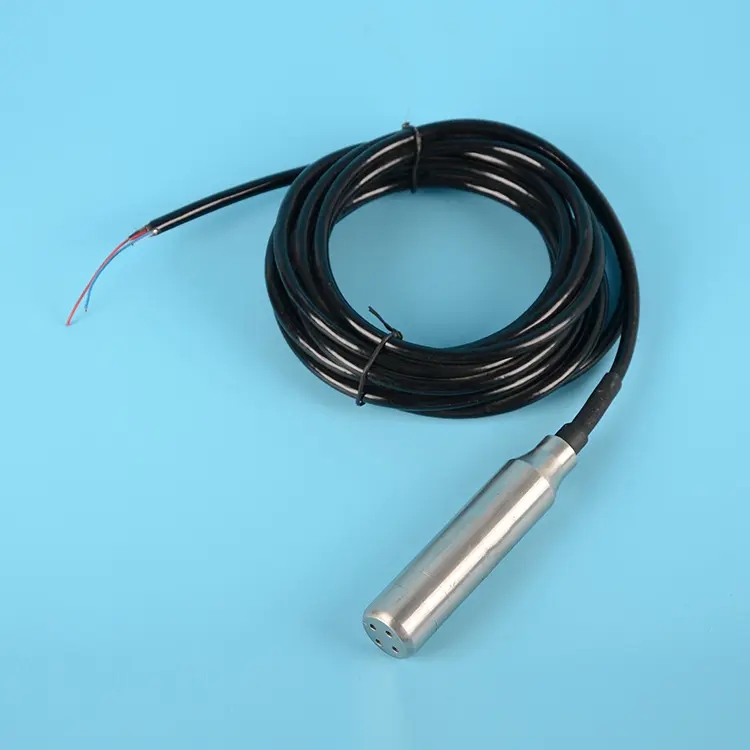
A level sensor (Level Sensor) is a relatively simple and easy-to-use level control device. It has no complicated mechanical transmission or circuit design, yet it can convert the height of liquid, material level or object level inside a container into measurable electrical signal output. Level sensors are a key component in achieving automated liquid level measurement and control technology.
Their importance is becoming increasingly prominent, especially in high-tech industries such as petrochemical, metallurgy, electric power, pharmaceutical, water supply and drainage, and environmental protection. Level sensors directly affect the continuity of production processes, product quality, and environmental safety.
NiuBoL provides professional contact and non-contact solutions for various level monitoring needs, including submersible level, capacitive level, ultrasonic level, radar level and other series products, widely used in lakes, rivers, reservoirs, sewage treatment, chemical industry, construction machinery and other complex operating conditions.
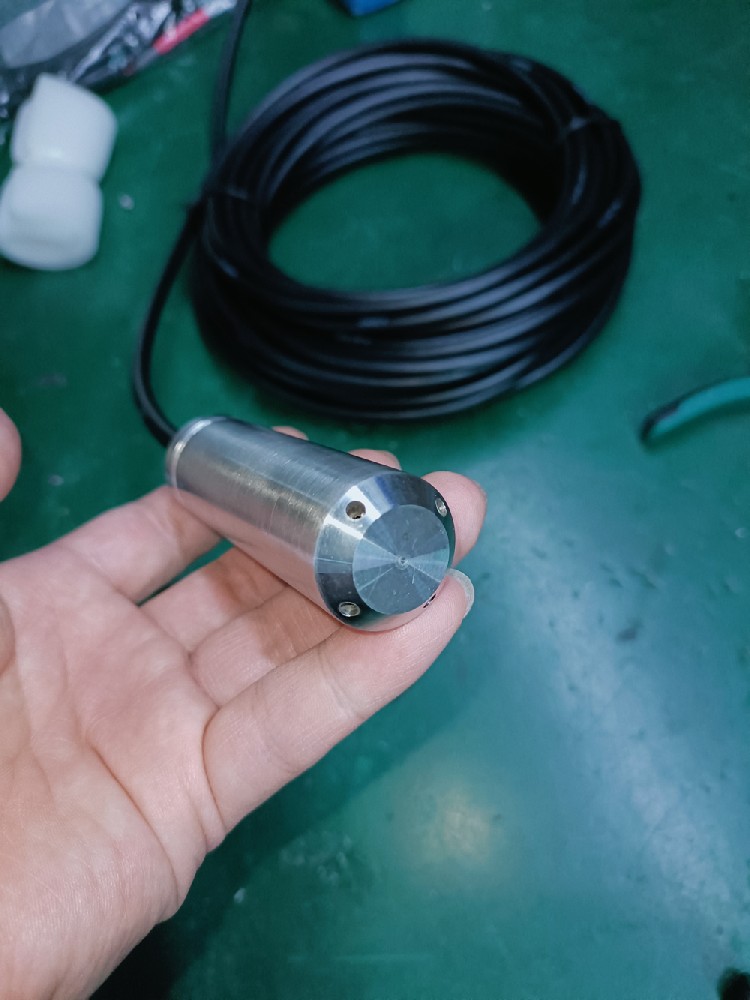
The design principle and measurement method of a level sensor are the core factors that determine its applicable conditions and measurement accuracy.
Principle: Capacitance change detection
The capacitive level sensor is based on the capacitive detection principle. It uses a metal rod as one electrode of the capacitor and the container wall (or auxiliary electrode) as the other electrode. The medium between them is the liquid and the gas above it.
Features: Suitable for liquids with stable dielectric constant.
Principle: Magnetic float and reed switch
The float ball level sensor uses buoyancy-driven mechanical action to achieve level switch control.
One or more reed switch chips are installed inside a sealed non-magnetic tube. One or more floats with ring magnets inside are fitted outside the tube.
When the liquid rises or falls, the magnetic float moves up and down together. When the float reaches the set position, its internal magnet triggers the reed switch inside the detection tube to close or open instantly, thereby outputting a contact on/off switching signal.
Features: Simple structure, economical and practical, commonly used for switch-level monitoring in sump pits, fire water tanks, sewage treatment, etc. Not suitable for food and hygiene industries with high sanitary requirements.
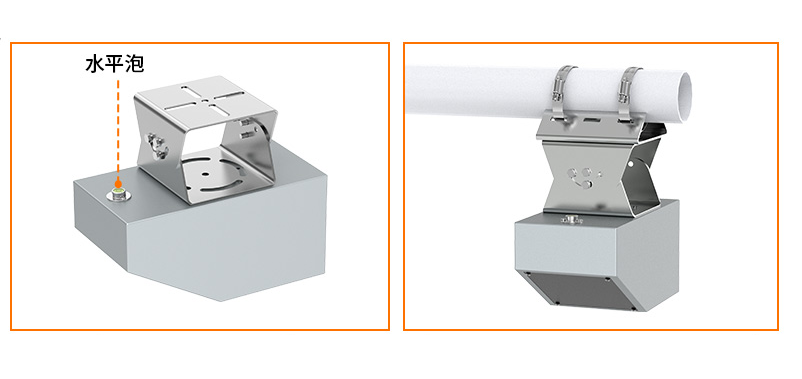
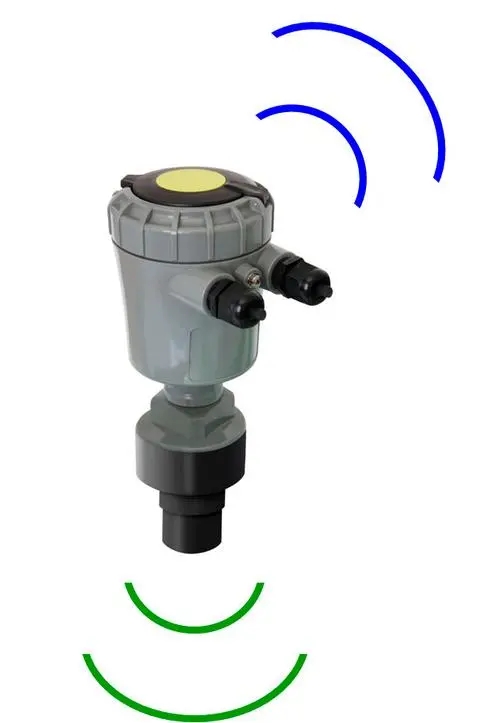
Principle: Ultrasonic reflection and time-of-flight (TOF)
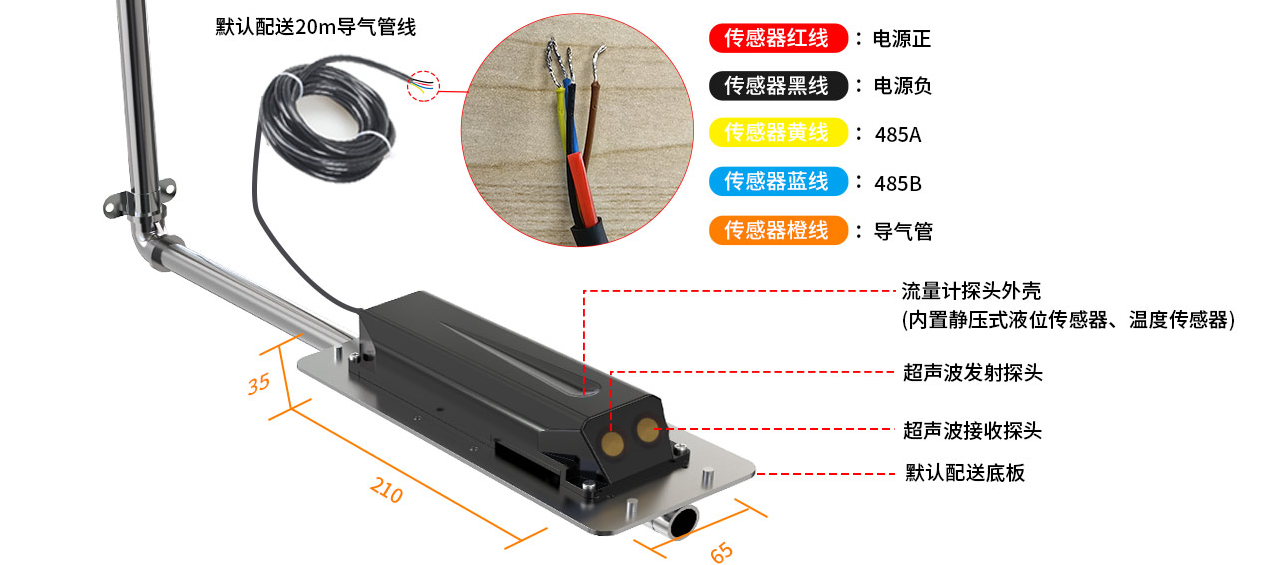
The ultrasonic level sensor is a typical non-contact sensor. It works based on the ultrasonic reflection principle:
The sensor emits ultrasonic pulses toward the liquid surface.
The ultrasonic wave is reflected back to the sensor after contacting the liquid surface.
By measuring the time difference (t) between transmission and reception, the distance (L) from the sensor to the liquid surface is calculated:
L = C × t / 2
where C is the speed of sound.
Features: Non-contact, simple installation, high flexibility. Suitable for hydrological monitoring, sewage monitoring, etc. Limitations: sensitive to temperature (affects sound velocity), easily affected by foam on the liquid surface and obstacles below the installation point.
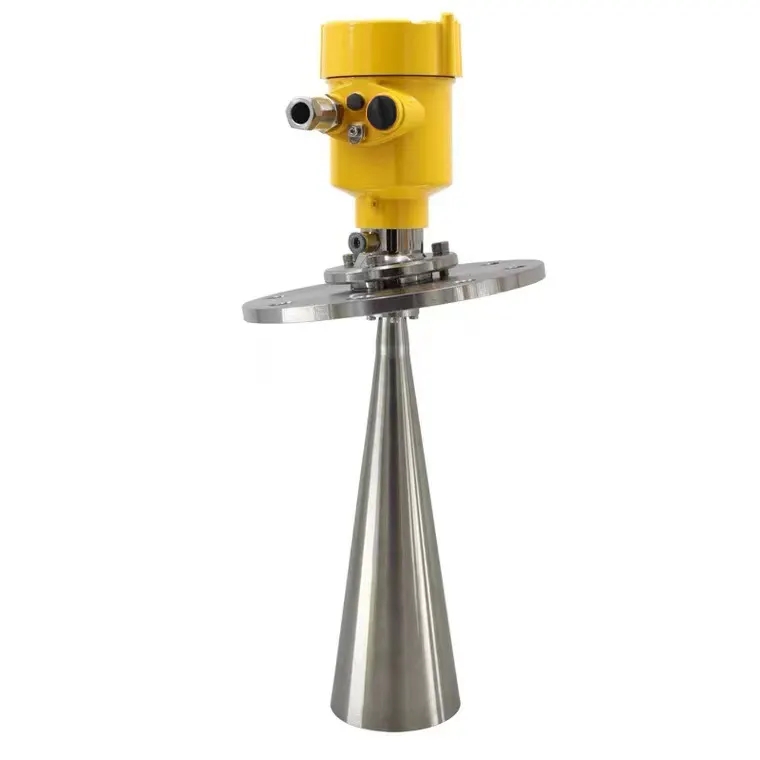
Principle: Microwave pulse transmission and reception
Similar to ultrasonic sensors, radar level sensors are also non-contact measurement devices, but they use microwave (electromagnetic wave) pulses. The propagation speed of electromagnetic waves in the air inside the container is almost unaffected by temperature, pressure, or medium density changes, thus offering higher stability and accuracy.
Features: Unaffected by measured medium (e.g., viscosity, density) and minimally affected by external environment. Particularly suitable for measuring inside large vessels with heating steam, such as residual oil, asphalt and other high-temperature media. However, measurement height is generally limited (e.g., within 6 meters) and cost is relatively high.
Principle: Liquid column hydrostatic pressure measurement
The hydrostatic level sensor, commonly known as submersible level gauge, is based on the famous fluid mechanics formula:
p = ρ g h
where p is the hydrostatic pressure generated by the liquid, ρ is the liquid density, g is the gravitational acceleration constant, and h is the liquid level height.
The sensor is installed at the bottom of the tank or submerged in the liquid to measure gauge pressure at that point. When gas phase pressure (atmospheric pressure), liquid density, and gravitational acceleration are constant, the hydrostatic pressure inside the tank is directly proportional to the liquid level height.
Features: Simple principle, suitable for almost all media. Limitations: prone to level drift when water temperature fluctuates frequently (affecting density ρ) or when the tank operates under pressure (affecting pressure p reference), therefore not suitable for pharmaceutical water and other high-precision or pressurized systems.
| Sensor Type | Measurement Method | Core Advantages | Limitations / Inapplicable Scenarios | Typical Applications |
|---|---|---|---|---|
| Capacitive | Contact / Continuous | Simple structure, moderate cost, suitable for insulating liquids | Easily affected by changes in dielectric constant, requires regular cleaning | Oil, diesel, solvent level measurement |
| Float Ball | Contact / Point | Economical and practical, no power required (switch signal) | Only provides point signals, not suitable for viscous or corrosive media | Sump pits, fire water tanks (switch control) |
| Ultrasonic | Non-contact | Easy installation, low maintenance, strong penetration | Affected by temperature (sound velocity), foam, vapor, and obstacles | Hydrological monitoring, sewage treatment, open water tanks |
| Radar | Non-contact | Unaffected by temperature, pressure, density; high accuracy | High cost, certain requirements on tank dimensions | Sludge oil, asphalt, high-temperature/high-pressure vessels, chemical industry |
| Hydrostatic (Submersible) | Contact / Continuous | Simple principle, installed at bottom/side wall | Prone to drift due to density and pressure fluctuations | Raw water tanks, soft water tanks, river/lake water level (submersible) |
High-precision non-contact first choice: For tanks with high temperature, high pressure, corrosive or viscous media and sufficient budget, radar level sensors are recommended.
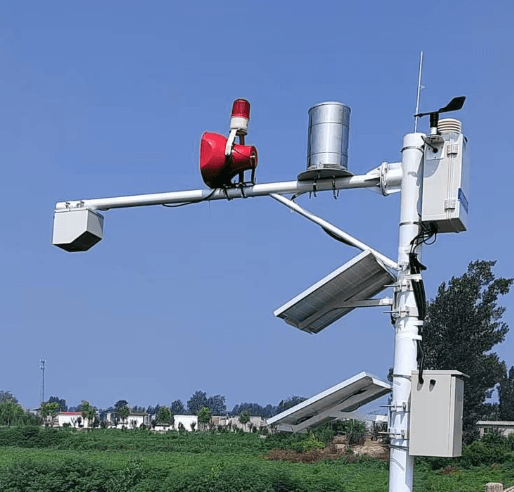
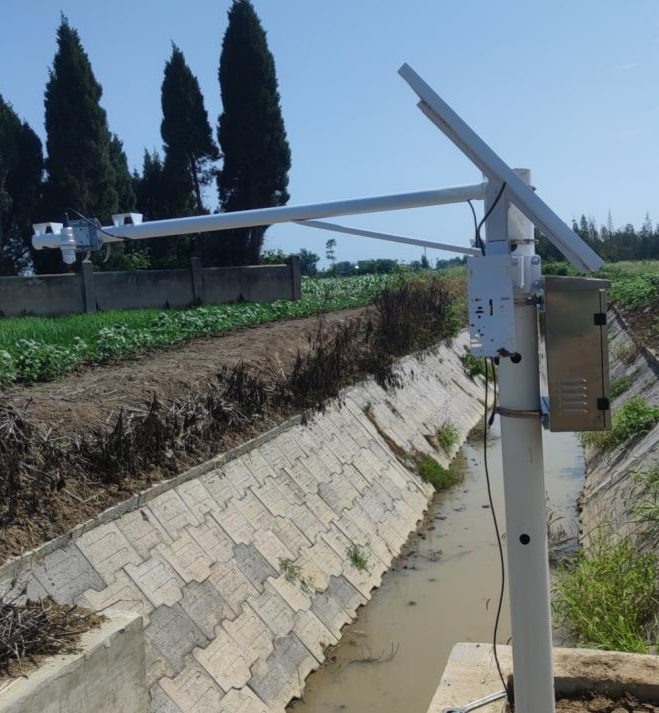
Cost-effective non-contact solution: For sewage treatment, rivers, reservoirs and other open, normal-temperature media requiring flexible installation, ultrasonic level sensors are recommended.
Pipeline or oil measurement: For lubricating oil, diesel and other media requiring continuous measurement, capacitive level sensors can be selected.
Hydrological and water conservancy monitoring: For lakes, reservoirs and other scenarios requiring absolute water depth measurement, submersible (hydrostatic) level sensors are commonly used due to their stability and ease of installation.
Pharmaceutical water systems: Hydrostatic level gauges are prone to drift, so they are rarely used in pharmaceutical water storage systems (e.g., water for injection and purified water) that demand extremely high accuracy. High-precision, high-stability non-contact solutions should be chosen instead.
Q: What are the advantages of “non-contact” in ultrasonic level gauges?
A: Non-contact means the sensor does not directly contact the measured medium. This completely avoids corrosion, scaling, and adhesion damage or contamination caused by the medium, resulting in extremely low maintenance and long-term stable operation.
Q: Why is the hydrostatic level gauge not suitable for pharmaceutical water storage systems?
A: Pharmaceutical water tanks are usually small in volume, with frequent water temperature fluctuations or pressurized operation. These factors cause frequent changes in liquid density ρ or gas phase pressure p, leading to level drift in hydrostatic level gauges, which cannot meet the extremely high accuracy requirements of the pharmaceutical industry.
Q: Can capacitive level sensors measure conductive liquids?
A: Yes, but special structural design is required. For conductive liquids (e.g., water), the capacitance between the metal rod and container wall is actually determined by the gas above the liquid level. Capacitive sensors are usually designed with insulated coaxial electrode structure, measuring the capacitance difference between the inside and outside of the insulation layer.
Q: Radar level gauges are less affected by the measured medium. Will they be affected by foam?
A: Compared with ultrasonic waves, radar waves have stronger penetration through foam and are less affected. However, if the foam layer is very thick and dense, it may still attenuate the signal or cause reflection from the foam surface, resulting in measurement errors.
Q: Can float ball level sensors achieve continuous measurement?
A: Standard float ball sensors are point-type measurement and can only output switch signals. For continuous measurement, magnetostrictive level gauges are required, which also use magnetic floats but achieve continuous, high-precision measurement by measuring the propagation time of magnetic field along the waveguide wire.
Q: What obstacles should be noted during ultrasonic level gauge installation?
A: Ensure there are no obstacles directly below the sensor that block the ultrasonic signal, such as agitators, ladders, coils, or protrusions on the inner wall of the container.
Q: Does the submersible level sensor require atmospheric pressure compensation?
A: Yes. Standard submersible level gauges are typically relative pressure sensors. Their cable contains a vent tube that connects the reference pressure on the back of the sensor to the external atmospheric pressure, automatically compensating for atmospheric pressure and ensuring measurement of only the hydrostatic pressure of the liquid column.
Q: If liquid density ρ changes significantly with temperature, which sensor should be chosen?
A: Avoid hydrostatic level gauges. Non-contact ultrasonic or radar level gauges are recommended, as they directly measure distance (L) instead of calculating indirectly through density.
Q: What are the common advantages of radar level gauges and laser measurement principles?
A: Both share the advantages of non-contact, high precision, fast measurement speed. Radar waves and laser are electromagnetic waves that are minimally affected by changes in air medium and require no repeated calibration.
Q: Can level sensors be used to measure solid powder or granular materials?
A: Yes. Ultrasonic, radar, and capacitive sensors usually have versions suitable for solid material level measurement. For example, radar level gauges for solids are commonly used high-precision devices for measuring bulk solids.
Q11: What certifications does NiuBoL have?
A11: CE, ISO9001, RoHS, and nationally recognized meteorological calibration certificates.
Level sensors, as the cornerstone of automation and industrial process control, are evolving from simple switch control to high-precision, multi-parameter continuous monitoring. With professional accumulation in ultrasonic, radar, submersible and other technologies, NiuBoL provides customers with highly targeted, cost-effective level monitoring solutions.
Understanding the unique principle of each sensor is the prerequisite for correct selection and precise control. As high-tech continues to be widely applied in industry, level sensor functions will become more sophisticated, continuing to make significant contributions to efficient production and safe operation in petrochemical, environmental protection, pharmaceutical and other industries.
Whether you need to monitor clean water, sewage, or high-temperature corrosive media, NiuBoL can provide the most suitable professional level monitoring solution for your operating conditions.
Prev:Forest Weather Station: Building an All-Weather Fire Prevention and Early Warning System
Next:Ultrasonic Level Gauge | NiuBoL Ushers in a New Era of Intelligent Level Measurement
Related recommendations
Sensors & Weather Stations Catalog
 Agriculture Sensors and Weather Stations Catalog-NiuBoL.pdf
Weather Stations Catalog-NiuBoL.pdf
Agriculture Sensors Catalog-NiuBoL.pdf
Water Quality Sensor Catalog-NiuBoL.pdf
Related products
 Combined air temperature and relative humidity sensor
 TDR Soil Moisture & Temperature Sensor for irrigation| RS485 |4-20mA| NBL-S-THR
 Soil pH sensor RS485 soil Testing instrument soil ph meter for agriculture |NBL-S-PH
 Wind Speed sensor Output Modbus/RS485/Analog/0-5V/4-20mA
 Tipping bucket rain gauge for weather monitoring auto rainfall sensor RS485/Outdoor/stainless steel
 Pyranometer Solar Radiation Sensor 4-20mA/RS485

Screenshot, WhatsApp to identify the QR code
WhatsApp number:+8615367865107
(Click on WhatsApp to copy and add friends)

