





— Blogs —
—Products—
 Consumer hotline +8618073152920
WhatsApp:+8615367865107
Address:Room 102, District D, Houhu Industrial Park, Yuelu District, Changsha City, Hunan Province, China
Product knowledge
Time:2025-11-08 13:27:37 Popularity:979
Wireless weather station remote checks can help a farm or solar-site team decide whether a site visit is needed and what to inspect. Review observation time, channel identity, trends and communication status before acting on a dashboard value. NiuBoL weather sensors and compatible data logging can support that workflow, but remote access does not guarantee forecasting, automatic control or a fixed efficiency gain.
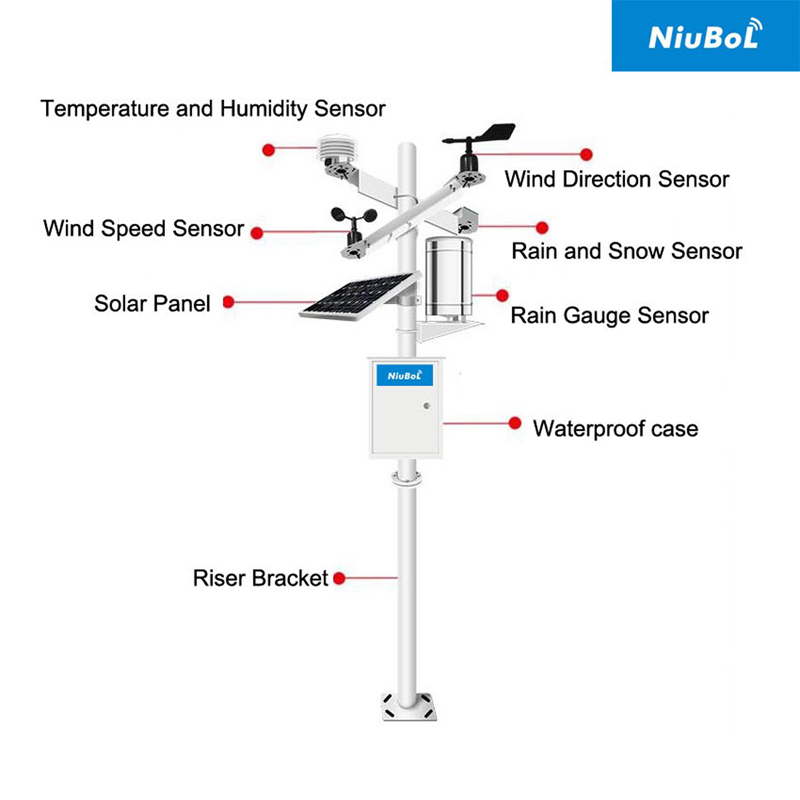
Start with the time the instrument was observed, not only the time a page loaded or a server received a message. Compare the latest record with the required reporting interval. A value left on screen after communication stops may still look normal. Missing data, a valid zero and a stable physical condition require different interpretations.
For a farm, stale rainfall can affect how staff interpret irrigation. For a solar site, a delayed radiation record may not match the electrical data being compared. Specify timestamps and data-age behavior before deployment so remote viewing reduces uncertainty rather than hides a gap behind an unchanged number.
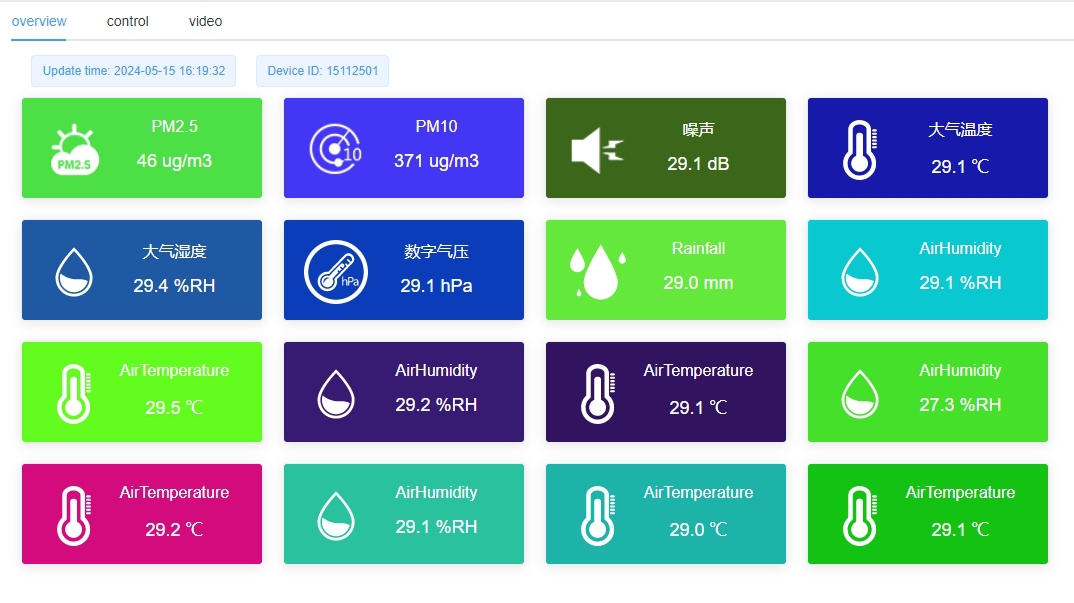
| Remote observation | Check before dispatch | Possible site task |
|---|---|---|
| Every channel stops updating | Last complete record, communication status and available power information | Inspect supply, acquisition and the onward link |
| One channel differs from expectation | Its identity, unit, exposure and surrounding event | Inspect that instrument and measurement position |
| Data arrives late after an interruption | Observation time versus arrival time and actual recovery behavior | Check local history and communication path if required |
| Farm or PV records disagree | Common time period, units and whether the quantities should match | Inspect the relevant soil, radiation or process instrument |
These checks narrow an investigation; they do not establish a component diagnosis from a screen alone. Keep a short event record and relevant traces for the technician. A visit with a likely measurement point and the correct spare configuration is more useful than replacing a complete station because one chart looks unusual.
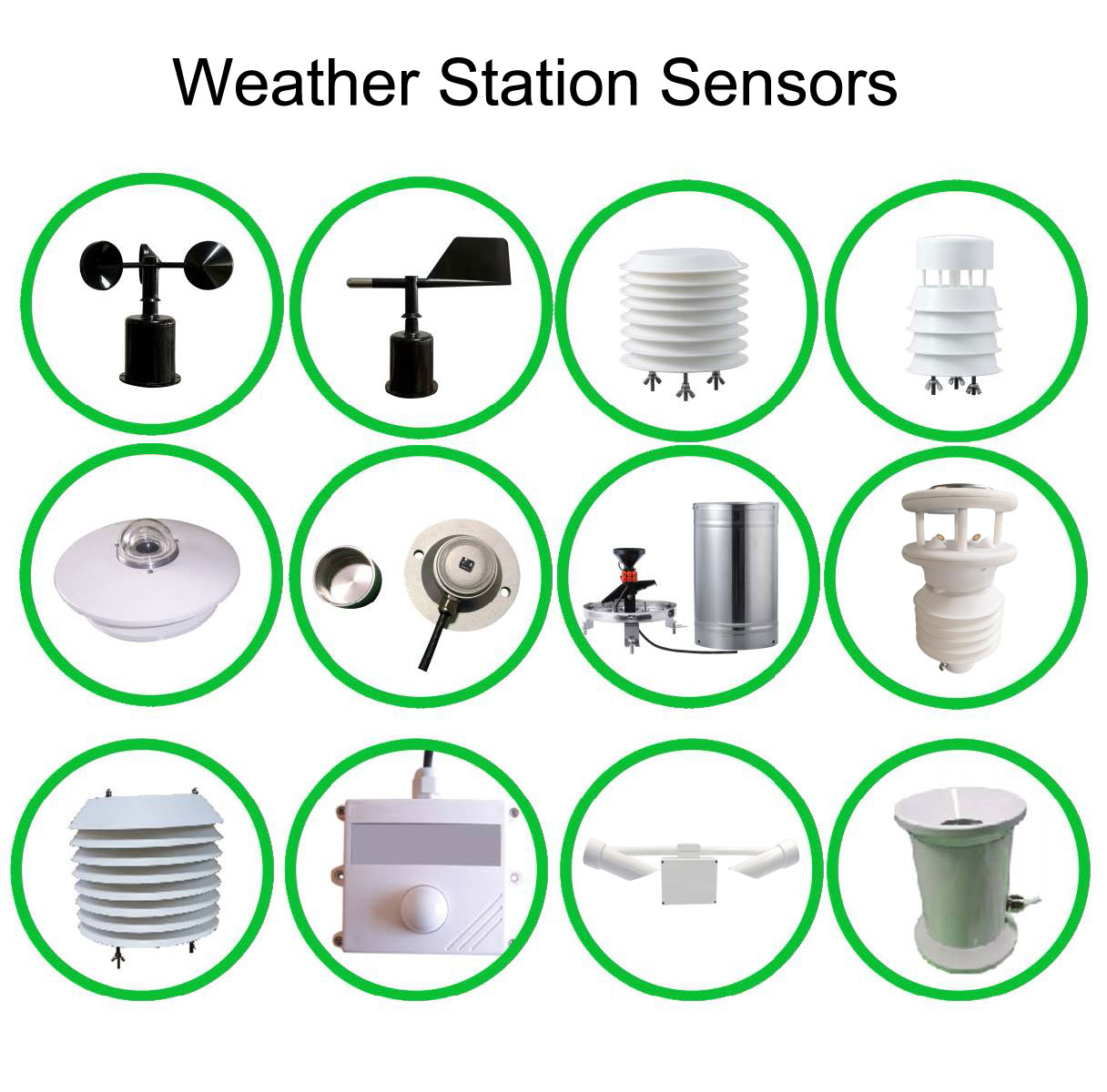
A rain event does not guarantee a corresponding change at every buried probe. Depth, irrigation, soil and location can explain the difference. The NBL-S-TM measures soil temperature and FDR moisture at its own position. It supplies useful context for root-zone management, not an automatic crop-water calculation or a direct measure of applied irrigation volume.
Keep irrigation event information beside the measurements. If a control system is included, distinguish a valve command from confirmation of delivered water. Spraying or frost-response rules should come from the actual crop, equipment and operating requirements; a generic wind or temperature threshold is not a universal farm instruction.
Solar irradiance in W/m2 and illuminance in lux are not interchangeable. A PV monitoring task may also require module temperature and an identified radiation measurement plane. Check the installed instruments and their units before comparing a weather trace with generation. A daily average or a delayed upload may be unsuitable for a short-period performance investigation.
Use remote records to identify the period and location needing review, not to diagnose every underperforming module from weather alone. Electrical measurements, equipment state, shading and site observations may be required. Select any specified radiation instrument class by actual model and documentation rather than infer certification from a station label.
| Equipment | Relevant specification | Remote-check use |
|---|---|---|
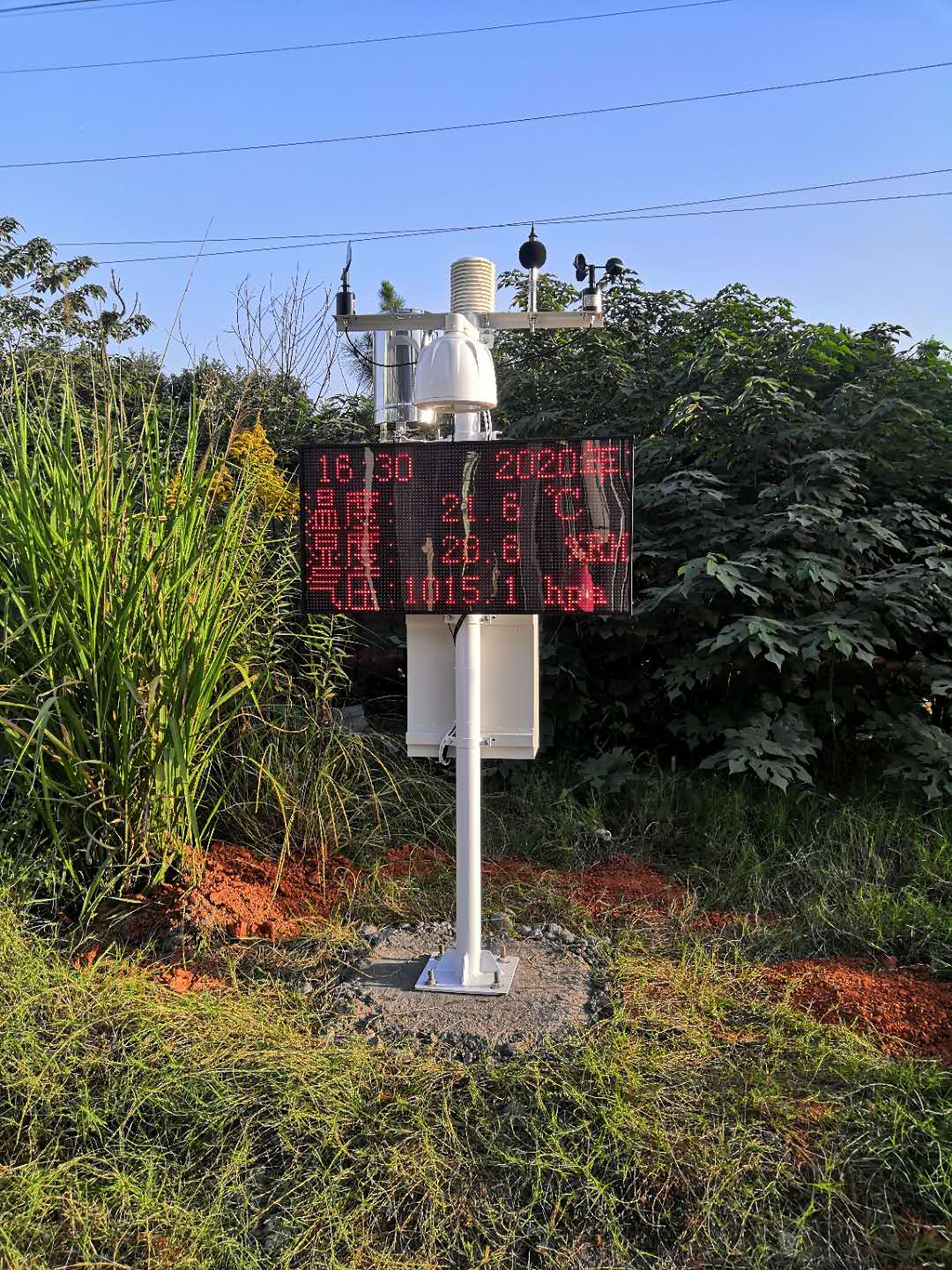
| NBL-W-LBTH | Temperature -40 to 80 C, accuracy +/-0.5 C; RH 0-100%, accuracy +/-5% RH; pressure 10-1200 hPa; DC 12-24 V | Identified atmospheric channels for comparison |
| NBL-S-TM | Soil temperature and moisture; RS485 Modbus RTU; IP68 | Local soil response with known depth and position |
| NBL-PH-1 | FLASH recording; saving interval 1-240 minutes; configured 4G communication | Collection and history independently specified from remote updates |
The NBL-W-LBTH is an air instrument, not a module-temperature or leaf sensor. Separate NBL-W-SS and NBL-W-DS wind instruments are IP65. The completed station's environmental and power limits depend on all selected equipment, not one generic outdoor rating.
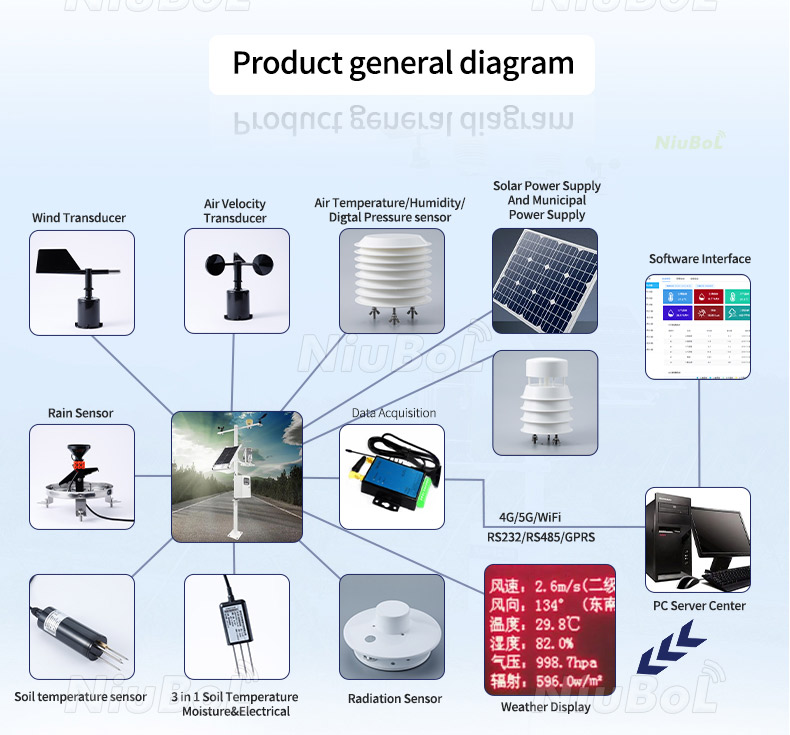
In a typical arrangement, wired instruments connect to a data logger, which sends records over an onward link. Confirm RS485 Modbus RTU compatibility, cable connections and local supply before investigating 4G. A functioning modem cannot compensate for an unpowered sensor or the wrong register mapping.
Check the destination network, SIM settings and receiving system for the deployed configuration. Local FLASH records can help investigate interruptions, but do not assume unlimited storage or automatic recovery of every missing remote record. Demonstrate the actual outage and retrieval behavior required by the project.
No. It can help identify when and where to inspect, but cannot physically clean a gauge, check mounting movement or verify an obstructed measurement position. Keep site servicing in the operating plan.
No. Check the observation timestamp and expected record interval. Page refresh and message arrival time are different from the time the environmental value was measured.
No. Rainfall and air observations are context. Depending on the task, local soil response and suitable water or actuator feedback may be needed to verify the intended irrigation action.
No. Evaluate the actual workflow and measured outcome against an appropriate baseline. Connectivity and a working dashboard do not establish a fixed percentage improvement.
Send the models, affected channels, observation times, traces before and after the event, configuration changes and installation photos. Include receiving-system details so NiuBoL can help distinguish a measurement issue from collection or transfer behavior.
Wireless weather station remote checks are useful when they lead to a specific, justified next action. Validate record freshness, compare the right farm or solar quantities and keep sensing separate from onward communications. The resulting workflow can support better-prepared site visits without claiming automatic control or benefits that have not been measured.
Prev:Solar Irradiance Meter Output: Match HPRS to Your Data Logger
Next:NiuBoL Frequency Vibration Solar Insect Killer Lamp – Green Pest Control for Agriculture
Related recommendations
Sensors & Weather Stations Catalog
 Agriculture Sensors and Weather Stations Catalog-NiuBoL.pdf
Weather Stations Catalog-NiuBoL.pdf
Agriculture Sensors Catalog-NiuBoL.pdf
Water Quality Sensor Catalog-NiuBoL.pdf
Related products
 Combined air temperature and relative humidity sensor
 TDR Soil Moisture & Temperature Sensor for irrigation| RS485 |4-20mA| NBL-S-THR
 Soil pH sensor RS485 soil Testing instrument soil ph meter for agriculture |NBL-S-PH
 Wind Speed sensor Output Modbus/RS485/Analog/0-5V/4-20mA
 Tipping bucket rain gauge for weather monitoring auto rainfall sensor RS485/Outdoor/stainless steel
 Pyranometer Solar Radiation Sensor 4-20mA/RS485


Screenshot, WhatsApp to identify the QR code
WhatsApp number:+8615367865107
(Click on WhatsApp to copy and add friends)

