





— Blogs —
—Products—
 Consumer hotline +8618073152920
 WhatsApp:+8615367865107
Address:Room 102, District D, Houhu Industrial Park, Yuelu District, Changsha City, Hunan Province, China
Product knowledge
Time:2026-01-25 18:13:19 Popularity:585
In utility-scale PV plants and large ground-mounted tracking projects, Solar Tracking Systems have become a key technology for significantly increasing annual power generation (typically 15%–35% gain) and reducing Levelized Cost of Electricity (LCOE). However, the actual performance of trackers highly depends on real-time, accurate environmental perception data: solar radiation components (GHI/DNI/DHI), module surface soiling losses (Soiling Ratio), and dynamic changes in ambient temperature and other parameters.
As an industrial-grade manufacturer specializing in Solar radiation sensors and Soiling sensors, NiuBoL provides highly reliable perception-layer hardware for system integrators, PV EPC contractors, tracking bracket manufacturers, and IoT solution providers. This article, from the perspective of system integration, details how high-precision radiation and environmental monitoring data can drive tracking algorithms from “geometric blind tracking” to “energy intelligent optimization,” including selection guides, integration practices, project cases, and bulk supply advantages, helping engineering teams maximize power generation revenue and asset protection under complex climatic conditions.
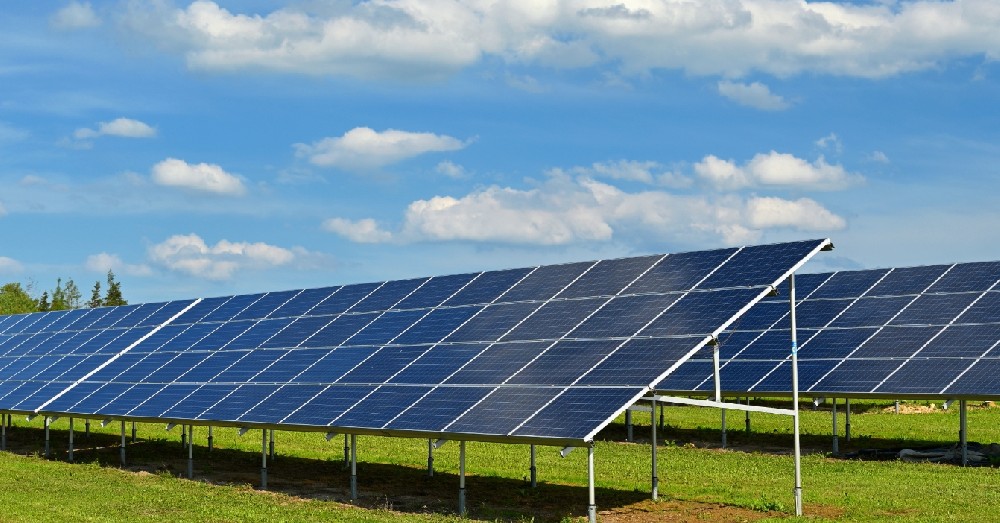
Traditional single-axis/dual-axis tracking systems mostly rely on astronomical algorithms (Astronomical Tracking) to calculate sun position. This “open-loop” mode performs well under ideal clear-sky conditions but experiences significant efficiency drops in cloudy, hazy, dusty, or high diffuse radiation (Diffuse Horizontal Irradiance, DHI) environments.
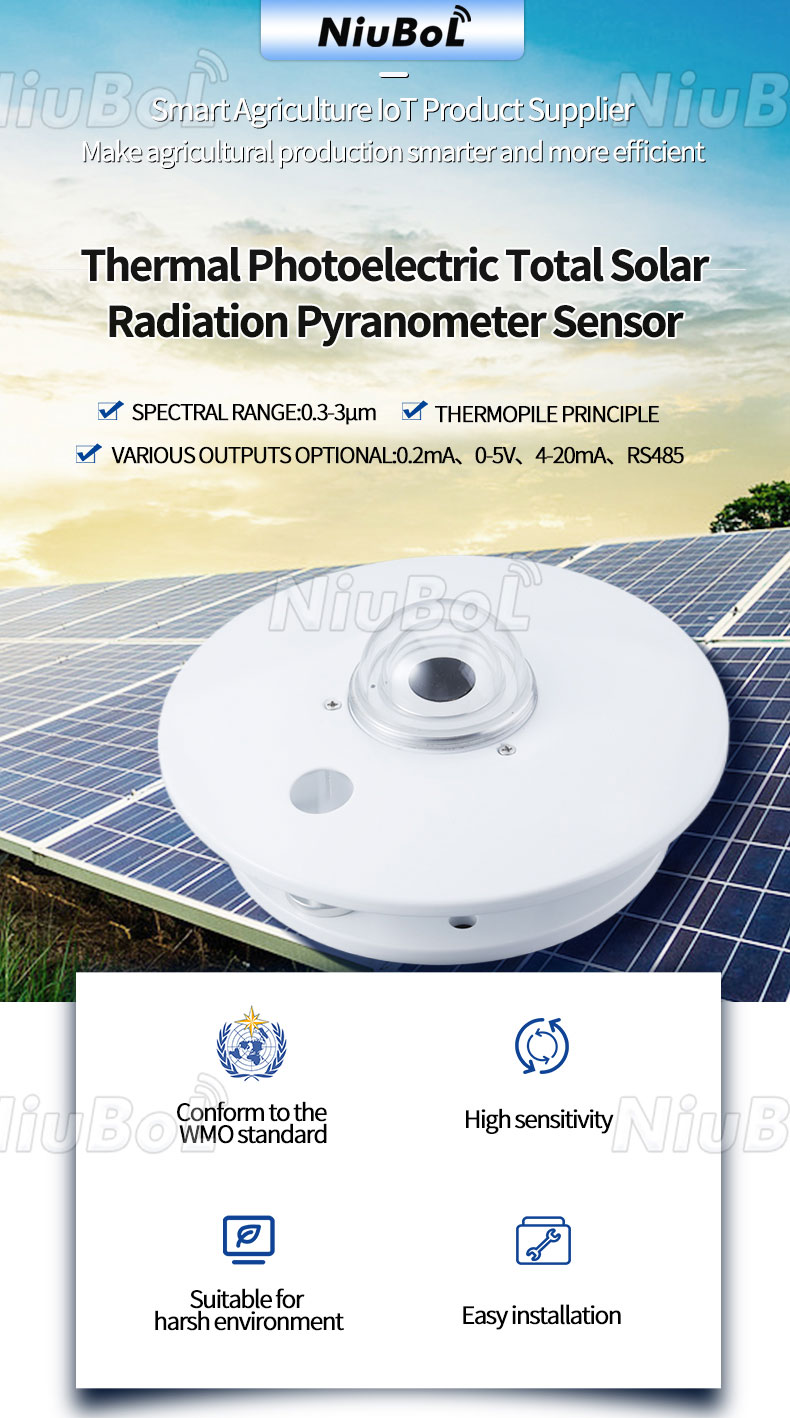
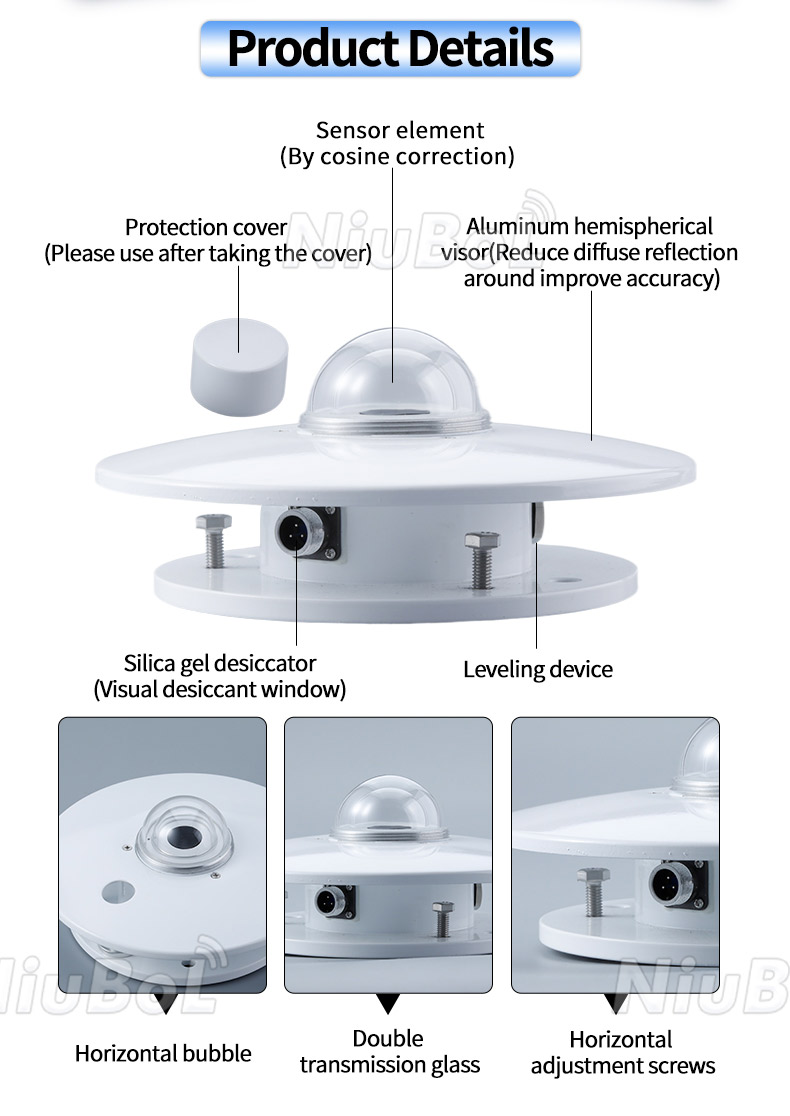
The NiuBoL NBL-W-HPRS global radiation sensor (GHI), combined with optional DNI/DHI configurations, provides real-time radiation component data to support the following advanced tracking strategies:
Diffuse avoidance and backtracking optimization (Diffuse Backtracking): When DNI falls below a threshold (e.g.,<200 W/m²), the system switches to maximize DHI reception angle, avoiding inter-row shading losses. Studies show this strategy can add 2%–5% annual generation in cloudy regions.
Bifacial module gain balancing (Bifacial Gain Optimization): Dynamic tilt adjustment based on ground albedo and rear-side radiation monitoring to achieve optimal trade-off between front direct and rear diffuse gains.
Cloud penetration prediction and rapid response: Sensor response time ≤30 seconds (95%), enabling tracking controllers to proactively adjust posture during fast-moving cloud passages, reducing power fluctuations' impact on inverter MPPT.
These features shift tracking systems from pure positional following to closed-loop control based on energy maximization, significantly improving Performance Ratio (PR).
In arid, desert, or industrial dust areas, soiling on PV module surfaces is a major non-technical loss factor affecting LCOE, with annual losses reaching 5%–25%. Fixed-cycle cleaning no longer meets economic requirements.
The NiuBoL NBL-W-PSS Soiling Sensor uses optical differential closed-loop technology (reference vs. soiled sensor) to output Soiling Ratio (SR) in real time, supporting the following O&M decisions:
Condition-based cleaning triggering: When SR drops to 92%–95%, combine local electricity prices, water costs, labor costs, and weather forecasts to calculate cleaning ROI (generation gain vs. cleaning expense).
Natural cleaning efficiency evaluation: Automatically detects transmittance recovery after rainfall, quantifying rain cleaning effectiveness and avoiding unnecessary manual intervention.
Array representative monitoring: Deployed at typical array positions with consistent tracking tilt, ensuring SR data has statistical representativeness.
After integration, plants can achieve 3%–5% annual generation gain and 15%–25% reduction in cleaning costs, significantly improving long-term asset returns.
Remote PV projects face challenges such as high winds, extreme temperature differences, and salt fog. Environmental Monitoring is key to ensuring mechanical safety of tracking systems and electronic equipment lifespan.
In NiuBoL solutions for PV power plants and large ground tracking projects:
Wind speed linked Stow Mode: Outside air temperature sensor collaborates with wind speed sensors; when wind exceeds threshold (e.g., 18–25 m/s), forced horizontal stow to avoid sail-effect structural fatigue.
Temperature compensation and hot-spot warning: Outside PV temperature sensor provides ambient temperature reference for correcting module power temperature coefficient (Pmax Temp Coefficient) and thermal management of inverters/combiners.
Comprehensive meteorological redundancy: Fusion of radiation + temperature + humidity + pressure data supports SCADA platform multi-parameter alarms and predictive maintenance.
These features can reduce system failure rates by 20%–30% and extend tracker mechanical lifespan.
| Parameter | Specification |
|---|---|
| Measurement Range | 0–2000 W/m² |
| Spectral Range | 0.3–3.0 μm |
| Accuracy | Annual stability ≤±2%, cosine response ≤7% (solar zenith angle 10°) |
| Response Time | ≤35 seconds (99%) |
| Output Type | RS485 (Modbus RTU), 4–20mA, 0–5V (optional) |
| Power Supply | DC 12–24V |
| Operating Environment | -40℃~+85℃, IP65/IP66 |
| Parameter | Specification |
|---|---|
| Soiling Ratio Range | 50%–100% |
| Measurement Accuracy | ±1% (90%–100%), ±3% (80%–90%), ±5% (50%–80%) |
| Output | RS485 (Modbus RTU) |
| Power Supply | DC 12V, average power consumption 1W |
| Optional | Temperature measurement -50℃~+100℃ (±0.5℃) |
1. Desert large-scale tracking plants: Combined with Soiling sensor for dynamic cleaning scheduling, achieving 4%–6% annual gain.
2. Cloudy region single-axis tracking projects: DHI data-driven diffuse avoidance strategy, increasing generation by 3%–5%.
3. Bifacial modules + dual-axis tracking: Radiation + temperature monitoring optimizes tilt, boosting rear-side gains by 10%–20%.
4. High-wind coastal plants: Wind speed + temperature linked Stow Mode reduces mechanical damage risk.
5. Southeast Asia/Singapore distributed tracking projects: High-humidity salt-fog resistant design + RS485 integration, supporting cloud platforms.
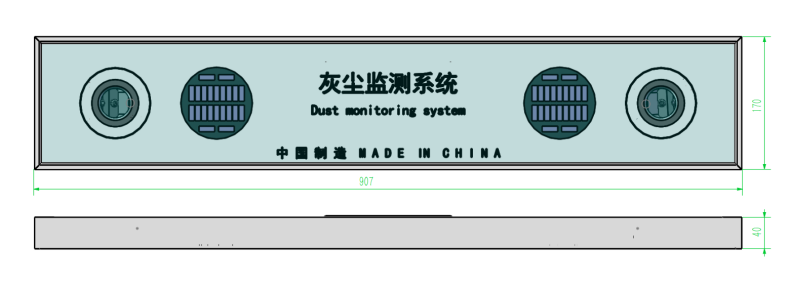
Selection key points:
1. Radiation type: GHI primary → NBL-W-HPRS; need DNI/DHI → configure shading ring/tracking ball.
2. Soiling accuracy requirement: SR >90% interval ±1% is critical.
3. Interface: RS485 Modbus RTU mainstream, compatible with main tracking controllers.
4. Environment: -40℃~+85℃, IP65+, desert/coastal prioritize salt-fog resistant versions.
5. Expansion: Combine with Outside air temperature sensor to form PV weather station.
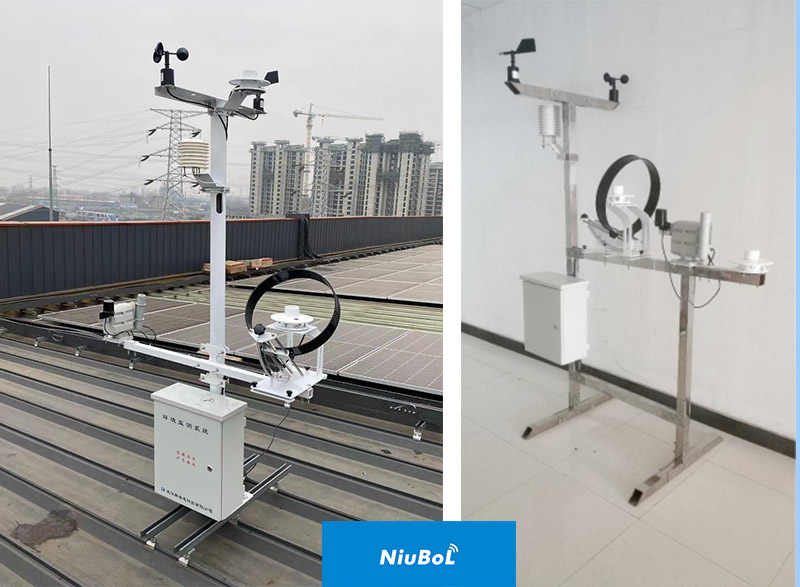
PV weather station integration notes:
Installation level error<0.5° to avoid cosine error.
RS485 bus shielded + terminating resistor, length<1200 m.
Regular nighttime zero-point calibration to eliminate temperature drift.
SCADA implements SR and radiation linked models, sets alarm thresholds.
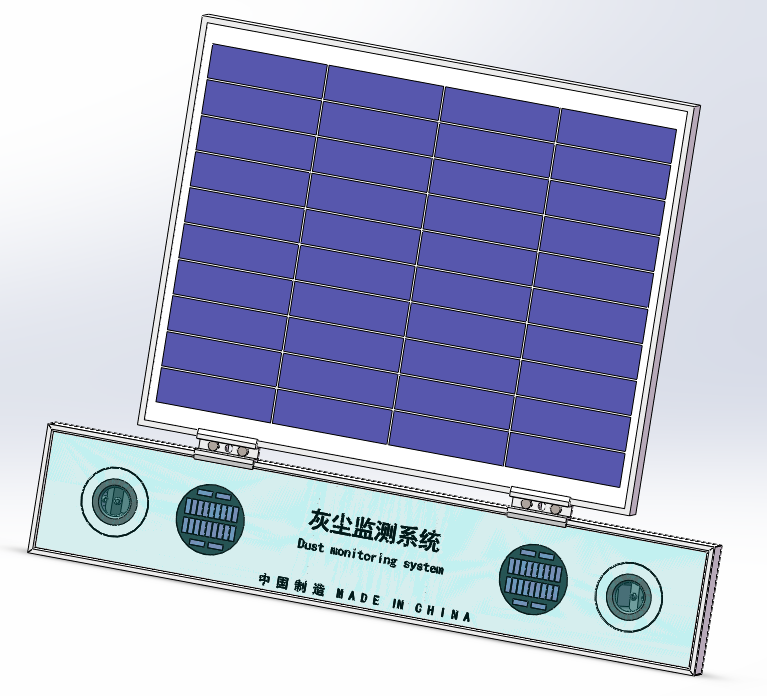
NiuBoL supports:
OEM private labeling (LOGO, housing, protocol privatization)
Radiation component customization (GHI/DNI/DHI combinations)
Interface expansion (LoRaWAN, NB-IoT)
Integrated PV weather station (solar radiation + Soiling + temperature + humidity + wind speed + wind direction)
Bulk supply (minimum order 50 units, GW-scale project exclusive discounts)
Fast delivery + technical support (protocol docking, on-site calibration guidance)
Northwest 200MW desert tracking plant: Deployed 100 sets of NBL-W-HPRS + Soiling sensor, connected to SCADA, achieving dynamic cleaning + diffuse avoidance, annual generation gain ≈4.2%, cleaning cost reduction 18%.
Southeast Asia 50MW distributed project: Integrated solar radiation + PV module temperature sensor, supporting cloud platform optimization, PR improvement 2.8%, stable operation in high-humidity salt-fog environment.
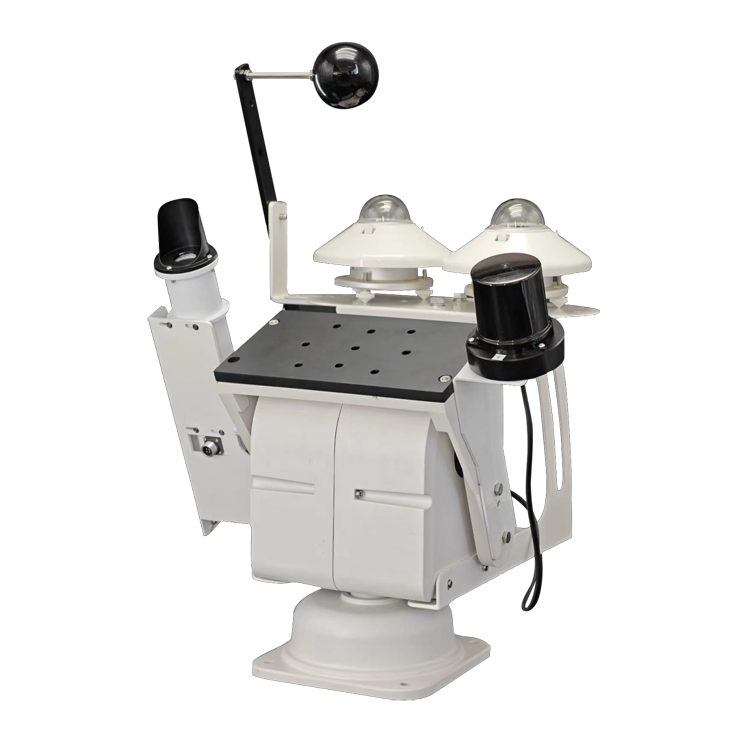
Q1: Does NiuBoL radiation sensor comply with ISO 9060 standard?
A: Yes, provides Second Class and higher accuracy levels, meeting large plant PR calculation and asset evaluation requirements.
Q2: Does Soiling sensor require manual reset after rainfall?
A: No, automatically detects transmittance recovery, system updates SR value in real time, supports evaluation of natural cleaning efficiency.
Q3: Will sensor readings drift in high-temperature desert environments?
A: Uses industrial-grade compensation circuits and thermally stable lenses, no significant temperature drift from -40℃~+85℃, validated in multiple locations.
Q4: How to connect sensors to wireless networks?
A: RS485 output compatible with Modbus gateways/DTUs, supports LoRaWAN/4G, reducing cabling costs.
Q5: What is the routine maintenance frequency for Soiling sensor?
A: Only periodic lens wiping required; natural soiling monitoring needs no additional intervention, extreme pollution cleaned with modules.
Q6: Minimum order quantity and lead time for bulk purchase?
A: Minimum order 50 units, standard products 3–5 weeks delivery; GW-scale projects with reserved inventory and exclusive quotes.
In the context of smart plant transformation, high-precision Solar radiation sensors and Soiling sensors have become the key engines driving solar tracking systems from mechanical following to energy intelligent optimization. NiuBoL, through industrial-grade hardware, flexible integration, and reliable data, helps system integrators improve generation gains, reduce O&M costs, and build competitive barriers.
If you are preparing PV tracking projects, meteorological monitoring upgrades, or GW-scale plant bids, welcome to contact the NiuBoL team. We can provide technical selection manuals, customized solution discussions, and bulk procurement quotes. We look forward to collaborating with you to precisely capture and efficiently convert every joule of sunlight.
 NBL-W-HPRS-Solar-Radiation-Sensor-Instruction-Manual-V3.0.pdf
NBL-W-SRS-Solar-radiation-sensor-instruction-manual-V4.0.pdf
NBL-W-PSS Soiling Sensor Photovoltaic Dust Monitoring Instrument Data Sheet.pdfRelated recommendations
Sensors & Weather Stations Catalog
Agriculture Sensors and Weather Stations Catalog-NiuBoL.pdf
Weather Stations Catalog-NiuBoL.pdf
Agriculture Sensors Catalog-NiuBoL.pdf
Water Quality Sensor Catalog-NiuBoL.pdf
Related products
 Combined air temperature and relative humidity sensor
 TDR Soil Moisture & Temperature Sensor for irrigation| RS485 |4-20mA| NBL-S-THR
 Soil pH sensor RS485 soil Testing instrument soil ph meter for agriculture |NBL-S-PH
 Wind Speed sensor Output Modbus/RS485/Analog/0-5V/4-20mA
 Tipping bucket rain gauge for weather monitoring auto rainfall sensor RS485/Outdoor/stainless steel
 Pyranometer Solar Radiation Sensor 4-20mA/RS485

Screenshot, WhatsApp to identify the QR code
WhatsApp number:+8615367865107
(Click on WhatsApp to copy and add friends)

