





— Blogs —
—Products—
 Consumer hotline +8618073152920
 WhatsApp:+8615367865107
Address:Room 102, District D, Houhu Industrial Park, Yuelu District, Changsha City, Hunan Province, China
Product knowledge
Time:2026-01-16 11:18:02 Popularity:1069
Radar vs submersible water level sensor selection for a river is a decision about where the instrument can survive and what the station must measure. A bridge-mounted radar reads the distance to the water surface without entering the flow. A submersible pressure transmitter reads the pressure of the water column above its diaphragm. Neither principle is automatically more accurate at every site; installation geometry, hydraulic conditions and the receiving system decide the result.
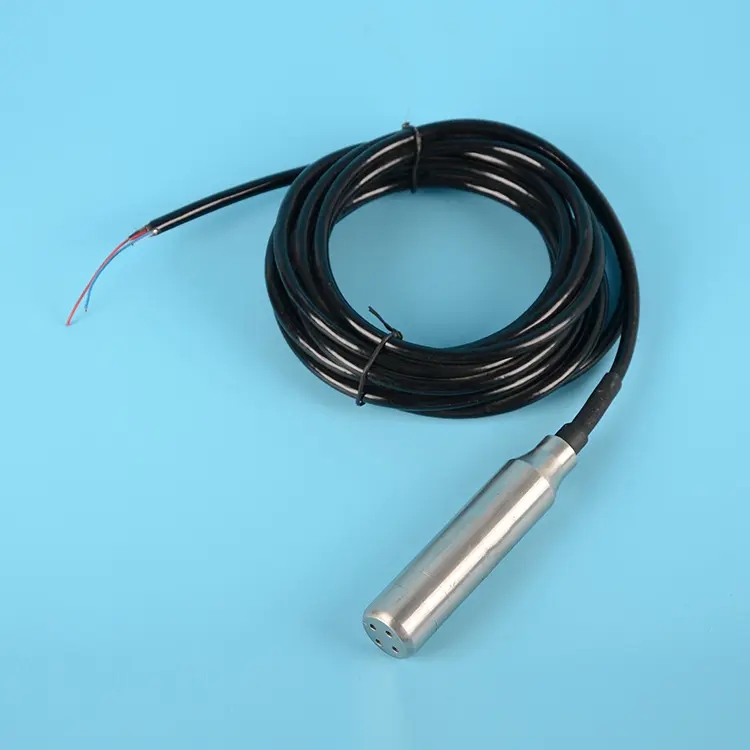
Define the reported value before requesting a gauge. A radar measures distance from its antenna reference to a reflecting surface; the logger converts that distance to stage using the surveyed sensor elevation. A pressure sensor measures hydrostatic head at its installed depth; the logger converts that head to stage using the probe elevation and the correct pressure and density assumptions. If the datum is missing, two apparently precise instruments can produce incompatible levels.
Survey a stable benchmark, expected low and design high water, and the elevation of the instrument reference. Check whether the station needs stage only, a flood threshold, or flow calculated from a separately validated stage-discharge relation. Level alone is not river discharge. Preserve the raw radar distance or pressure-derived head alongside the displayed stage so a later relocation can be reconciled.
A protected stilling well or sheltered side channel can provide a stable position for a pressure probe. The NiuBoL NBL-L-SMP4603 is an analog hydrostatic option with 4-20 mA or voltage variants. It uses a vented cable for atmospheric reference; that vent must terminate dry and open to air. It is not a Modbus sensor simply because a downstream RTU can digitize its analog loop.
In an open river, the pressure head is vulnerable to burial by silt, impact from debris, scouring or displacement. A protective perforated pipe may reduce direct flow impact but needs cleaning and must remain hydraulically connected to the river. The cable route and vent termination require as much attention as the probe. Where the water chemistry is aggressive, review 316L stainless steel and seal compatibility rather than assuming an IP68 rating covers chemical resistance.
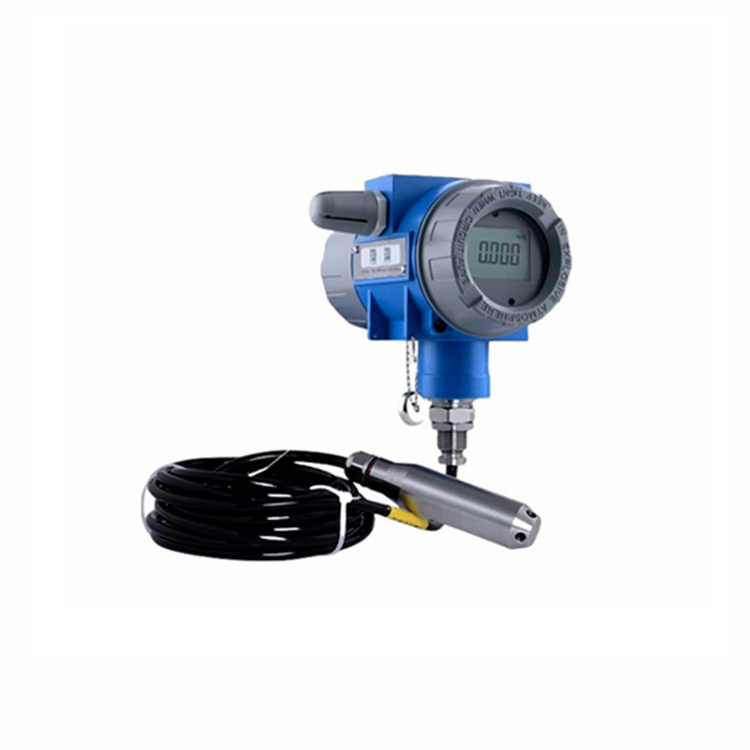
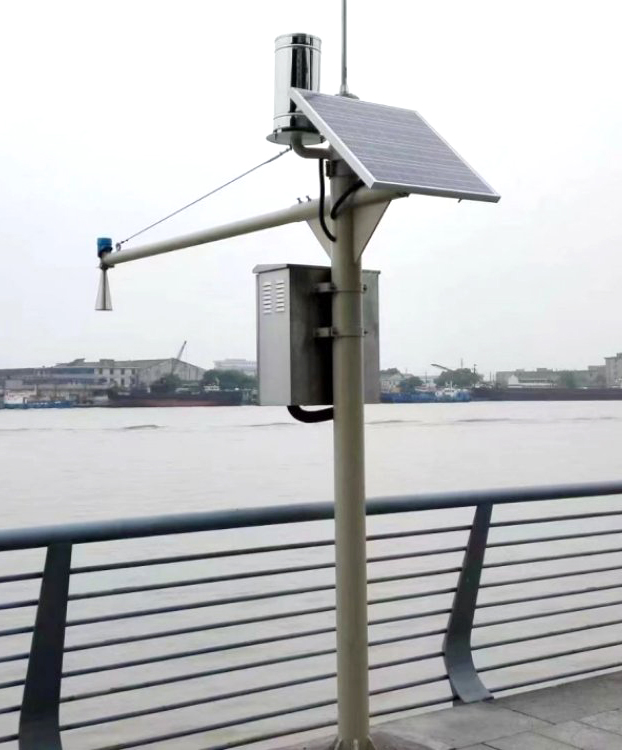
The second photograph shows a separate split-type level-transmitter variant. It should not be specified as NBL-L-SMP4603: confirm that variant's output, approvals and cable arrangement independently if it is proposed for the site.
| Selection item | NBL-L-SMP4603 published value | Field consequence |
|---|---|---|
| Range | Selectable ranges from 1 to 200 m water column | Order a range that covers credible high stage without losing useful low-stage resolution. |
| Accuracy | ±0.25% FS typical; ±0.5% FS maximum | State which accuracy basis is used in the acceptance calculation. |
| Supply and output | 9-30 VDC for 4-20 mA; 12-30 VDC for 0-5 V or 0-10 V | Specify the actual input card and loop power arrangement. |
| Construction | 316L sensing body; IP68; vented polyethylene cable | Keep the vent dry and check water/seal compatibility. |
Where flood debris, heavy sediment or difficult water access makes a submerged probe hard to maintain, place a radar above the water on a stable arm or bridge. A non-contact head avoids wet-end fouling, but it introduces a different set of checks: a clear beam to the water, mounting vibration, false echoes from steelwork, adequate clearance at peak stage and a surveyed reference height. A sensor mounted over a narrow bank eddy may be easy to install but may not follow the main-channel water surface during rapidly changing flow.
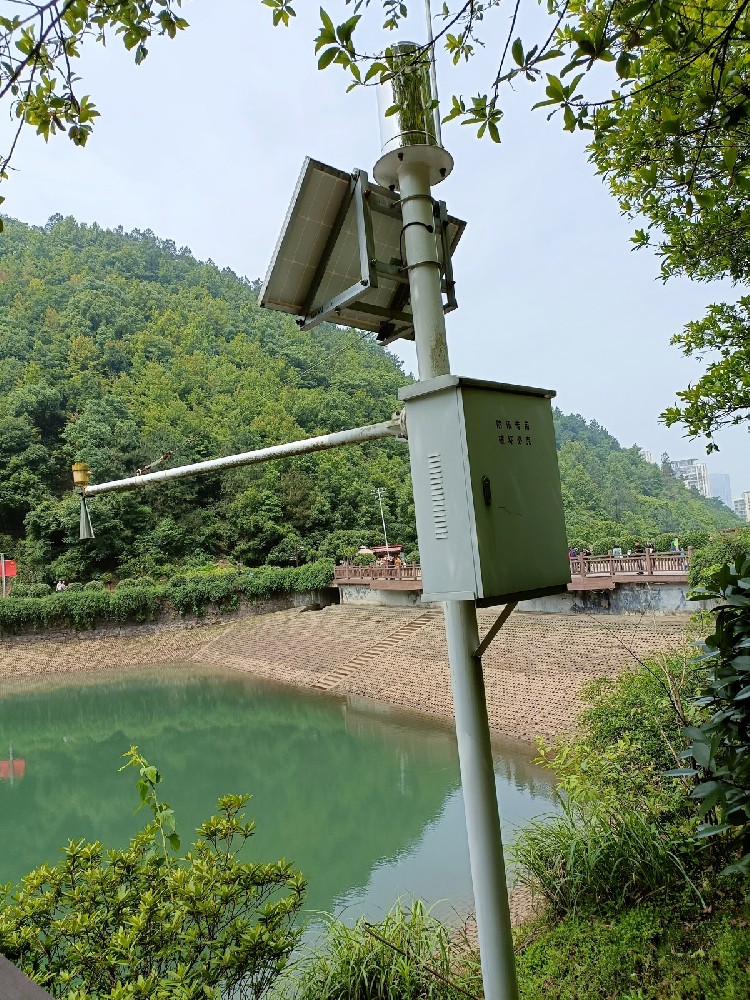
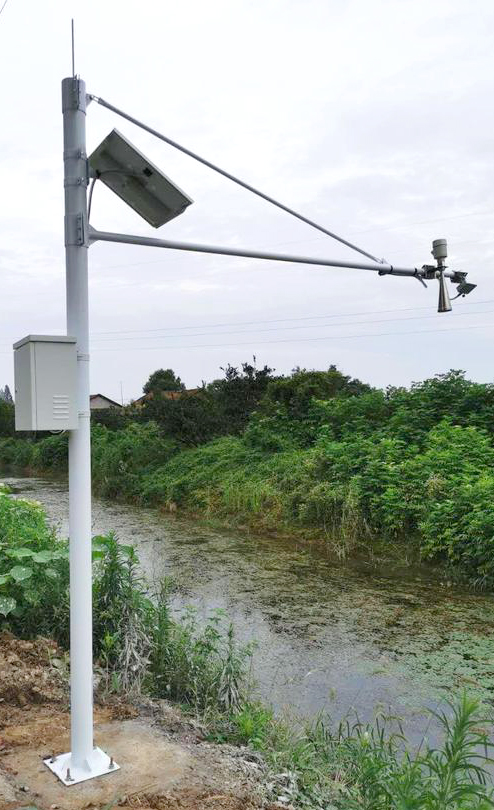
The installed river photograph illustrates the mounting problem: the arm, enclosure and cable must remain outside the flood path while the beam still lands on representative water. Confirm legal and safe access to the bridge or bank before pricing the radar. The cost of a safe bracket, survey, enclosure and maintenance access can outweigh the sensor-price difference.
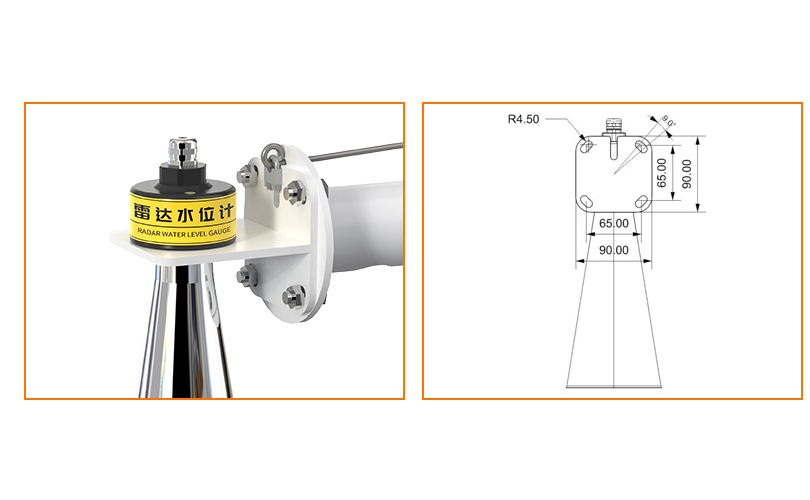
NiuBoL's high-frequency radar level gauge is an RS485 Modbus model. Its product page describes a 76-81 GHz FMCW instrument, a 6-degree beam and a nominal 0.1-65 m range. Those figures apply to that model, not to every radar photographed on this page. The page lists ±1 mm accuracy under its specified product conditions; commissioning still needs a surveyed datum and comparison at the actual mounting location.
| Selection item | Published radar value | Field consequence |
|---|---|---|
| Principle and band | FMCW radar; 76-81 GHz | Verify the ordered model and any local radio requirements. |
| Distance range / beam | 0.1-65 m; 6-degree beam | Check high-water clearance and obstructions through the entire beam footprint. |
| Supply / interface | 10-30 VDC; RS485 Modbus | Test cable voltage and the RTU's register interpretation. |
| Protection | IP67 | Protect external joints and cabinet separately. |
At a mounting height H, approximate the beam radius at the water as H × tan(3 degrees) for a 6-degree full beam. At 10 m height that is about 0.52 m, before allowing for installation tolerance and nearby false reflectors. This geometric check is more useful than treating the beam specification as a guarantee that every narrow channel is suitable. Recalculate the footprint at low water, when the antenna-to-surface distance is greatest.
A radar generally avoids repeated retrieval from the water, yet its bracket and reference elevation still need inspection after floods or structural work. A pressure transmitter may be simpler where a stilling tube and analog input already exist. A statement that one option always has lower lifecycle cost is not supportable without the site's access, fouling, replacement and civil-work assumptions.
For the RTU, an analog pressure loop requires loop power, a configured input range, broken-wire handling and scaling from current to water level. The radar requires RS485 wiring, address, baud rate, register map, unit scaling and communication-loss handling. Both need a timestamped stage record and an alarm state distinguishable from a stale last value. Do not connect a pressure sensor's 4-20 mA wires to an RS485-only port or assume the radar can replace a legacy analog input without a converter.

For radar, measure the antenna height at low and high water, keep the high-water surface outside the dead zone, and inspect the entire beam path for crossbars, vegetation and bank reflections. Secure the arm against oscillation and protect the cable from UV exposure, abrasion and induced surge. At startup, compare the live value with a surveyed staff gauge or equivalent level reference at the same time. Repeat the check after the first significant flood or bracket adjustment.
For a submersible probe, use a location that cannot be easily scoured or buried, but do not isolate it from the water level being monitored. Protect the vented cable end from condensation and immersion; never seal the atmospheric vent shut. Confirm the zero and scaling under normal water, then perform an independent reference check at another level where feasible. If density varies materially with salinity or temperature, account for that in the head-to-stage conversion.
Send NiuBoL the river cross-section, lowest and design-high stages, proposed mounting height, bridge or bank photos, sediment and debris conditions, power, available RTU inputs, cable run and required update interval. Ask for the exact radar or pressure model, output, range, bracket, cable, enclosure, surge protection and any converter as separate line items. For a radar request, include the free-beam drawing; for a pressure request, include a vent termination and protective mounting detail.
At factory or bench check, confirm output scaling and simulated fault behavior. At site acceptance, record the benchmark, as-built sensor elevation, configuration, local reference comparison, communication settings and alarm test. This record matters more than a single screenshot because it lets the next technician tell whether a later step change came from the river, a moved bracket, a blocked vent or an RTU setting.
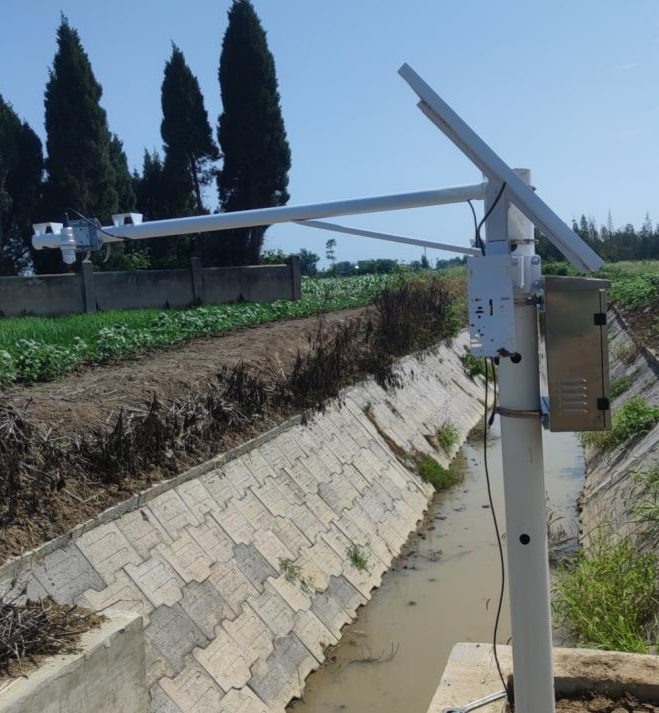
Photographs of complete hydrological stations are useful for evaluating the mounting and power package, but they do not prove a particular sensor's accuracy or a project's results. Keep the probe and station specification separate: solar panel, battery, cabinet and telemetry must be sized for the actual sampling and upload duty.
Q1. Is radar always the safer choice for a river?
A1. No. It avoids submerged exposure but still needs a stable mount, clear beam and surveyed reference. A protected stilling well with an existing analog input may favor a pressure transmitter.
Q2. Does the pressure probe need an atmospheric vent?
A2. The NBL-L-SMP4603 uses a vented cable. Keep its termination dry and open to air; a blocked or wet vent can introduce error or damage.
Q3. Can the NBL-L-SMP4603 connect directly to a Modbus RTU?
A3. Only if the RTU has the matching analog input or a suitable converter. The cited product variants output 4-20 mA or voltage, not native RS485 Modbus.
Q4. What does the radar's millimeter accuracy mean in the field?
A4. It is a sensor specification for the named model, not the uncertainty of a river-stage station. Survey error, movement, surface roughness and false echoes must be assessed separately.
Q5. Which level should be used for the radar's beam check?
A5. Check both extremes. Low water creates the largest beam footprint; high water challenges the antenna clearance and near-range limit.
Q6. Which option has the lower purchase cost?
A6. Request itemized installed quotations. The analog probe, cable protection and vent housing must be compared with the radar, arm, survey and data interface. No universal site price is stated here.
Q7. What must the acceptance test demonstrate?
A7. A documented datum and as-built elevation, correct stage scaling, reference comparison, fault indication, data timestamp and alarm response. Retain both the raw sensor value and the displayed stage.
For radar vs submersible water level sensor selection, choose the measuring principle that can remain representative and serviceable through the river's full operating range. Radar avoids immersion but requires beam and mount checks; a pressure probe can use a protected well but depends on a clean hydraulic connection and a dry vent. The final purchase should be based on the complete installed system and a defined field acceptance method.
Prev:Types of Water Level Sensors: Choose by Datum and Site Limits
Next:Submersible Level Transmitter Density Correction: Span and Process Errors
Related recommendations
Sensors & Weather Stations Catalog
 Agriculture Sensors and Weather Stations Catalog-NiuBoL.pdf
Weather Stations Catalog-NiuBoL.pdf
Agriculture Sensors Catalog-NiuBoL.pdf
Water Quality Sensor Catalog-NiuBoL.pdf
Related products
 Combined air temperature and relative humidity sensor
 TDR Soil Moisture & Temperature Sensor for irrigation| RS485 |4-20mA| NBL-S-THR
 Soil pH sensor RS485 soil Testing instrument soil ph meter for agriculture |NBL-S-PH
 Wind Speed sensor Output Modbus/RS485/Analog/0-5V/4-20mA
 Tipping bucket rain gauge for weather monitoring auto rainfall sensor RS485/Outdoor/stainless steel
 Pyranometer Solar Radiation Sensor 4-20mA/RS485

Screenshot, WhatsApp to identify the QR code
WhatsApp number:+8615367865107
(Click on WhatsApp to copy and add friends)

