





— Blogs —
—Products—
 Consumer hotline +8618073152920
WhatsApp:+8615367865107
Address:Room 102, District D, Houhu Industrial Park, Yuelu District, Changsha City, Hunan Province, China
Product knowledge
Time:2025-03-18 11:16:21 Popularity:1816
A small outdoor weather station installation needs enough space for each measurement, not merely enough space for the pole. Wind sensors need unobstructed exposure, the rain collector needs a clear catch area, and the air sensor needs ventilation away from heated equipment. Where a compact crossarm cannot provide those conditions, separate the affected sensor rather than accepting a smaller but unrepresentative installation.
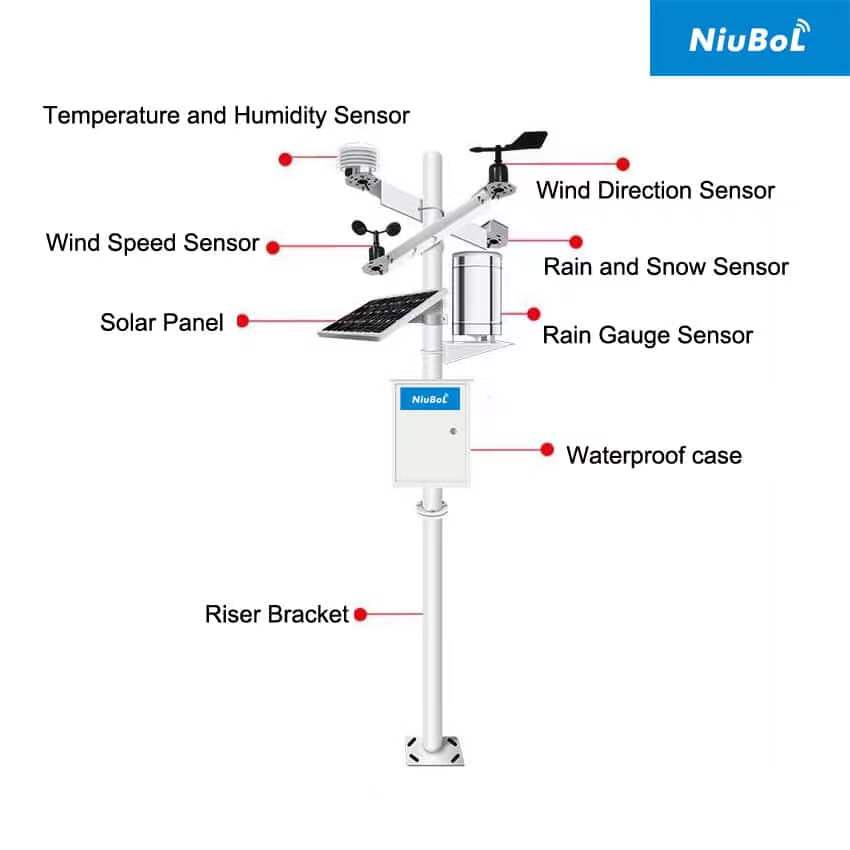
Small outdoor weather stations suit farms, research plots and industrial grounds where a full observation enclosure is impractical. The advantage is a manageable assembly with selectable channels. The constraint is that a solar panel, cabinet, crossarm and several instruments occupy the same small space. A neat arrangement can still shade a radiation sensor, shelter a rain collector or expose an air sensor to cabinet heat.
Begin with a drawing showing sensor positions, panel orientation, cabinet doors and cable routes. Add nearby vegetation, fences and buildings. Check the arrangement from different sun and wind directions, including expected crop growth. Mast height alone does not establish measurement quality, and a single obstacle-clearance distance cannot resolve every channel's exposure.
| Component | Compact-layout problem | Practical layout decision |
|---|---|---|
| Wind speed and direction | Crossarm, panel or nearby structure disturbs airflow. | Place sensing elements clear of the assembly and document the observation height. |
| Air temperature and humidity | Warm cabinet, paved surface or restricted ventilation biases the sampled air. | Keep the radiation shield ventilated and away from artificial heat sources. |
| Rain gauge | Overhead parts intercept rain or shed water into the collector. | Provide a clear catch opening and a stable, level mounting position. |
| Pyranometer | Panel, mast or sensor casts a moving shadow. | Check the view of the sky over the required observation period. |
| Control cabinet | Door movement, cable tension or water entry disrupts servicing. | Reserve opening clearance, supported cable entries and access from the ground where feasible. |

The TG462 / TG462S data logger can collect compatible serial, analog and digital signals, but the device itself is rated IP30. It needs suitable outdoor protection. An enclosure must accommodate terminals, cable bends and service access as well as the logger. Its environmental performance also depends on glands, door seals and the completed installation.
Keep water paths away from terminals. Support cables below entries and provide drip loops where appropriate. A sealed box can still experience condensation and solar heating, so assess those conditions when choosing its location and protective arrangement. Do not close the ventilated air-sensor shield inside the cabinet to protect it from rain; it must sample the surrounding air.
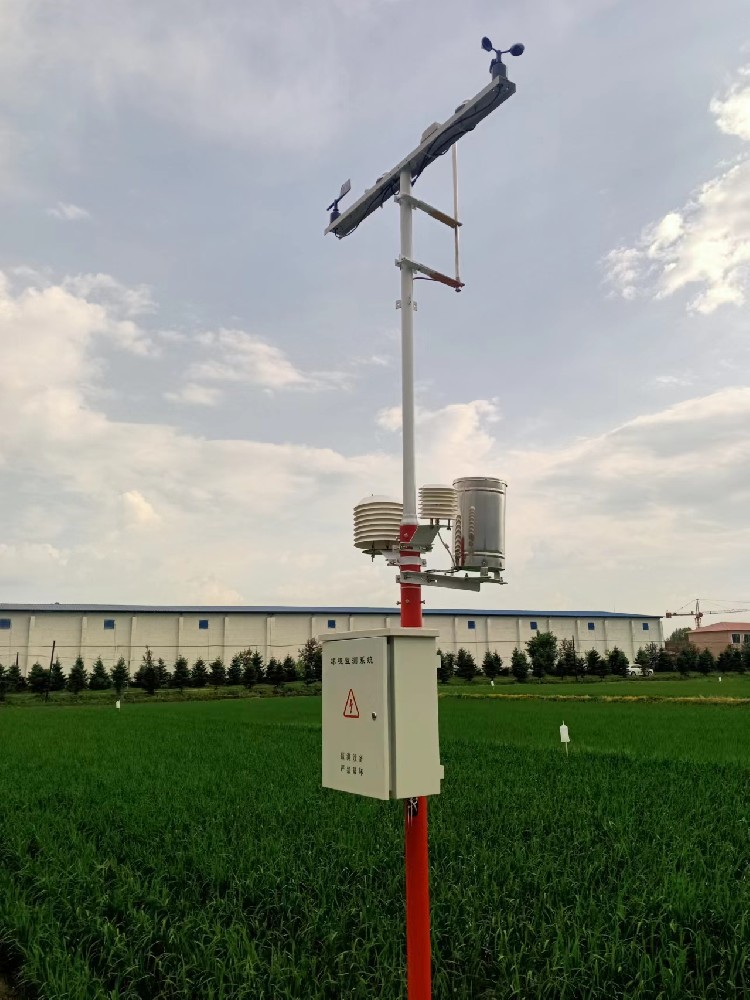
These NiuBoL component specifications help define a small outdoor weather station installation. They are not a single operating envelope for the complete system. The rain gauge's liquid-precipitation limits, for example, can be narrower than the air sensor's temperature range.
| Instrument | Relevant parameters | Installation consequence |
|---|---|---|
| NBL-W-LBTH | Air temperature -40 to 80 C, accuracy +/-0.5 C; RH 0-100%, accuracy +/-5% RH; DC 12-24 V; RS485 Modbus RTU or 4-20 mA | Select the output version and preserve airflow through the shield. |
| NBL-W-SS and NBL-W-DS | Separate wind-speed and wind-direction sensors; IP65 | Keep moving elements clear, orient direction correctly and specify the receiver's required output. |
| NBL-W-RS | 0.2 mm resolution; intensity range 0-4 mm/min; operation 0-50 C; 5 m standard cable | Plan the cable route and liquid-rain exposure; do not assume snowfall measurement. |
| TG462 / TG462S | 3 RS485 ports; 8 analog inputs with 12-bit conversion; IP30 | Match channel types and protect the logger in an appropriate cabinet. |
For cable length, measure the routed distance, including vertical runs and service slack, rather than the straight-line separation. Specify cable jacket and connector requirements for sunlight, moisture and mechanical exposure; there is no single cable material applicable to every sensor configuration. Keep model-specific wiring identification with the installation record.
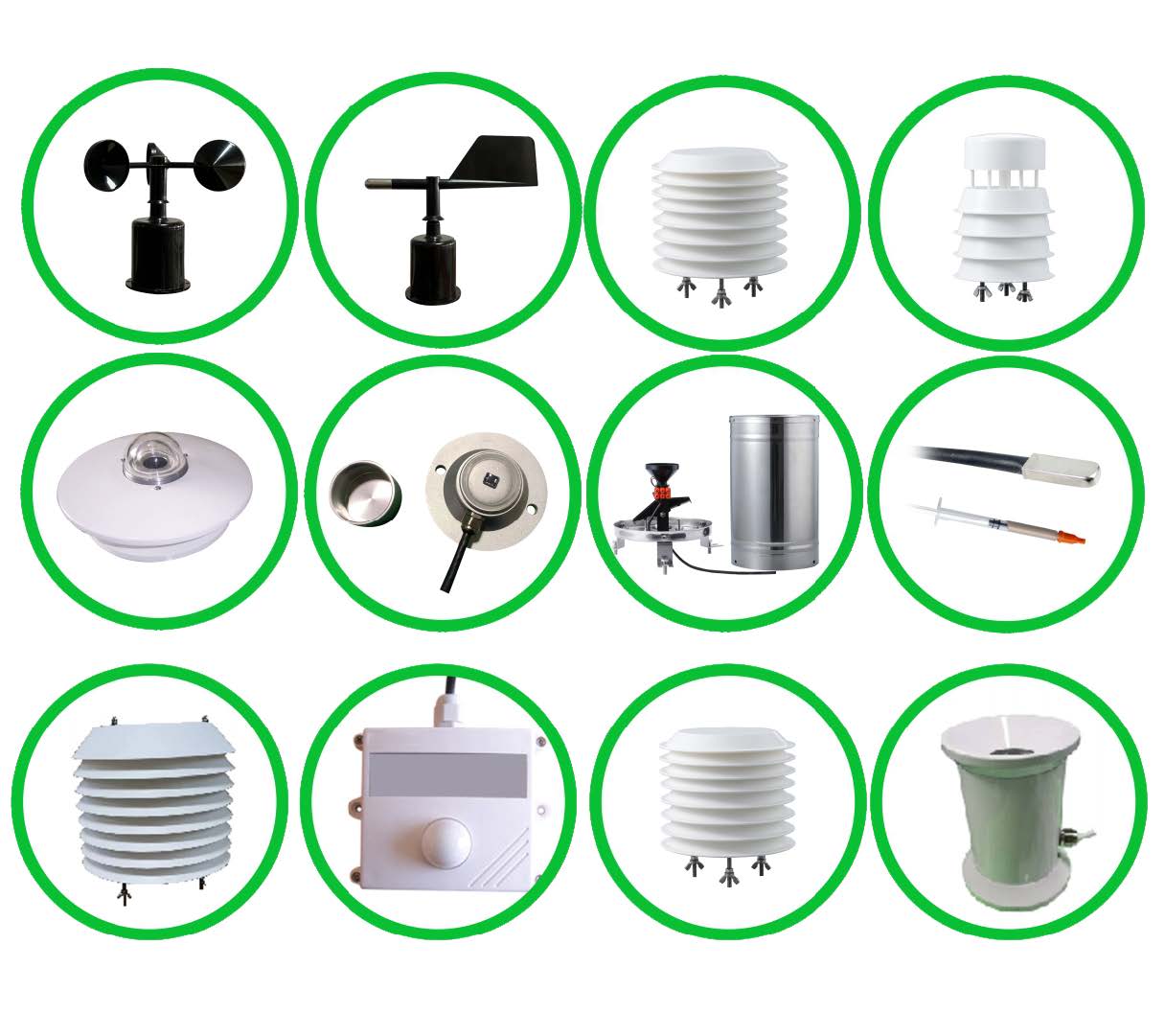
Connect each instrument to a compatible logger input. RS485 Modbus RTU channels need unique addresses, matching serial settings and correct scaling. A pulse rain gauge requires a suitable counting input and the correct millimetres-per-tip setting. Neither an RS485 terminal nor a digital input alone proves that the application has been configured to record the selected sensor.
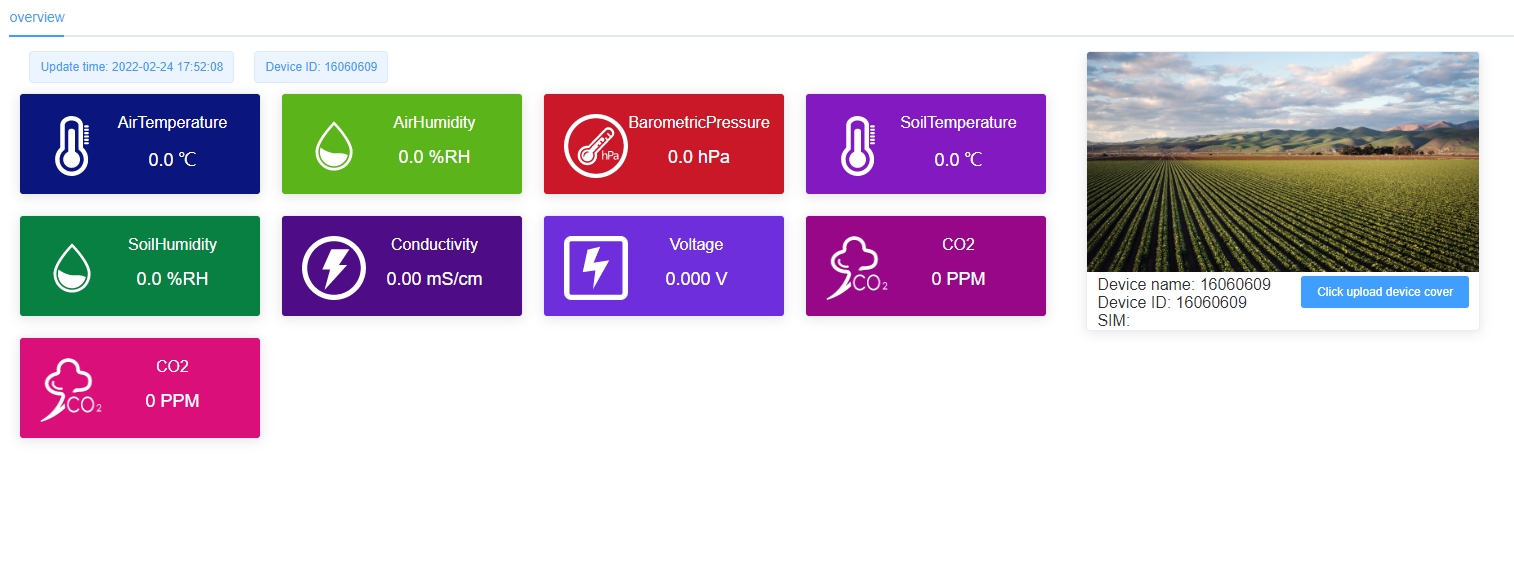
Solar power requires a load-based design. Add sensors, logger, modem and accessories, then assess site sunlight and usable battery capacity. A small mast or an MPPT controller does not establish seven days of autonomy. Likewise, a dashboard illustration does not define the purchased software, alarm channels or historical export functions.
Only when the arrangement provides acceptable exposure for every required observation. If the panel shades radiation measurements or a crossarm shelters the gauge, use a separate bracket or mounting point. Record the revised heights and positions so later comparisons are meaningful.
No. IP65 applies to the specified wind sensors, not automatically to the logger, terminal connections or finished cabinet. Evaluate each component and the completed cable-entry arrangement. An IP30 logger requires additional outdoor protection.
Set an initial inspection interval from local dust, leaves, insects and bird activity, then revise it using observed contamination. A universal six-month interval can miss rapid fouling. Inspect level and drainage as well as removing debris.
It can supply observations to a compatible controller. Irrigation operation also needs suitable soil or crop information, control logic, valve interfaces and a defined response to missing measurements. Weather sensing alone is not a complete irrigation controller.
Send the measurement list, site sketch, required heights, mounting footprint, power source, cable routes and receiving system. Identify any channels that can be mounted separately. Those details determine the brackets, enclosure, input modules and installation work more reliably than a request for a generic compact station.
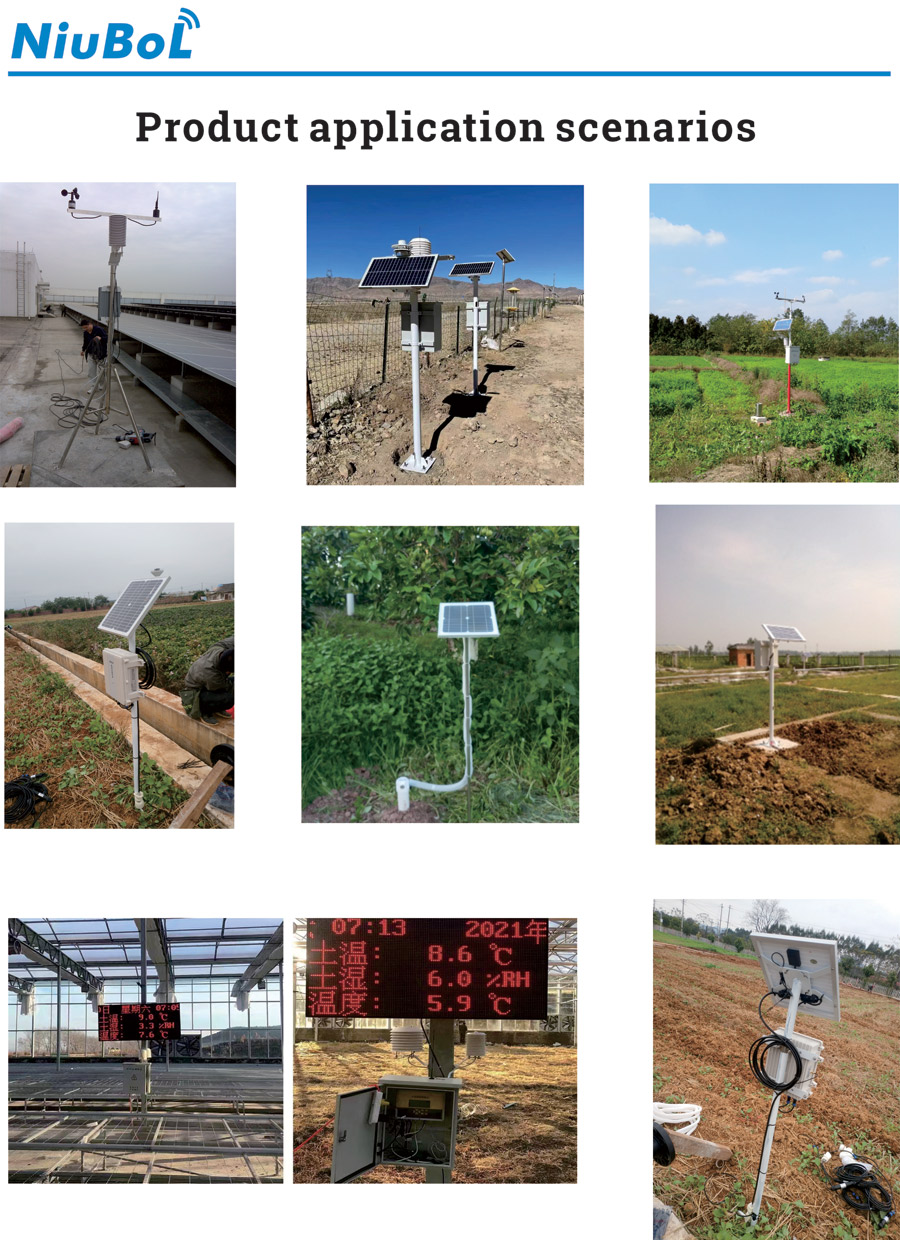
A small outdoor weather station installation succeeds when compact construction preserves useful exposure and service access. NiuBoL can configure separate wind, atmospheric and rainfall instruments with compatible acquisition equipment. Share the actual site layout before ordering so the assembly fits the measurements as well as the available ground space.
Prev:Highway Weather Monitoring Station: Choose Channels by Road Section
Next:Ultrasonic Weather Stations for Meteorological Monitoring
Related recommendations
Sensors & Weather Stations Catalog
 Agriculture Sensors and Weather Stations Catalog-NiuBoL.pdf
Weather Stations Catalog-NiuBoL.pdf
Agriculture Sensors Catalog-NiuBoL.pdf
Water Quality Sensor Catalog-NiuBoL.pdf
Related products
 Combined air temperature and relative humidity sensor
 TDR Soil Moisture & Temperature Sensor for irrigation| RS485 |4-20mA| NBL-S-THR
 Soil pH sensor RS485 soil Testing instrument soil ph meter for agriculture |NBL-S-PH
 Wind Speed sensor Output Modbus/RS485/Analog/0-5V/4-20mA
 Tipping bucket rain gauge for weather monitoring auto rainfall sensor RS485/Outdoor/stainless steel
 Pyranometer Solar Radiation Sensor 4-20mA/RS485


Screenshot, WhatsApp to identify the QR code
WhatsApp number:+8615367865107
(Click on WhatsApp to copy and add friends)

