





— Blogs —
—Products—
 Consumer hotline +8618073152920
 WhatsApp:+8615367865107
Address:Room 102, District D, Houhu Industrial Park, Yuelu District, Changsha City, Hunan Province, China
Product knowledge
Time:2026-03-05 22:18:30 Popularity:683
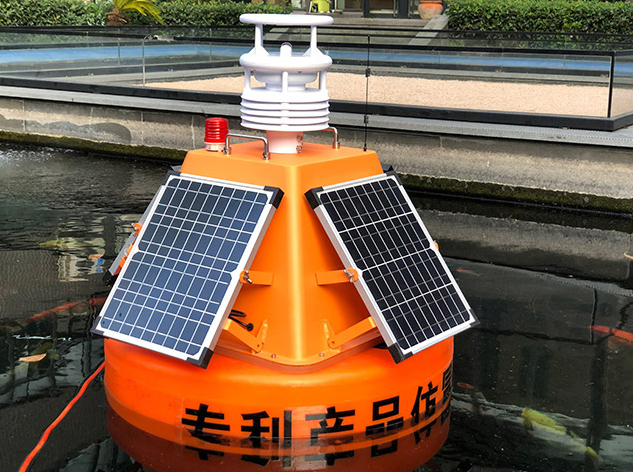
A water quality monitoring buoy and a laboratory sample can report different values without either result immediately proving an instrument fault. They may represent different depths, times, sample treatments or measurement methods. Before adjusting a NiuBoL online sensor to match a bottle result, establish whether the two observations are genuinely comparable. This is particularly important when commissioning a multi-parameter buoy for a lake, reservoir or water-source monitoring project.
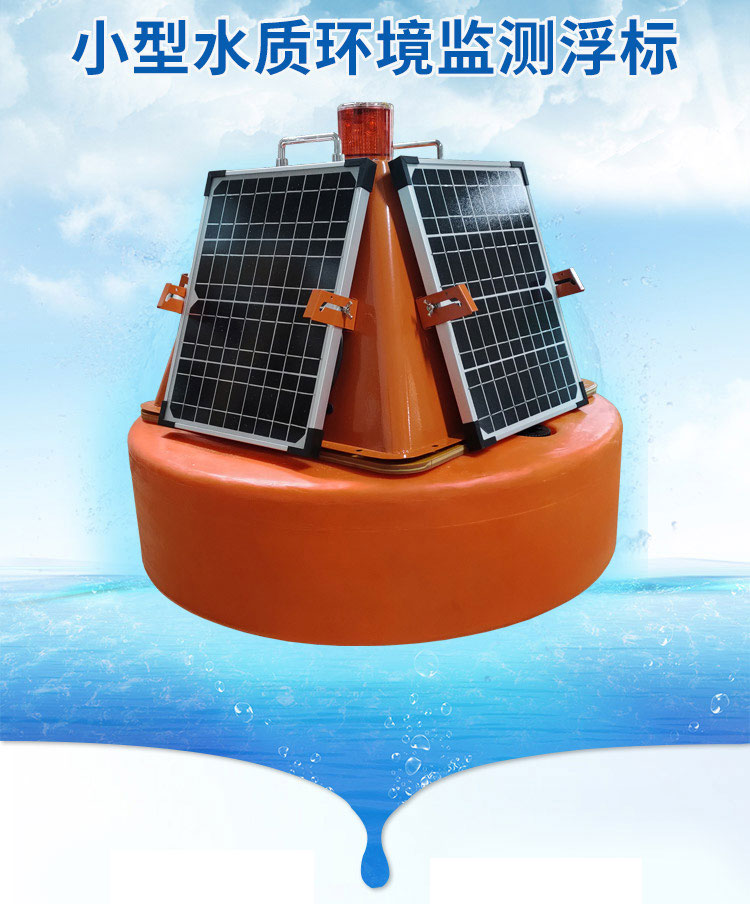
A field check can answer several different questions: whether a probe has drifted, whether the logger decodes it correctly, or whether an optical estimate agrees sufficiently with a specified laboratory method. These require different tests. A logger displaying ten times the instrument value needs a scaling correction, not a new chemical calibration.
Start by identifying the parameter and reporting basis. Ammonium, ammonia nitrogen and total nitrogen are not interchangeable labels. Dissolved oxygen in mg/L is different from percent saturation. Turbidity and optical transparency describe different properties, even when a display places their trends next to each other. Record the actual quantity and unit before choosing a reference result.
| Question | Appropriate comparison | Common misleading shortcut |
|---|---|---|
| Is digital acquisition correct? | Instrument value, decoded register and displayed engineering value | Recalibrating the probe to fix a unit or scale error |
| Has a field probe drifted? | Suitable reference check with controlled conditions and current calibration | Using an unverified handheld meter as unquestioned truth |
| Does an online estimate track a laboratory method? | Matched samples across the water conditions relevant to the project | Changing the slope from one convenient sample |
| Does one buoy represent the water body? | Additional spatial or depth observations | Comparing an offshore probe with a shoreline bottle |
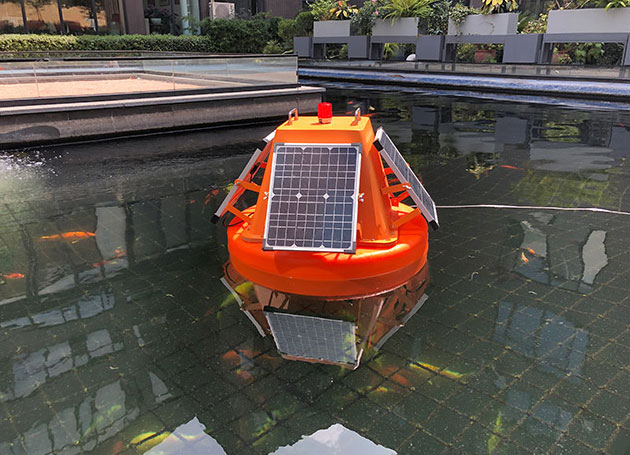
A sample should represent water close to the probe at the relevant depth and time, while avoiding disturbance from the boat, sampler or sediment. Record the water level and actual sensor depth. A buoy-mounted probe can move vertically with the platform, whereas a shore sampling point may remain at a different elevation.
Use the logger's acquisition timestamp, not only the time when staff view a cloud screen. If the uploaded value is a five-minute average, pair it with an observation that has an appropriate time basis. A short pollution plume can pass between a bottle collection and the next station update; averaging the whole hour does not make those observations equivalent.
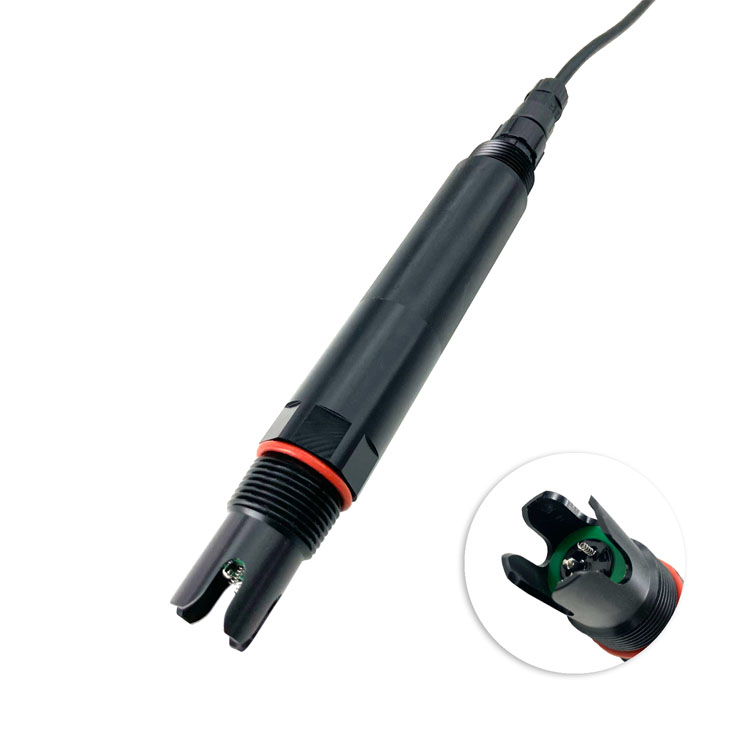
For the NBL-WQ-NHN ammonium-selective sensor, record pH and water temperature alongside the comparison. Identify whether the reference laboratory result is reported as nitrogen or as the ion. Temperature compensation of an electrode does not resolve a mismatch in chemical species or reporting units.
Some quantities should be checked in the water because collection, agitation and storage can change them. Dissolved oxygen can change through gas exchange and biological activity. A pH comparison made after a long transport period may describe the bottle's changed conditions rather than the original probe environment. Arrange field measurements and sample handling around the quantity being tested.
For laboratory work, agree containers, preservation, holding time, filtration and analytical method with the laboratory before sampling. Do not apply one acidification or filtration procedure to every bottle in a multi-parameter campaign. Retain the sampling record so a later discrepancy can be traced to an actual treatment difference.
A residual chlorine instrument belongs to applications where residual disinfectant is an intended measurement. Its availability in the NiuBoL water-quality range does not make it a default indicator for untreated lakes. Where chlorine is required, compare the same chlorine fraction using an appropriate prompt reference test rather than a delayed, differently defined result.
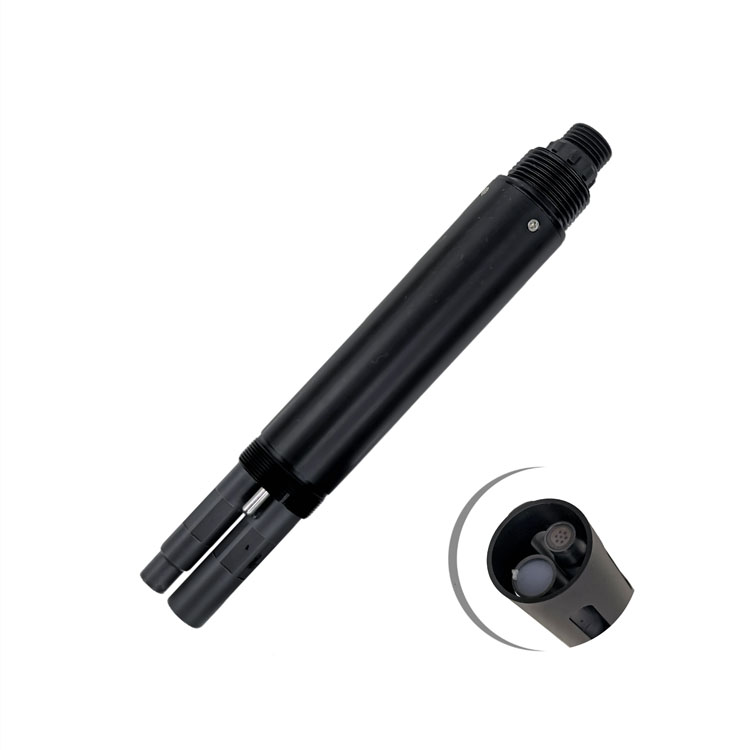
An online UV-based COD estimate uses optical absorption and a conversion relationship. A laboratory digestion method measures oxygen demand through a different analytical procedure. The same displayed unit does not guarantee that the methods respond identically when the composition of organic matter changes. Turbidity compensation also does not establish immunity to every suspended particle or coloured substance.
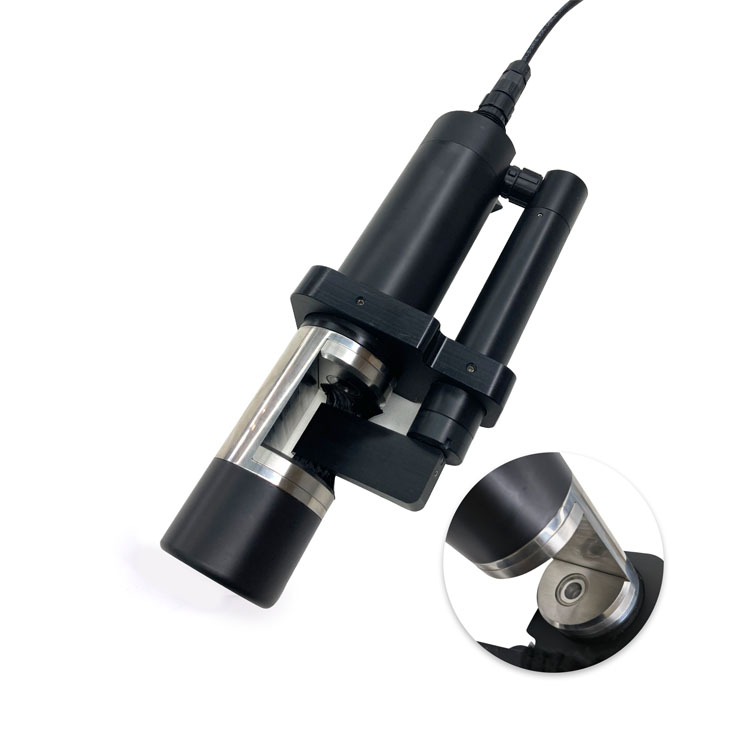
The NBL-WQ-COD-408-S is an example of a dual-wavelength optical sensor that can be considered for an expanded buoy package. It is not assumed to be installed on every illustrated platform. Select its range and establish its relationship with the required laboratory method using the site's water, rather than adopting one universal COD/TOC conversion.
| NBL-WQ-COD-408-S item | Specification | Comparison implication |
|---|---|---|
| Method | Dual-wavelength UV absorption, including UV254 | Validate the conversion against the chosen reference method |
| COD range options | 0-200, 0-500 or 0-1500 mg/L; 0.1 mg/L resolution | Order the range needed for the expected water and event peaks |
| Specified accuracy | 0-1000 mg/L: +/-10% of reading; 1000-1500 mg/L: +/-5% of reading | Do not substitute resolution for accuracy or site-method agreement |
| Digital and optional output | RS485 Modbus RTU; optional 4-20 mA | Verify the quantity, unit and scaling at the receiving system |
| Supply and load | 12-24 VDC; 0.4 W operating, 2 W cleaning | Include the cleaning load in buoy power design |
| Housing, protection and cable | 316L stainless steel; IP68; standard 5 m cable | Check immersion and chemical compatibility for the actual site |
Collect comparison pairs over normal operation and relevant changes in water quality. Keep an independent set of later pairs to test any fitted relationship. A good fit to the same points used to adjust a coefficient is not independent evidence that the relationship holds in a new season or after an upstream process change.
A nearly constant difference may suggest an offset or method bias. A difference that grows with concentration may involve scaling or the conversion relationship. Disagreement only during high turbidity may point toward optical interference or a changed sample fraction. None of those patterns is a diagnosis by itself; use them to decide the next check.
Inspect the sensing surface and run the approved cleaning check before recalibration. Record the reading before cleaning, after cleaning and after any adjustment. If cleaning alone restores agreement, applying a new calibration first would have hidden the maintenance problem. Do not use a fixed three- or six-month inspection interval without observing local fouling behaviour.
Transparency is another useful boundary: a transparency probe's reported length is not a turbidity value in NTU, and neither is automatically a suspended-solids concentration in mg/L. If a customer needs a relationship between these outputs, establish it with suitable paired measurements rather than changing the channel name in the gateway.
Specify the quantities, reference methods, sampling locations, applicable concentration range and treatment of results below reporting limits. Agree how uncertainty and invalid observations will be handled. The number and distribution of comparison pairs should reflect the site's variability and contractual purpose; there is no universal sample count that validates every water body.
Ask NiuBoL to review the probe package, mounting depth, access for checks and logger register mapping together. Include laboratory work and field access as identifiable project costs. A buoy can remove a long pumped sampling line, but it does not eliminate calibration checks, site permissions or the need for a boat or safe access where conditions require one.
No. First check units, methods, sample location, depth, timing and preservation. Adjusting a sensor against a non-comparable sample can introduce an error into otherwise useful measurements.
It can provide a useful independent field check if its calibration, measurement method and compensation settings are appropriate. It cannot validate every chemical parameter or replace required laboratory analyses.
One pair can identify a large discrepancy but cannot establish a conversion over changing concentrations and water composition. Use a planned comparison covering the site's relevant operating conditions.
Retain the qualifier and reporting limit. Do not convert it to an exact zero or use it as a precise calibration point. Agree the statistical and contractual treatment before evaluating the results.
Provide normal concentrations, credible event peaks, water chemistry, required reporting limits and the intended comparison method. A wider range is not automatically preferable for a low-level monitoring task.
No. RS485 Modbus RTU can transfer correctly mapped readings to a logger. Analytical agreement depends on the measurement and comparison methods, not on the transport protocol.
A water quality monitoring buoy should be evaluated against a planned reference procedure, not an isolated bottle result. Match quantity, depth, time and method; investigate discrepancies before altering calibration. With those requirements defined, NiuBoL can review a sensor and acquisition package that supports both continuous observations and meaningful independent checks.
The following documents describe different probe families. Use the exact model and revision for wiring and service work; inclusion in this list does not mean that every probe is fitted to one buoy.
 NBL-RDO-206 Online Fluorescence Dissolved Oxygen Sensor.pdf
NBL-COD-208 Online COD Water Quality Sensor.pdf
NBL-CL-206 Water Quality Sensor Online Residual Chlorine Sensor.pdf
Prev:Air Pollution Sources and Online Monitoring Technology
Next:Aquaculture Monitoring Buoy: Match Sensors to Freshwater or Brackish Water
Related recommendations
Sensors & Weather Stations Catalog
Agriculture Sensors and Weather Stations Catalog-NiuBoL.pdf
Weather Stations Catalog-NiuBoL.pdf
Agriculture Sensors Catalog-NiuBoL.pdf
Water Quality Sensor Catalog-NiuBoL.pdf
Related products
 Combined air temperature and relative humidity sensor
 TDR Soil Moisture & Temperature Sensor for irrigation| RS485 |4-20mA| NBL-S-THR
 Soil pH sensor RS485 soil Testing instrument soil ph meter for agriculture |NBL-S-PH
 Wind Speed sensor Output Modbus/RS485/Analog/0-5V/4-20mA
 Tipping bucket rain gauge for weather monitoring auto rainfall sensor RS485/Outdoor/stainless steel
 Pyranometer Solar Radiation Sensor 4-20mA/RS485

Screenshot, WhatsApp to identify the QR code
WhatsApp number:+8615367865107
(Click on WhatsApp to copy and add friends)

