





— Blogs —
—Products—
 Consumer hotline +8618073152920
 WhatsApp:+8615367865107
Address:Room 102, District D, Houhu Industrial Park, Yuelu District, Changsha City, Hunan Province, China
Product knowledge
Time:2026-03-05 22:23:42 Popularity:574
An aquaculture monitoring buoy selected for a freshwater pond should not be transferred to brackish water solely because its probes have IP68 housings. Salinity affects measurement interpretation, electrode behaviour and material suitability. A useful NiuBoL configuration review therefore starts with the actual water composition and required reporting limits, then checks each sensor and its compensation settings individually.
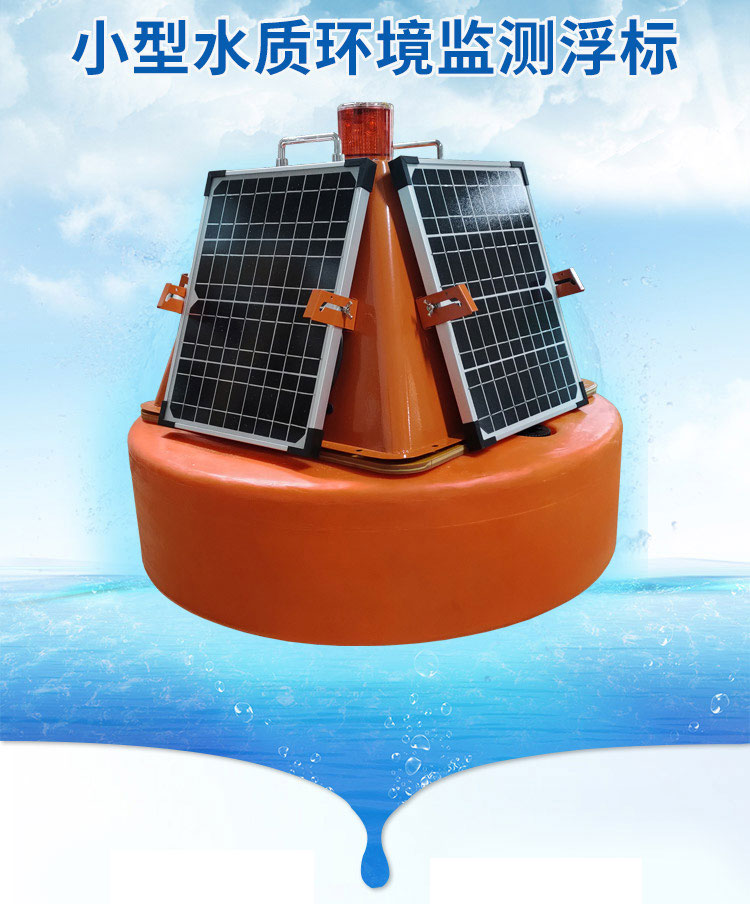
For freshwater ponds, provide the usual conductivity, temperature and pH range, along with aeration and cleaning practices. For brackish ponds or nearshore cages, add the salinity range and how it changes with rainfall, evaporation or tidal exchange. A single value collected on a dry afternoon may not describe the conditions after freshwater inflow.
Identify the management question for each channel. Dissolved oxygen may support an operator's aeration decisions; temperature and pH provide context for biological conditions; an ammonium-selective sensor may track one nitrogen species. Do not label that package as a complete nutrient analysis or assume it detects nitrite, nitrate and toxic free ammonia independently.
| Water condition | Information needed before selection | Decision affected |
|---|---|---|
| Changing salinity | Expected range and source of salinity input | DO compensation and conductivity range |
| High or variable pH | Daily pH range, not only a single check | Ammonium electrode applicability and ammonia interpretation |
| Very low target concentrations | Required decision level and acceptable uncertainty | Whether an online electrode can resolve the intended change |
| High solids or biological growth | Seasonal loading and access for inspection | Optical-window and membrane maintenance arrangements |
| Saltwater immersion | Chloride conditions, depth and all wetted materials | Probe, connector, fastener and mooring suitability |
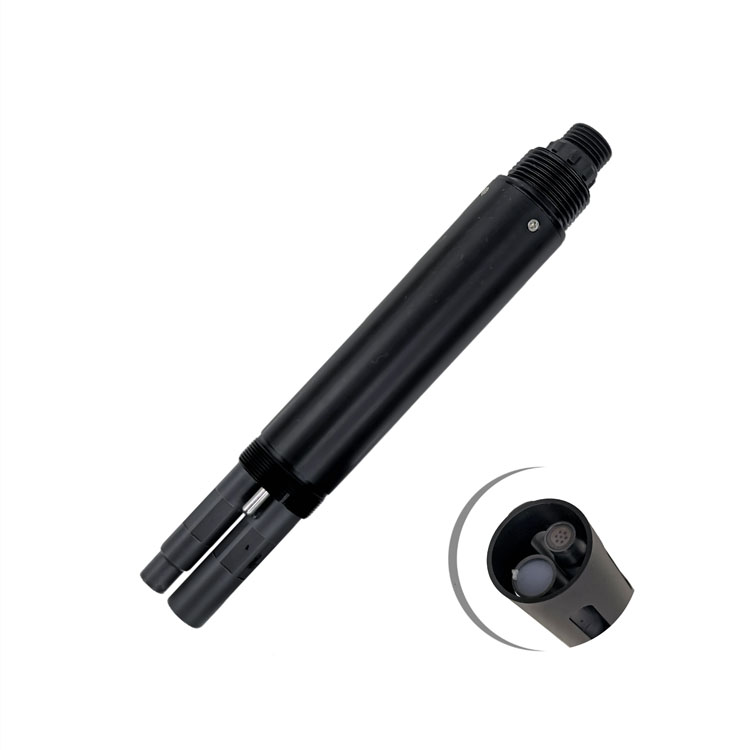
The NBL-WQ-NHN uses an ammonium ion-selective electrode. Its response is not a direct measurement of every nitrogen form. Agree whether the output is reported as NH4+-N, another nitrogen basis or a calculated quantity, and use consistent names in the logger, platform and laboratory records.
Temperature compensation does not automatically correct every matrix effect in saline water. Obtain a suitability review for the expected ionic composition, including relevant electrode interferences and the calibration method. A successful digital response on the workbench establishes communication, not satisfactory selectivity in a brackish pond.
| NBL-WQ-NHN item | Specification | Procurement significance |
|---|---|---|
| Measurement range options | 0-10.00, 0-100.00 or 0-1000.0 mg/L | Specify the range and reporting basis |
| Resolution | 0.01 mg/L for the two lower ranges; 0.1 mg/L for the highest | Displayed digits do not establish low-level accuracy |
| Accuracy | +/-10% or +/-1 mg/L | Obtain the applicable acceptance envelope before using a low alarm level |
| Medium pH | 4-10 pH | Check the full daily pond cycle |
| Temperature | -5 to 40 C stated operating range | Confirm liquid-water operating conditions and the ordered revision |
| Supply and power | 12-24 VDC; 0.2 W at 12 V | Add the rest of the buoy loads separately |
| Output | RS485; 4-20 mA configuration available | Match the exact version and register definition to the logger |
| Wetted material, protection and cable | POM and 316L stainless steel; IP68; standard 5 m cable | Check chemical and immersion conditions, not only ingress rating |
If the site's decision depends on a change of only a few tenths of a milligram per litre, the accuracy allowance needs particular scrutiny. Ordering the lowest range does not erase an absolute error term. An independent method may be needed for the low-level decision even when the online channel remains useful for larger trends.
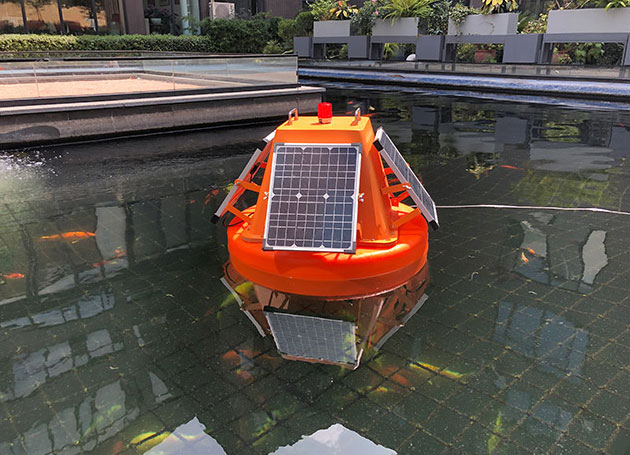
Dissolved oxygen concentration in mg/L and percent saturation are related but are not the same quantity. Oxygen solubility depends on temperature, pressure and salinity. The USGS dissolved oxygen measurement guidance addresses calibration, field measurement and these correction factors. Establish how the selected instrument applies them rather than assuming that a digital DO probe has every correction enabled.
A separate conductivity probe on the buoy does not necessarily update a DO sensor's salinity compensation. The logger or receiving software must implement any required exchange or calculation. If an operator enters salinity manually, record the setting and how it is updated when freshwater inflow changes conditions. Avoid applying a second correction to a value already compensated inside the sensor.
Request the exact NiuBoL DO model, measuring range, optical-cap service instructions and compensation method. Do not copy one generic DO range into the specification for every probe family. During acceptance, compare both units and compensation settings with an appropriate independent instrument in the actual water.
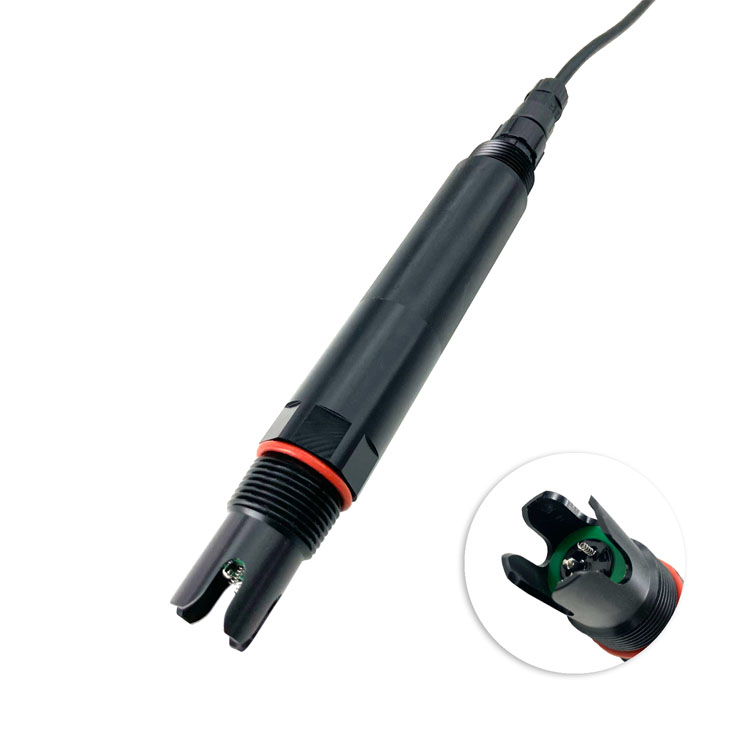
Residual chlorine monitoring can be relevant to treated supply water or a defined disinfection process. It is not automatically part of routine biological pond monitoring. If the project includes chlorine, identify the measurement fraction, concentration range and process point; an illustrated chlorine probe is not evidence that it belongs in every aquaculture package.
Separate measurements used during water preparation from those used in an occupied culture pond. The interpretation, expected range and reference test may differ. Equipment selection should follow the site's treatment procedure and responsible technical review, not an assumption that every available water-quality sensor adds useful information.
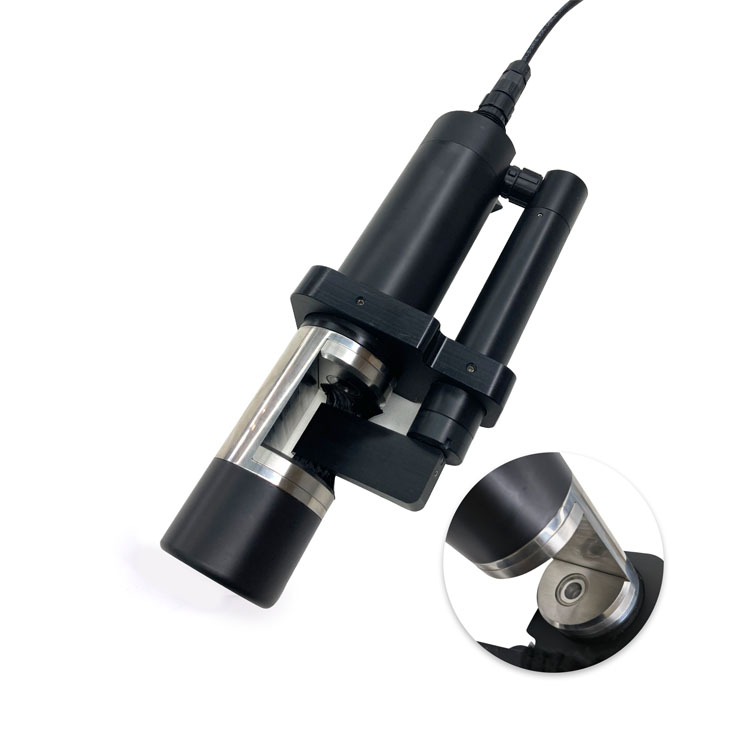
Transparency and turbidity are different outputs. A transparency sensor may describe an optical path or visibility-related length; a turbidity sensor reports scattering under its measurement method. Neither directly identifies algae species or supplies a universal suspended-solids concentration. Choose the quantity used by the farm's decision procedure.
In a saline or highly productive pond, compare the selected optical method with representative field observations before setting thresholds. Bubbles from aeration, sediment resuspension and growth on the optical surface can change readings. An increase in scattering is not, by itself, evidence of an algal bloom or proof of a particular water-treatment failure.
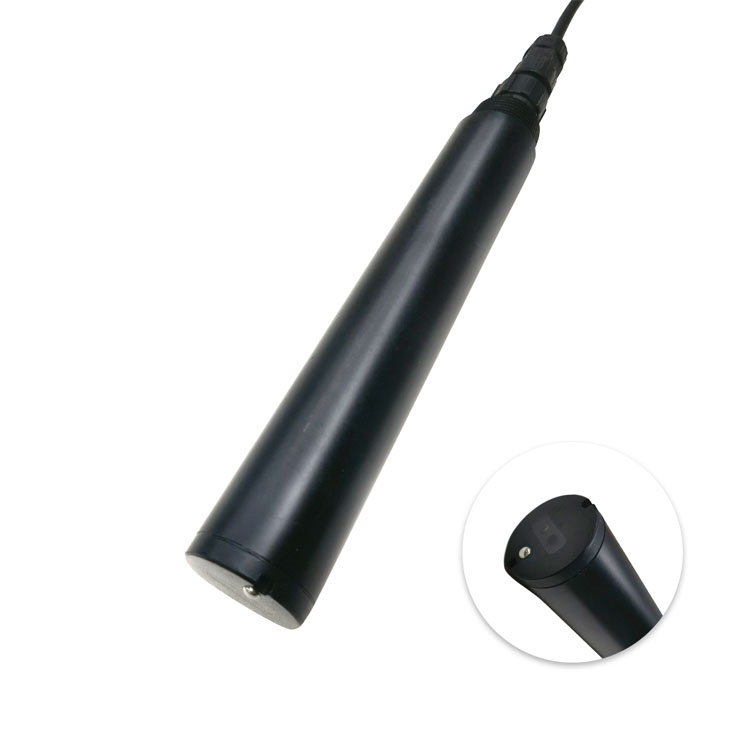
IP68 addresses ingress under specified conditions; it is not a corrosion classification. Review probe bodies, seals, cable jackets, connector materials, brackets and fasteners against the water and cleaning chemicals. A material description for the float cannot establish the durability of a different immersed metal component.
Keep sensors submerged within their approved depth and pressure limits, with clearance from the bottom and from direct aerator discharge. Allow safe recovery for inspection without lifting the assembly by sensor cables. Boat access, wind exposure and mooring loads need site-specific assessment; no universal wind rating follows from the float's diameter or colour.
For the electrical package, specify each digital address, baud rate, register and unit, then test the actual RS485 Modbus RTU channels through the ordered data logger. Cloud alarms, cellular upload and historical recovery are logger or platform functions that must be selected and tested. They are not guaranteed by the presence of waterproof probes.
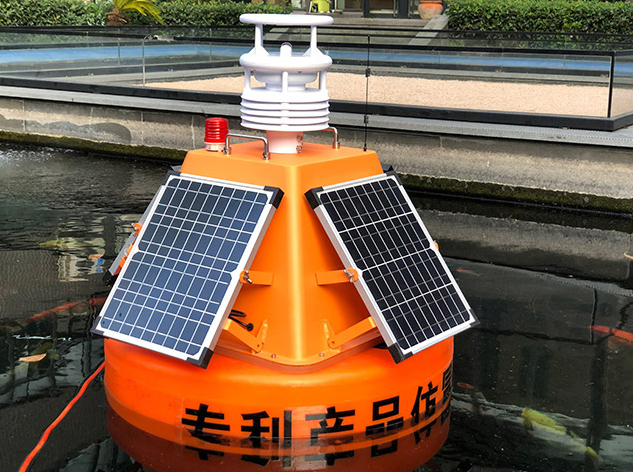
Possibly, but each probe needs review for range, compensation, interferences and wetted materials. Do not transfer the package based only on its ingress rating or a previous freshwater installation.
No. An ammonium-selective measurement and a free-ammonia calculation are different outputs. Any conversion needs the correct chemical basis, appropriate environmental inputs and a validated method.
Not by itself. Compare the proposed alarm and required discrimination with the complete accuracy allowance and site performance. Resolution describes the output increment, not the smallest reliably distinguishable field change.
Only if that data path and calculation exist in the selected system. Verify whether compensation occurs in the probe, logger or software and confirm that it is not omitted or applied twice.
Include salinity, temperature and pH ranges, expected nitrogen levels, desired DO units, immersion depth, cleaning chemicals and logger requirements. Representative water information is more useful than the label seawater alone.
No. The buoy observes its selected quantities at its installed location. It does not establish fish health, inspect every part of the pond or remove the need for reference checks and physical maintenance.
The probe methods and ranges, salinity-related configuration, mounting and recovery arrangement, power budget, communications and service scope all affect cost. Request those items separately rather than comparing two unspecified complete buoys.
An aquaculture monitoring buoy needs a sensor package matched to the water, not a generic freshwater-or-seawater claim. Check ammonium measurement limits, DO compensation, optical quantities and the complete immersed assembly. Provide NiuBoL with the expected water conditions and decision levels so the proposed package can be assessed before deployment.
These documents cover separate water-quality sensor families. Select only the probes needed for the intended monitoring points, and match the supplied model and revision before using a wiring or calibration procedure.
 NBL-RDO-206 Online Fluorescence Dissolved Oxygen Sensor.pdf
NBL-COD-208 Online COD Water Quality Sensor.pdf
NBL-CL-206 Water Quality Sensor Online Residual Chlorine Sensor.pdf
Prev:Water Quality Monitoring Buoy: Compare Online Readings with Laboratory Samples
Next:Photovoltaic Environmental Monitor: Validate Data for Performance Ratio
Related recommendations
Sensors & Weather Stations Catalog
Agriculture Sensors and Weather Stations Catalog-NiuBoL.pdf
Weather Stations Catalog-NiuBoL.pdf
Agriculture Sensors Catalog-NiuBoL.pdf
Water Quality Sensor Catalog-NiuBoL.pdf
Related products
 Combined air temperature and relative humidity sensor
 TDR Soil Moisture & Temperature Sensor for irrigation| RS485 |4-20mA| NBL-S-THR
 Soil pH sensor RS485 soil Testing instrument soil ph meter for agriculture |NBL-S-PH
 Wind Speed sensor Output Modbus/RS485/Analog/0-5V/4-20mA
 Tipping bucket rain gauge for weather monitoring auto rainfall sensor RS485/Outdoor/stainless steel
 Pyranometer Solar Radiation Sensor 4-20mA/RS485

Screenshot, WhatsApp to identify the QR code
WhatsApp number:+8615367865107
(Click on WhatsApp to copy and add friends)

