





— Blogs —
—Products—
 Consumer hotline +8618073152920
WhatsApp:+8615367865107
Address:Room 102, District D, Houhu Industrial Park, Yuelu District, Changsha City, Hunan Province, China
Product knowledge
Time:2025-03-24 21:35:29 Popularity:1927
A solar radiation monitoring station must be specified by the radiation quantities it measures, not simply by the number of instruments on its mast. A horizontal pyranometer measures global horizontal irradiance; tilting it changes the measurement plane. Diffuse, direct-normal, reflected and net radiation require different arrangements. Confirm each channel before comparing station quotations.
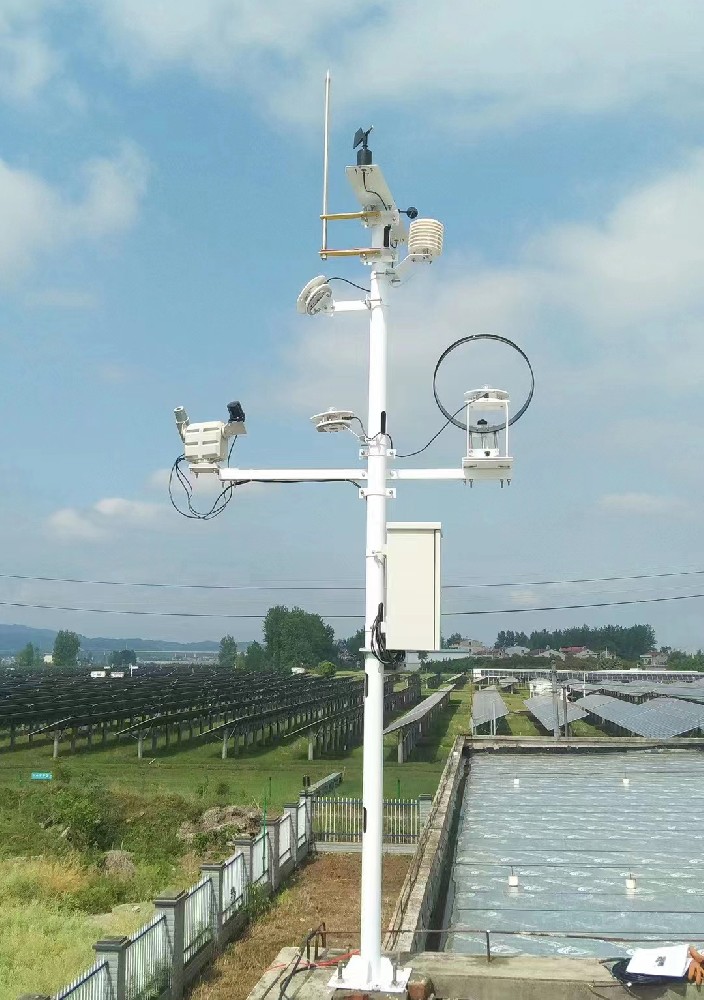
A research team studying surface energy exchange does not need the same configuration as a photovoltaic operator comparing irradiance with plant output. Both may request a solar radiation monitoring station, but that description does not establish the sensor set. Specify the measured quantity, orientation, units, interval and required uncertainty for each channel.
For solar resource assessment, global horizontal irradiance may be the initial requirement. For an inclined photovoltaic array, plane-of-array irradiance may be more relevant. An agricultural experiment may need radiation above and below a canopy or a separate photosynthetically active radiation channel. Broadband solar irradiance in W/m2 is not automatically a measurement of photosynthetic photon flux.
| Quantity | Measurement arrangement | Common specification error |
|---|---|---|
| Global horizontal irradiance, GHI | Upward-facing, level pyranometer with suitable sky exposure | Calling any tilted sensor a GHI channel |
| Plane-of-array irradiance, POA | Pyranometer aligned with the intended module plane | Comparing it directly with a horizontal measurement without accounting for geometry |
| Diffuse horizontal irradiance, DHI | Horizontal pyranometer with an appropriate shading arrangement and its required adjustments | Assuming a bare pyranometer separates diffuse from direct radiation |
| Direct normal irradiance, DNI | Suitable direct-beam instrument maintained in alignment with the sun | Calling total irradiance direct-normal irradiance |
| Reflected shortwave radiation | Downward-facing instrument over the representative surface | Ignoring the surface area seen by the instrument or shadows from its support |
| Net radiation | Measurement of the required incoming and outgoing shortwave and longwave components | Treating incident minus reflected solar radiation as complete net radiation |
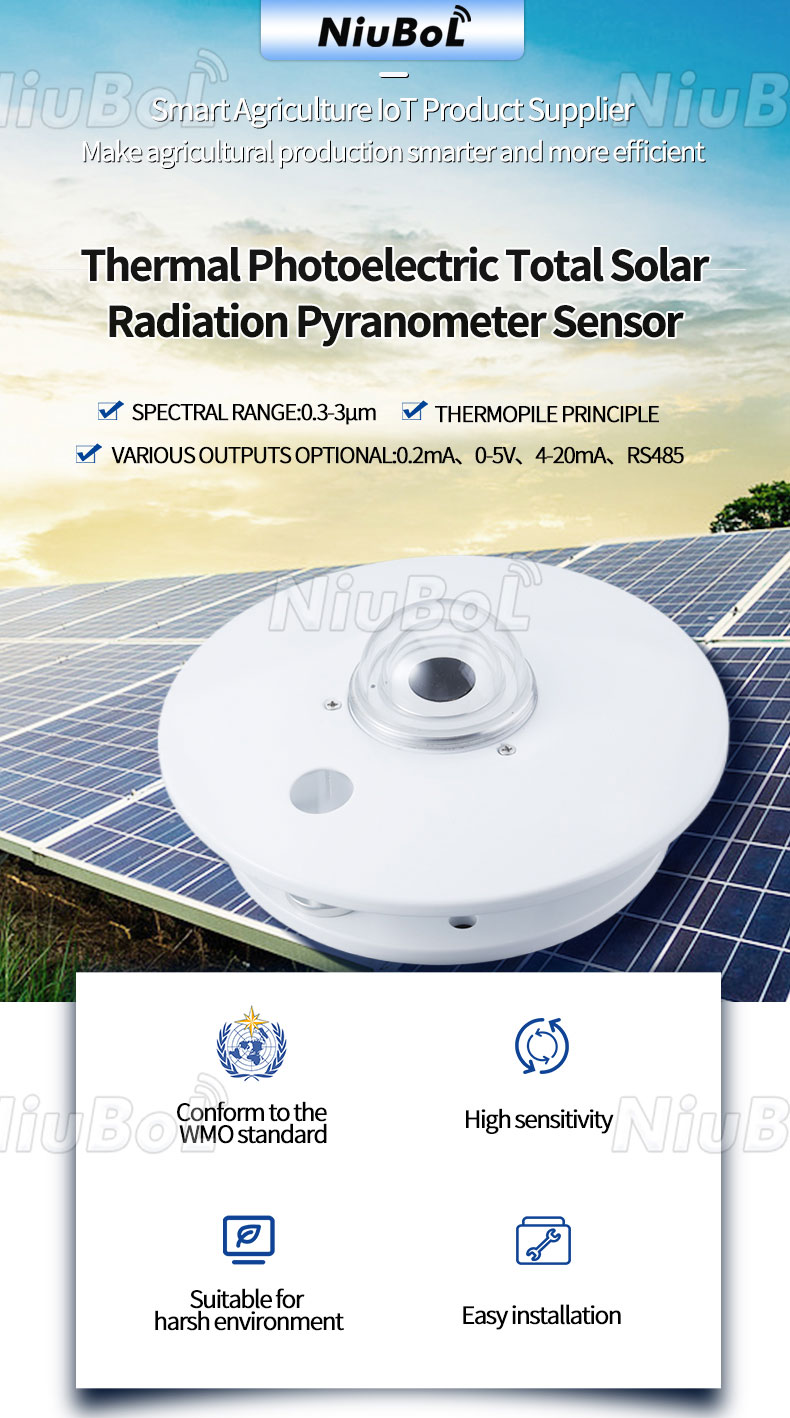
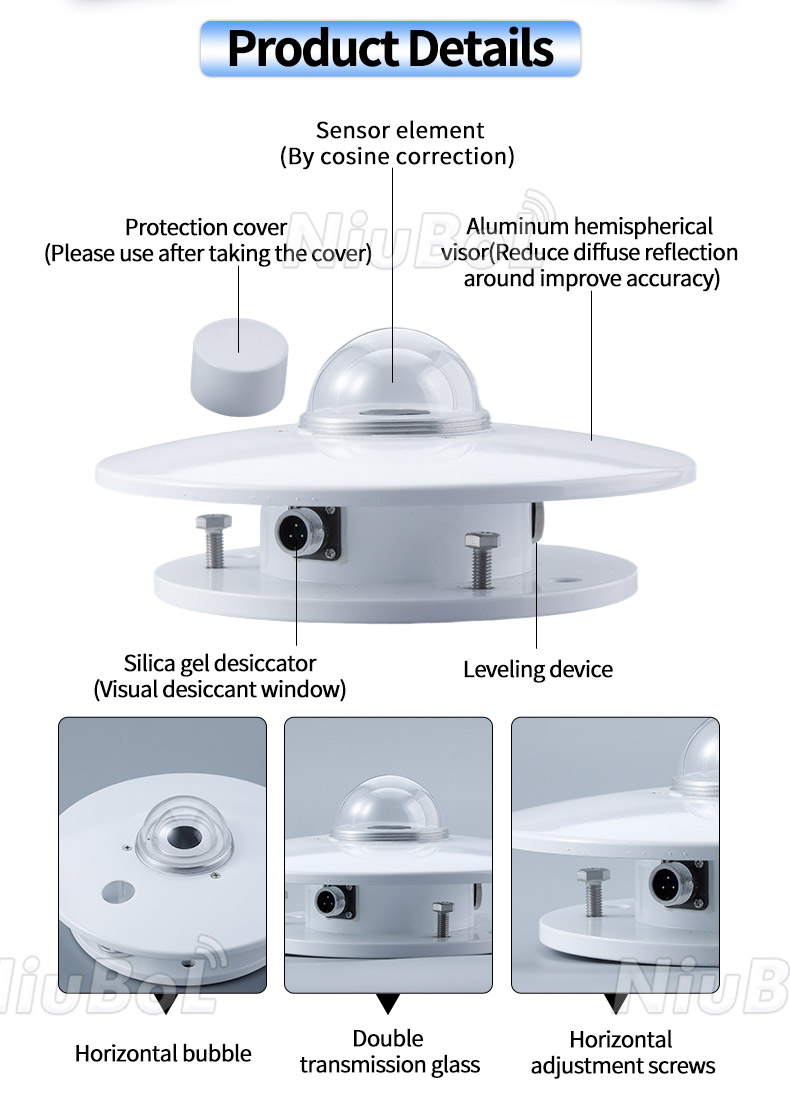
The NiuBoL NBL-W-HPRS is a thermopile pyranometer. The NBL-W-SRS is a separate solar radiation sensor with its own range and response specification. Similar applications do not make their characteristics interchangeable. Neither should be presented as a complete five-component radiation station on its own.
| Parameter | NBL-W-HPRS | NBL-W-SRS |
|---|---|---|
| Measurement range | 0-2000 W/m2 | 0-1500 W/m2 |
| Spectral range | 0.3-3 micrometers | 0.3-3 micrometers |
| Response time | Up to 35 seconds to 99% | Less than 5 seconds; response endpoint not specified |
| Operating temperature | -40 to +50 degrees C | -20 to +65 degrees C |
| Supply and output | 12 V or 24 V DC transmitter versions; 4-20 mA, 0-5 V or RS485 versions; raw millivolt configuration also available | 12-24 V DC; 4-20 mA, 0-5 V or RS485 versions |
| Standard cable length | 2.5 m; other lengths by configuration | 2.5 m |
Do not rank the two response-time figures as though they used an identical endpoint. Likewise, sensitivity, nonlinearity and annual stability describe different characteristics; none is a complete system accuracy figure. If a project requires an instrument classification or accredited calibration, obtain the applicable evidence for the proposed model and configuration rather than relying on a general statement about meteorological standards.
The Sandia irradiance definition gives the horizontal relationship GHI = DHI + DNI x cos(zenith angle). Suppose simultaneous values are DHI = 120 W/m2 and DNI = 800 W/m2 at a zenith angle of 60 degrees. The calculated GHI is 520 W/m2, not 920 W/m2. This is an illustrative calculation, not a station test result.
That relationship helps investigate inconsistent measurements only when timestamps, geometry and the observation intervals are compatible. It does not turn a single pyranometer into independent GHI, DHI and DNI measurements. Values derived from a model should be identified as derived, especially when a customer expects separately measured channels.
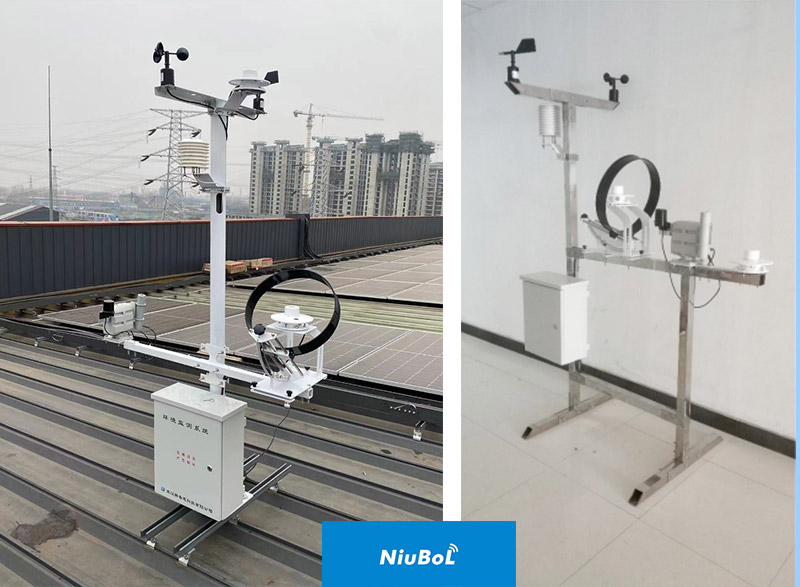
A diffuse channel requires the direct solar beam to be excluded without treating the resulting shaded measurement as an unmodified total. A shading ring blocks part of the sky as well as the solar path; its geometry, adjustment and correction method matter. Confirm who performs those adjustments and how the correction is recorded. Do not quote only the sensor and omit its shading assembly.
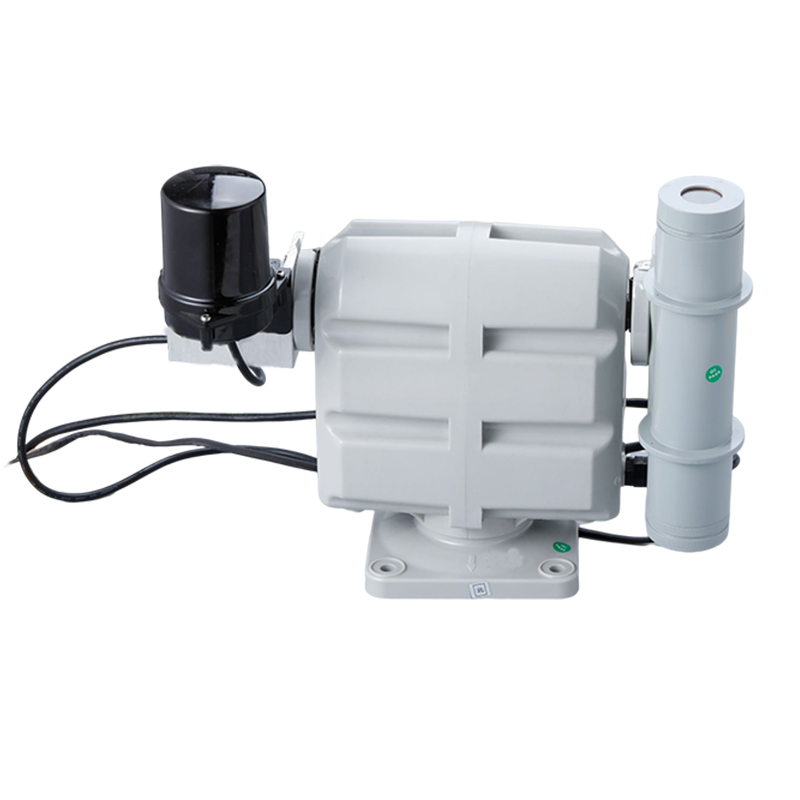
For direct-beam monitoring, check the actual optical instrument, alignment method and tracking arrangement. A product name containing "tracking" is not sufficient evidence of motorized tracking hardware or a DNI channel. Ask for the complete arrangement, operating limits and maintenance access. The station illustration shows possible hardware layouts; it does not establish which items are included in a particular quotation.
A raw millivolt pyranometer needs a suitable low-level input and the instrument's sensitivity coefficient. A 4-20 mA transmitter needs the agreed range and a compatible current input. RS485 Modbus RTU versions require the appropriate address, serial settings and register interpretation at the PLC, RTU or data logger. Select the interface per channel instead of assuming every radiation instrument shares the same connection.
The TG462/TG462S logger family offers industrial acquisition interfaces, but the input configuration and project software still need to be matched. State whether records must contain instantaneous irradiance, interval averages or integrated irradiation. An irradiance reading in W/m2 cannot be relabeled as daily energy in Wh/m2 without time integration and a rule for missing intervals.
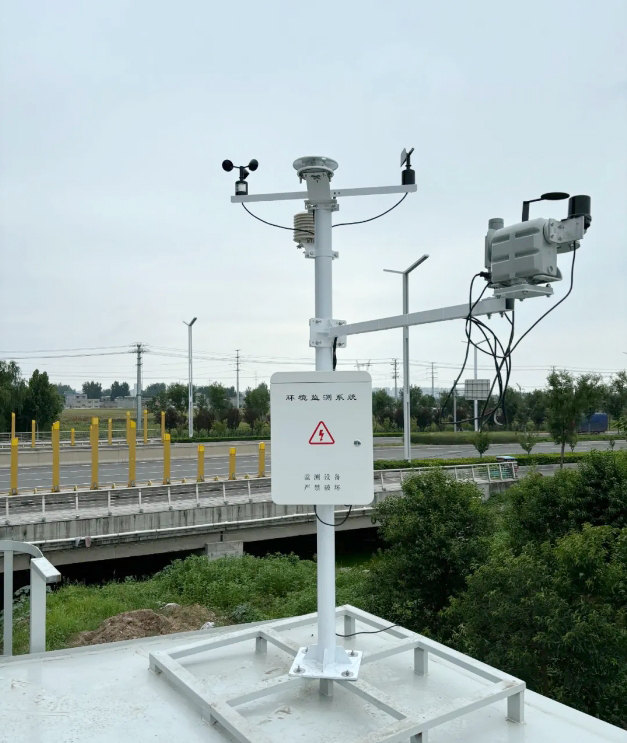
Before handover, check level or specified tilt, orientation, horizon obstructions and shadows from the mast, panel and other instruments. For reflected radiation, identify the representative surface and the instrument's view of it. For a rooftop installation, document nearby parapets and reflective surfaces rather than assuming that an open sky alone establishes representative conditions.
Record cleaning and any changes to alignment. A recurring daily dip can be a moving shadow rather than loss of sensor sensitivity. Inspect optics and the installation before applying a correction factor. Set service and recalibration intervals from the instrument requirements, contamination and project quality obligations; cleaning does not replace calibration.
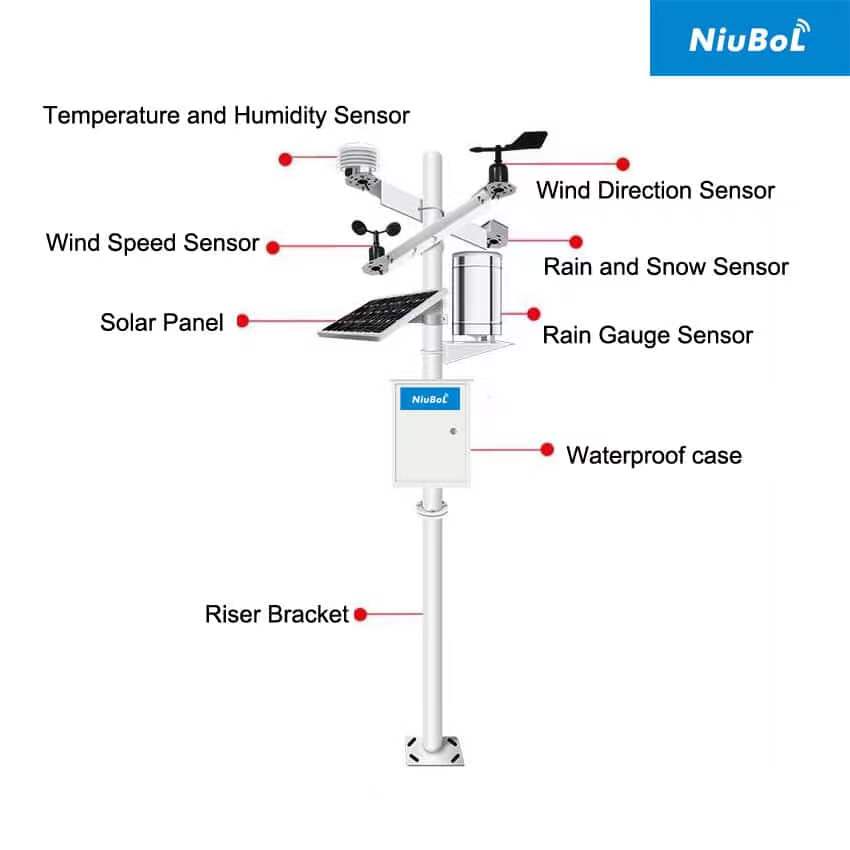
For a PV project, identify whether the task is resource assessment, operating performance monitoring or a research comparison. For surface-energy work, identify whether longwave measurements are needed. Confirm power for the logger and any tracker, communications availability, local storage and responsibilities for data correction. Do not assume a standard solar-powered mast includes every radiation assembly.
Send NiuBoL a channel schedule, measurement planes, environmental limits and receiver details for configuration review. Require the quotation to distinguish instruments, brackets, shading or tracking equipment, calibration, logger configuration and installation work. This makes a basic total-radiation station distinguishable from a multi-component research system.

No. It measures irradiance on its receiving plane. Separately measuring diffuse, direct-normal and reflected components requires appropriate additional arrangements. A model estimate must not be labeled as an independent sensor measurement.
No. A downward-facing solar instrument can measure reflected shortwave radiation over its viewed surface. Complete net radiation also involves incoming and outgoing longwave components and requires the corresponding instrument scope.
Only when the electrical input and interpretation match. A raw millivolt output, powered current transmitter and RS485 digital device require different inputs or configuration. Confirm the exact output version before ordering.
No. A PV station may add wind and module temperature but still have only one irradiance channel. A research radiation station may have several radiation components but no module-temperature measurement. Compare channel lists, not category names.
The number and type of measured channels, calibration requirements, shading or tracking equipment, acquisition, power and installation scope determine the price. Define these items before comparing quotations; there is no single price for every radiation monitoring station.
A useful solar radiation monitoring station produces clearly defined radiation records. Select each measurement arrangement, verify the receiving interface and preserve its geometry and maintenance history. NiuBoL can help match HPRS or SRS channels and acquisition requirements; separate specialist radiation assemblies should be identified explicitly in the proposed system.
 NBL-W-SRS-Solar-radiation-sensor-instruction-manual-V4.0.pdf
NBL-W-HPRS-Solar-Radiation-Sensor-Instruction-Manual-V3.0.pdf
Prev:Small Weather Station Data Errors: Isolate the Fault Before Correcting Values
Next:Small Weather Station Lightning Protection: Earthing, Bonding and Surge Routes
Related recommendations
Sensors & Weather Stations Catalog
Agriculture Sensors and Weather Stations Catalog-NiuBoL.pdf
Weather Stations Catalog-NiuBoL.pdf
Agriculture Sensors Catalog-NiuBoL.pdf
Water Quality Sensor Catalog-NiuBoL.pdf
Related products
 Combined air temperature and relative humidity sensor
 TDR Soil Moisture & Temperature Sensor for irrigation| RS485 |4-20mA| NBL-S-THR
 Soil pH sensor RS485 soil Testing instrument soil ph meter for agriculture |NBL-S-PH
 Wind Speed sensor Output Modbus/RS485/Analog/0-5V/4-20mA
 Tipping bucket rain gauge for weather monitoring auto rainfall sensor RS485/Outdoor/stainless steel
 Pyranometer Solar Radiation Sensor 4-20mA/RS485


Screenshot, WhatsApp to identify the QR code
WhatsApp number:+8615367865107
(Click on WhatsApp to copy and add friends)

