





— Blogs —
—Products—
 Consumer hotline +8618073152920
 WhatsApp:+8615367865107
Address:Room 102, District D, Houhu Industrial Park, Yuelu District, Changsha City, Hunan Province, China
Product knowledge
Time:2026-02-01 10:04:22 Popularity:558
In modern hydrology, meteorology, and disaster prevention and mitigation engineering, system integrators have increasingly higher requirements for the real-time, continuous, and accurate nature of precipitation data. Traditional manual observation can no longer meet the needs of basin flood forecasting, urban drainage scheduling, and agricultural water resource management. NiuBoL NBL-W-RS tipping bucket rain gauge sensor, as an industrial-grade telemetering rain gauge compliant with national standards SL61-2003, GB11831-89, and GB11832-89, uses a high-precision tipping bucket mechanism as its core to provide reliable data on precipitation amount, intensity, and start/stop times. It supports multiple output formats, making it easy to integrate into automatic weather stations (AWS), hydrological telemetry terminals (RTU), flash flood disaster warning systems, and IoT environmental monitoring platforms.
From the perspective of system integrators, this sensor is not just a single precipitation sensing element but a key node in building multi-element hydrological monitoring networks. Its 0.2mm or 0.1mm resolution and minute-level sampling capability can capture short-duration heavy rainfall processes, providing high temporal resolution inputs for downstream flood evolution models, urban pipe network simulations, and irrigation decisions. Combined with 4G/5G communication and solar-powered overall station solutions, it enables long-term stable operation in unattended scenarios such as remote mountainous areas, river channels, and reservoir surroundings.
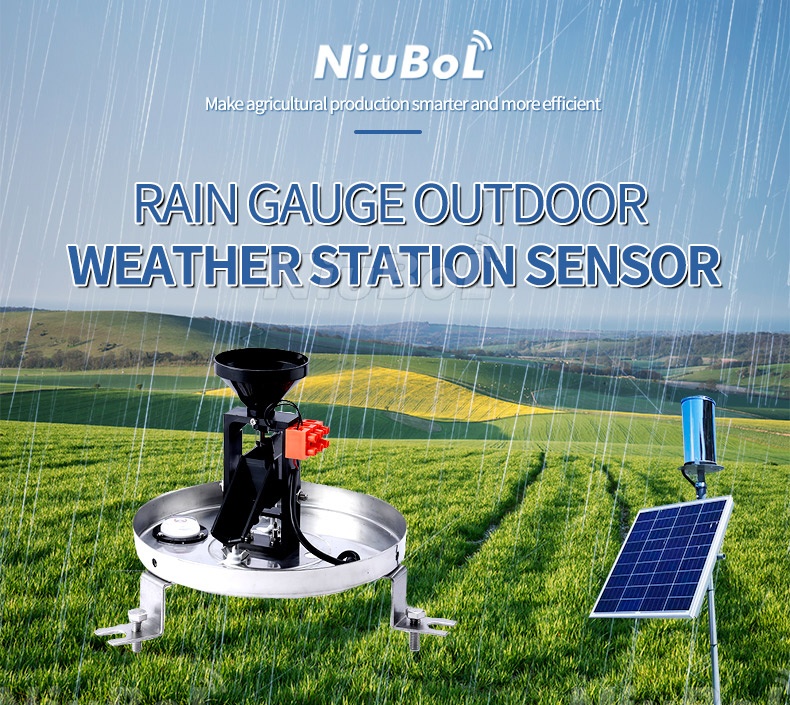
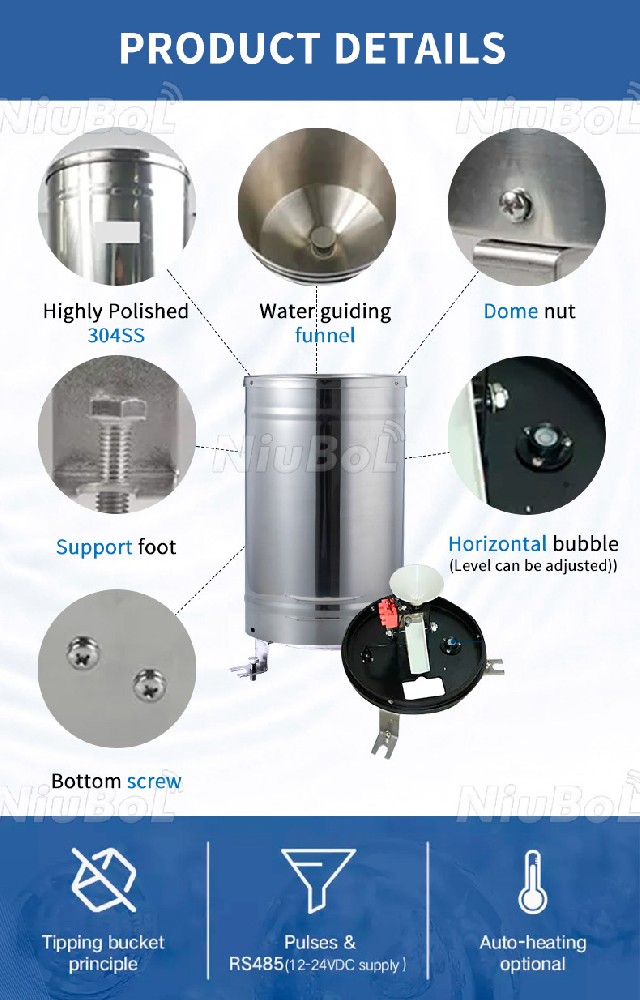
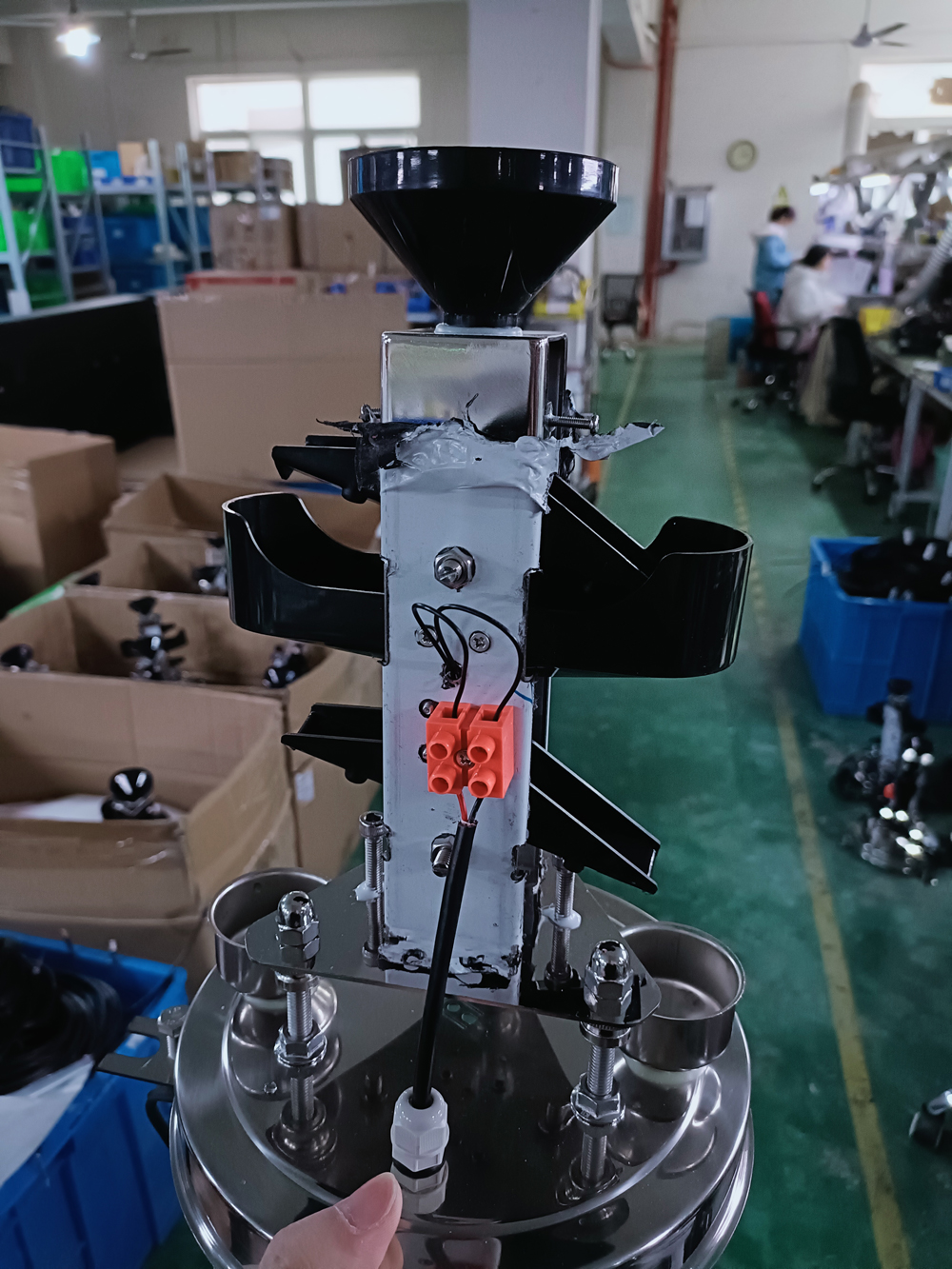
NBL-W-RS adopts the classic tipping bucket structure: a water collector with a receiving orifice diameter of Φ200±0.6mm guides precipitation into the tipping bucket. Each tip corresponds to a fixed volume (6.28ml, equivalent to 0.2mm precipitation depth), generating a switch signal via a reed switch or outputting analog/digital quantities through conversion circuits. This design features a simple mechanical structure, good repeatability, and high long-term stability.
Compared to weighing-type or optical rain sensors, the tipping bucket solution offers engineering advantages in the following aspects:
High cost-effectiveness and mature reliability, widely certified by national metrology verification.
Good linear response to medium-low intensity rainfall (<4mm/min), suitable for most hydrological and meteorological applications.
Anti-clogging design (tipping bucket + filter screen), maintaining high availability even in precipitation containing impurities.
Multiple output options (reed switch, 0-2.5V/0-5V voltage, RS485), adaptable to different acquisition terminals.
In actual projects, these characteristics ensure continuous data collection under complex meteorological conditions such as heavy rain and thunderstorms, providing a reliable foundation for flood peak forecasting and waterlogging warning.
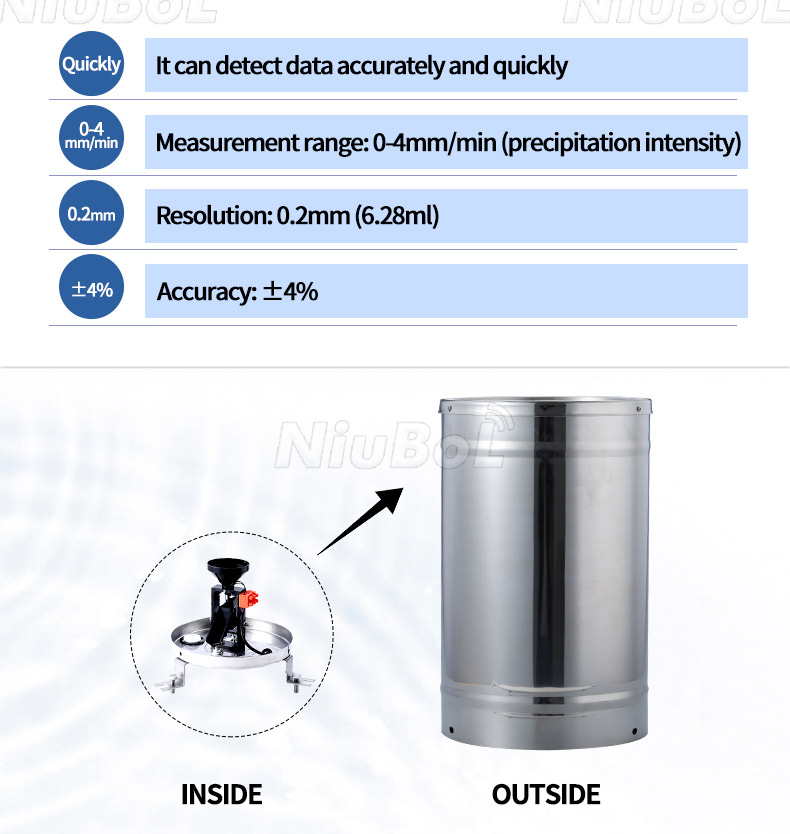
The following table summarizes the main technical parameters of the NiuBoL NBL-W-RS tipping bucket rain gauge sensor:
| Parameter Category | Parameter Item | Specification Value |
|---|---|---|
| Receiving Orifice Diameter | Φ200 ± 0.6 mm | |
| Measurement Range | Precipitation Intensity | 0~4 mm/min |
| Resolution | 0.2 mm (corresponding to 6.28 ml) | |
| Accuracy | Indoor Static Test (2 mm/min) | ±4% |
| Power Supply Mode | DC 5V / DC 12-24V / Other customized | |
| Output Form | Reed switch signal / 0~2.5V / 0~5V / RS485 / Other customized | |
| Instrument Cable Length | Standard | 5 meters (customizable) |
| Operating Temperature | 0~50℃ | |
| Storage Temperature | -40~80℃ |
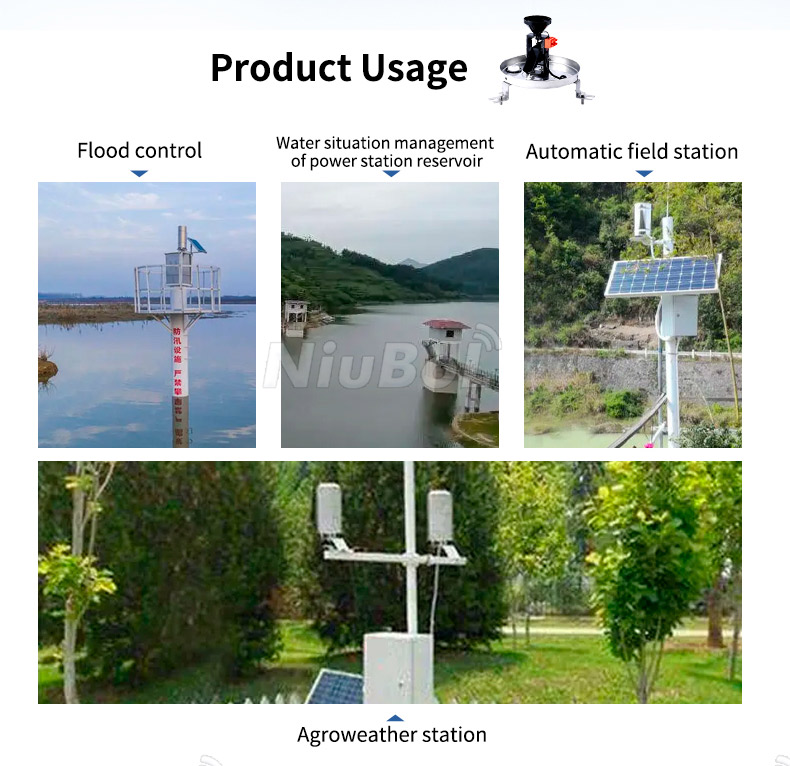
These parameters comply with the specifications of hydrological automatic reporting systems and are suitable for scenarios such as flood control scheduling, water supply management, and reservoir hydrological monitoring.
When deploying hydrological automatic reporting systems, system integrators typically use NBL-W-RS as the core of the precipitation sensing layer, combined with water level, flow, soil moisture, and meteorological element sensors to form multi-parameter monitoring stations.
1. In flash flood disaster warning systems, sensors are deployed in upstream tributaries and small watersheds, with RS485 output connected to RTU or edge gateways. When minute rainfall intensity exceeds the threshold or cumulative rainfall triggers a critical value, the system can automatically generate warning information and send it to grassroots flood control responsible persons via 4G/5G or Beidou short message. This solution has been verified effective in multiple provincial flash flood warning projects, significantly shortening warning response time.
2. Urban flood control and drainage monitoring is another key application scenario. Integrators can deploy automatic rain gauge stations at waterlogging-prone points and key nodes of drainage pipe networks, with data uploaded in real time to municipal drainage scheduling platforms. Through correlation analysis with pipe network water levels and pumping station operating status, dynamic scheduling under short-duration heavy rainfall is achieved to avoid waterlogging. Actual cases show that areas deploying NiuBoL rain gauge stations have significantly improved waterlogging warning accuracy, providing a critical window for emergency response.
3. In the field of agricultural water resource management, sensors are often linked with drip/sprinkler irrigation control systems. Based on minute-level precipitation data and soil moisture monitoring, irrigation controllers can automatically deduct effective rainfall, achieving variable irrigation, saving water resources, and increasing crop yields. IoT solution providers can integrate NBL-W-RS into cloud platforms to generate regional-scale rainfall distribution maps and support irrigation decision-making.
4. In addition, in reservoir group joint scheduling and power station hydrological automatic reporting systems, the sensor provides high-frequency precipitation inputs to support real-time correction of hydrological models, improving reservoir capacity utilization efficiency and comprehensive benefits of flood control and benefit generation.
When selecting, integrators can refer to the following engineering points:
1. Output Interface Matching: For new IoT projects, prioritize RS485 version for easy MODBUS protocol integration; traditional RTU systems can choose reed switch signal.
2. Power Supply Environment: Recommend DC 12-24V version for remote sites, compatible with solar + battery systems; DC 5V optional for low-power requirements.
3. Deployment Density and Representativeness: One station per 10-30km² for small watershed flash flood warning; optimize points by drainage zones for urban flood control.
4. Accuracy and Intensity Requirements: ±4% is sufficient for conventional meteorological/hydrological applications; verify high rainfall intensity linearity in extreme heavy rain areas.
5. Cable and Protection: Standard 5m cable length; suggest adding lightning protection modules and waterproof connectors for outdoor deployment.
6. System Scalability: Choose RS485 version for easy subsequent addition of temperature, humidity, pressure, wind speed, etc., to form composite stations.
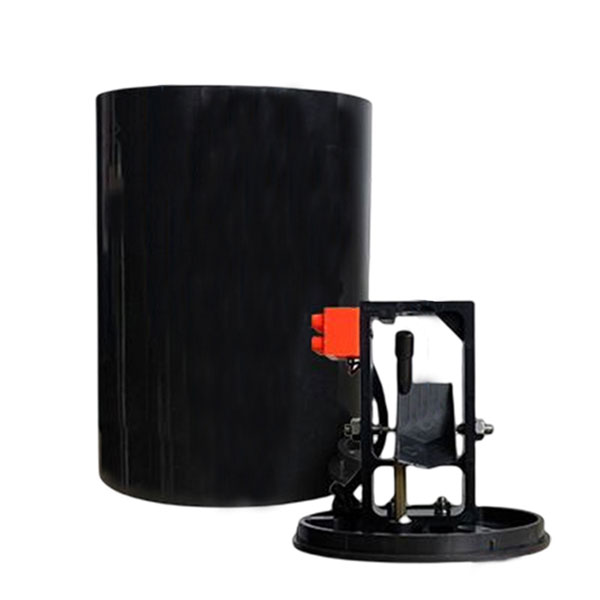
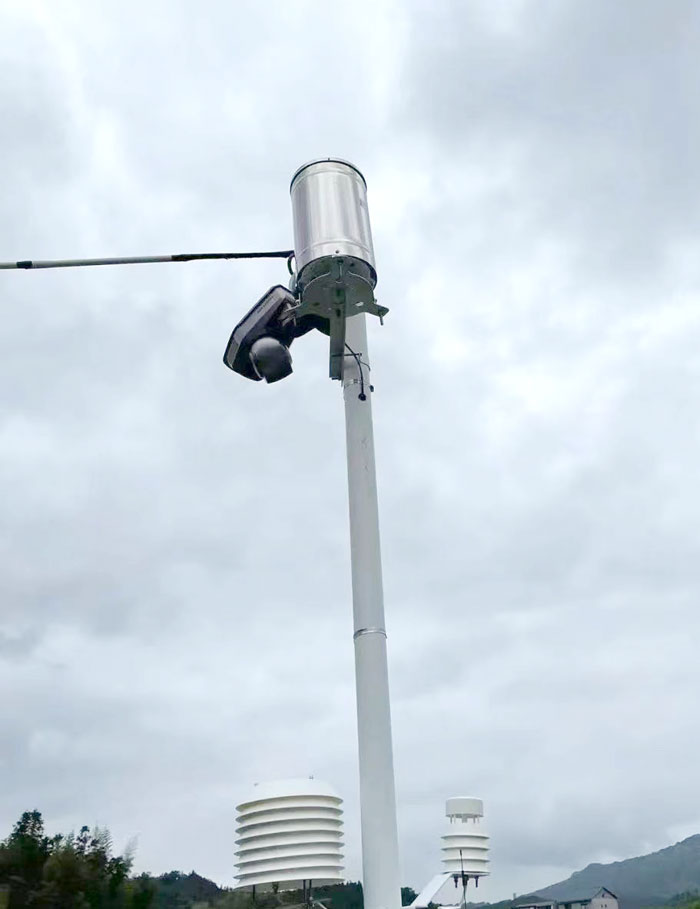
1. Installation Location: Choose open areas without obstruction or tall vegetation; receiving orifice 1.2-1.5m above ground to avoid splash interference.
2. Level Calibration: After installation, use a level to ensure the instrument base is horizontal to prevent tipping bucket deflection errors.
3. Anti-Clogging Maintenance: Regularly (recommended quarterly) clean the receiving orifice filter screen and deposits inside the tipping bucket.
4. Electrical Connection: For RS485 version, use shielded twisted pair; suggest adding terminal resistor (120Ω) to prevent signal reflection; separate power and signal cables.
5. Lightning Protection: Install power and signal surge protectors at outdoor sites, grounding resistance<4Ω.
6. Data Acquisition Configuration: For reed switch output, set debounce time; for RS485 version, define MODBUS register mapping to collect cumulative amount and rainfall intensity.
7. Field Verification: After deployment, compare with standard rain gauge to ensure error within ±4%.
Q1. How are the resolution and accuracy of NBL-W-RS defined?
Resolution 0.2mm (single tip 6.28ml), accuracy ±4% (indoor 2mm/min static test), compliant with national hydrological reporting standards.
Q2. What output forms does the sensor support for easy system integration?
Supports reed switch, 0-2.5V/0-5V voltage, RS485 digital output; multi-interface design adapts to different RTUs and IoT gateways.
Q3. Will the tipping bucket sensor experience clogging or missing counts under heavy rainfall?
Designed with filter screen and double tipping bucket structure, good linearity within 4mm/min; regular cleaning recommended to maintain long-term accuracy.
Q4. How to choose power supply voltage to adapt to solar systems?
DC 12-24V version compatible with most solar controllers; DC 5V suitable for low-power micro-power acquisition terminals.
Q5. Does RS485 output support MODBUS protocol?
Yes, RS485 version uses standard MODBUS RTU protocol, easy seamless docking with SCADA and cloud platforms.
Q6. Can the operating temperature range meet northern winter or southern high-temperature environments?
Operating temperature 0~50℃, storage -40~80℃; extreme low-temperature sites suggest adding anti-freeze cover or heating component.
Q7. How to achieve minute-level precipitation intensity monitoring?
Through high-frequency tipping bucket counting (with acquisition terminal set to 1-minute sampling period), real-time rainfall intensity calculation and cumulative rainfall.
Q8. What are the advantages and disadvantages of tipping bucket compared to weighing rain gauges?
Tipping bucket has simple structure, low cost, easy maintenance, suitable for medium-low intensity rainfall; weighing type has advantages in solid precipitation and extremely high rainfall intensity scenarios.
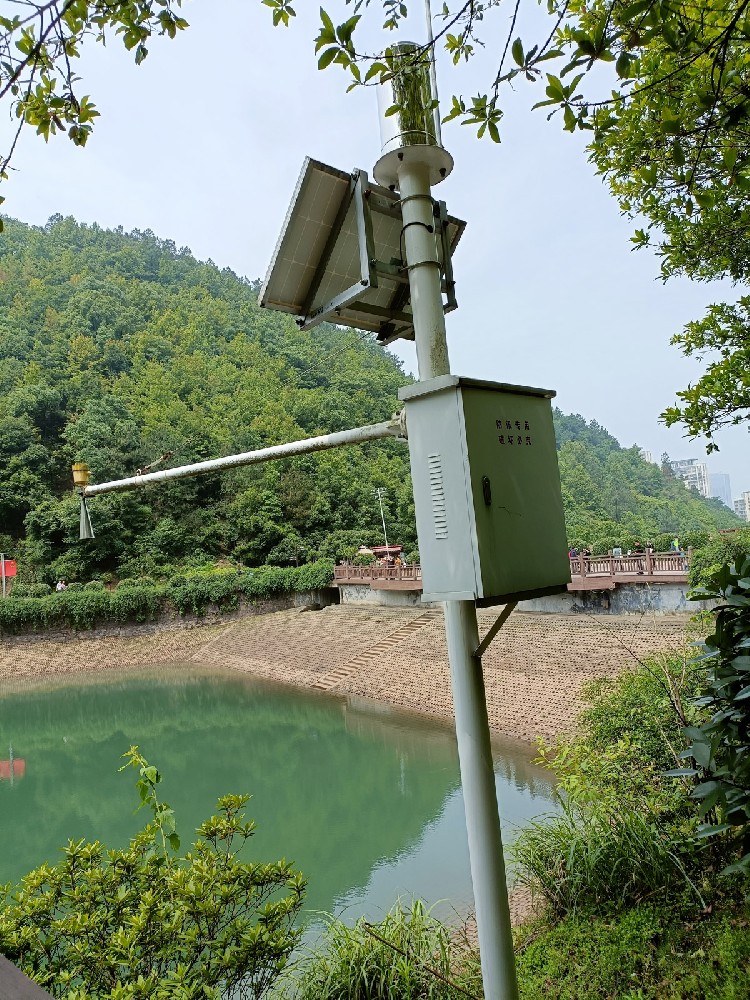
NiuBoL NBL-W-RS tipping bucket rain gauge sensor, with its accuracy compliant with national standards, multiple output compatibility, and high environmental adaptability, has become a reliable choice for hydrological automatic reporting, flash flood warning, urban flood control, and agricultural water resource management projects. Whether building small field reporting stations or large basin monitoring networks, the sensor provides stable and economical precipitation data sources for system integrators.
If you are a system integrator, IoT solution provider, or hydrological engineering contractor planning or upgrading automatic rain gauge stations, flash flood warning systems, or comprehensive hydrological monitoring projects, welcome to contact the NiuBoL team for complete technical materials, prototype testing support, or customized integration solutions. We are committed to providing professional and reliable sensing components for industrial-grade hydrological and meteorological applications, jointly improving overall project performance and O&M efficiency.
 NBL-W-ARS-Tipping-bucket-rain-gauge-instruction-manual.pdf
NBL-W-RS-Rain-sensors-instruction-manual-V4.0.pdf
NBL-W-DRS-Double-Tipping-Bucket-Rain-Sensor-Instruction-Manual.pdfRelated recommendations
Sensors & Weather Stations Catalog
Agriculture Sensors and Weather Stations Catalog-NiuBoL.pdf
Weather Stations Catalog-NiuBoL.pdf
Agriculture Sensors Catalog-NiuBoL.pdf
Water Quality Sensor Catalog-NiuBoL.pdf
Related products
 Combined air temperature and relative humidity sensor
 TDR Soil Moisture & Temperature Sensor for irrigation| RS485 |4-20mA| NBL-S-THR
 Soil pH sensor RS485 soil Testing instrument soil ph meter for agriculture |NBL-S-PH
 Wind Speed sensor Output Modbus/RS485/Analog/0-5V/4-20mA
 Tipping bucket rain gauge for weather monitoring auto rainfall sensor RS485/Outdoor/stainless steel
 Pyranometer Solar Radiation Sensor 4-20mA/RS485

Screenshot, WhatsApp to identify the QR code
WhatsApp number:+8615367865107
(Click on WhatsApp to copy and add friends)

